
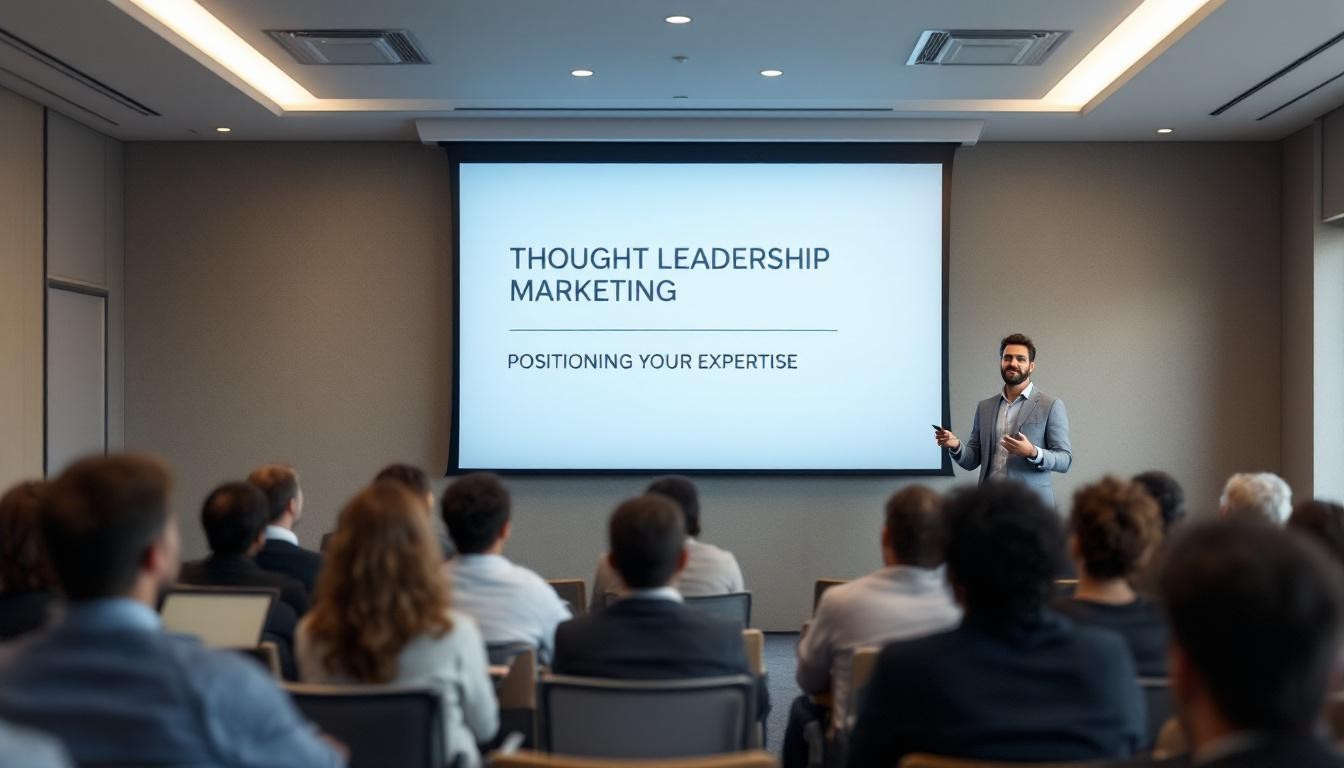
Brands that speak with authority stand out. Thought leadership marketing isn’t about self-promotion-it’s about sharing genuine expertise that solves real problems for your audience.
At Innovative Events, we’ve seen firsthand how companies that position themselves as industry experts attract better clients, command premium pricing, and build lasting credibility. This guide shows you exactly how to build that authority.
What Thought Leadership Marketing Actually Is
Brands that position themselves as industry experts attract better clients, command premium pricing, and build lasting credibility. Thought leadership marketing is the practice of positioning your expertise so visibly that your audience views you as a trusted authority shaping conversations in your industry. It’s not about broadcasting your product; it’s about sharing insights that matter to your audience’s business challenges. According to research from the Edelman-LinkedIn Thought Leadership Impact Report in 2024, 60% of decision-makers are willing to pay a premium to work with companies that demonstrate strong thought leadership. When you consistently share valuable perspectives, buyers see you differently before they ever contact your sales team. In fact, about 58% of buyers review thought leadership content before reaching out to a salesperson, and 53% say it directly influenced their purchasing decision.
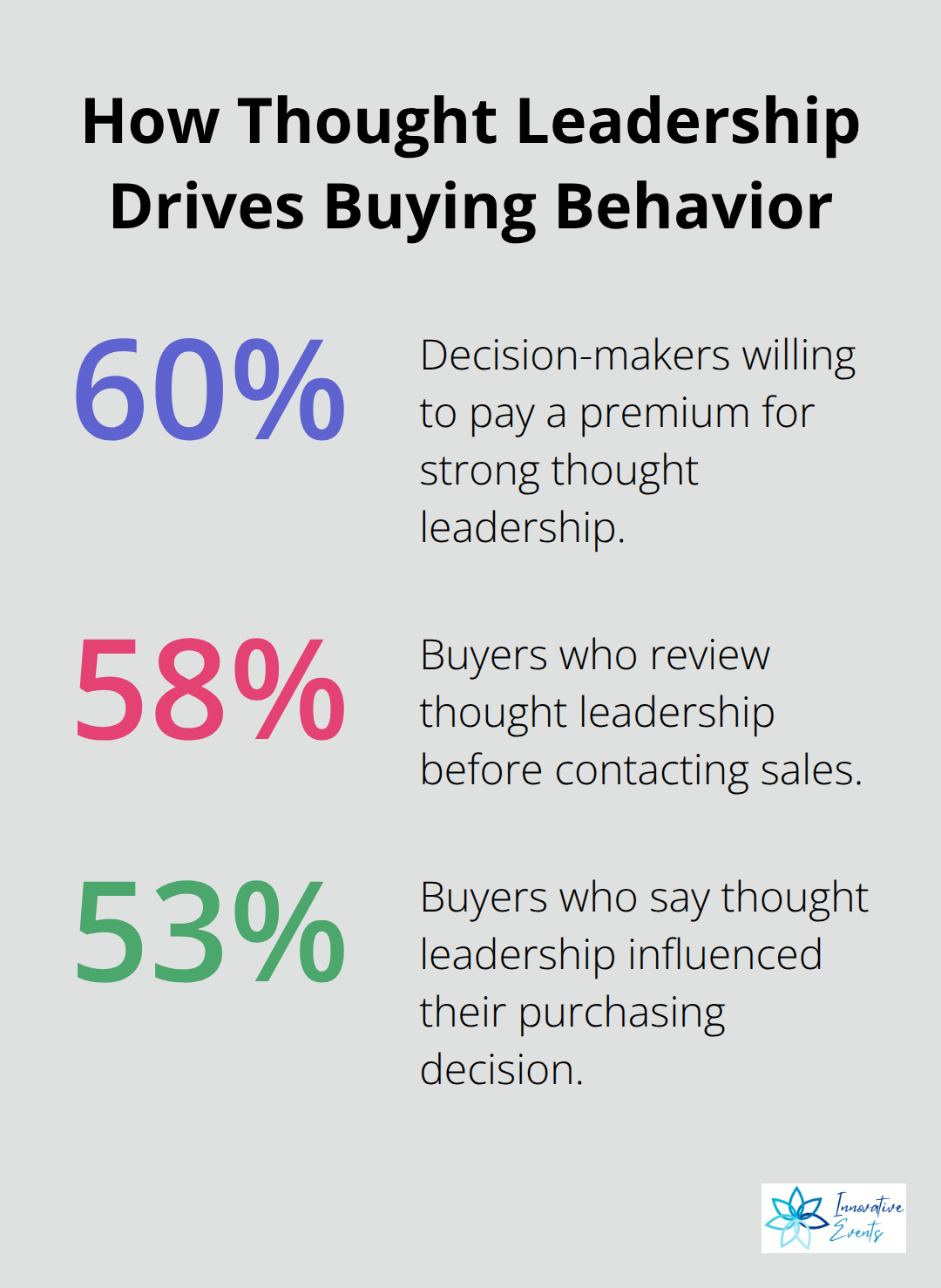
The data is clear: expertise that’s visible shapes markets.
Why visibility matters more than expertise alone
You can be brilliant at what you do and still fail at thought leadership if nobody knows about it. A study from DSMN8 analyzing 500,000 LinkedIn posts found that employees with 5,000–10,000 connections generate higher engagement than influencers with 10,000+ connections. This tells you something important: thought leadership isn’t about follower counts. It’s about reaching the right people consistently with insights they actually need. High-growth SaaS startups allocate up to $140,000 annually to thought leadership SEO efforts, and for good reason. When your content ranks for industry problems, your audience finds you at the moment they search for solutions. Meanwhile, 75% of executives have explored products or services after engaging with compelling thought leadership content. Thought leadership operates across the entire buying cycle. Pre-sale, it builds awareness and credibility. During vendor evaluation, about 42% of decision-makers say it directly affects which companies they consider. Post-sale, roughly 49% feel ongoing quality content strengthens loyalty. This is why brands that treat thought leadership as a long-term investment outpace those that see it as a marketing tactic.
Differentiation through authentic expertise positioning
In crowded markets, your product features won’t separate you from competitors. Your perspective will. Thought leadership differentiates because it forces you to take a position on how your industry should evolve, what problems matter most, and how organizations should think differently. This means you can’t be generic. You need to narrow your focus to a specific niche where your expertise overlaps with what your audience genuinely struggles with. Research from FT Longitude Insights shows that 76% of executives say thought leadership content helps them make better business decisions, but only when it addresses their specific challenges. Generic insights about industry trends don’t move the needle. Targeted insights about the exact problems your audience faces do. This is why depth matters more than breadth. Choose two or three core topics and own them completely rather than spreading yourself thin across industry commentary. When potential clients see you consistently publishing on their specific pain points, you become the obvious choice. The bonus: 73% warn that poor-quality thought leadership damages reputation, so quality absolutely matters. Authentic positioning also means your voice needs to be genuine. Vulnerability and bold perspectives outperform polished corporate speak. When leaders share real insights from their experience rather than sanitized talking points, audiences connect. That connection builds trust, and trust drives premium pricing and faster sales cycles.
How to make your expertise visible
Visibility requires a deliberate strategy. You can’t simply publish content and expect your audience to find it. You need to identify where your target audience actually looks for ideas-whether that’s industry publications, LinkedIn, podcasts, conferences, or speaking events. At Innovative Events, we specialize in sourcing expert speakers and managing speaking engagements that enhance brand visibility and establish thought leadership. Speaking engagements work because they position you directly in front of decision-makers who are actively seeking insights. The mechanism is straightforward: when you speak at industry conferences or webinars, you reach people at moments when they’re most receptive to new ideas. A balanced approach combines offline activities (networking, speaking) with online channels (social media, webinars, long-form articles). This multi-channel strategy ensures your expertise reaches your audience wherever they consume content. The key is consistency.
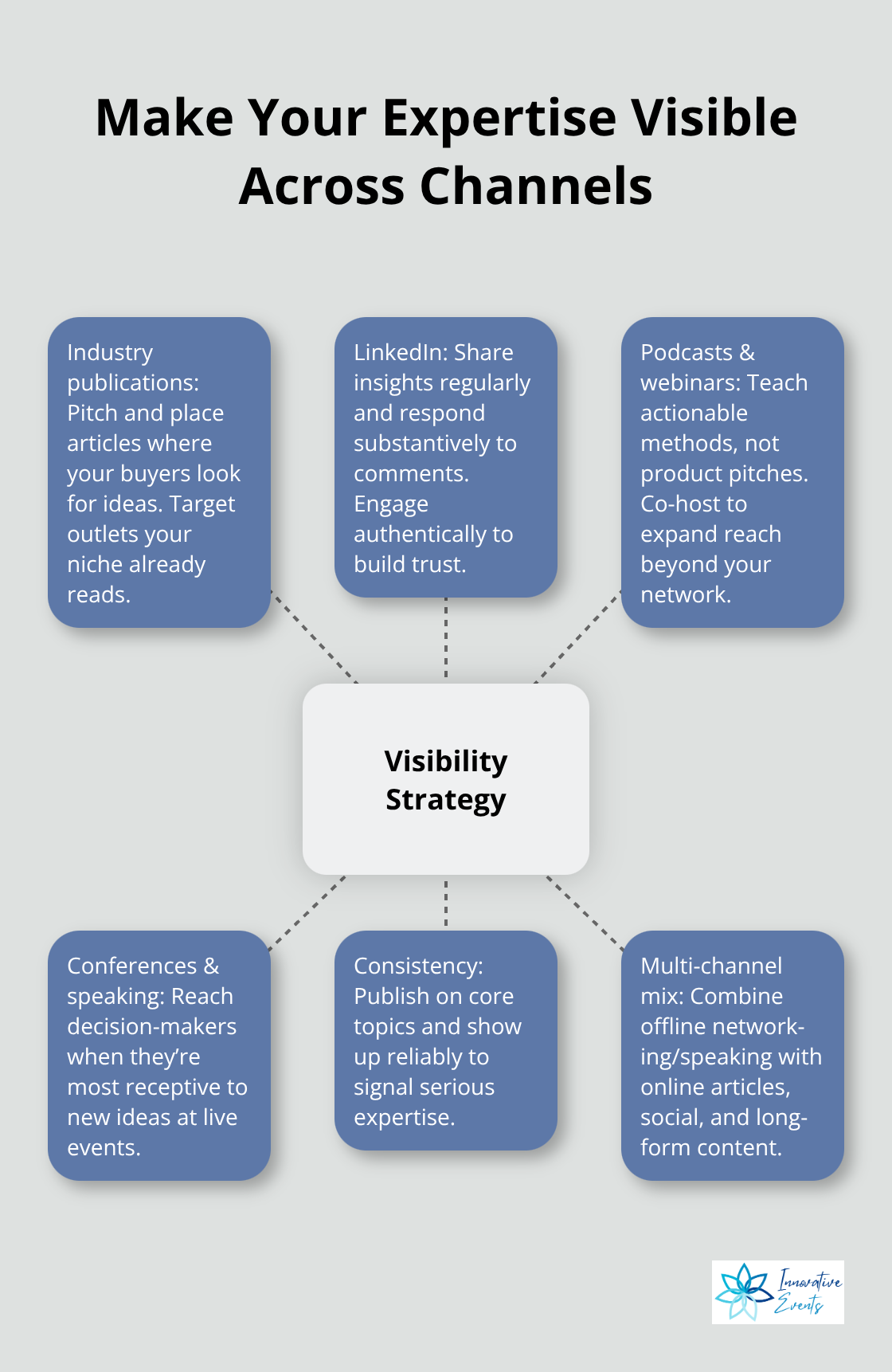
Publish regularly on your core topics, speak when opportunities arise, and engage authentically on platforms where your audience congregates. This consistency signals that you’re serious about your expertise, not just chasing trends.
Building Your Thought Leadership Platform
Authority requires more than occasional content. You need a system that produces expertise visibly and consistently. Speaking engagements at industry conferences position leaders directly in front of decision-makers, and the impact is measurable. When you speak at industry conferences, you reach audiences at their most receptive moment-actively seeking insights rather than passively scrolling. According to DSMN8’s 2026 Employee Advocacy Benchmark Report, 68% are directly involved in managing their organization’s employee advocacy program, with onboarding them as a top priority. This shift reflects what works: real people sharing real expertise outperform polished corporate messaging.
Speaking Engagements That Reach Your Audience
Start with one or two speaking engagements quarterly at venues where your target audience congregates. Research which conferences your decision-makers actually attend, not which ones have the biggest attendance numbers. A 200-person industry-specific conference where your entire audience fits your buyer profile beats a 2,000-person generalist event. Your content strategy should feed these speaking opportunities. High-growth SaaS startups allocate up to $140,000 annually to thought leadership SEO, which means your written content needs to rank for the problems your audience searches for. Write long-form articles addressing specific challenges your niche faces, optimize them for search, and repurpose each piece across multiple channels. One substantive 2,000-word article becomes a LinkedIn article, three social posts, a podcast episode, and speaking talking points. This multiplier effect maximizes your effort. According to LinkedIn-Edelman research, 54% of decision-makers spend at least an hour weekly consuming thought leadership content, so distribution matters as much as creation.
Social Media Strategy That Amplifies Expertise
Your social media presence should amplify expertise, not broadcast promotions. LinkedIn engagement actually favors employees with 5,000–10,000 connections over accounts with 10,000+ followers, meaning mid-level networks drive higher engagement than massive followings. Post insights about industry shifts you observe, pose questions that challenge conventional thinking, and respond substantively to comments. Avoid generic inspirational content or company announcements. Instead, share specific lessons from client work, contrarian takes on industry trends, and data points that shift how people think about their problems. FT Longitude Insights found that 60% of decision-makers engage more with thought leadership addressing their specific business challenges.
Webinars and Podcasts for Deeper Conversations
Webinars and podcasts open deeper conversations than social posts. Host quarterly webinars where you teach something immediately applicable-not a product pitch, but actual methodology your audience can use. Invite complementary experts or clients to co-host, which expands reach beyond your existing network. Podcasts work similarly: appearing as a guest on industry podcasts reaches audiences already primed for your message. The consistency matters most. You should publish every two weeks, speak quarterly, and engage on social three to four times weekly. This cadence signals serious expertise and keeps your name visible during the months-long buying cycles 90% of B2B buyers experienced in 2024. Poor-quality thought leadership damages reputation according to 73% of executives, so every piece must be substantive, accurate, and genuinely useful.
Measuring What Works in Your Platform
Track which topics generate the most engagement, which speaking venues produce qualified leads, and which content formats your audience prefers. This data reveals where your expertise resonates most strongly and where you should invest more effort. The platforms that work best vary by industry and audience, so your measurement approach should reflect your specific niche rather than copying what competitors do. As you build momentum across these channels, your visibility compounds. Each speaking engagement feeds your content library. Each article generates speaking invitations. Each podcast appearance expands your network and creates new partnership opportunities. This interconnected system transforms isolated efforts into a cohesive thought leadership engine that positions you as the authority your market needs.
Measuring and Amplifying Your Thought Leadership Impact
Track metrics that reveal real influence
Thought leadership without measurement is just hoping your expertise reaches people. You need specific metrics that reveal what actually moves the needle on visibility, engagement, and business outcomes. Start by tracking which topics generate the most qualified engagement rather than vanity metrics like total impressions. According to the Edelman-LinkedIn Thought Leadership Impact Report, 90% of B2B buyers experienced longer purchase cycles, which means your metrics need to reflect influence across months, not days.
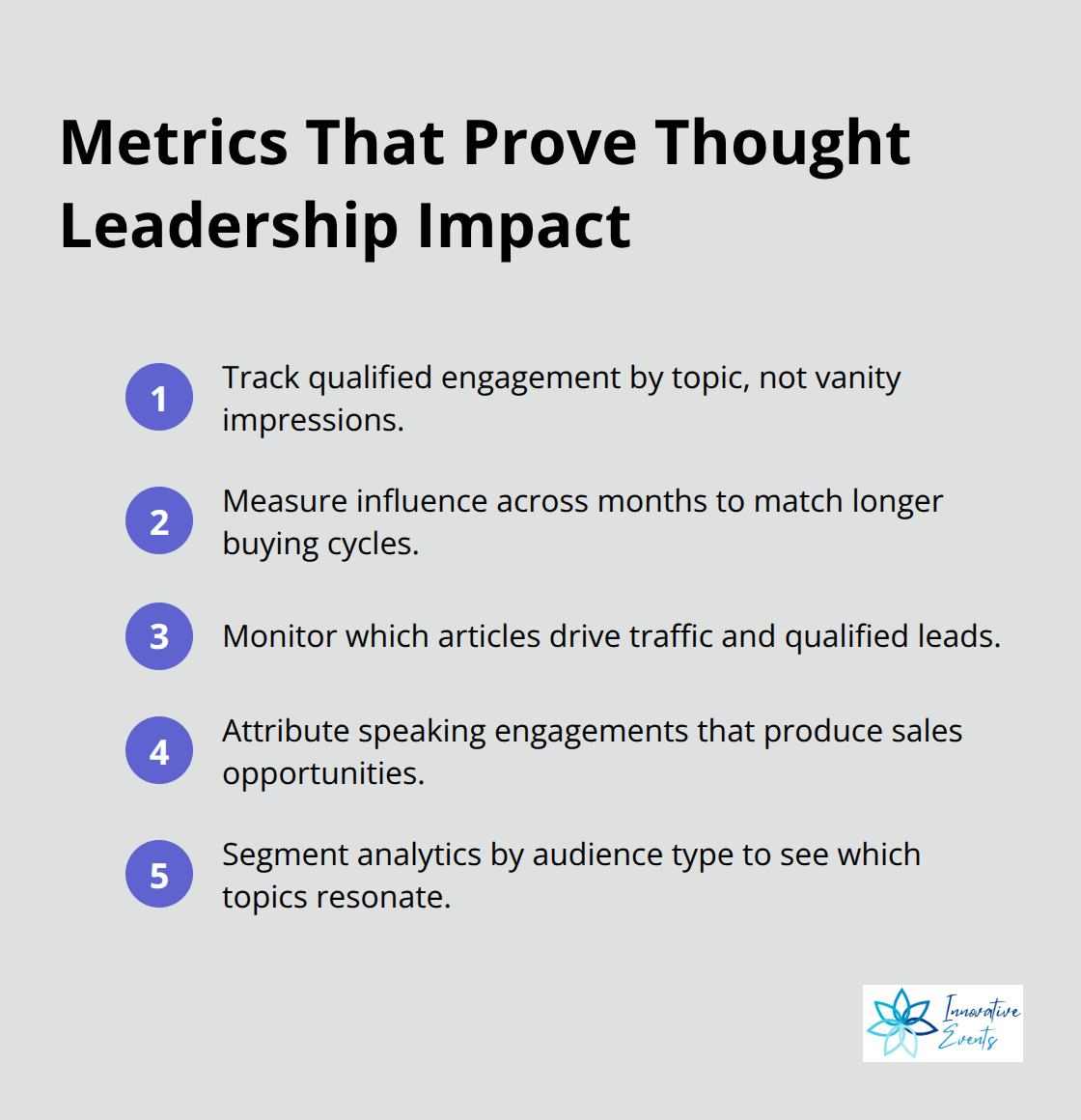
Monitor which articles drive traffic to your website, which speaking engagements produce qualified leads, and which social posts spark substantive conversations in your comments rather than just likes. FT Longitude Insights found that 60% of decision-makers engage more deeply with thought leadership addressing their specific business challenges, so segment your analytics by audience type and track which segments respond to which topics.
Use data to refine your strategy
Use UTM parameters on every link you share to trace which channels and content pieces actually drive qualified traffic. Set up monthly reviews where you examine which topics your audience engages with most, which speaking venues produce leads within your target companies, and which content formats your decision-makers prefer consuming. This data reveals where your expertise resonates strongest and where you should concentrate your effort.
Most teams waste time on content that generates engagement from the wrong audience. Your measurement system should filter for quality engagement from actual decision-makers in your target accounts, not broad audience metrics. Track conversion rates from thought leadership touchpoints to sales conversations, not just engagement numbers. This distinction separates real impact from hollow metrics.
Build partnerships that expand your reach
Strategic partnerships multiply your reach far faster than solo efforts. Identify complementary experts or companies serving the same audience without directly competing, then propose co-hosting webinars, co-authoring articles, or appearing on each other’s platforms. When you partner with someone whose audience trusts them, you inherit some of that credibility.
Edelman-LinkedIn research shows 54% of decision-makers spend at least an hour weekly consuming thought leadership, which means partnerships that position you in front of those audiences during their consumption time have an outsized impact. Target partnerships with industry publications, podcast hosts, and conference organizers who reach your exact buyer profile.
Speak at venues where your buyers congregate
Speaking engagements at industry conferences position you directly in front of concentrated groups of decision-makers. When you speak at a conference where your entire audience fits your buyer profile, that single engagement generates more qualified visibility than months of social media activity. Build a speaking strategy that targets three to five conferences annually where your target customers actually attend, not the largest events.
After each speaking engagement, repurpose your talk into articles, podcast episodes, and social content that extends the reach beyond the live audience. Track which speaking venues produce the most qualified leads and inbound interest, then double down on similar events. Innovative Events specializes in sourcing expert speakers and managing speaking opportunities to maximize visibility and establish authority in your industry.
Concentrate your efforts on channels your audience trusts
Establishing authority in your niche requires consistent visibility in the specific channels your audience trusts. If your buyers read certain industry publications, pitch articles to those outlets. If they listen to specific podcasts, pursue guest appearances. If they attend particular conferences, speak at those events (Innovative Events can help source and manage these opportunities). This concentrated approach builds authority faster than scattered efforts across every possible channel. The goal is to become the obvious expert your audience thinks of when they face problems in your niche.
Final Thoughts
Thought leadership marketing works because it positions you as the person decision-makers turn to when they face real problems. The brands winning in their markets aren’t the ones with the loudest marketing budgets-they’re the ones who consistently share expertise that shifts how their audience thinks about their challenges. Sixty percent of decision-makers pay premium prices for companies that demonstrate strong thought leadership, and 53% say it directly influenced their purchasing decision.
Your next step is choosing your niche and your core topics. Pick two or three areas where your expertise runs deep, then commit to publishing regularly on those topics. Speak at conferences where your buyers congregate, appear on podcasts your audience listens to, and engage authentically on the platforms they use (this focused approach builds authority faster than scattered efforts across every possible channel).
We at Innovative Events help brands establish this visibility through speaking engagements and event management that position leaders directly in front of decision-makers. Start today with your first article or speaking pitch, because consistency compounds over time into the authority that transforms how your market sees you.