

Content that tells a story converts 30 times better than traditional marketing messages, according to Stanford’s Graduate School of Business research.
At Innovative Events, we’ve seen how storytelling in content marketing transforms audience engagement into measurable results. The right narrative structure can increase conversion rates by up to 300%.
Most brands struggle to connect emotionally with their audience through data-heavy content alone.
Why Stories Override Logic in Purchase Decisions
Your brain processes stories 60,000 times faster than raw data, according to neuroscience research from the University of Pennsylvania. When customers hear a narrative, their brains release oxytocin and dopamine-chemicals that drive trust and action. Stanford researchers found that stories activate the sensory cortex, motor cortex, and frontal cortex simultaneously, which creates what scientists call neural coupling between storyteller and listener.
The Memory Advantage of Narrative Structure
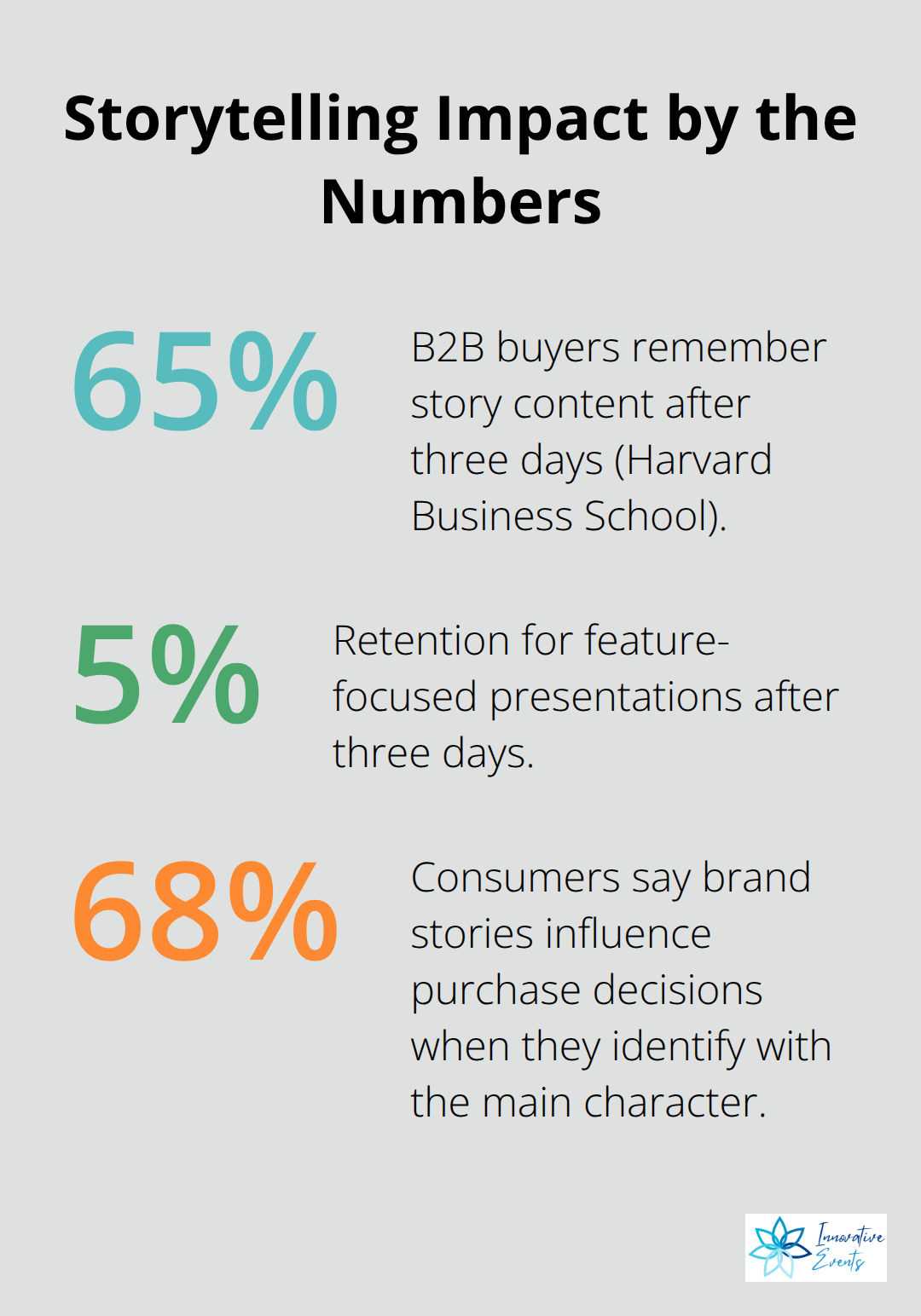
Jerome Bruner’s cognitive psychology research shows facts wrapped in stories become 22 times more memorable than standalone statistics. The brain’s hippocampus tags emotional content as important and transfers story-based information to long-term memory within hours. Harvard Business School studies reveal that B2B buyers remember 65% of story content after three days, compared to 5% retention for feature-focused presentations.
Jennifer Aaker’s research at Stanford demonstrates that storytelling generates twice as many donations compared to statistical appeals, which proves narrative structure directly impacts conversion behavior.
Authentic Narratives Build Measurable Trust
Motista’s consumer research found that emotionally connected customers generate 306% higher lifetime value than transactional relationships. Brands that share authentic origin stories see 73% higher purchase intent, according to Stackla’s 2021 consumer trust report. Patagonia’s transparent environmental storytelling contributed to $1 billion in annual revenue while the company maintained premium prices. User-generated content testimonials convert 79% better than brand-created stories because authentic customer voices trigger social proof mechanisms in the brain’s reward system.
The Conversion Power of Character Connection
Customers connect with relatable protagonists who face similar challenges and overcome obstacles through your product or service. Research shows that 68% of consumers report that brand stories influence their purchase decisions when they identify with the main character. The hero’s journey structure works because it mirrors how people process their own experiences and aspirations.
What Makes Story Content Convert
Successful story content requires three non-negotiable elements that transform casual readers into committed customers. POWERUP Toys experienced significant growth when they shifted from product benefit lists to relatable customer narratives. The secret lies in protagonists who mirror your target audience’s exact struggles and aspirations.
Character Development That Drives Action
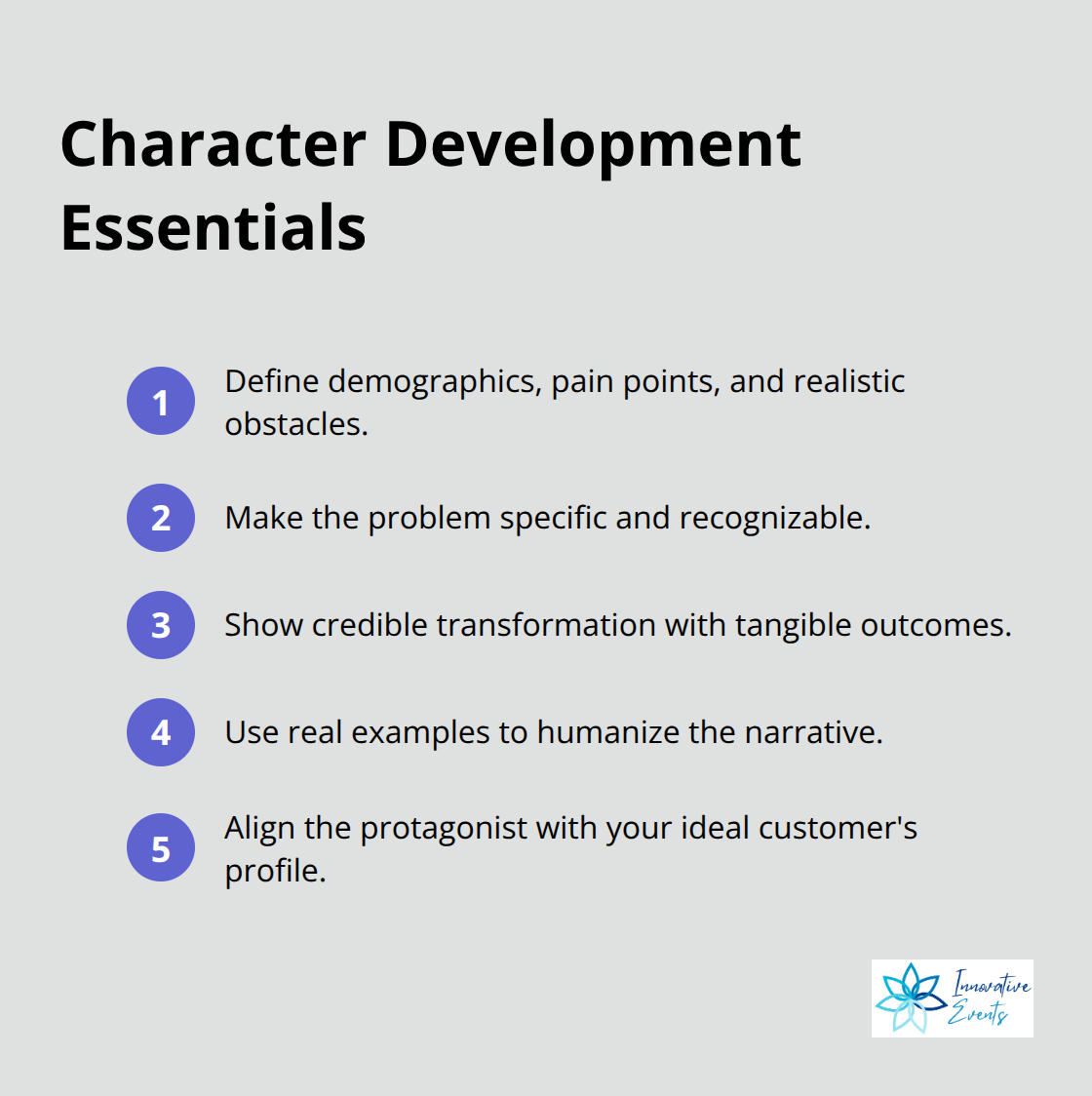
Your story characters must face specific problems that your audience recognizes from their daily experience. Netflix’s algorithm shows that viewers engage longer with content that features relatable protagonists. Create characters with defined demographics, clear pain points, and realistic obstacles. Airbnb’s Host Stories series highlights individual property owners who transformed their financial situations through the platform, generating higher engagement than generic property listings. Your protagonist should represent your ideal customer’s age, profession, and challenges while demonstrating how your solution creates measurable change.
Conflict Resolution That Builds Credibility
Structure your narratives around a clear problem-solution framework that showcases tangible results. Salesforce’s Ecopreneurs video campaign ranked number one for monthly platform views because it presented specific environmental challenges and demonstrated measurable climate action outcomes. Your conflict must be significant enough to create emotional investment while remaining solvable through your solution (without overwhelming the audience). Include specific metrics that prove success: revenue increases, time savings, or efficiency improvements. Manchester City’s athlete stories focus on overcoming precise adversities with quantifiable achievements, which strengthen emotional connections and build trust through documented results.
Social Proof Integration Within Narratives
Weave customer testimonials and user-generated content directly into your story structure rather than treating them as separate elements. Stackla’s research shows that 59% of consumers find user-generated content the most trustworthy type of marketing material. Feature real customer names, specific results, and authentic challenges they faced before discovering your solution. This approach transforms abstract benefits into concrete proof points that resonate with prospects who share similar situations (making your narrative both relatable and credible).
The format you choose to tell these stories determines how effectively they convert browsers into buyers across different platforms and touchpoints.
Which Formats Convert Viewers Into Customers
Short-form video content dominates social media conversion rates, with TikTok and Instagram Reels generating higher engagement than static posts. Successful video stories follow a three-act structure: hook within the first three seconds, demonstrate the problem and solution in 15-30 seconds, then close with a clear call-to-action. Pizza Hut’s AI-generated video collaboration increased organic impressions by 78%, which proves that authentic stories beat polished production quality.
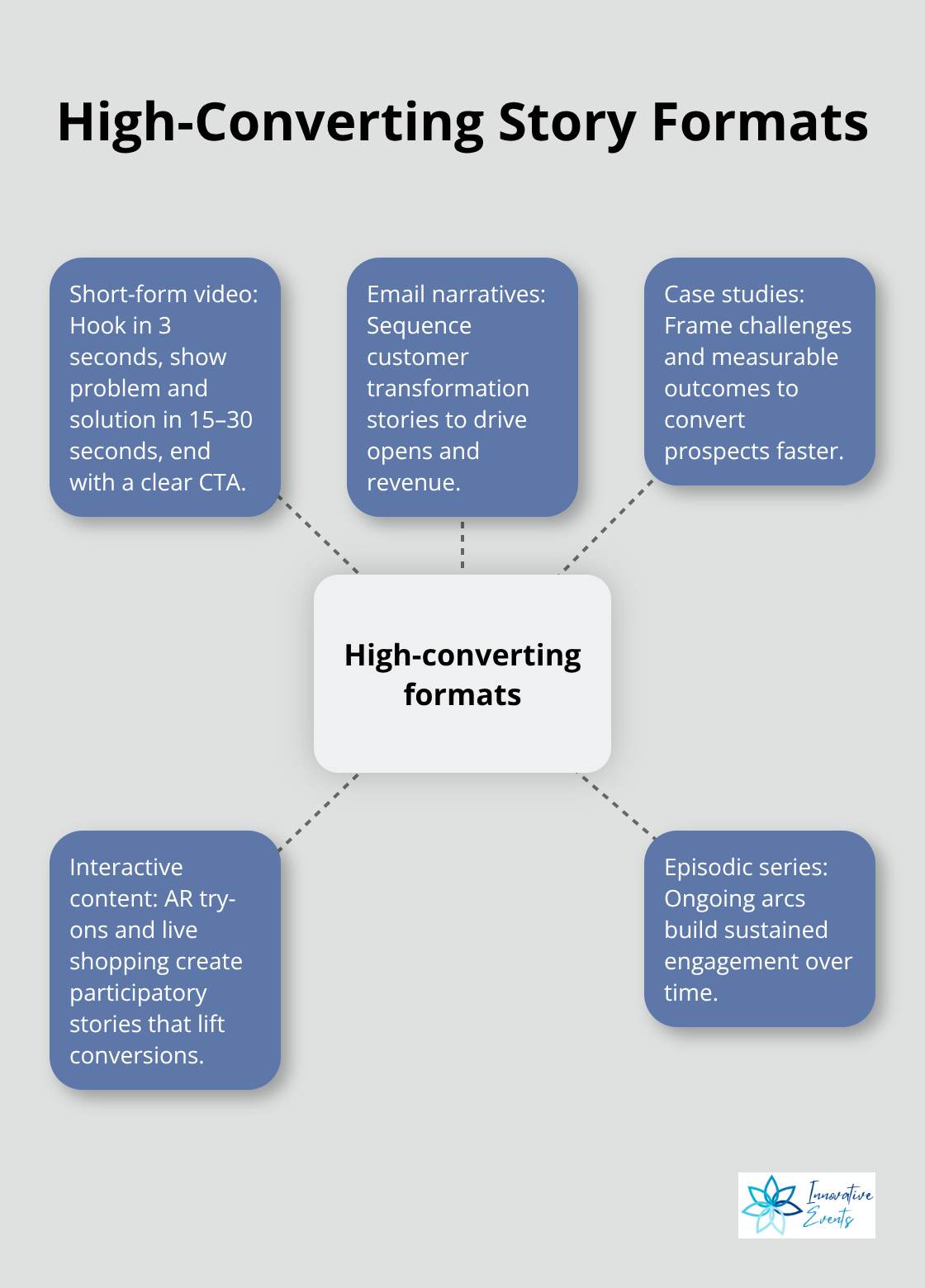
Formula One’s Drive To Survive series shows how episodic content builds audience investment over time and creates sustained engagement that traditional ads cannot match.
Email Narratives That Generate Revenue
Email stories convert better than promotional content alone. Structure your email campaigns around customer transformation journeys rather than product features. Travel Oregon’s cohesive narrative strategy generated over $50 million in economic impact through email sequences that told complete destination stories across multiple touchpoints. Use subject lines that hint at story continuation to increase open rates by 26%. ServiceNow’s Workflow Quarterly publication established thought leadership through narrative-driven content (significantly enhancing brand awareness and generating qualified leads through email distribution).
Case Studies That Build Buyer Confidence
Case study stories convert prospects 73% faster than feature-focused content because they provide social proof within narrative frameworks. Volvo Penta’s narrative-driven campaign that featured young women surfers generated over 6.5 million impressions when it focused on personal transformation rather than technical specifications. Structure case studies around specific challenges, measurable outcomes, and emotional transformation. Include exact metrics: revenue increases, time savings, or efficiency improvements. The Humane Society effectively uses individual narratives over statistics in their publications to connect with donors (which demonstrates how personal stories create stronger emotional investment than aggregate data).
Interactive Content That Drives Engagement
Interactive stories through AR filters and gamified experiences create deeper audience connections than passive content consumption. Brands that implement AR try-ons see 94% higher conversion rates because customers actively participate in the narrative experience. Live shopping events on Instagram and TikTok allow real-time interaction where brands tell product stories while customers ask questions and make immediate purchases. This format combines entertainment with commerce, creating urgency that static content cannot replicate.
Final Thoughts
Storytelling in content marketing transforms how brands connect with audiences and drives conversions. Research proves that narrative-driven content generates 30 times better results than traditional approaches. Your strategy should focus on relatable characters who face specific challenges that mirror your target audience’s daily struggles.
Track engagement metrics like time spent on content, social shares, and conversion rates to measure effectiveness. Monitor brand sentiment through social listening tools to gauge how your narratives build trust and emotional connections. Video content performs best across social platforms, while email narratives generate sustained engagement through sequential stories.
Start with your brand narrative by identifying core values and authentic customer transformation stories. Document real customer challenges and measurable outcomes to create credible case studies. We at Innovative Events help brands craft compelling messaging and storytelling strategies that build meaningful connections with their audiences (through strategic marketing and exceptional brand experiences).