

Most brands fail because they chase trends instead of understanding what their customers actually need. A solid product brand strategy isn’t about looking good-it’s about connecting the right message to the right people and watching your business grow as a result.
At Innovative Events, we’ve seen firsthand how companies that nail their brand positioning outperform competitors by miles. This guide walks you through the exact steps to build a brand strategy that delivers measurable results.
Who Are You Really Trying to Reach
Understanding your audience is where most brands stumble. They make assumptions instead of gathering actual data. Harvard Business Review found that less than half of structured data is actively used for decision-making, which means companies sit on customer insights they never tap into. Brands waste thousands on campaigns aimed at the wrong people because they skip this foundational work. The difference between a brand strategy that flops and one that drives revenue comes down to one thing: knowing exactly who you’re selling to and what keeps them up at night.
Conduct conversations, not surveys
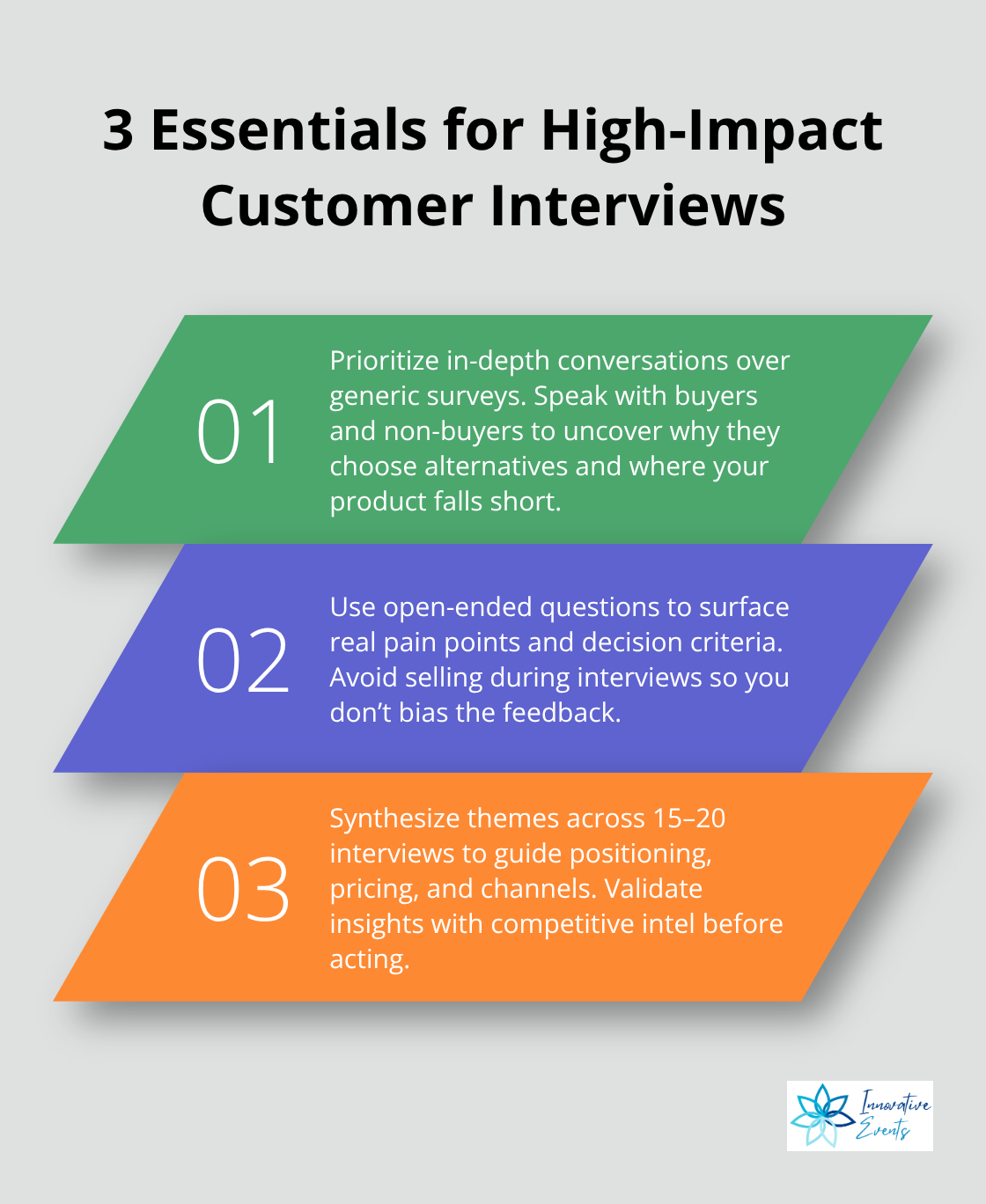
Market research isn’t about sending out generic surveys. You need to have direct conversations with the people who buy from you and the people who don’t. Talk to at least 15 to 20 customers in depth about their biggest challenges, what solutions they’ve tried, and why they picked your competitor instead. Ask open-ended questions and listen without selling. This isn’t theoretical work-it’s the foundation for every decision you make about positioning, pricing, and where to spend your marketing budget.
Competitive analysis matters too. Study what your top three competitors are saying, who they’re targeting, and where they’re winning. You’ll spot gaps in the market that your brand can own.
Connect pain points to real solutions
Once you’ve gathered customer feedback, stop trying to solve every problem at once. Identify the two or three pain points that show up repeatedly and that your product actually solves better than anyone else. If you sell project management software and customers keep mentioning they’re drowning in email threads, that’s your angle-not that your tool has seventeen integrations. Build your messaging around the specific problems your ideal customers face.
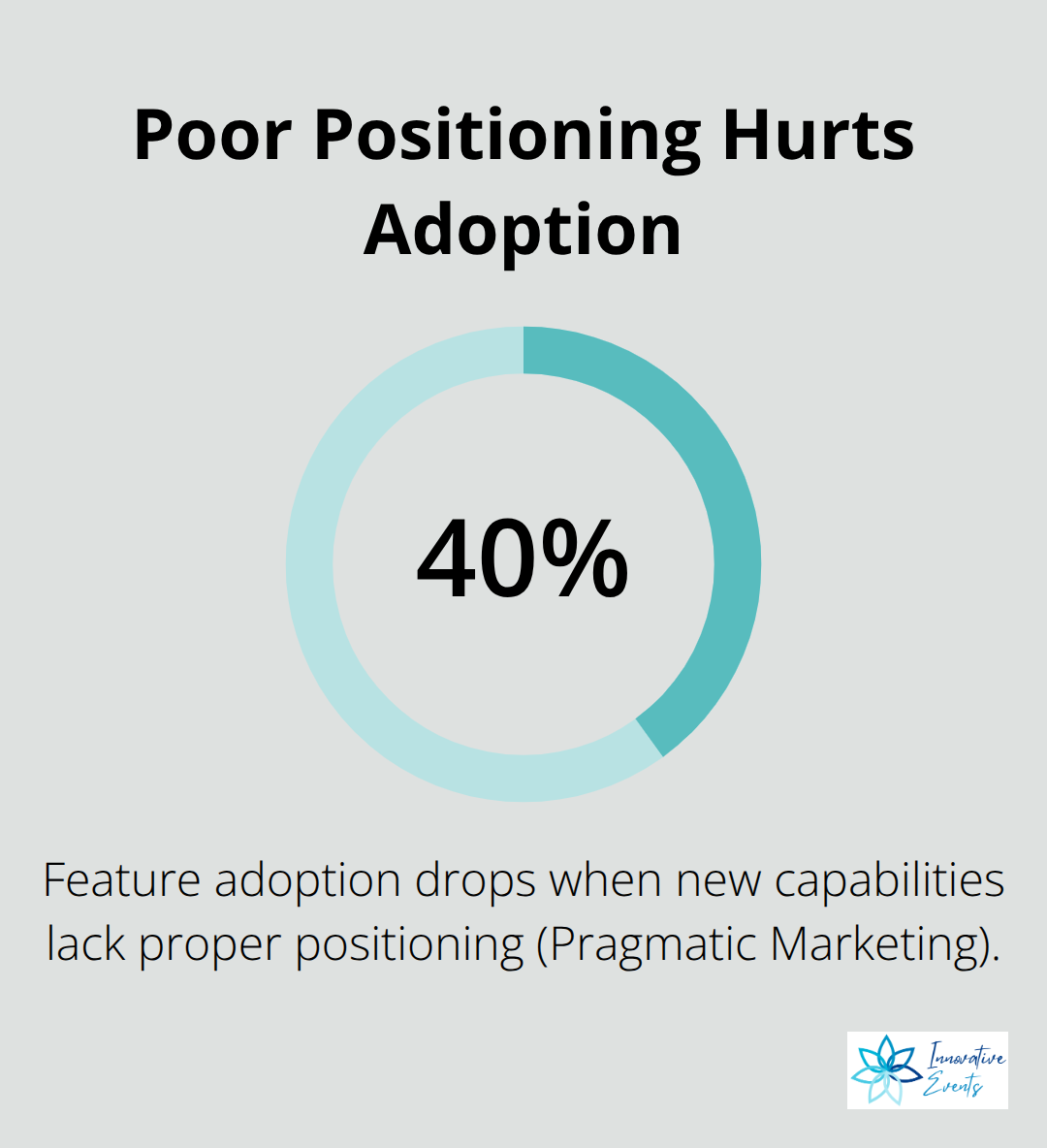
When new capabilities lack proper positioning, feature adoption drops by about 40 percent, according to Pragmatic Marketing. That’s what happens when you list features instead of connecting them to customer outcomes.
Build personas from real behavior patterns
Your buyer personas should reflect actual behavior patterns, not demographic stereotypes. Include their budget authority, their timeline for making decisions, and the specific metrics they care about hitting. This level of detail helps your entire team, from product to marketing-stay aligned on who matters most. When you know your audience this well, you’re ready to build a brand identity that speaks directly to them.
What Makes Your Brand Stand Out
Your brand value proposition and customer outcomes aren’t a tagline you slap on a website. It’s the specific reason a customer picks you over three other options they’re considering. Too many brands describe what they do instead of why it matters. You sell software that tracks expenses, but your customer actually cares that they’ll spend two fewer hours on accounting each week. The difference between those two statements determines whether someone clicks buy or moves to your competitor. Start with the exact outcome your product delivers to your target audience. Then test it with actual customers. Ask them if that statement resonates or if it sounds generic. Your value proposition should be so clear that a customer can explain it back to you in their own words without confusion.
Visual consistency builds recognition faster than you think
Your logo, color palette, and typography aren’t decorative choices. They function as working tools that train your audience to recognize you instantly. Dyson extended its brand successfully into new product categories because every visual element remained unmistakably Dyson. If your website uses three different fonts, your social media uses two more, and your email templates look completely different, your audience fails to build a mental connection to your brand. Pick one primary color, one secondary color, and stick with them across every channel. Choose one primary font for headlines and one for body text. When customers see these elements, they should immediately think of you. Visual consistency across brand channels makes marketing much easier, and when people see the same fonts, colors, and logos everywhere, they start associating them with your brand.
Your tone of voice shapes customer perception
The way you write and speak shapes how customers perceive your entire company. Volvo built trust through safety-centric storytelling that reinforced core brand values. Your tone should reflect who you’re talking to and what they value. If your audience is Fortune 500 CFOs, conversational and playful messaging will undermine your credibility. If you’re targeting freelancers and solopreneurs, corporate-speak will push them away. Document your brand voice with three to five adjectives that describe how you communicate. Then create example sentences showing how you’d describe the same feature in your voice. This becomes your reference point when your team writes anything under your brand name. Your messaging should feel consistent whether it’s a homepage headline, an email subject line, or a customer support response. Inconsistent tone makes brands feel disorganized and unreliable, even when the product is solid.
Positioning separates you from the noise
Your positioning statement answers one question: why should your target audience choose you instead of your competitors? This isn’t about listing features or claiming you’re the “best” (everyone says that). Instead, identify the specific gap in the market that your brand fills better than anyone else. That’s what happens when you list features instead of connecting them to customer outcomes. Your positioning should be narrow enough to own a specific space in your customer’s mind. A project management tool positioned as “the easiest way for remote teams to stay aligned” is stronger than “a tool with great features.” The first one tells customers exactly who it’s for and what problem it solves. Test your positioning statement with ten customers outside your company. If they struggle to explain it back to you, it needs refinement.
Now that you’ve defined what makes your brand distinctive, the next step involves putting that identity to work across every customer touchpoint.
Making Your Brand Strategy Work in the Real World
Your brand positioning means nothing if it never reaches the people who need to hear it. The gap between strategy and execution is where most brands lose momentum. You’ve defined who you’re targeting, clarified your value proposition, and locked down your visual identity. Now comes the part that actually moves revenue: getting that message in front of customers consistently across every channel they use. This requires more than posting on social media and hoping for engagement. It demands a deliberate approach where every marketing touchpoint reinforces the same core message, whether someone encounters your brand on LinkedIn, in an email inbox, or at an industry conference.
Align Every Touchpoint to Your Positioning
Companies that fail typically treat brand positioning as something marketing owns, while product, sales, and customer service operate independently. That fragmentation kills results. When a prospect sees your positioning statement on your website but then receives a sales email that contradicts it, or experiences customer support that feels like a completely different company, trust erodes fast.
Spotify demonstrates what happens when this alignment works. Their Wrapped feature generates over 60 million social media shares annually and drives roughly 20 percent of new user acquisitions in December because every element, from product design to marketing messaging to the customer experience, reinforces the same value: personalized music discovery. That’s not accidental. It’s the result of product and marketing teams sharing the same success metrics and making decisions together from day one. Consider appointing brand champions within different departments to ensure your positioning stays consistent as your organization scales.
Amplify Your Core Message Across Campaigns
Your marketing campaigns amplify positioning through specific, focused messaging rather than generic statements. If you positioned your software as the easiest solution for remote teams, every campaign headline, email subject line, and social post should reinforce that ease and speed. Made.com saw a 27 percent sales uplift in the UK through discovery commerce strategies that aligned product recommendations with customer intent. The lesson translates directly: when your marketing message matches the actual experience customers get from your product, conversion rates improve substantially.
Start by auditing your current campaigns. Do your paid search ads, email sequences, content, and social posts all tell the same story about why someone should pick you? Most brands fail this test. One team runs brand awareness campaigns highlighting company values, while another team runs conversion campaigns focused purely on price. That mixed messaging confuses customers about what you actually stand for. Pick three to five core messages that directly connect to your positioning statement, then enforce those consistently across all channels.
Tailor Your Message to Each Channel
Digital channels give you the advantage of speed and measurability. Shell’s IT purchase scoring system delivered a return on investment of 4.44 in the US by using predictive signals to target the right decision-makers with the right message at the right time. You should implement similar precision by using platform-specific data to refine who sees what.
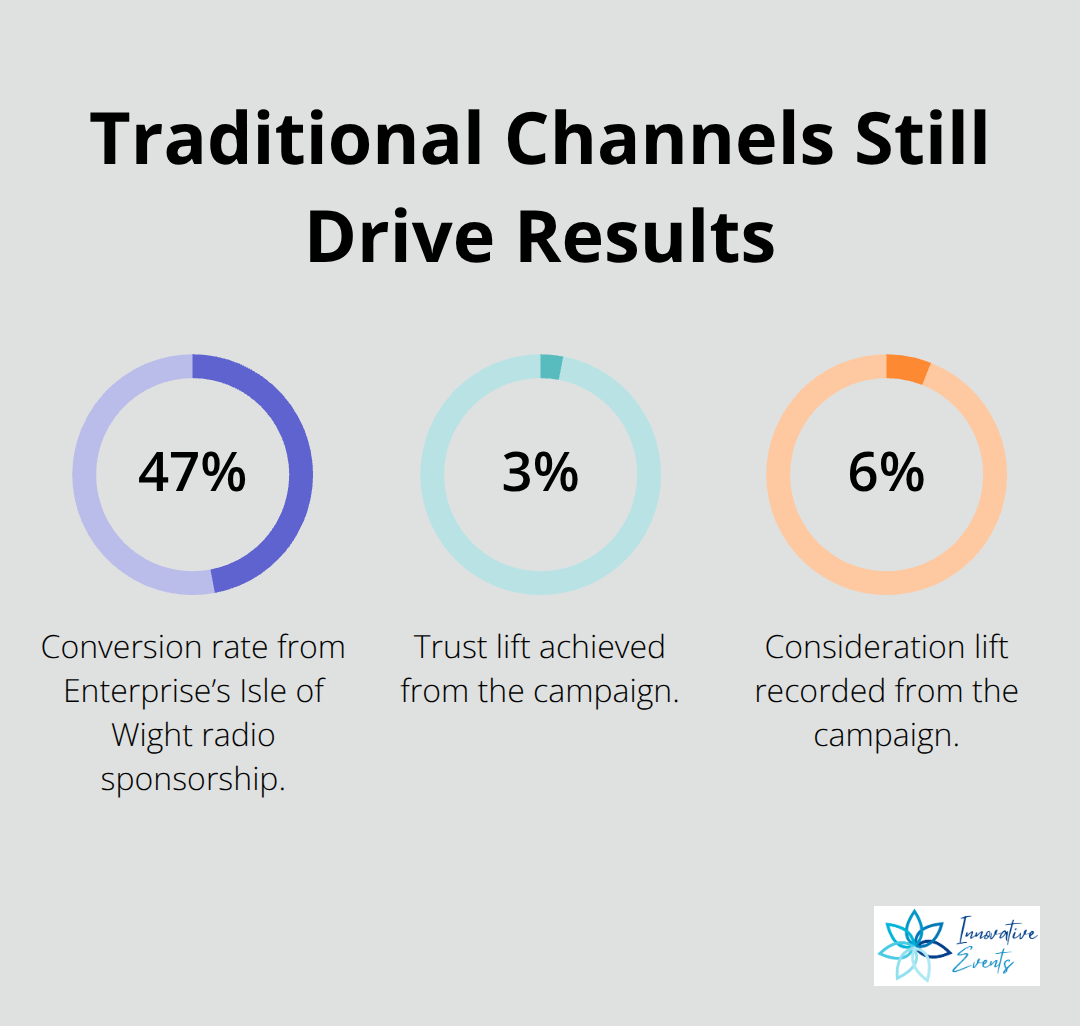
LinkedIn advertising performs differently from Instagram advertising, which performs differently from email marketing. Rather than running identical creative across all channels, adapt your core message to each platform’s format and audience behavior. A LinkedIn post works best as professional insight, while Instagram thrives on visual storytelling. Strategic content marketing across these channels ensures your positioning reaches customers where they’re most receptive. Traditional channels shouldn’t be abandoned either. Enterprise’s sponsorship of Absolute Radio’s Isle of Wight coverage reached 6.8 million listeners and delivered a 47 percent conversion rate with a 3 percent trust lift and 6 percent consideration lift.
The critical mistake is spreading the budget too thin across channels that don’t reach your actual customers. Instead, identify where your target audience spends time and attention, then dominate that space with consistent messaging before expanding elsewhere.
Measure What Actually Drives Results
Measurement separates strategies that work from those that waste money. Track adoption rates for new features, customer acquisition costs by channel, retention metrics, and Net Promoter Score alongside revenue impact. Only 45 percent of executives feel their data analytics and AI deliver business value, according to Harvard Business Review, which suggests most companies measure poorly. Set up dashboards that show which campaigns actually drove customers to your product and which ones generated noise.
Test different messaging variations systematically. A/B test email subject lines, landing page headlines, and social media copy to discover which positioning angles resonate most with your audience. Adjust based on what the data shows, not on internal preferences. When you notice that one message consistently outperforms others, double down on it across channels. This is how brands move from hoping their strategy works to knowing it does.
Final Thoughts
A product brand strategy only works when every element connects to the same core purpose. You’ve now seen how understanding your audience, building a distinctive identity, and executing consistently across channels transforms a brand from invisible to unmissable. The companies that dominate their markets aren’t the ones with the biggest budgets-they’re the ones that refuse to compromise on alignment between what they promise and what they deliver.
Brands that stick with a clear strategy see compounding returns through stronger customer retention, higher lifetime value, and word-of-mouth growth that paid advertising can’t replicate. Your positioning becomes the filter for every decision your team makes, from product development to customer support. That consistency builds trust faster than any campaign ever could, and it compounds over time as customers experience the same values across every touchpoint.
Implementation starts now. Pick one area where your brand strategy is weakest-whether that’s unclear positioning, inconsistent messaging, or fragmented channel execution-and fix it first. We at Innovative Events help brands move from scattered messaging to coordinated strategies that drive measurable results, and we’re ready to support your brand strategy execution whenever you need a partner to bring your vision to life.