

Podcast content marketing has become a powerful tool for businesses to connect with their audiences. With over 464 million podcast listeners worldwide in 2023, the medium offers unprecedented reach potential.
We at Innovative Events have seen firsthand how strategic podcast marketing drives real business results. The key lies in developing a systematic approach that combines compelling content with smart distribution tactics.
How Do You Build a Strategic Podcast Content Foundation
Success in podcast marketing starts when you identify your specific audience segment and content niche. Research from Edison shows that 80% of podcast listeners trust the advice of their favorite hosts when content directly addresses their interests. You should analyze demographic data from platforms like Spotify for Podcasters and Apple Podcasts Connect to understand listener behavior patterns. Your niche should intersect three factors: your expertise, audience pain points, and market gaps. Target millennials interested in career advancement rather than general professional development to create better engagement rates.
Define Your Audience Research Process
Start with existing customer data to identify podcast listener overlap. Survey current clients about their audio consumption habits and preferred topics. Use tools like Google Trends to validate topic demand and competition levels. The most successful podcasts serve audiences with specific, measurable characteristics rather than broad demographics.
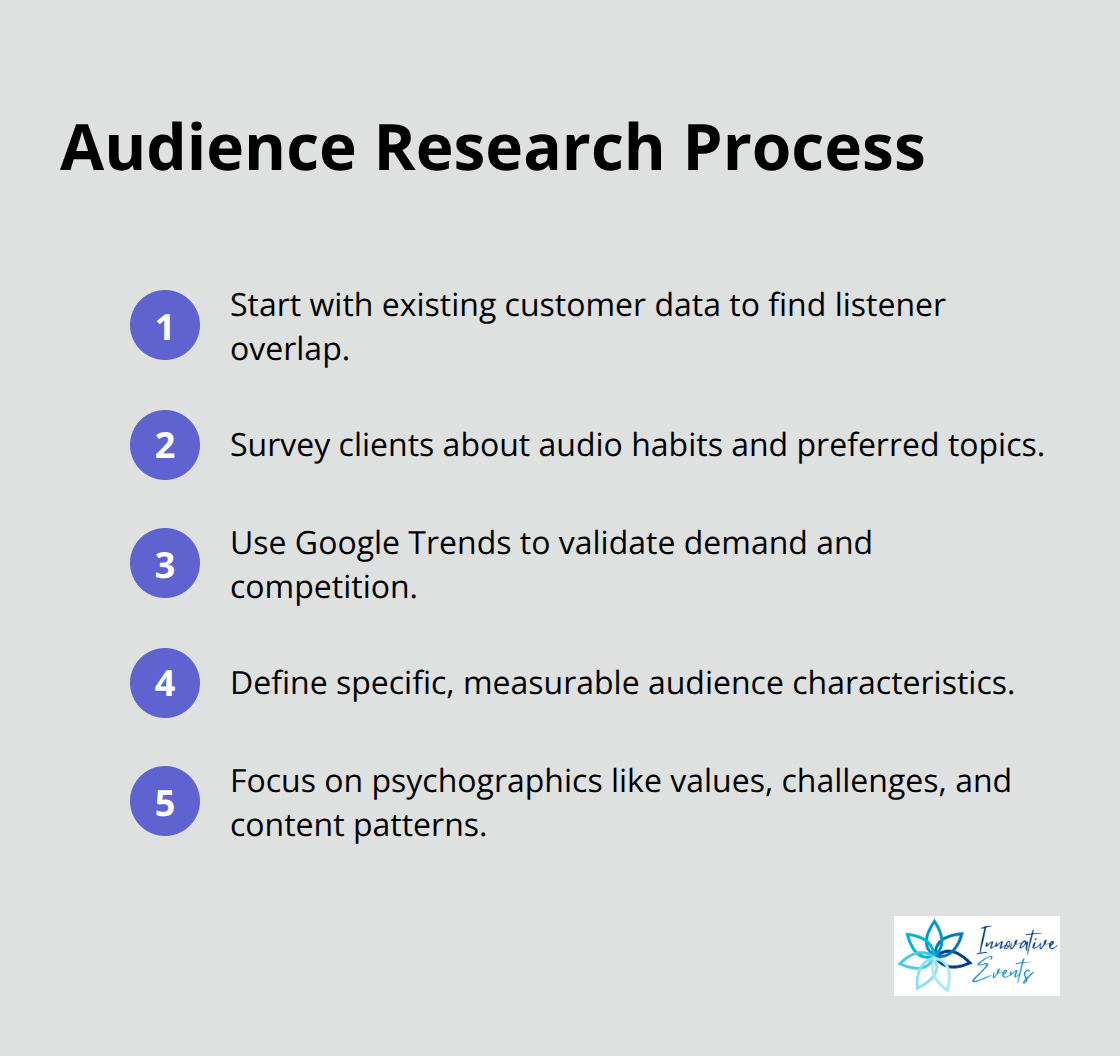
Focus on psychographic data that includes values, challenges, and content consumption patterns.
Establish Content Themes and Production Standards
Create 3-5 core content pillars that align with your business objectives and audience needs. Each episode should connect to at least one pillar while you maintain variety in format and guest selection. Podcasts with consistent themes show better subscriber retention than those with scattered topics. Develop templates for different episode types (interviews, solo commentary, and case study breakdowns). Set quality standards for audio production, episode length, and content depth that you can maintain long-term.
Structure Your Publishing Calendar
Plan episodes 8-12 weeks in advance to maintain consistency and capitalize on seasonal trends. Weekly schedules perform better than sporadic releases, with regular podcasts showing higher download rates. Map content to business cycles, industry events, and audience availability patterns. Include buffer episodes for unexpected schedule disruptions and plan promotional content around major releases or guest appearances.
Once you establish your content foundation, you need to focus on maximizing your podcast’s reach through organic content marketing strategies and building brand awareness across multiple platforms and channels.
How Do You Amplify Your Podcast Reach
Your podcast needs aggressive distribution tactics across multiple platforms to compete for audience attention. YouTube dominates podcast discovery, which makes video uploads mandatory even for audio-only content. Upload every episode to YouTube with keyword-optimized titles and detailed descriptions that include timestamps and key topics. The platform’s search algorithm favors longer descriptions that help viewers understand content value before they click.
Master SEO for Podcast Platforms
Podcast SEO requires different tactics than website optimization. Apple Podcasts and Spotify algorithms prioritize episode titles, show descriptions, and category placement over traditional keyword density. Include your primary keyword in the first 50 characters of episode titles and repeat it naturally in descriptions. App browsing remains a significant discovery method, making category selection critical for organic growth. Choose specific subcategories rather than broad ones to face less competition and reach targeted audiences more effectively.
Build Cross-Platform Content Systems
Transform each podcast episode into 8-12 pieces of content for maximum exposure. Create short video clips for TikTok and Instagram Reels that highlight key moments or quotes from episodes. Twitter threads work exceptionally well for main point summaries and drive traffic back to full episodes. LinkedIn articles that repurpose podcast insights perform better than generic business posts and establish thought leadership.
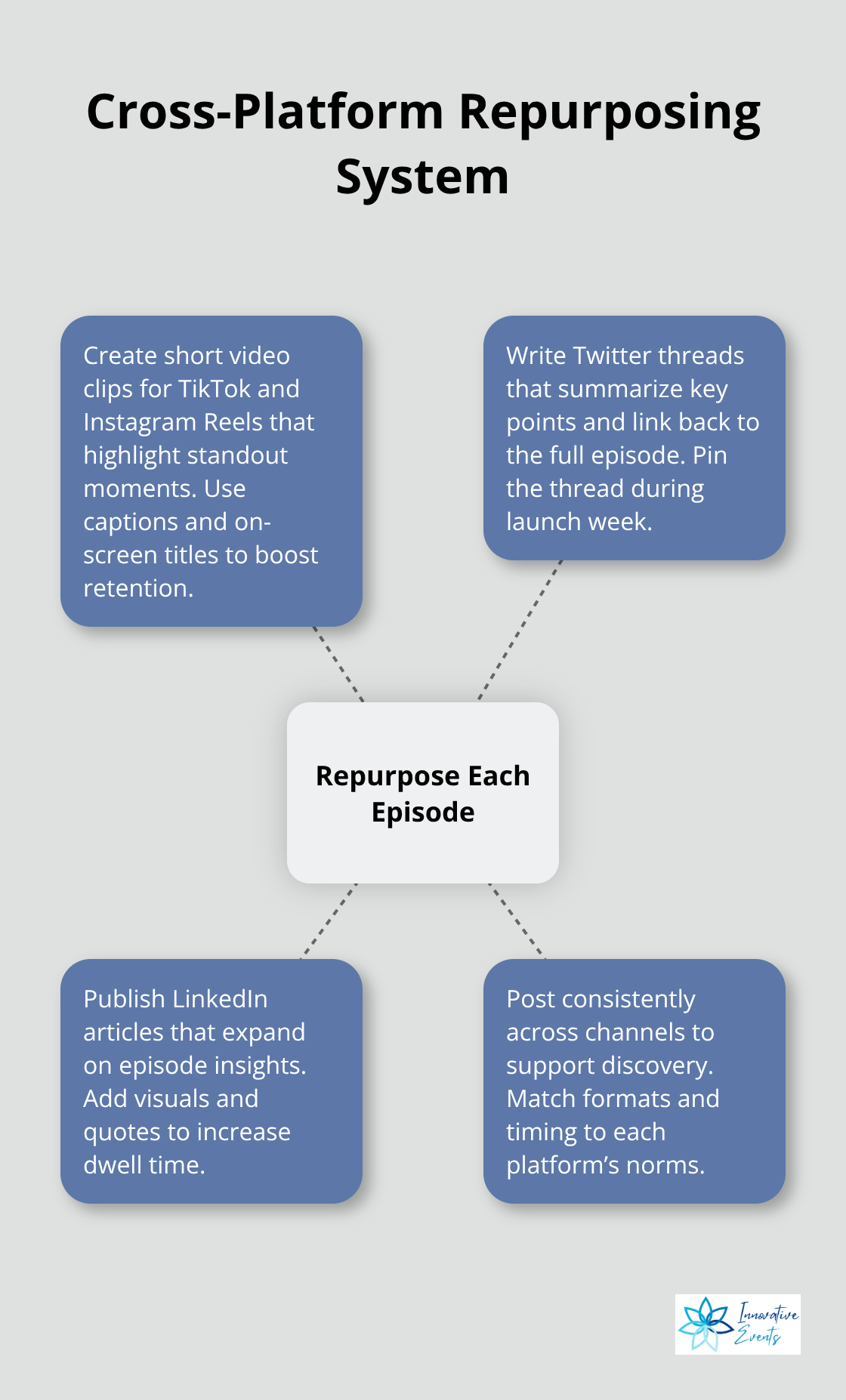
Social media accounts for significant podcast discovery according to industry data, which makes consistent posts across platforms essential for growth rather than optional.
Optimize Distribution Timing and Frequency
Schedule episode releases during peak listener hours (Tuesday through Thursday mornings show highest engagement rates). Publish content across social platforms within 24 hours of episode release to maximize momentum. Post teaser content 48 hours before release to build anticipation and drive initial downloads. Cross-promote episodes on different platforms with platform-specific formats rather than identical posts. While organic reach matters, paid advertising can significantly boost your brand visibility through targeted campaigns. Collaborations with influencers and industry experts amplify your content’s reach beyond your existing audience.
The foundation you build through strategic distribution sets the stage for accurate performance measurement and data-driven optimization of your podcast marketing efforts.
How Do You Measure Podcast Performance
Podcast analytics require specific metrics that connect directly to business outcomes rather than vanity numbers. Downloads per episode matter less than completion rates, with top 50% of podcasters achieving 25-30 downloads in the first week after release. Apple Podcasts Connect and Spotify for Podcasters provide detailed listener retention graphs that reveal exactly when audiences disengage. Track geographic data to identify expansion opportunities and demographic breakdowns to refine targeting strategies. Monthly unique listeners provide better growth indicators than total downloads because they eliminate duplicate counting and bot traffic.
Focus on Engagement Over Download Numbers
Audience engagement metrics predict long-term success better than download spikes. Monitor social media mentions, website traffic from podcast referrals, and email signups attributed to specific episodes. Podcast reviews and ratings on Apple Podcasts directly influence algorithmic distribution, making review velocity a metric to track weekly. Survey listeners quarterly about content preferences and business impact to gather qualitative data that numbers cannot capture. The most valuable metric combines listener feedback with behavioral data from your website analytics.
Calculate Direct Revenue Attribution
Track conversion rates from podcast listeners to paying customers through unique promo codes, dedicated landing pages, and UTM parameters in episode descriptions. Edison Research reports that podcast listeners spend 18% more on advertised products than non-listeners (making direct attribution measurements valuable for ROI calculations). Set up Google Analytics goals that track podcast traffic through your sales funnel and assign monetary values to different conversion actions. Calculate cost per acquisition by dividing total podcast production and promotion costs by new customers acquired through the channel.
Analyze Listener Behavior Patterns
Study episode performance data to identify content types that generate the highest engagement rates. Compare completion rates across different episode lengths, guest types, and topic categories to optimize future content decisions. Track listener drop-off points to identify weak content segments and improve episode structure. Monitor performance tools weekly rather than daily to identify meaningful trends without distraction from normal fluctuations.
Benchmark Against Industry Standards
Compare your podcast metrics against industry averages to assess competitive performance. The average podcast completion rate hovers around 65%, while top-performing shows achieve 80% or higher. Monthly growth rates of 5-10% indicate healthy audience expansion for established podcasts.
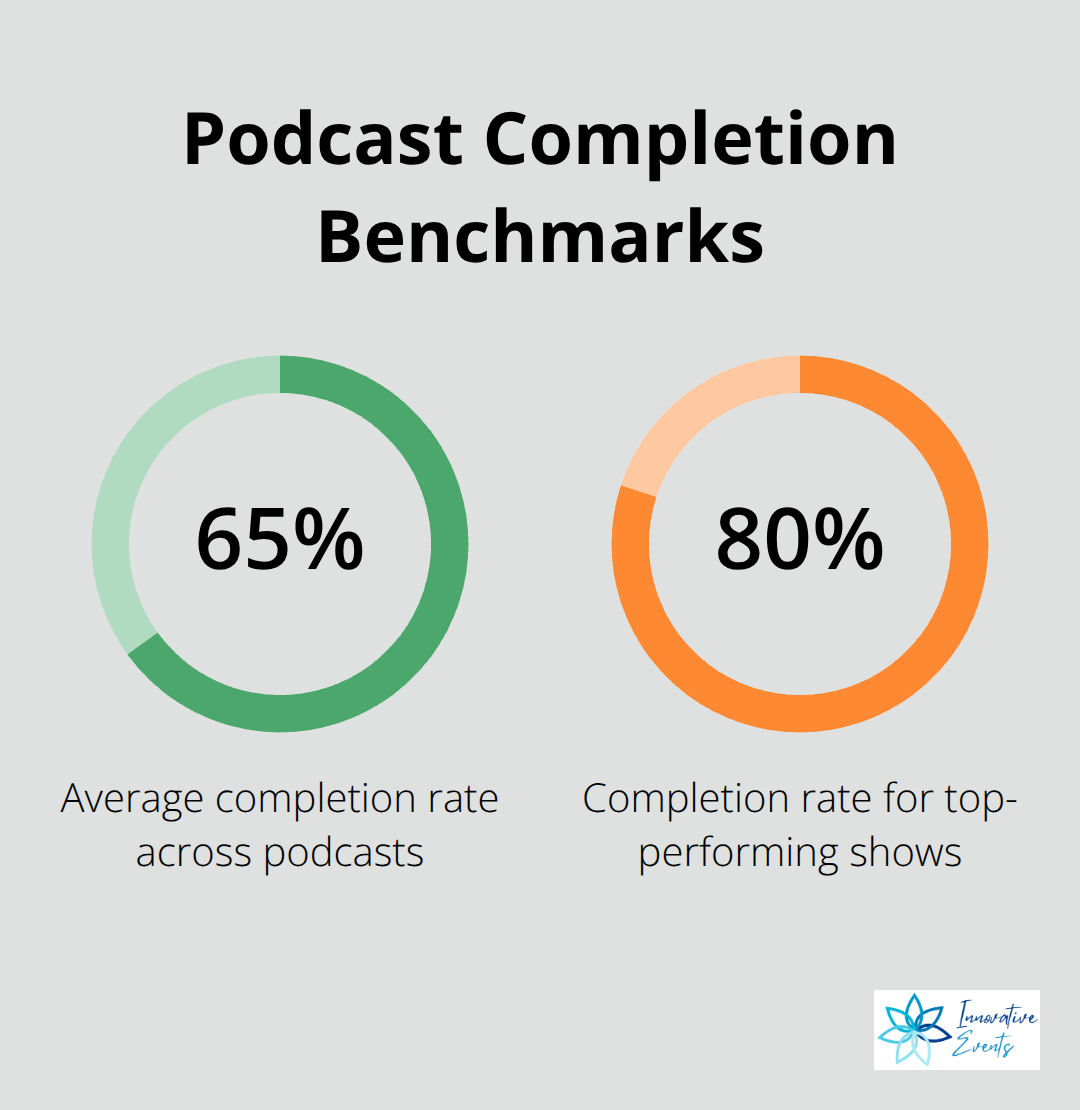
Use these benchmarks to set SMART goals and identify areas that need improvement in your content strategy.
Final Thoughts
Podcast content marketing success relies on three core elements: strategic audience focus, multi-platform distribution, and performance measurement. Your podcast must deliver consistent content themes that solve specific audience problems while you maintain professional production standards. Distribution across YouTube, Apple Podcasts, and Spotify demands platform-specific tactics that transform each episode into multiple social media pieces.
Start implementation with a defined niche and a 12-week content calendar. Launch weekly episodes and build cross-platform promotion systems within your first month. Track completion rates and listener retention data instead of download numbers to measure actual business impact (completion rates above 65% indicate strong audience engagement).
Long-term growth demands continuous content refinement based on listener feedback and analytics. Scale your efforts through strategic partnerships with industry experts and guest appearances that expand your audience reach. We at Innovative Events help businesses develop strategic content marketing approaches that drive measurable results through systematic audience engagement.