
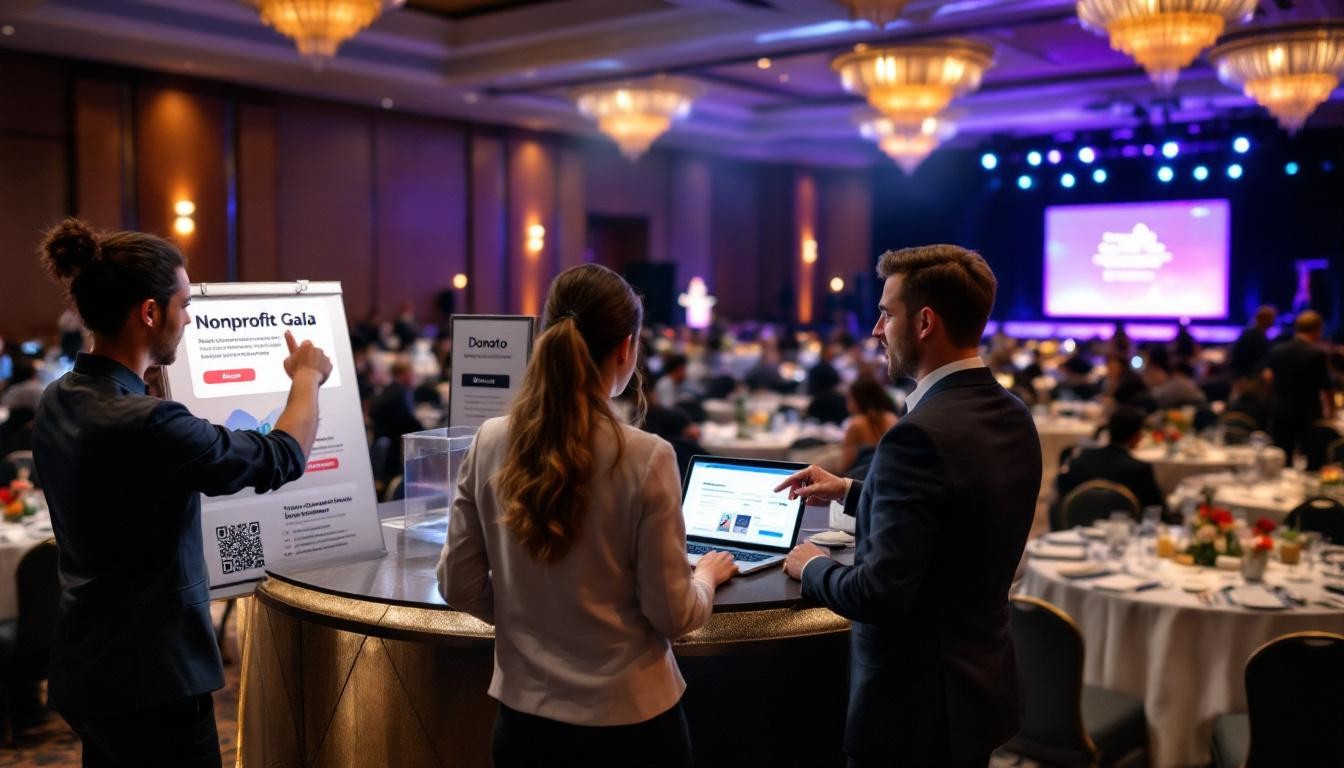
Nonprofit galas raise millions annually, yet many organizations leave money on the table through poor marketing and execution. We at Innovative Events have seen firsthand how strategic planning transforms fundraisers from ordinary dinners into powerful revenue-generating events.
This guide covers everything from building ticket sales momentum to designing experiences that inspire donors to give more. You’ll learn concrete tactics for measuring results and keeping major donors engaged long after the event ends.
How to Build Momentum Before Your Gala Even Starts
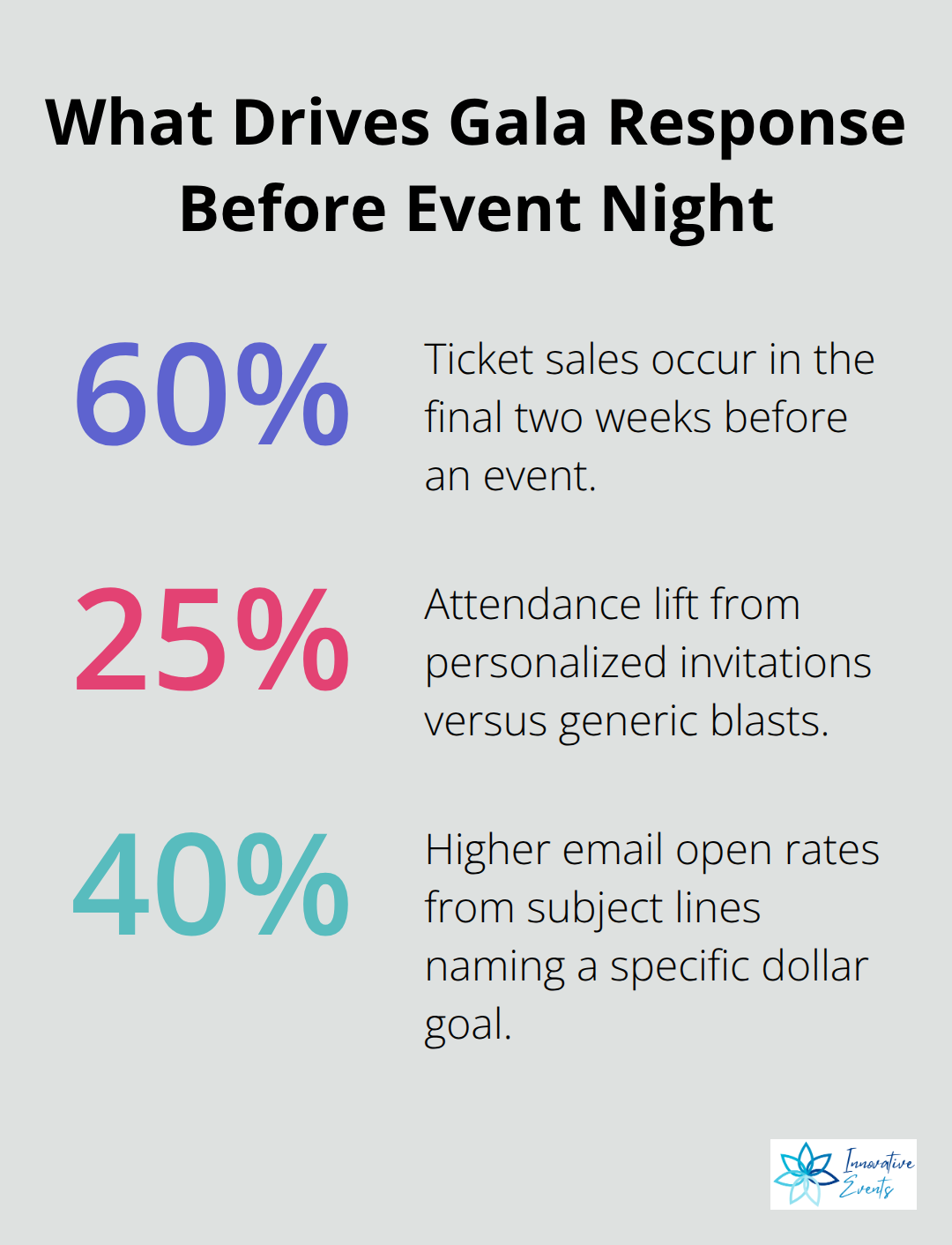
Most nonprofit galas fail in the marketing phase, not on event night. Organizations spend weeks perfecting table settings and menu selections while ignoring the fact that 60% of ticket sales happen in the final two weeks before an event. This scramble at the end wastes money on rushed campaigns and leaves seats empty. Strategic gala marketing starts eight to twelve weeks out and builds awareness in three distinct waves that compound each other.
Segment your donor database before you send anything
Nonprofit donor databases contain hidden patterns that most organizations never examine. You need to segment your guest list by giving history, capacity, and engagement level before you send a single marketing message. A major donor who gave $50,000 last year requires a different invitation than someone attending their first event. Your donor CRM reveals which supporters have capacity for larger gifts and which are best suited for ticket purchases. Personalized invitations generate 25% higher attendance rates than generic blasts.
Craft separate messaging for board members, past major donors, younger professionals, and corporate sponsors. Each group responds to different motivations: board members care about peer involvement, past donors want impact updates, younger supporters want community connection, and corporate partners want visibility and CSR alignment. Send invitations in waves, starting with your highest-capacity donors six to eight weeks out. This creates early momentum and gives you time to adjust if response rates lag.
Email outperforms social media by three to one for ticket sales
Email remains the highest-ROI channel for gala ticket sales, outperforming social media by a factor of three when properly segmented. You should send four to five emails over eight weeks, each with a specific call to action. The first email introduces the event and mission impact. The second email highlights the experience, speakers, or entertainment. The third email creates urgency with early-bird pricing that expires. The fourth email features testimonials or past-event photos. The fifth email serves as a final reminder 48 hours before registration closes. Space these seven to ten days apart.
Social media amplifies email by reaching attendees’ networks. Post twice weekly on Instagram and Facebook, mixing event details with mission stories. Use event-specific hashtags consistently. Paid social targeting works best when you upload your email list as a lookalike audience, reaching people similar to your best donors. A $500 Facebook campaign targeting lookalike audiences typically generates $8,000 to $12,000 in ticket revenue for mid-sized galas. QR codes on email signatures and social posts drive immediate registration.
Test different headlines in emails. Subject lines mentioning the specific dollar impact (like “Help Us Reach $250,000 This Year”) generate 40% higher open rates than generic event announcements. Include the registration link in every email, not buried in a footer.
Frame the gala as mission participation, not just an event
Gala invitations that focus only on the event experience underperform. Instead, frame the gala as a fundraising moment where attendance equals participation in the mission. Tell a specific beneficiary story in your invitation. Describe one person helped, one problem solved, one outcome achieved. Generic mission statements get ignored. Specific stories get opened, read, and acted upon.
Your invitation should answer three questions: Why does this gala matter right now? What will my gift accomplish? Who else is attending? The third question matters more than most nonprofits realize. People give more when they see peer involvement. Mention board members attending, corporate sponsors committed, or past major donors already registered. This creates social proof and encourages commitment.
Your email copy should avoid jargon. Replace nonprofit language with donor language. Instead of “support our programs,” say “help a family find stable housing.” Instead of “maximize impact,” say “provide job training to 50 more people this year.” Most gala invitations read like they were written by committees, full of hedging and vague language. Write as if you’re talking to one person, not an audience. Read your copy aloud. If it sounds like a nonprofit, rewrite it.
These three marketing waves-precision targeting, email velocity, and mission-focused messaging-compound each other to fill seats and set the stage for strong event-night fundraising. The real work now shifts to the experience itself.
How Production Design Transforms Donor Behavior
The difference between a forgettable gala and one that generates 40% higher paddle raise revenue comes down to production design. Audio, lighting, and visual elements aren’t decorative-they’re psychological tools that shape how donors feel and give. Organizations often spend $80,000 on catering while allocating $3,000 to production, then wonder why donors felt uninspired. This backwards approach leaves hundreds of thousands of dollars on the table. Professional production design creates emotional momentum that directly translates to larger gifts. Weak audio makes speakers sound amateurish, killing credibility. Poor lighting flattens the room and kills energy. Misaligned visual messaging confuses donors about what they’re supporting. Strong production design does the opposite. It amplifies speaker impact, elevates the room’s energy, and reinforces your mission at every moment.
The technical foundation determines everything
Start with audio quality before anything else. A single microphone feedback squeal or muffled speaker kills donor momentum faster than any other production failure. Invest in wireless lavalier microphones for all speakers and emcees, not handheld mics that speakers fumble with.
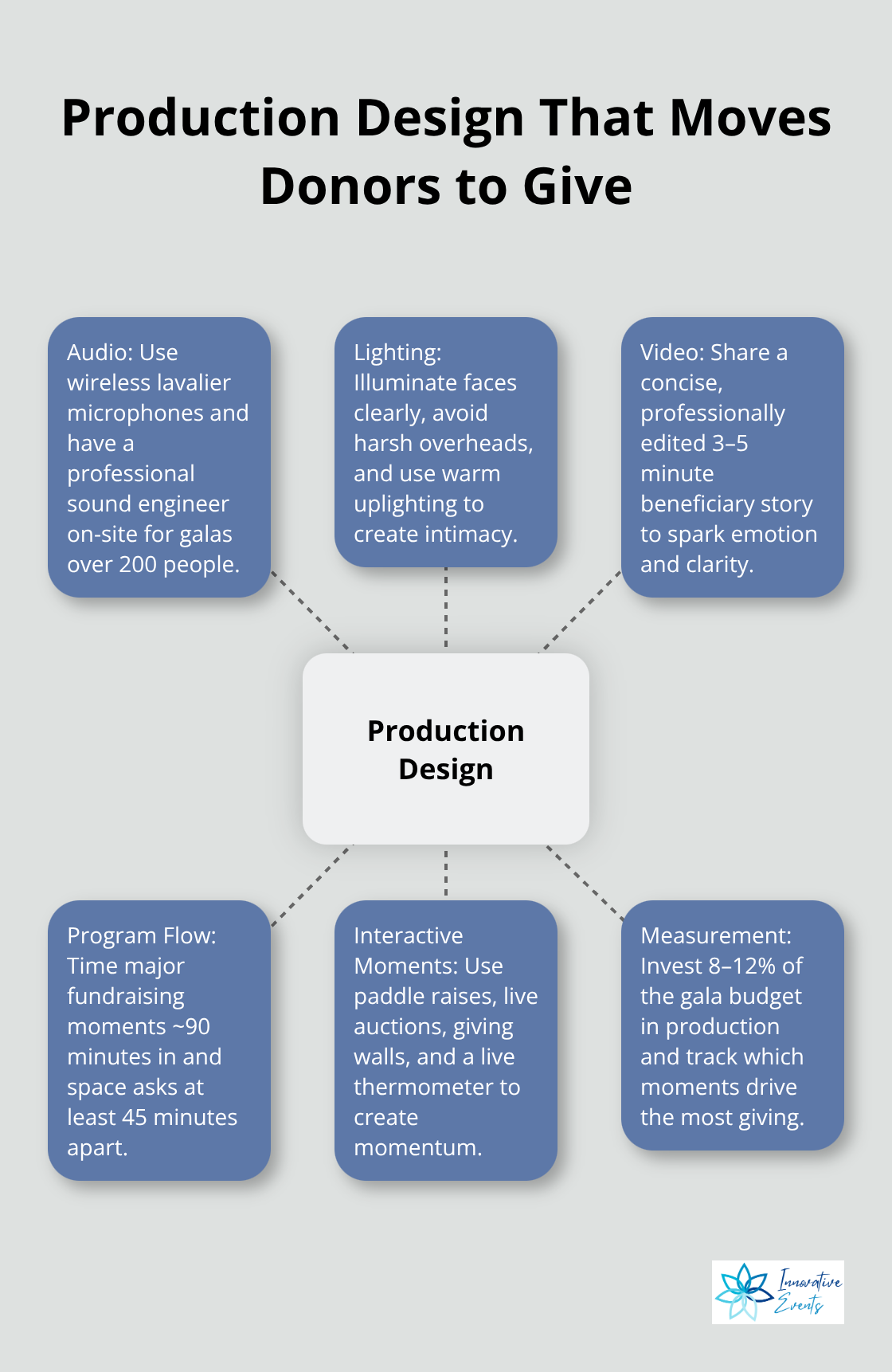
Test audio during the day before your event. Position speakers on stage so they’re clearly visible and audible from every table. A professional sound engineer on-site during the event is non-negotiable for galas of over 200 people. Lighting illuminates faces clearly so donors can see emotion and connection. Avoid harsh overhead lighting that creates shadows under the eyes. Use warm uplighting on walls to create intimacy, not cold blue tones that feel institutional. Stage lighting highlights speakers and any visual content. Most nonprofits underestimate how much lighting costs-expect $3,000 to $8,000 for a quality lighting design that actually works. Video content deserves the same investment. A five-minute beneficiary story filmed professionally and edited cleanly moves donors more than a 20-minute live testimonial. One major donor reported that a three-minute video about a child’s transformation generated her $25,000 gift, while the same story told live by the beneficiary’s parent generated half that amount. Video creates emotional distance that allows donors to feel rather than judge. Pair video with live moments-never rely entirely on screens.
Program flow controls when donors give their largest gifts
Gala timing matters more than most organizations realize. Donors give bigger gifts when they’re emotionally activated but not exhausted. Structure your program so the largest fundraising moments happen 90 minutes into the event, not at the end when energy has faded. Start with cocktails and silent auction browsing. Move into a seated dinner with light conversation and mission introduction. Then launch your first major fundraising moment-typically a live auction or paddle raise-while donors are fed, comfortable, and emotionally engaged. Space your major tasks at least 45 minutes apart. Three separate fundraising moments (opening paddle raise, silent auction close, and closing appeal) outperform a single long fundraising push. Between asks, provide entertainment or speaker moments that re-engage the room without asking for money. A five-minute performance or an inspiring speaker story between asks keeps energy up without donor fatigue. Program length matters too. Galas over three and a half hours see donation fatigue kick in. Trim your program ruthlessly. Every moment should serve either an emotional connection or fundraising. If a speaker or performance doesn’t move donors closer to giving, cut it. One nonprofit removed a 15-minute dance performance and replaced it with a two-minute video of program impact. Revenue increased by $37,000 that year simply because donors weren’t mentally checked out by the time the paddle raise happened.
Interactive moments convert passive attendees into active givers
Static galas where donors sit and watch underperform. Create moments where attendees physically participate. A mobile platform means donors bid from their seats without raising hands. Paddle raises work better than traditional hand-raising because donors hold paddles visible to peers, creating social pressure and friendly competition. Incorporate a live auction where donors come to the stage, adding theater and energy. A giving wall where donors write their names and gift amounts as they pledge creates real-time visual momentum. One gala incorporated a photo booth where donors could take pictures with a beneficiary, then share on social media with event hashtags. That simple interactive moment generated 847 social media impressions and reached 12,000 people. The booth cost $1,200 and generated awareness worth far more than paid advertising. Consider a live thermometer showing real-time progress toward your fundraising goal. As the number climbs, donors see momentum and feel pressure to contribute. Segment interactive moments by donor type. Offer major donors a private moment with leadership or a beneficiary before the main program. Offer younger donors a chance to vote on how some of the evening’s proceeds get allocated. These customized moments make different donor types feel valued and increase lifetime giving.
Measuring production impact on fundraising outcomes
Production quality directly correlates with donation size, yet most nonprofits never track this relationship. After your gala, compare fundraising totals against production investment. Organizations that spend 8-12% of their gala budget on professional audio, lighting, and video typically see 25-35% higher average gifts than those spending 3-5%. Track which moments generated the most paddle raise activity-was it after the video, after a live speaker, or after the interactive moment? This data informs next year’s production decisions. Ask major donors in post-event calls what moments moved them most. You’ll often find that production elements (the video, the lighting during a speaker moment, the energy of the live auction) rank higher than the meal or entertainment. This feedback shapes where you allocate production dollars in future events. The production experience shapes how donors perceive your organization’s professionalism and mission impact. This foundation now supports the final critical phase: converting event momentum into sustained donor relationships that extend far beyond the evening itself.
Converting Event Momentum Into Lasting Donor Relationships
The gala ends at 11 p.m., but your fundraising work intensifies immediately after. Most nonprofits squander the momentum they built over eight weeks of marketing and one carefully orchestrated evening by taking no action for 30 days. Donors leave emotionally activated and ready to deepen their commitment, yet they receive a generic thank-you email and silence. This gap between event energy and follow-up action costs organizations hundreds of thousands in lost lifetime value. Nonprofits that execute a structured post-event strategy within 72 hours see 40% higher repeat giving rates and 60% larger average gifts from major donors in the following year compared to those with delayed or generic follow-up. The data is clear: what happens after the gala matters more than what happens during it.
Capture and analyze data before momentum fades
Your first priority is to capture clean data before anyone leaves the building. Mobile check-in platforms and integrated donation systems record who attended, what they bid on, how much they gave, and through which channel. This real-time data becomes worthless if you wait weeks to analyze it. Assign someone to pull reports the morning after your event, showing total raised, average gift size, paddle raise participation rates, and auction performance by category. Compare these numbers against your gala goals and prior-year results. If your average gift was $850 this year versus $680 last year, you need to understand why.
Was it the production quality? The mission story? The specific donor segment you invited? This analysis directly informs next year’s strategy and prevents you from repeating mistakes or abandoning tactics that worked. Track which fundraising moments generated the most activity. Did your paddle raise outperform your silent auction? Did video content drive more giving than live speakers? One nonprofit discovered that their opening paddle raise generated 3x more revenue than their closing appeal, prompting them to restructure the entire gala flow for the following year. These insights only emerge if you measure them immediately while the data is fresh.
Thank donors strategically within 72 hours
Your thank-you process must begin within 24 hours, not weeks later. Segment your thank-yous by giving level and donor type. Major donors who gave $5,000 or more receive a personal phone call from your executive director within 48 hours, not a letter.
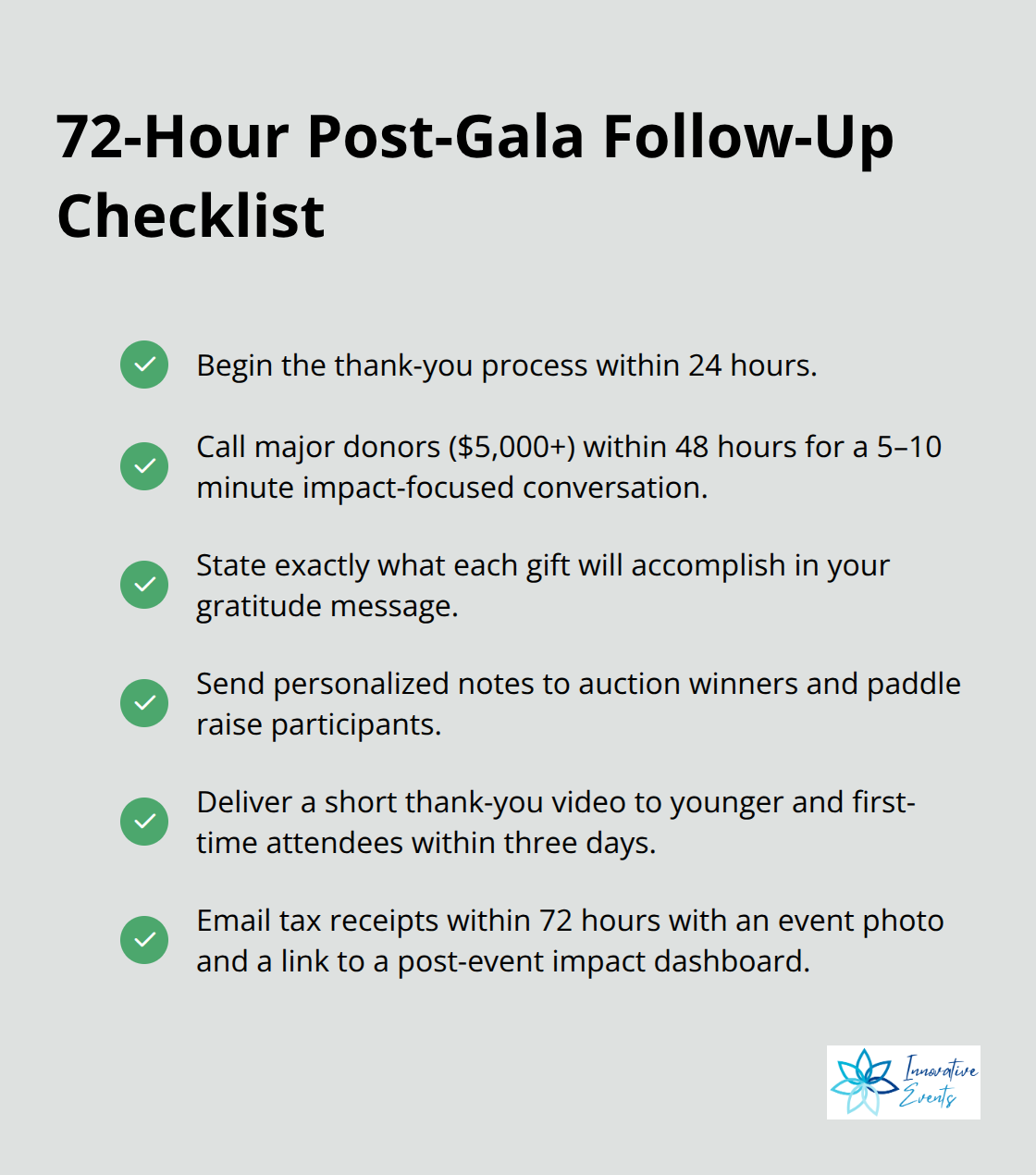
This call lasts 5-10 minutes and focuses on impact, not logistics. Say specifically what their gift will accomplish: hire two job coaches, provide housing support for 12 families, or fund 500 hours of mentoring. Generic gratitude underperforms. Specific impact gratitude converts one-time givers into annual supporters.
Auction winners and paddle raise participants receive personalized thank-yous mentioning what they purchased or supported. A donor who won a wine-tasting package should receive a note from the vintner or your executive director, not a form letter. Younger donors and first-time attendees receive a thank-you video clip from a beneficiary or staff member within three days, creating an emotional connection that drives repeat attendance. Your email thank-yous should arrive within 72 hours and include a tax receipt, a photo from the event showing the donor, and a specific impact statement. Include a link to a post-event impact dashboard or story showing how gala funds are already being deployed.
One nonprofit sent donors a 60-second video showing a program participant thanking gala attendees by name two weeks after the event. That single video generated 22 additional gifts from gala attendees within 30 days, totaling $47,000. The investment was minimal; the return was extraordinary.
Build a 12-month stewardship rhythm for major donors
Your stewardship calendar for major donors should extend 12 months beyond the gala. Schedule quarterly impact updates via email, showing progress on goals funded by the gala. In month three, share program statistics. In month six, feature a beneficiary story. In month nine, preview next year’s gala and invite early committee involvement. In month twelve, send a personalized invitation to next year’s event with a note about their impact this year. This rhythm keeps major donors emotionally connected and makes them feel like insiders, not just checkbook holders. They become advocates who recruit peers and increase their own giving year over year.
Final Thoughts
Professional nonprofit gala support transforms fundraising from guesswork into a predictable revenue engine. The strategies covered in this guide-precision marketing, strategic production design, and structured post-event stewardship-compound each other to create galas that generate 40% higher average gifts and dramatically improve donor retention. Organizations that execute all three phases see repeat giving rates jump by 40% in the year following their event.
Galas fail when organizations treat them as one-night events rather than 12-month fundraising campaigns. Your marketing phase determines who shows up and in what emotional state, your production design determines whether donors feel inspired or underwhelmed, and your post-event strategy determines whether attendees become annual supporters or disappear. An honest assessment of your current approach against these three pillars reveals where your biggest opportunities lie.
If production quality or strategic execution feels overwhelming, partner with experts who specialize in nonprofit gala support. Innovative Events provides comprehensive event management, professional AV production, and strategic marketing content designed specifically to elevate nonprofit fundraising, handling everything from initial planning through post-event follow-up so your staff can focus on mission work while your gala generates maximum revenue.