

Inbound marketing and content marketing are often used interchangeably, but they’re fundamentally different strategies. At Innovative Events, we’ve seen businesses waste resources by confusing the two approaches.
One focuses on pulling customers toward you through valuable content. The other is a broader methodology that guides prospects through their entire buying journey. Understanding which strategy fits your business is essential for your marketing success.
What’s the Real Difference
Content Marketing: The Single Tactic
Content marketing focuses on creating and sharing valuable information that attracts and educates your audience. It’s the blog post, the video, the guide, the podcast episode. According to HubSpot’s research, content marketing costs about 62% less than traditional advertising and generates three times as many leads. The goal is straightforward: establish trust, build authority, and pull people toward your brand through genuinely helpful material. Content marketing works because well-optimized content has real credibility built into the channel itself.
Inbound Marketing: The Complete Methodology
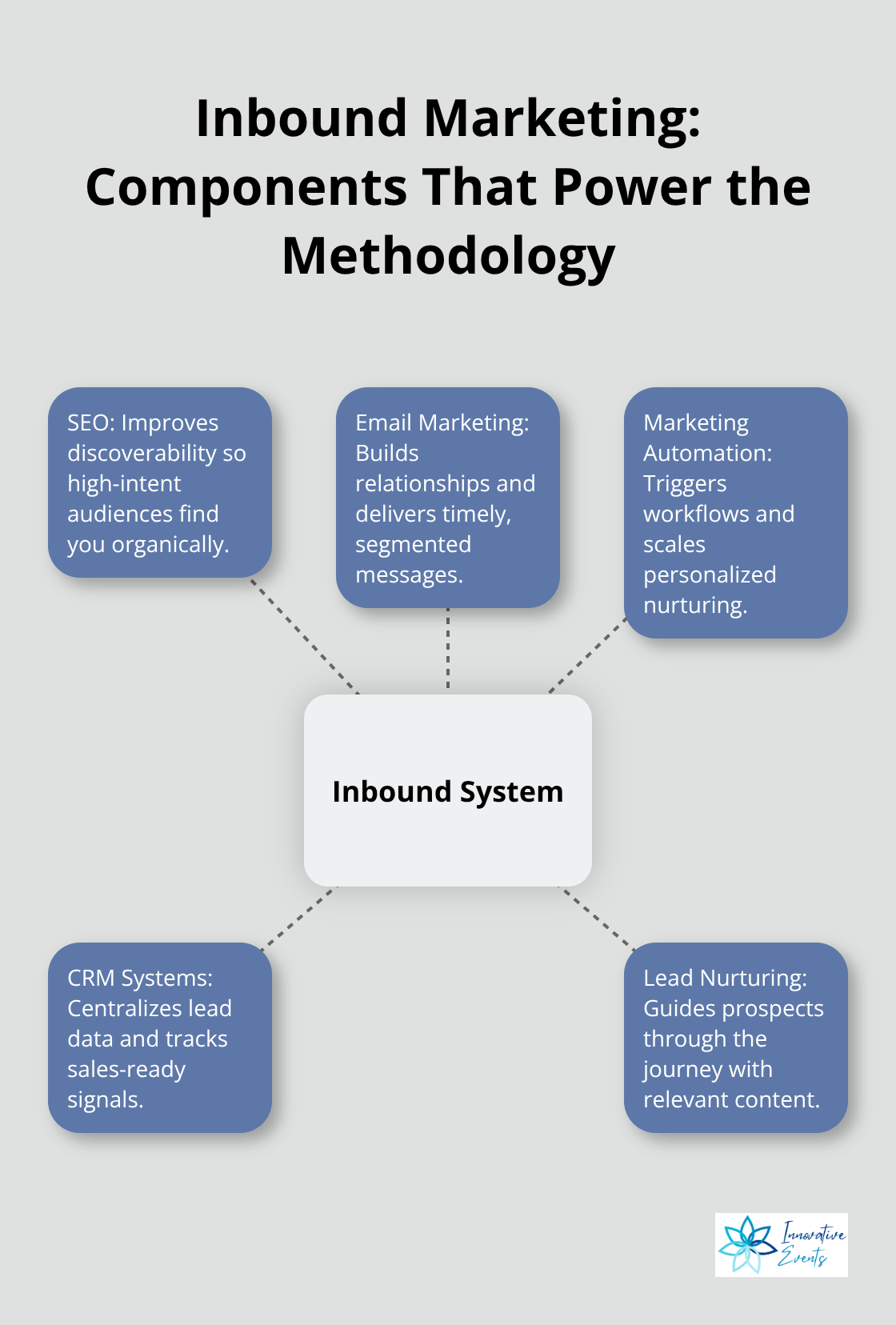
Inbound marketing operates on a different level entirely. It’s a complete methodology that moves prospects through the entire buying journey using multiple tools and tactics. While content fuels the system, inbound adds SEO, email marketing, marketing automation, CRM systems, and lead nurturing workflows.
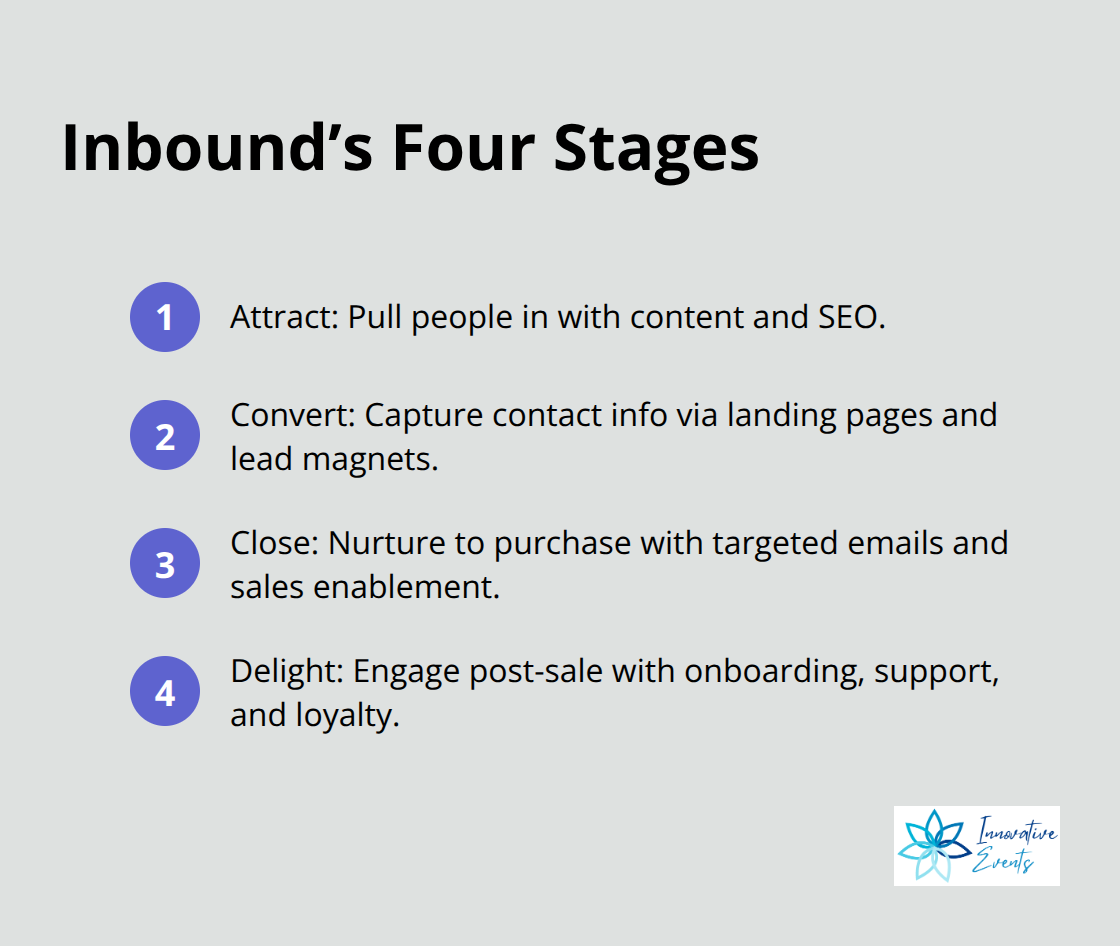
The inbound methodology provides a four-stage framework: Attract (pull people in with content and SEO), Convert (capture their information via landing pages and lead magnets), Close (nurture them toward a purchase decision), and Delight (keep them engaged after the sale).
Why This Distinction Matters for Results
This distinction matters enormously for your bottom line. Content marketing alone might grow your social following or boost website traffic. Inbound marketing, by contrast, delivers higher-quality leads because it attracts people already interested in solving the problem you address. That targeted approach means better conversion rates and stronger revenue outcomes. The numbers back this up: businesses using inbound strategies report lower customer acquisition costs compared to those relying purely on paid advertising.
The Gap Most Businesses Miss
Most businesses create great content but never capture the lead’s information or nurture them systematically. They publish blog posts without implementing the systems to convert readers into prospects. That’s why content without inbound mechanics leaves money on the table. Conversely, inbound without strong, original content has nothing to attract people in the first place. The real power emerges when both work together-your content strategy becomes the cornerstone of your inbound system, attracting the right people at the right time, while your inbound infrastructure converts those visitors into leads and customers.
Integration Unlocks Revenue Potential
Brands that treat content as a standalone awareness tactic miss the conversion opportunity. Those that integrate content into a full inbound system with proper lead capture, segmentation, and nurturing workflows see dramatically different results in both lead quality and revenue attribution. The next section explores how to assess which approach fits your business and how to build an integrated strategy that maximizes both reach and conversion.
Where Content and Inbound Actually Diverge
Content marketing and inbound marketing operate in fundamentally different lanes, and confusing them costs businesses real money. Content marketing is a single tactic focused on creating and distributing valuable material-blog posts, videos, guides, podcasts-to build awareness and establish credibility with your audience. It’s awareness-first. Inbound marketing, on the other hand, is a complete operating system that encompasses content, SEO, email workflows, landing pages, marketing automation, and CRM integration to guide prospects through the entire buying cycle. Think of it this way: content marketing asks, “How do we educate and attract people?” Inbound marketing asks, “How do we attract, convert, close, and retain customers?” According to HubSpot, the distinction matters because content marketing typically generates leads through engagement and trust-building, while inbound delivers higher-quality leads because it filters for people already interested in solving your specific problem. Your content might reach thousands; your inbound system converts the right hundreds into paying customers.
Scope Determines What You Actually Measure
This scope difference changes everything about how you track success. Content marketing metrics focus on reach and engagement: page views, time on page, social shares, and audience growth. These numbers feel good, but they don’t tell you if anyone’s actually buying. Inbound marketing metrics track what matters for revenue: lead generation volume, conversion rates, cost per acquisition, email engagement, and customer lifetime value. A blog post might drive 5,000 monthly visitors (content win), but if zero of those visitors enter your sales funnel, it’s a vanity metric. An inbound system with the same traffic that converts 2% into leads worth $500 each generates $50,000 in pipeline value. The measurement gap explains why many content-only strategies disappoint: they optimize for metrics that don’t connect to revenue. Inbound forces you to connect every tactic back to customer acquisition and retention. This means your team stops chasing viral moments and starts building systems that move people from awareness to decision.
The Customer Journey Splits Into Four Distinct Stages
Content marketing treats the customer journey as one phase: awareness. You create content people find useful, they trust you more, and hopefully they eventually buy. Inbound marketing maps to all four stages of the buyer’s journey. During awareness, inbound uses SEO-optimized content and social media to attract (same as content marketing). During consideration, inbound deploys lead magnets, landing pages, and email sequences to capture contact information and nurture prospects with targeted content based on their interests and behavior. During the decision, inbound uses marketing automation to send comparison guides, case studies, and sales enablement materials that push toward conversion. During delight, inbound keeps customers engaged with onboarding content, support resources, and loyalty programs to encourage repeat business and referrals.
Content marketing has no infrastructure for stages two, three, and four. It stops after publication. That’s why inbound generates three times more leads than content marketing alone, according to HubSpot research. The difference isn’t the content quality; it’s the system around it.
Where Revenue Actually Enters the Picture
Content marketing builds awareness and trust, but it rarely captures contact information or moves prospects toward a sale. Inbound marketing adds the mechanisms that convert awareness into action. Lead magnets sit behind landing pages that collect email addresses. Marketing automation then sends follow-up sequences tailored to each prospect’s interests and stage in the buying cycle. CRM systems track every interaction, so your sales team knows exactly where each lead stands. Email engagement metrics reveal who’s ready to talk to a salesperson. This infrastructure transforms casual readers into qualified prospects. A prospect who downloads your guide, receives three nurturing emails, and opens two of them signals genuine interest, far different from someone who simply read your blog post once. Inbound systems quantify that interest and act on it. Content alone leaves this opportunity untapped.
The Path Forward Requires Both Systems Working Together
The real power emerges when you stop treating content and inbound as competing choices. Content attracts the right people; inbound converts them. Your next step involves assessing which approach your business needs most urgently and how to build an integrated strategy that maximizes both reach and conversion.
Which Strategy Matches Your Business Right Now
Your choice between content and inbound marketing depends on where your business stands today and what your sales team actually needs. B2B companies with long sales cycles and complex buying decisions require inbound strategies. According to HubSpot research, inbound approaches lower customer acquisition costs significantly compared to pure paid advertising because they filter for prospects already searching for solutions. D2C brands selling lower-priced items with shorter decision cycles may generate sufficient awareness and trust through content marketing alone, without the overhead of marketing automation and lead nurturing workflows. Most businesses need both strategies, but in different proportions depending on industry and sales process. A SaaS company selling $10,000 annual contracts cannot rely on content marketing alone-they need inbound’s conversion infrastructure to identify sales-ready prospects. A fitness brand building a community around lifestyle content might generate sufficient revenue from content-driven social followers without a full inbound system. Your industry determines urgency more than your company size.
Ask Your Sales Team What They Actually Need
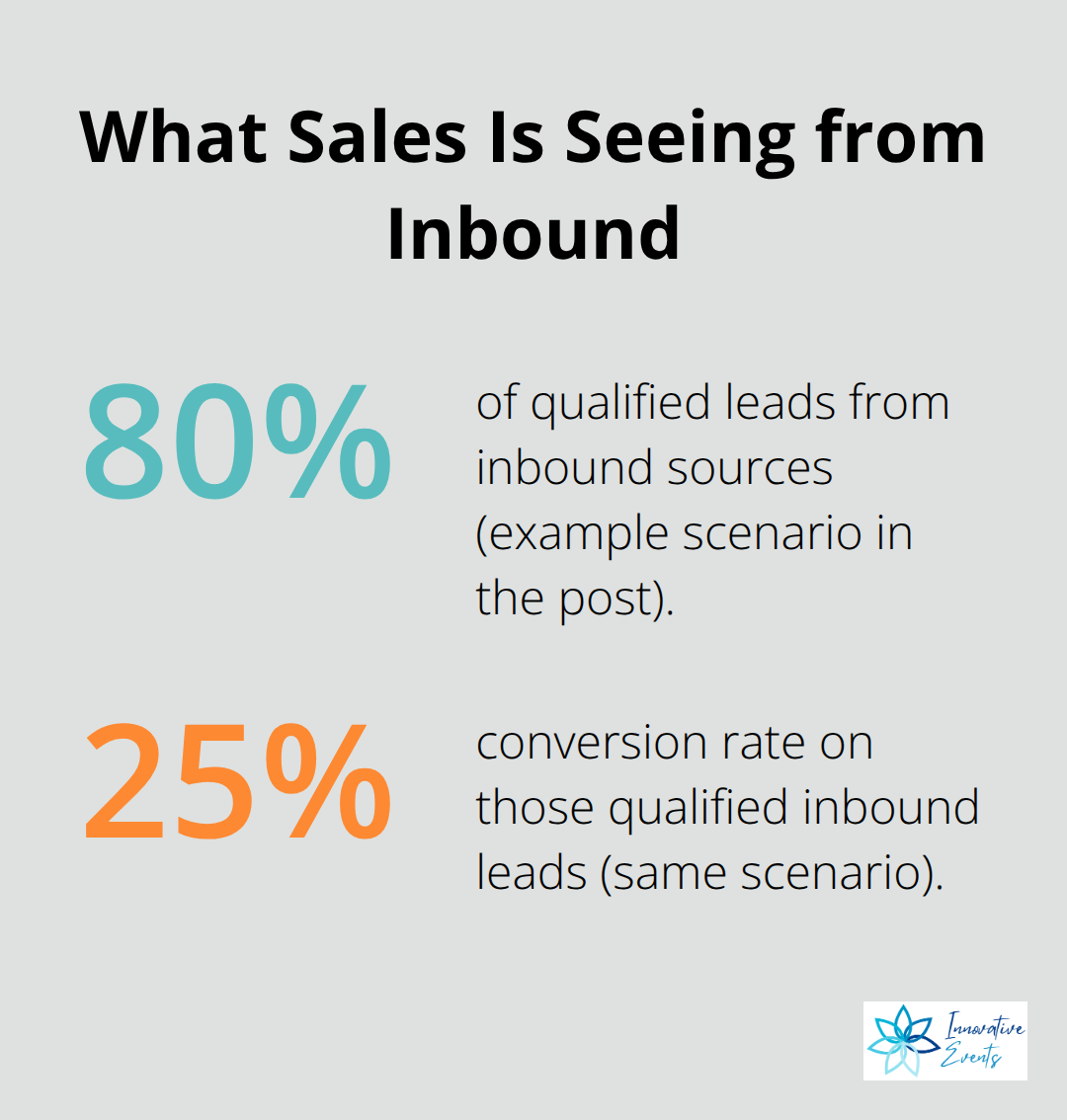
Your sales team reveals whether content or inbound matters most. Ask your sales reps directly: how many inbound leads do you receive monthly, and what percentage convert to customers? Ask them: how many prospects reach out already knowing your solution exists versus prospects you must educate from scratch? Sales teams reporting that 80% of qualified leads come from inbound sources and convert at 25% have a working inbound system worth optimizing further.
Teams reporting that most prospects don’t know you exist until cold outreach signal that your content marketing fails to build awareness, you need to invest heavily in SEO and distribute content across platforms where your audience actually spends time. The gap between what marketing produces and what sales closes reveals whether your content strategy feeds inbound or sits in isolation. Many businesses publish content consistently but never ask their sales team if any of it influences buying decisions. That mistake transforms content into guesswork. Inbound without sales input becomes a lead-generation machine producing quantity without quality. Your sales data should drive your strategy choice, not marketing intuition.
Your Budget Determines What You Can Realistically Build
Content marketing requires lower upfront investment-you need writers, SEO tools like Semrush or Ahrefs (typically $100–$200 monthly), and a publishing schedule. Inbound marketing demands additional spending on marketing automation platforms like HubSpot or ActiveCampaign (usually $300–$1,000+ monthly depending on contact volume), CRM systems, landing page builders, and often a dedicated person to manage workflows and lead nurturing. With a marketing budget under $5,000 monthly, start with content and SEO. Build blog posts targeting high-intent keywords in your space and publish consistently, then measure organic traffic and engagement. Once you generate 500+ monthly organic visitors, layer in a lead magnet and simple email nurturing to capture contact information. With a budget exceeding $10,000 monthly, invest in both immediately. Hire or contract experienced writers to produce an SEO-optimized content marketing strategy, implement a marketing automation platform, and build landing pages designed specifically to convert. The difference in results justifies the investment: inbound systems convert 2–5% of traffic into leads, while content-only strategies rarely convert more than 0.5% because they lack capture and nurturing mechanisms. Your budget ceiling determines whether you build gradually or launch a complete system from day one.
Final Thoughts
The distinction between inbound marketing vs content marketing fundamentally shapes how you allocate resources and measure success. Content marketing builds awareness and trust through valuable material, while inbound marketing creates a complete system that converts awareness into customers. Neither approach works in isolation-your content attracts the right people, but without inbound mechanics like lead capture and email nurturing, those visitors leave without entering your sales funnel.
Start by auditing your current content performance to identify which blog posts drive organic traffic and which ones convert readers into leads. Then layer in inbound elements: create a lead magnet behind a landing page, set up basic email sequences, and track which prospects convert to customers. This data reveals what works and what wastes effort, allowing you to optimize your strategy with confidence.
Innovative Events helps businesses craft marketing strategies that combine compelling content with conversion infrastructure, transforming awareness into revenue. Your content and inbound systems should work together, not compete-that integration is where real growth happens.