

Content marketing measurement remains one of the biggest challenges for businesses today. According to HubSpot’s 2024 State of Marketing report, 73% of marketers struggle to prove ROI from their content efforts.
We at Innovative Events have seen countless companies waste resources on content that doesn’t move the needle. The solution lies in tracking the right metrics and using proper analytics tools.
This guide shows you exactly which numbers matter and how to interpret them for better content decisions.
Which Metrics Actually Predict Content Success
Website traffic numbers tell only half the story. Google Analytics 4 shows that average engagement time matters more than page views. Content with engagement times above 2 minutes generates 3x more conversions than content under 30 seconds.
Track new users versus returning visitors to understand acquisition versus retention performance. Semrush data reveals that pages with bounce rates below 40% convert 2.5x better than high-bounce content.
Lead Generation Drives Revenue Growth
Conversion rates separate content winners from time-wasters. B2B companies should target 2-5% conversion rates for blog content, while SaaS free trial pages achieve 5-7% according to industry benchmarks.
Track assisted conversions through Google Analytics 4 because top-funnel content influences B2B purchases across multiple touchpoints. Customer acquisition cost through content should maintain a 3:1 ratio with lifetime value (making every dollar spent worth three dollars back).
Email signup rates above 3% indicate strong content magnetism, while rates below 1% signal content-audience mismatch.
Social Engagement Reveals Content Resonance
Comments and shares outweigh likes for real engagement measurement. LinkedIn posts with 50+ comments generate 5x more leads than posts with high like counts but no discussion.
Instagram engagement rates above 3% indicate a strong audience connection, while rates below 1% suggest content irrelevance. Track branded search volume increases through Google Search Console after content publication.
Brand mentions across external sites signal content amplification beyond owned channels (with tools like Semrush tracking these indicators effectively). These metrics connect directly to the tools and platforms that make measurement possible.
Which Tools Give You Real Performance Data
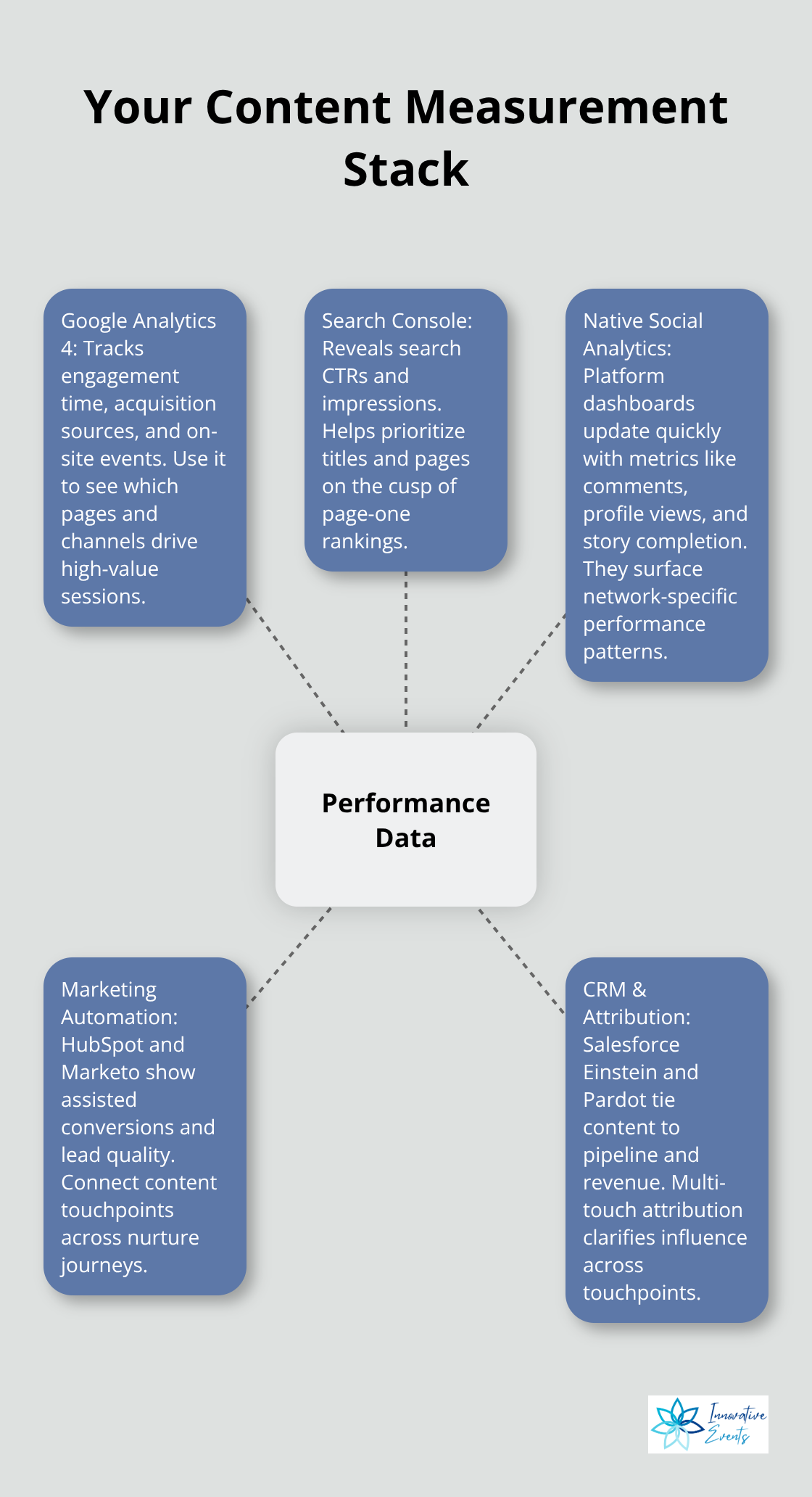
Google Analytics 4 serves as the foundation for content measurement, but most marketers overlook its most powerful features. The Engagement Overview report displays average engagement time by page, while the Acquisition report shows which content channels drive the highest-value visitors. Custom events track PDF downloads, video plays, and form submissions beyond basic page views.
Search Console complements GA4 by revealing click-through rates from search results. Pages with CTRs above 5% show strong title optimization, while rates below 2% indicate the need for headline rewrites. Impression data identifies content that ranks on page 2 and needs optimization pushes.
Social Platform Analytics Outperform Third-Party Tools
Native analytics platforms deliver deeper insights than external tools. LinkedIn Analytics reveals professional engagement patterns, with posts that generate 100+ profile views indicating strong B2B resonance. Twitter Analytics shows retweet-to-impression ratios above 2% as high-performance content markers.
Instagram Insights tracks story completion rates, with rates above 70% demonstrating compelling content flow. Facebook Analytics displays post reach versus engagement ratios (healthy content maintains 10:1 ratios). These native tools update faster than third-party alternatives and provide platform-specific metrics unavailable elsewhere.
Marketing Automation Platforms Track Content Journey Impact
HubSpot and Marketo track content influence across entire customer journeys, revealing which pieces generate qualified leads versus awareness-stage traffic. Salesforce Einstein Analytics connects content consumption to deal closure rates, with top content influencing more closed deals.
Pardot attribution reports show content assist rates, where effective nurture content influences B2B purchases before direct conversion. These platforms reveal content performance beyond single-session metrics through multi-touch attribution models that connect content consumption to revenue generation.
The real power emerges when you combine these tools to analyze patterns and make strategic content decisions based on comprehensive data insights.
How Do You Turn Raw Data Into Actionable Insights
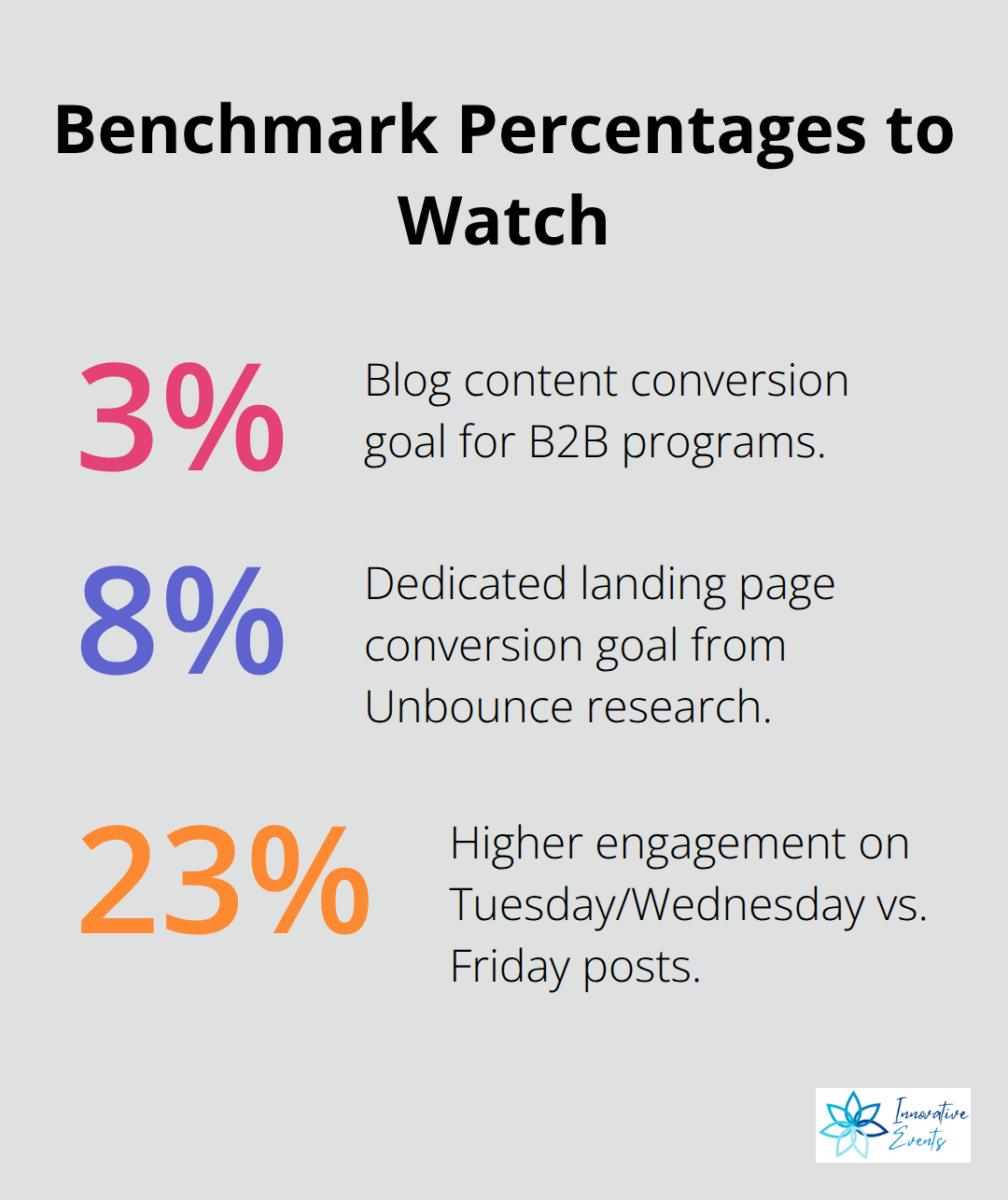
Raw analytics data becomes valuable when you establish specific performance baselines and track deviations systematically. Set engagement time benchmarks based on Google Analytics 4 industry data, where the median engagement rate across all industries was 56.21% for September 2024. Conversion rate goals should target 3% for blog content and 8% for dedicated pages according to Unbounce research. Track monthly organic traffic growth targets of 10-15% for content-driven strategies, with quarterly assessments that reveal seasonal patterns and algorithm impacts.
Weekly Pattern Analysis Reveals Content Opportunities
Content performance follows predictable weekly cycles that most marketers ignore completely. Tuesday and Wednesday blog posts generate 23% higher engagement rates than Friday publications, according to CoSchedule data.
LinkedIn content performs strongest on Tuesday mornings between 8-10 AM, while Instagram posts peak on Thursday afternoons. Track these patterns monthly to identify your specific audience behavior rather than follow generic industry recommendations (which often miss your unique market dynamics).
Revenue Attribution Connects Content to Business Impact
Google Analytics 4 attribution models show which content pieces influence purchase decisions across multiple touchpoints. Content that generates assisted conversions often outperforms direct conversion content for long-term revenue impact. Track customer lifetime value through content source via your CRM integration with marketing automation platforms. B2B companies should analyze content influence on deal sizes, with educational content providing valuable insights for demand generation strategies.
Data Segmentation Uncovers Hidden Performance Drivers
Segment your content performance data across different audience demographics and traffic sources to identify high-value patterns. Mobile users engage differently than desktop visitors (with mobile sessions averaging 40% shorter engagement times). Organic search traffic converts at 2.4x higher rates than social media traffic for most B2B content.
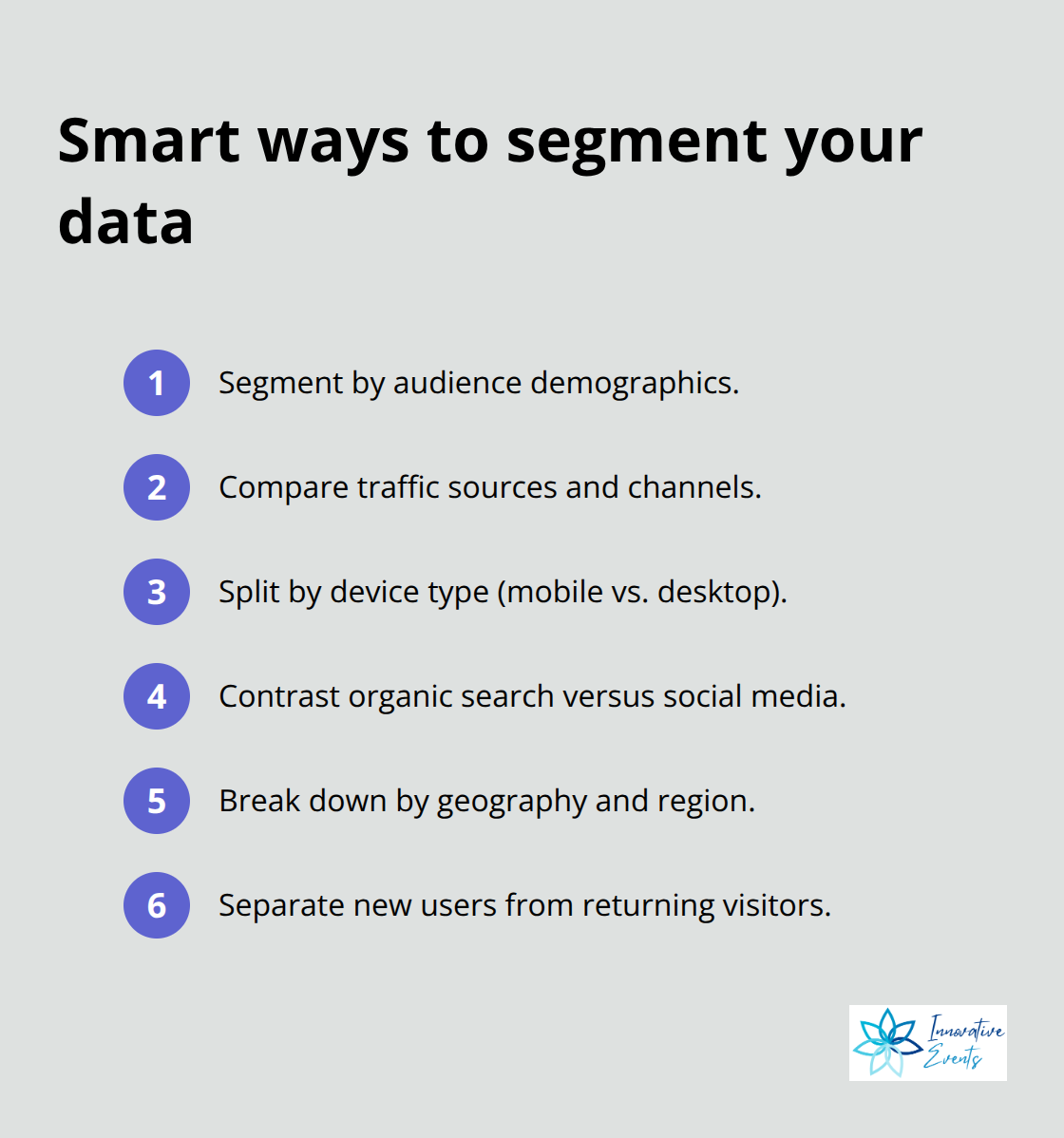
Geographic data reveals regional content preferences that can guide localization strategies and improve conversion rates significantly.
Final Thoughts
Content marketing measurement success depends on tracking engagement time, conversion rates, and assisted conversions rather than vanity metrics. Google Analytics 4, combined with native social platform analytics, provides the most accurate performance data. Weekly pattern analysis and revenue attribution reveal which content drives real business impact.
Start with baseline benchmarks of 56% engagement rates and 3% conversion rates for blog content. Set up GA4 custom events to track PDF downloads and form submissions beyond page views. Use Search Console data to optimize titles with CTRs below 2% (tracking customer lifetime value through content sources via CRM integration shows long-term impact).
The most successful content strategies emerge from systematic data analysis rather than guesswork. Companies that measure content performance weekly and adjust monthly see 40% better ROI than those who rely on quarterly reviews. We at Innovative Events help businesses transform their content marketing measurement through strategic marketing consulting that connects data insights to business growth.