

Event marketing budgets are often wasted on activities that don’t move the needle. At Innovative Events, we’ve seen firsthand that most organizers lack a clear framework for how to maximize ROI in event marketing.
This guide walks you through proven strategies to turn your events into revenue-generating machines. You’ll learn exactly which metrics matter, how to allocate your budget smartly, and how to convert attendees into customers.
Setting Your ROI Targets Before You Plan
Most event organizers skip the hardest part: defining what success actually looks like before they book a venue. Countless events fail not because of poor execution, but because the goals were never clear in the first place. You need to establish specific, measurable objectives tied directly to your business outcomes, then work backward to determine which metrics will prove you hit them. Start by asking yourself three questions: What business problem does this event solve? How will we know if it worked? What’s the financial or operational threshold for success? These answers become your north star. If your goal is lead generation, you need to know the target number of qualified leads, the average deal size, and the expected conversion rate. If it’s brand awareness, you need baseline metrics from pre-event surveys and concrete targets for post-event brand lift. According to the Event Industry Council, tracking your registration-to-attendance rate and no-show rate matters because these directly impact your cost per attendee and revenue potential. Try for a 70-85% attendance rate from registrations.
Choose Your Core Metrics Early
Pick 8 to 12 KPIs maximum and stick with them throughout planning and execution. Too many metrics create noise; too few hide problems. Your core set should span attendance and conversion metrics, engagement metrics, satisfaction metrics, and financial outcomes. For attendance, track registration-to-attendance rate and no-show rate. For engagement, measure poll and Q&A participation rates and activities per attendee-these correlate directly with post-event action. For satisfaction, use Net Promoter Score and sentiment analysis. For financial outcomes, track pipeline influence, gift or deposit conversions, and cost per lead. Align each metric to a specific business goal so you can justify why you measure it. A strong ROI target should reflect your industry and event type. Use Salesforce dashboards or similar platforms to connect engagement data to actual business results-this is where most organizers fail. They measure engagement in a vacuum without linking it to revenue or pipeline movement.
Build Your Calculation Approach Now
Three ROI formulas exist, and you must choose one before the event starts. The simple return-on-investment formula divides Event Revenue by Event Expenses-easy to calculate but often overstates profitability. The incremental revenue formula subtracts Event Expenses from Event Revenue, then divides by Event Expenses; this accounts for profit but ignores the cost of goods sold, like swag and catering. The incremental margin formula uses gross margin minus event expenses, divided by event expenses, providing the deepest financial view but requiring you to calculate COGS accurately. Pick one formula and document it now so your post-event analysis remains consistent. Track every cost category: venue and logistics, catering, technology solutions, marketing spend, speaker fees, travel, and internal staff time. Hidden costs like platform fees and design work often get overlooked, inflating your actual cost and deflating your ROI percentage. Assign someone to own cost tracking from day one-spreadsheets work, but event management software with cost modules prevents gaps and errors.
Connect Your Metrics to Revenue
The metrics you select must tie directly to revenue or pipeline movement. Engagement metrics alone tell you nothing about business impact. If 80% of attendees participate in a poll, that’s interesting-but only if you can show that poll participants convert at higher rates than non-participants. Use your CRM to track which attendees took action post-event: meetings booked, proposals sent, deals closed. This connection transforms raw engagement numbers into proof of ROI. Most organizers measure attendance and engagement separately from sales outcomes, creating a gap that makes ROI invisible. Your dashboard should show the full journey from registration through revenue, not isolated metrics. This approach requires your event platform, CRM, and analytics tools to communicate with each other, but the visibility you gain justifies the integration effort.
Now that you’ve set your targets and chosen your metrics, the next step is to allocate your budget strategically based on which activities actually drive these outcomes.
Where to Invest Your Event Budget for Maximum Returns
Your audience determines everything about your event budget. Before you allocate a single dollar, you need to know who will attend, why they matter to your business, and which segments will drive the highest ROI. Start with your existing customer data and CRM records to identify which accounts or personas generate the most revenue or pipeline value. If you sell enterprise software, a VP of Operations attending your conference is worth far more than a mid-level analyst.
Segment Your Audience by Revenue Potential
Segment your audience into tiers based on deal size, contract value, and growth potential. If your top 20% of customers represent 80% of your revenue, your event budget should reflect that reality. Allocate more resources to hosting, speaker fees, and premium experiences that appeal to high-value attendees. Use Google Analytics and social listening to validate which segments actually engage with your event content before launch.
Post-event surveys should always ask attendees about their role, company size, and decision-making authority so you can measure which segments converted and which wasted your time. This data becomes your playbook for the next event.
Allocate Budget to High-Impact Activities
High-impact activities cluster into three categories: lead capture, partnership expansion, and attendee engagement. Lead capture activities like booth staffing, one-on-one meetings, and qualification conversations should consume 35-40% of your budget because they directly feed your sales pipeline. Partnership and sponsorship activation should consume 25-30% because sponsors often bring their own audiences and co-market your event, amplifying reach without proportional cost increases.
Engagement activities like speakers, content, and networking infrastructure should consume the remaining 30-40% because they create the environment where deals actually happen. Most organizers flip this ratio, spending heavily on flashy production and light on actual lead conversion mechanics.
Choose Your Event Format Based on Conversion Data
Choose your event format based on which format historically converts your audience best. Virtual events excel at reaching geographically dispersed audiences and cost significantly less to execute, but they generate lower-quality leads because attendees face fewer friction points to skip sessions. In-person events create natural bottlenecks that force engagement and relationship building, driving higher conversion rates despite higher per-attendee costs.
Hybrid events attempt both but often deliver neither well, diluting your budget across incompatible execution requirements. If your sales cycle is short and your buyers are price-sensitive, a virtual format with aggressive email follow-up works. If your deals are complex and relationship-driven, an in-person format with structured networking and hosted buyer programs works.
Track which format generates the lowest cost per qualified lead for your specific business, then double down on that format rather than chasing trends. Your next step involves capturing and qualifying the leads that your budget allocation attracts.
Turning Attendees Into Qualified Leads
Your event platform and CRM must work together from day one, or you’ll lose the data that proves ROI. Most organizers collect attendee information haphazardly-a booth scan here, a form submission there-then wonder why their follow-up campaigns fail. Set up your registration system to capture role, company, revenue, decision-making authority, and specific pain points before attendees arrive.
Capture Behavioral Data That Reveals Intent
Use your event app or badge scanning technology to track which sessions each person attends, which booths they visit, and how long they spend in each space. This behavioral data reveals intent far better than generic demographic information. If someone attends three sessions on cost reduction and spends 15 minutes at your booth, they’re a qualified prospect. If someone attends one keynote and leaves, they’re not.
Most organizers treat all attendees equally in their follow-up campaigns, wasting resources on low-probability conversions. Segment your database immediately after the event based on engagement level and fit score, then apply different follow-up cadences to each segment. High-engagement, high-fit prospects receive a call from sales within 48 hours. Medium-engagement prospects receive a personalized email sequence. Low-engagement prospects enter a nurture drip.
Structure Partnerships That Amplify Reach
Strategic partnerships amplify your reach without proportional budget increases, but only if you structure the partnership to benefit both sides. Sponsors bring their own audiences and co-market your event, expanding your total reach exponentially. However, most organizers treat sponsors as revenue sources rather than marketing partners, offering them a booth and little else.
Instead, give sponsors co-branded speaking slots, exclusive networking sessions, or product demonstration opportunities that deliver real value to attendees. If a sponsor attracts 200 additional qualified attendees through their own marketing efforts, your cost per attendee drops significantly. This approach transforms sponsors from passive exhibitors into active growth partners.
Execute Post-Event Follow-Up Within Hours
Post-event follow-up determines whether your event generates revenue or just attendee lists. Within 24 hours of the event ending, send a personalized thank-you message to every attendee that references specific sessions they attended or conversations they had. This touches their recent memory and signals that you paid attention.
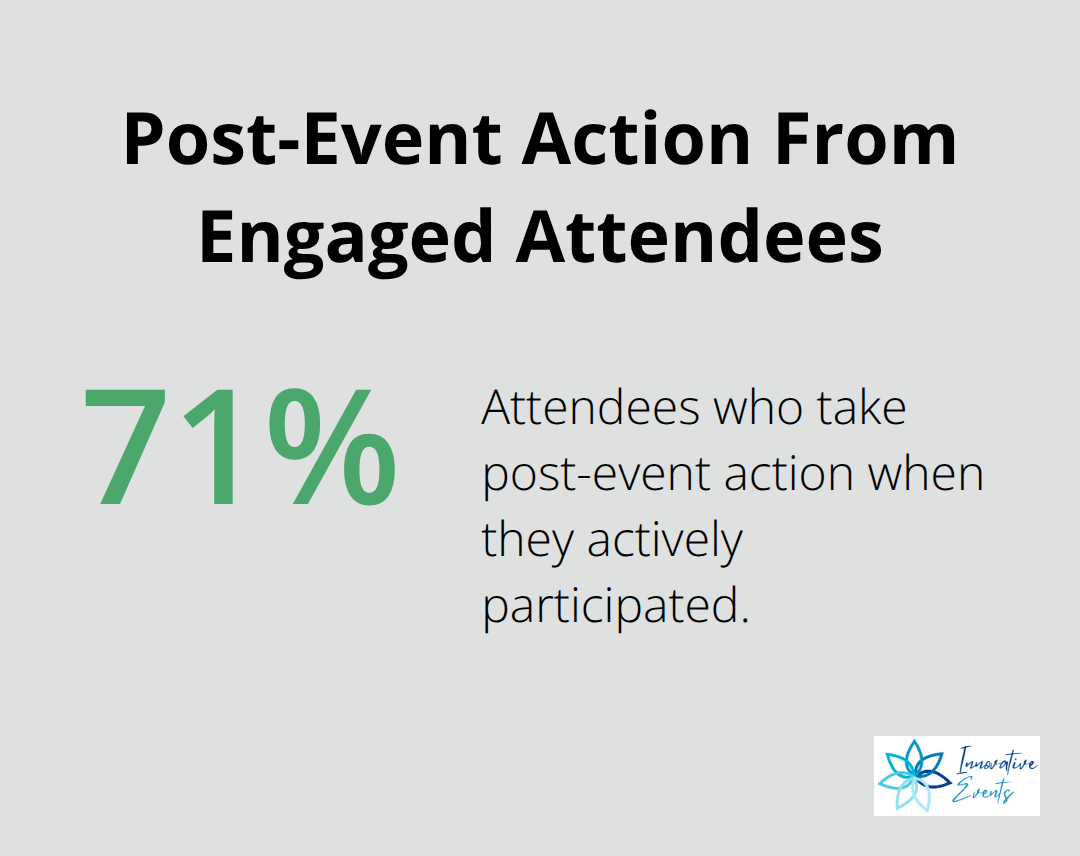
Over the following two weeks, execute a structured follow-up sequence: day two sends session recordings and resources, day five delivers a survey asking about pain points and next steps, day ten offers a one-on-one consultation call with your sales team. Research shows that 71% of attendees take post-event action when they actively participate in the event. Your follow-up campaigns should capitalize on this momentum rather than waiting three weeks to reconnect.
Optimize Your Communication Channels
Use SMS and email together-SMS open rates exceed 90% while email provides space for detailed information-to maintain contact frequency without overwhelming prospects. Track which follow-up touchpoints drive the most conversions, then optimize that sequence for your next event. This tiered approach dramatically improves conversion rates while reducing wasted outreach.
Final Thoughts
Your event’s true value emerges weeks after attendees leave the venue. The data you collected during registration, engagement tracking, and post-event follow-up now tells the story of whether your investment paid off. Pull your attendance numbers, engagement metrics, and revenue data into a single dashboard that shows the complete journey from registration through closed deals, then compare actual results against the KPI targets you set before planning began.
Calculate your ROI using the formula you selected at the start (if you spent $75,000 and generated $150,000 in attributed revenue, your ROI is 100%, and your profit is $75,000). Document which activities drove the highest conversion rates, which audience segments performed best, and which follow-up tactics generated the most pipeline movement. This data becomes your playbook for how to maximize ROI in event marketing going forward.
Share these results with your sales team, sponsors, and leadership to justify continued investment and secure budget for your next event. We at Innovative Events help brands turn event data into strategic insights that drive measurable business growth. Visit Innovative Events to learn how we transform events into growth engines for your business.