

Content writing for marketing isn’t about producing more words-it’s about producing the right words for the right people at the right time.
At Innovative Events, we’ve seen firsthand how brands that understand their audience, craft compelling messages, and measure results consistently outperform their competitors. This guide walks you through the exact framework we use to help clients turn content into conversions.
Know Your Audience Before You Write a Single Word
The biggest mistake content marketers make is writing for everyone. They create generic blog posts, emails, and landing pages that speak to no one. We start every content project by identifying exactly who we’re talking to, what keeps them awake at night, and what they’re already reading. This isn’t optional busywork-it’s the foundation that determines whether your content converts or gets ignored.
Build Detailed Buyer Personas
Start with buyer personas that go beyond basic demographics. Don’t just note that your audience is 35-45 year old managers. Instead, identify their job titles, annual budgets they control, specific tools they use, and measurable business outcomes they care about.
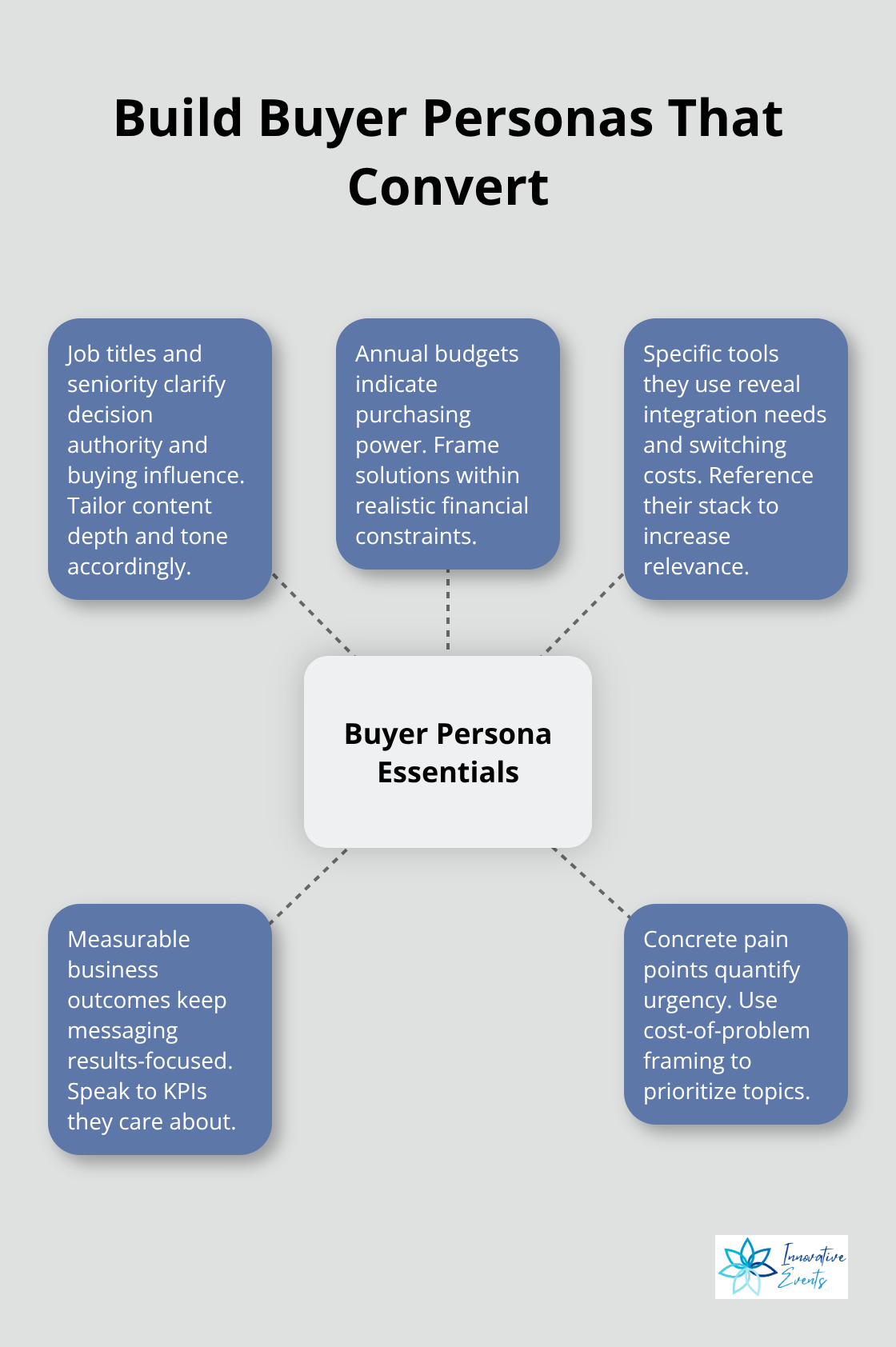
A VP of Marketing at a mid-market SaaS company has completely different content needs than a VP of Marketing at a Fortune 500 manufacturer.
Research what problems actually cost them money. According to Forrester, 73% of B2B buyers say understanding how a solution solves their specific problem matters most in their purchase decision. This means your content must address concrete pain points with real numbers attached. If your audience loses revenue because their sales team lacks visibility into customer interactions, state that explicitly. Show them the cost of the problem-maybe it’s 15% of deals slipping away each quarter-then position your content as a path to solving it.
Analyze What’s Working in Your Industry
Study what your competitors publish and which content actually gains traction. Check which competitor articles rank for keywords your audience searches for, how many shares and comments they receive, and what topics appear repeatedly across their content calendars. Tools like SEMrush and Ahrefs reveal exactly which pages drive the most organic traffic to competitor sites. This isn’t about copying their approach-it’s about identifying gaps they’re missing.
If every competitor writes about the same three topics, you have an opportunity to create authoritative content on adjacent problems they’re ignoring. Look at the format too. Some audiences engage more with short-form video, others with interactive tools or detailed case studies. Your competitor analysis reveals what format your specific audience actually consumes.
Identify Messaging Patterns That Resonate
Notice the language and messaging patterns that resonate with your market. Do they respond to data-driven arguments or emotional storytelling? Do they prefer formal tone or a conversational? Observe whether competitors use customer testimonials, statistics, or expert credentials. This reconnaissance work takes 3-5 hours but eliminates months of guessing about what content actually works for your market.
Once you understand your audience deeply and see what messaging patterns move them, you’re ready to craft content that actually converts. The next section shows you how to write headlines and structure your content so it captures attention and keeps readers engaged.
Words That Actually Convert
Headlines That Stop the Scroll
Your headline determines whether someone reads your content or scrolls past it. A weak headline kills even brilliant content before anyone sees it. Stop writing generic headlines like “10 Tips for Marketing Success” and start writing headlines that make readers feel like you’re speaking directly to their situation.
Instead of “How to Improve Sales,” write “Why Your Sales Team Loses 23% of Deals in the Pipeline” or “The One Metric Your Sales Manager Isn’t Tracking.” Specific, problem-focused headlines perform better because they promise something concrete rather than vague improvement. Test your headlines against competitor content in your space. If your headline sounds like everyone else’s, rewrite it until it doesn’t.
Try headlines between 6-12 words that either identify a specific problem your audience faces or reveal a surprising insight they didn’t expect. The best headlines make readers curious enough to click, not just informed enough to understand your topic.
Structure That Keeps Readers Engaged
Structure your content with short paragraphs of 2-4 sentences maximum. Long paragraphs intimidate readers on mobile devices, where most people consume content. Use subheadings every 150-200 words to break up text and give readers visual stopping points.
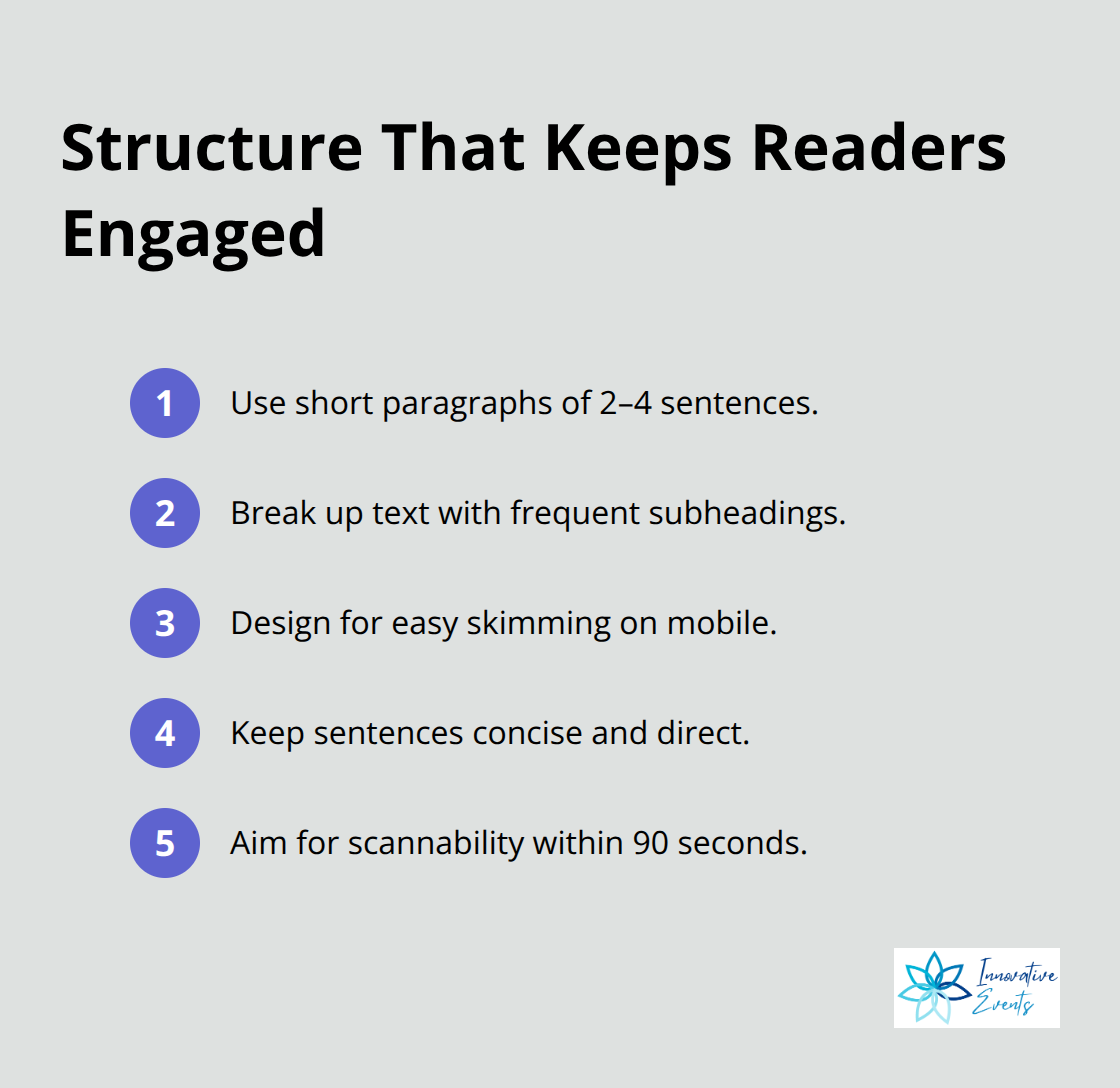
This structure also improves your search engine rankings because Google rewards content that’s easy to scan. Readers should be able to skim your piece in 90 seconds and still understand your main points. Short sentences and white space make that possible.
Evidence That Builds Trust
Incorporate real numbers and concrete examples throughout your writing rather than vague statements. Instead of saying “many companies struggle with lead generation,” state specific figures with sources. Concrete data builds credibility instantly.
When you reference a competitor’s success or a client example, name the company. Anonymous case studies feel made up, even when they’re real. Mention specific results like increased qualified leads or improved email open rates to make your argument stick.
Include screenshots, charts, or data visualizations when explaining complex concepts. Visuals should illustrate your point, not decorate it.
Eliminate Every Wasted Word
Cut adverbs, redundant phrases, and sentences that merely restate what you just said. Your readers are busy and skeptical. Respect their time by delivering value in every paragraph.
Avoid filler sentences and repetitive explanations. Every sentence should move the reader closer to understanding your point or implementing an action. When you finish writing, read through and mark any sentence that doesn’t add new information-then delete it.
This discipline in your writing separates content that converts from content that wastes your audience’s time. Once you master these structural and stylistic elements, the next step is making sure your content actually reaches the people who need it most.
Getting Your Content in Front of the Right People
Content that converts means nothing if nobody reads it. Most marketers publish their work and hope it reaches their audience, but that’s passive thinking. Distribution requires a strategy. You need to identify exactly where your audience consumes content, then place your work there consistently. LinkedIn performs differently from email, which performs differently from your blog. A VP of Sales scrolls LinkedIn during morning coffee but reads long-form content on their company blog during research phases. Your distribution strategy must match these consumption patterns.
Identify Where Your Audience Actually Spends Time
Start by analyzing where your competitors’ content gets the most engagement. If a competitor’s LinkedIn post about sales forecasting gets 2,400 views and 180 comments, that tells you your audience actively discusses that topic on that platform. Tools like BuzzSumo reveal which content formats and topics perform best across channels, and then you build your publishing calendar around these insights. Don’t spread yourself thin across every platform. Focus on three channels maximum where your specific audience actually spends time, then execute consistently on those channels rather than publishing sporadically everywhere.
Leverage Email as Your Highest-ROI Channel
Email remains the highest-ROI channel for B2B content distribution. According to HubSpot, email marketing generates approximately 42 dollars in return for every dollar spent. That means if you’re not distributing your best content through email to segmented lists, you’re leaving revenue on the table.
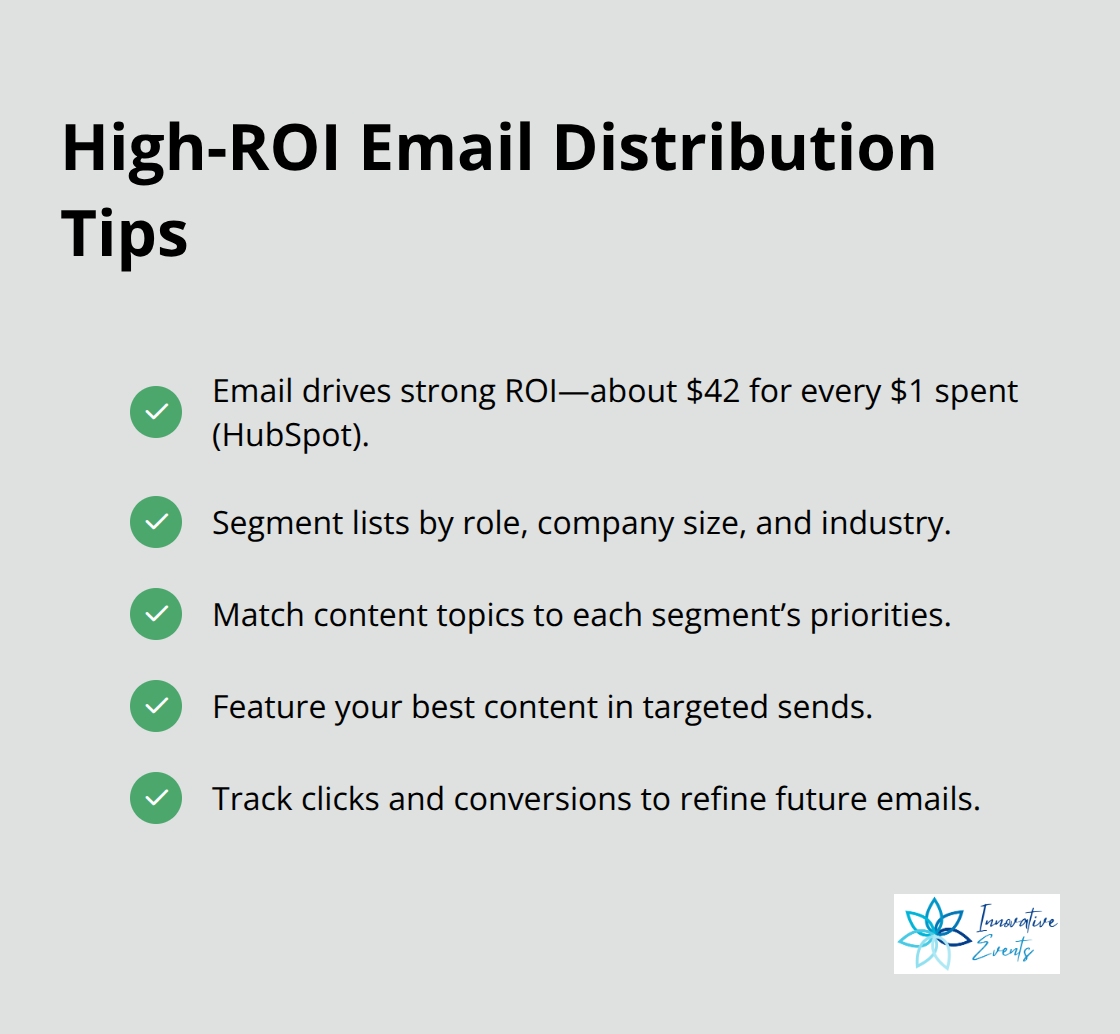
Segment your email list by role, company size, and industry so you send relevant content to each group. A content piece about reducing sales cycle length matters to sales leaders but not to HR leaders. Send it to the right segment and your click-through rates climb dramatically.
Track Metrics That Actually Matter
Measure what drives traffic and conversions by tracking which content pieces generate qualified leads, not just which ones get shared most. A blog post with 500 shares might generate zero leads, while a detailed case study with 20 shares might generate five qualified opportunities. Track metrics that matter to revenue, not vanity metrics. Set up UTM parameters on every link you distribute so you can attribute traffic and conversions back to specific channels and campaigns (this data reveals where to invest your content effort next quarter).
Final Thoughts
Content writing for marketing success rests on three non-negotiable principles: know exactly who you’re writing for, craft messages they actually want to read, and measure whether your work drives real business results. Skip any of these and your content becomes invisible noise in an already crowded market. The framework we’ve outlined here isn’t theoretical-it’s built on what actually works when brands stop guessing and start listening to their audience.
Your buyer personas should be specific enough that you could describe your ideal reader to a colleague without saying “someone in marketing.” Your headlines should make readers feel like you’re addressing their exact situation, not speaking to a generic crowd. Your distribution strategy should match where your audience actually spends time, not where you hope they’ll show up.
Start with one piece of content you’ve already published and apply these principles to it. Rewrite the headline to be more specific, segment your email list and send it to the right group, and track which channels actually drive qualified leads. If you’re ready to elevate your content strategy and create brand experiences that actually convert, Innovative Events specializes in crafting compelling marketing content and strategic messaging tailored to your business goals.