

Strong brands generate 23% more revenue than their competitors, according to McKinsey research. Yet most companies struggle to develop brand strategy that actually moves the needle.
We at Innovative Events have seen countless businesses transform their market position through strategic brand development. The difference lies in following a systematic approach that connects brand identity with measurable business outcomes.
What Makes Brand Strategy Actually Work?
Start With Purpose That Drives Decisions
Your brand purpose must solve a specific problem for real people. Patagonia built a $1 billion business around environmental activism because it identified customers who wanted gear that aligned with their values. Sprout Social found that 57% of customers spend more with brands they feel connected to, while 76% choose those brands over competitors.
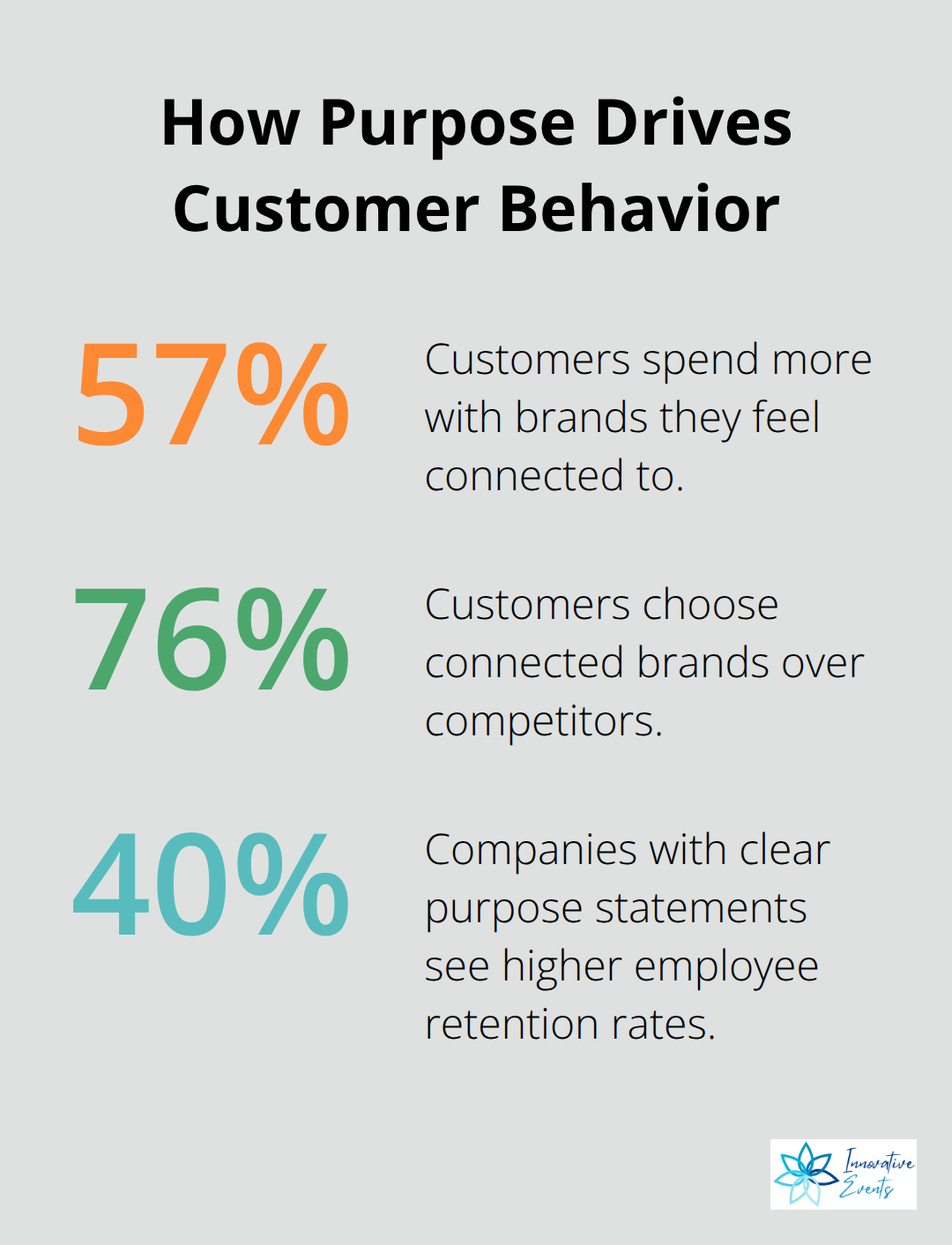
Purpose works when it guides every business decision, from product development to staff selection. Companies with clear purpose statements see 40% higher employee retention rates (according to Deloitte research). Write your purpose as a single sentence that explains why your company exists beyond profit generation.
Map Your Market Position Through Customer Pain Points
Successful brand placement starts with understanding what keeps your customers awake at night. Red Bull created the energy drink category when it targeted people who needed performance enhancement, not just caffeine. Study customer reviews, social media complaints, and support tickets to identify unmet needs.
Amazon uses this approach to expand into new markets, which allows it to leverage existing brand trust and reduce marketing costs by 30% compared to separate brand launches. Your position should address a specific pain point better than anyone else. Tesla positioned itself as the future of transportation, not just another car company. This approach allowed them to charge premium prices while customers waited in line.
Find Gaps Through Competitor Analysis
Most brands fail because they copy competitors instead of finding market gaps. Apple succeeded when it focused on design and user experience while competitors prioritized technical specifications. Analyze competitor messages, price strategies, and customer complaints to identify opportunities.
Netflix spotted the gap between expensive cable TV and affordable entertainment, then pivoted from DVD rental to streaming. Look for underserved customer segments, outdated business models, and emerging technologies your competitors ignore. The goal is not to beat competitors at their own game but to change the rules entirely.
Test Your Strategy Before Full Implementation
Smart brands validate their strategy through small-scale tests before major investments. Dove tested their “Campaign for Real Beauty” concept with focus groups before the full launch (which later redefined their entire brand purpose from moisturizer promotion to confidence building). Run pilot campaigns, survey target customers, and measure response rates.
Test different messages across social media platforms to see which resonates most. Track engagement metrics, conversion rates, and customer feedback during these tests. This data will guide your full strategy rollout and help you avoid costly mistakes that derail brand development efforts.
How Do You Build Brand Identity That Converts?
Visual Elements That Command Attention
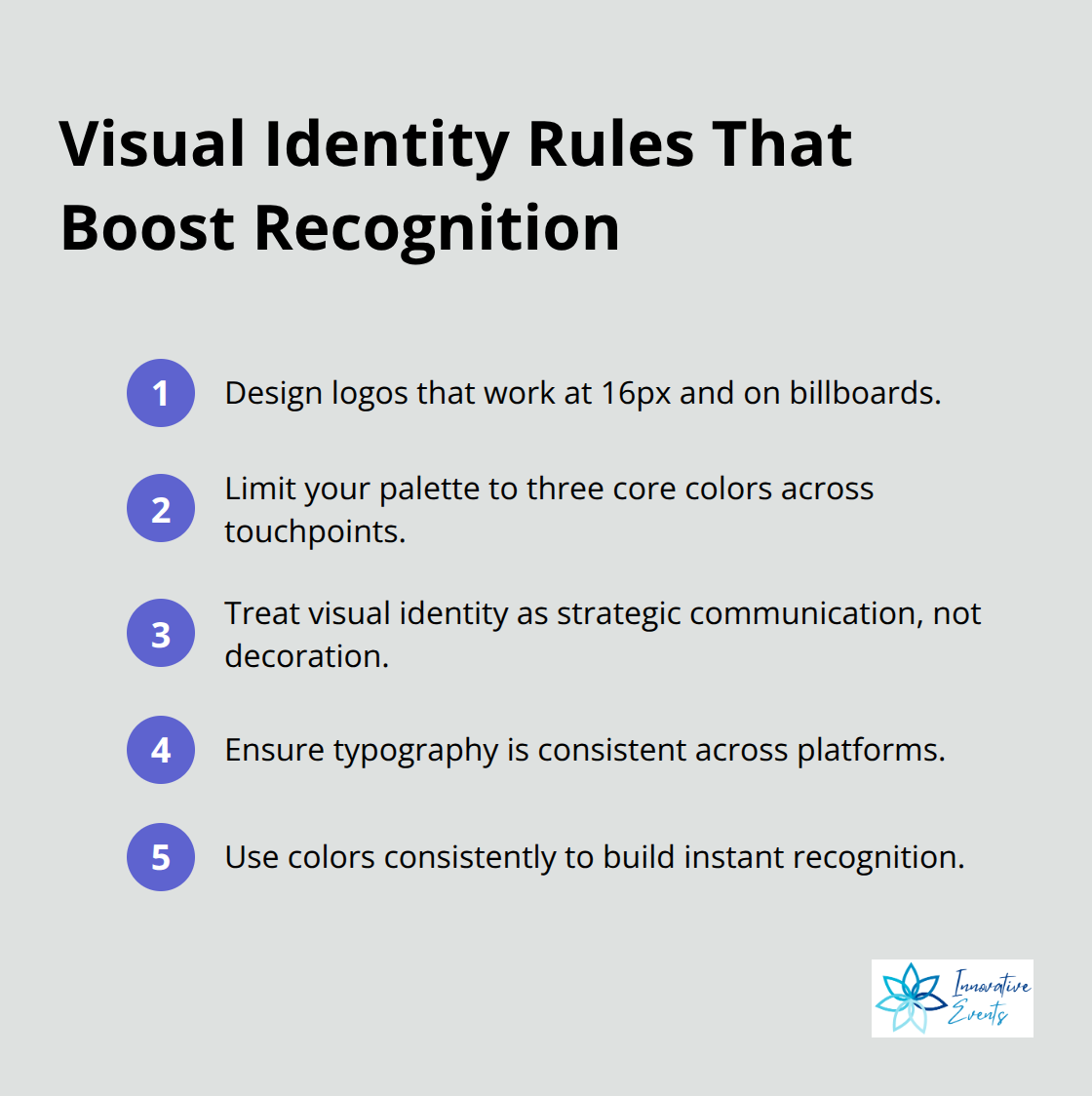
Your visual identity drives instant recognition before customers read a single word. Companies with consistent brand presentation see 32% revenue increases according to research, yet most brands fail because they treat visual identity as decoration rather than strategic communication.
Start with your logo, which should work perfectly at 16 pixels and on highway billboards. Uber’s rebrand cost $100 million because its previous logo failed at small sizes on mobile apps. Choose three core colors maximum and stick to them religiously across every touchpoint.
McDonald’s red and yellow combination has remained unchanged for 50 years because color consistency builds neural pathways that trigger instant brand recognition. Typography matters just as much-Apple uses San Francisco font across all platforms to maintain visual cohesion (even though most customers never notice the specific typeface).
Voice Guidelines That Teams Actually Follow
Brand voice guidelines fail when they contain abstract words like authentic or innovative. Netflix defines their voice through specific word choices: they say binge instead of watch, and they avoid corporate jargon completely.
Create a two-column list that shows words you use versus words you never use. Mailchimp’s voice guide includes actual email examples that demonstrate their playful tone in action, which reduced customer service complaints by 30% because all communications felt consistent.
Your voice should reflect how your customers naturally speak about their problems. Patagonia uses outdoor adventure language because their customers live that lifestyle, not because it sounds cool. Test your guidelines with real customer service scenarios to verify they work in practice.
Stories That Drive Purchase Decisions
Compelling brand stories connect customer problems to your solution through specific scenarios, not abstract missions. Warby Parker built their story around the frustration of losing expensive glasses, then offered affordable replacements delivered to your door.
Their story generated $214 million in revenue because it addressed a universal pain point. Structure your story with three elements: the problem your customer faces, the moment they discover your solution, and the transformation that follows.
Dove’s real beauty campaign works because it shows actual women who deal with confidence issues, not models who pretend to have problems. Test your story by asking customers to repeat it back after they hear it once (if they can’t, simplify your message).
The next step involves selecting the right channels and platforms to amplify these brand elements across your target market through strategic content marketing and social media engagement.
How Do You Execute Brand Strategy That Delivers ROI?
Platform Selection Based on Customer Behavior Data
Smart brands choose channels where their customers already spend time, not where competitors advertise most. LinkedIn generates 277% more leads for B2B companies than Facebook, according to HubSpot research, yet most businesses waste budget on broad social media campaigns. Study your Google Analytics data to identify which platforms drive actual conversions, not just traffic.
B2B companies should focus 80% of their budget on LinkedIn and email marketing, while consumer brands see better returns from Instagram and TikTok. Netflix spends 70% of its marketing budget on digital channels because its data shows customers who stream content consume media primarily online. Test each platform with small budgets first, then scale the channels that generate qualified leads at your target cost per acquisition.
Content Creation That Converts Browsers Into Buyers
Content that aligns with brand goals solves specific customer problems at each stage of the purchase journey. Companies that publish 16+ blog posts per month get 3.5 times more traffic than those that publish fewer than four posts, according to HubSpot data. Create educational content for the awareness stage, comparison guides for consideration, and case studies for decision-makers.
Video content generates 1200% more shares than text and images combined, which explains why brands like Dollar Shave Club built entire businesses through viral video campaigns. Focus on formats your audience prefers rather than trendy new platforms. B2B buyers consume white papers and webinars, while consumer audiences prefer short-form videos and user-generated content.
Performance Tracking That Guides Budget Allocation
Track metrics that connect directly to revenue growth, not vanity statistics like followers or impressions. Brands that measure customer lifetime value see 60% higher profits according to Bain & Company research. Set up conversion tracking in Google Analytics to identify which campaigns generate paying customers versus window shoppers.
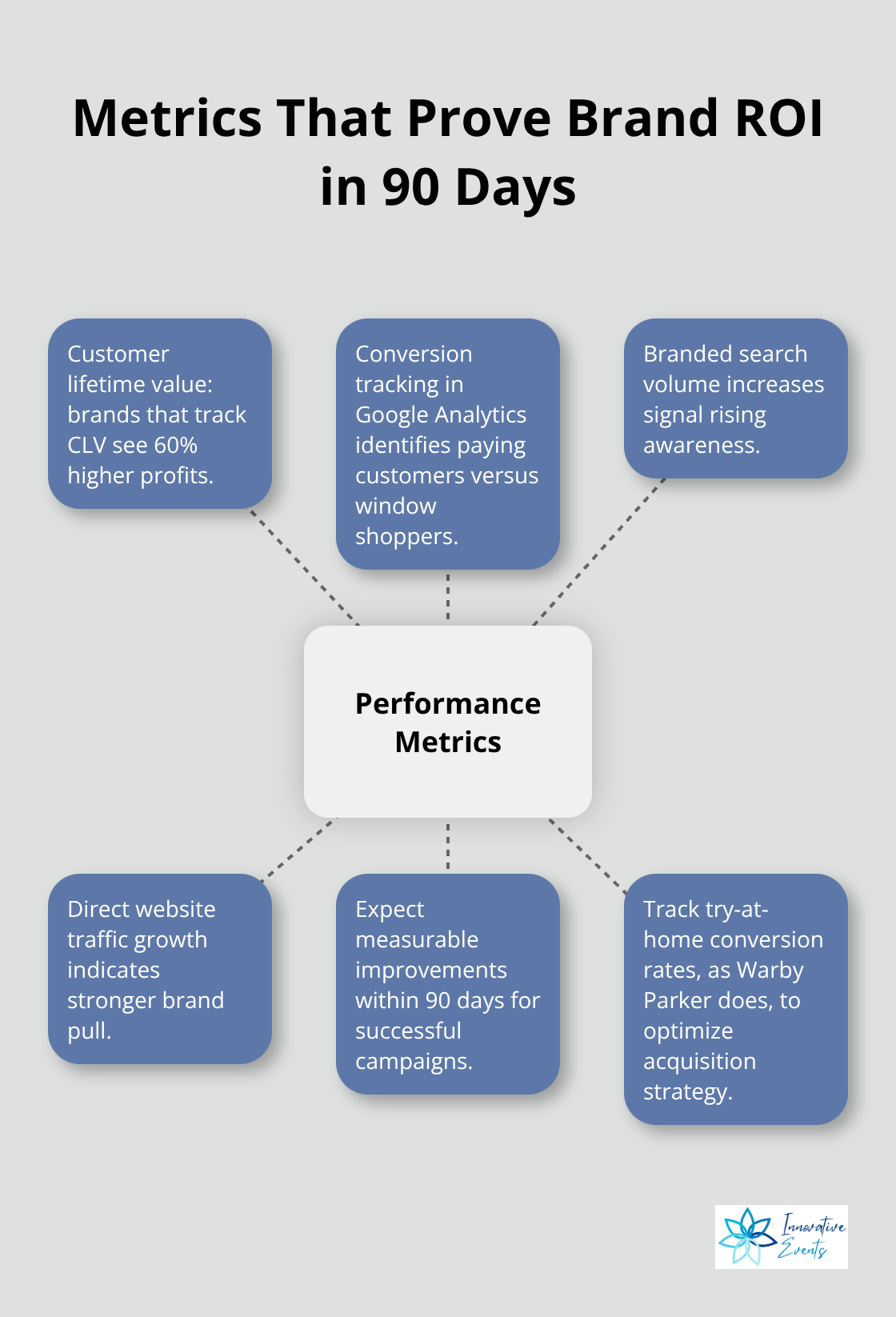
Monitor brand awareness through branded search volume increases and direct website traffic growth. Successful campaigns should show measurable improvements in these metrics within 90 days. Companies like Warby Parker track try-at-home conversion rates to optimize their customer acquisition strategy (which helped them reach $214 million in annual revenue through data-driven decision making). Working with experienced brand strategy consulting firms can help identify the most effective key roles needed to maximize return on investment.
Final Thoughts
A successful brand strategy combines clear purpose with systematic execution. Companies that develop brand strategy through customer pain point analysis, competitor gap identification, and consistent visual identity see measurable revenue growth within 90 days. The data proves this approach works: brands with strategic consistency generate 23% more revenue while they build stronger customer connections.
Your next steps should focus on tests of core messages before full implementation, then scale the channels that deliver qualified leads at your target acquisition cost. Track metrics that connect directly to business outcomes rather than vanity statistics. This systematic approach transforms brand investment from an expense into a profit driver.
Strategic brand development delivers compound returns over time. Companies that maintain consistent brand investment achieve sustainable growth while competitors struggle with short-term tactics (which often fail to build lasting value). We at Innovative Events help businesses execute these strategies through comprehensive marketing solutions that build customer relationships and drive measurable results.