

Your e-commerce brand strategy determines whether customers choose you or your competitors. Most online retailers focus only on product listings and checkout speed, missing the bigger picture that separates thriving brands from forgotten ones.
At Innovative Events, we’ve seen firsthand how brands that nail their positioning, visual identity, and customer experience outperform those that don’t. This guide walks you through the essentials you need to build a brand that customers actually remember and return to.
Understanding Your Target Audience
Your e-commerce brand strategy determines whether customers choose you or your competitors. Most online retailers focus only on product listings and checkout speed, missing the bigger picture that separates thriving brands from forgotten ones.
Who Your Customers Really Are
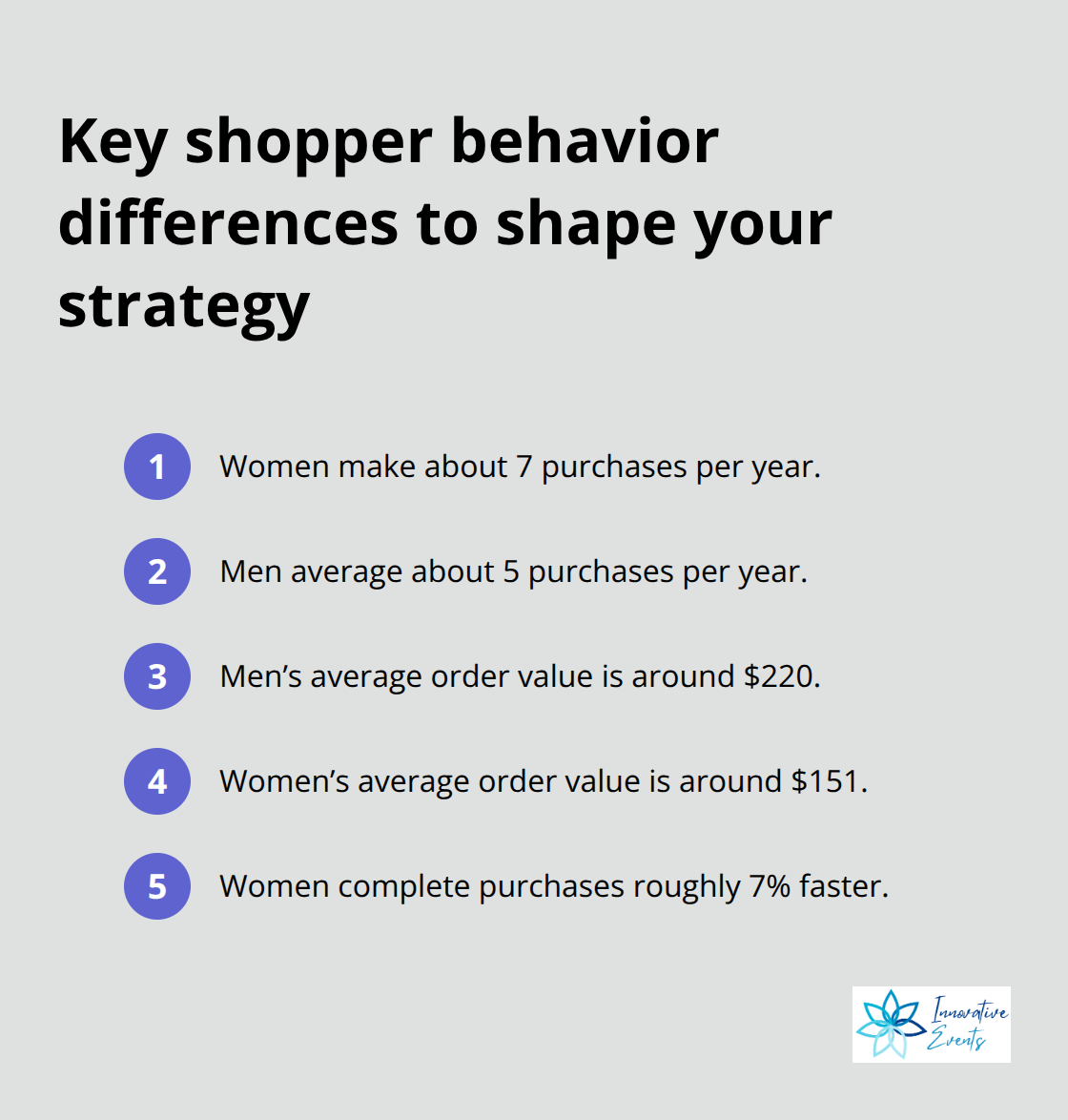
Understanding your e-commerce customers goes far beyond demographics. You need to know what they actually buy, when they buy it, and what stops them from completing a purchase. Start by analyzing your existing customer data. Look at your transaction history, cart abandonment patterns, and customer service inquiries to identify who spends money and who drops off. Women online shoppers average about 7 purchases per year compared to men’s 5 purchases, but men’s average order value sits higher at around $220 versus $151 for women. Women also close purchases roughly 7% faster. These differences matter because they shape how you position products, price offers, and design checkout flows.
If your target audience skews female, a faster, simpler checkout becomes non-negotiable. If you’re targeting men, emphasizing premium features and higher-value bundles makes sense.
What Your Customers Actually Need
Market research means talking to customers directly, not just reading analytics dashboards. Send surveys asking why they abandoned carts, what problems your product solves for them, and what competitors they considered. Look at reviews on your site and competitor sites to spot recurring complaints. Free shipping ranks as a top driver of online shopping behavior, with more than 76% of consumers saying it’s near the top of their list when deciding where to shop. Cart abandonment exceeds 70% in many cases, and the biggest reason isn’t indecision-it’s unexpected fees appearing at checkout. Customers also hate mandatory account creation before purchase and lengthy checkout processes. These aren’t theoretical problems; they’re concrete friction points you can eliminate immediately.
Building Accurate Buyer Personas
Create buyer personas based on real data, not guesses. A persona should include their actual purchase frequency, average spending, preferred product categories, and the specific objections they raise. One persona might be a busy professional who values speed and free shipping. Another might be a price-conscious shopper who compares across three sites before buying. Each persona needs different messaging, offers, and checkout experiences. Test your assumptions by segmenting your email list by persona and measuring which messaging drives higher open and click rates. Track which customer segments have the highest repeat purchase rates and lifetime value. This reveals which personas are actually worth acquiring and retaining, rather than which ones sound good in theory. Once you understand who your real customers are and what they need, you’re ready to build a brand identity that resonates with your target audience.
Building a Brand That Stands Out
Define Your Value Proposition
A value proposition is a concise statement that communicates the unique benefits and value a product or service offers to its target audience. Most brands bury this in vague language like “quality products” or “great service.” That approach fails. Warby Parker didn’t say “we sell glasses.” They positioned themselves around affordability and home try-on convenience, reaching a $3 billion valuation by solving the friction of traditional eyewear shopping. Casper didn’t claim to have the best mattress. They built authority through education and social proof, reaching $1.1 billion in value.
Your positioning statement should be one sentence that your entire team can recite. Test it against three competitors. If your statement could describe their brand too, it’s not distinctive enough. Once you nail positioning, translate it into three to five brand pillars with observable proof points. If sustainability is a pillar, show it through transparent sourcing details on your product pages. If speed is a pillar, highlight your shipping guarantees prominently. Each pillar needs evidence that customers can actually see.
Create Visual Identity That Sticks
Your logo, color palette, and typography work together to create immediate recognition. Use no more than two typefaces across your entire site and marketing. Pick one signature color for all action buttons (Add to Cart, Checkout, Subscribe). This consistency trains customers’ eyes to know exactly where to click. Accessibility matters here too: ensure your color combinations meet WCAG standards so colorblind visitors and those with low vision can navigate your site.
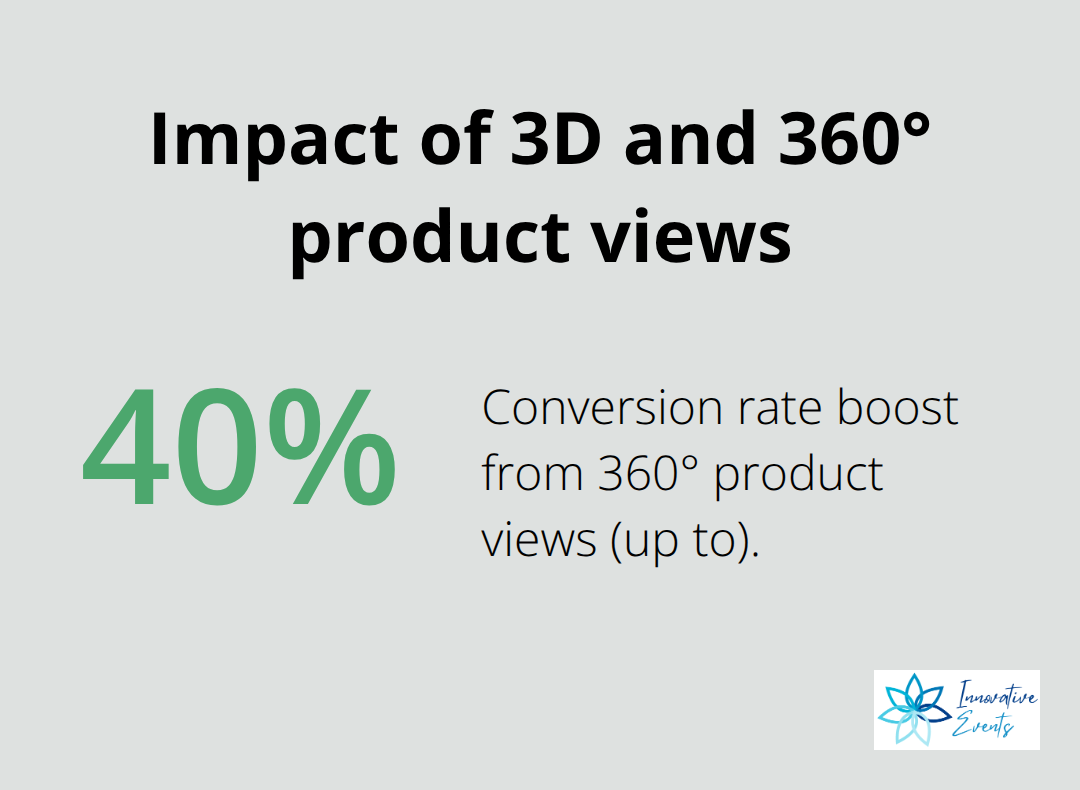
High-quality product photography or 3D product views significantly impact conversions. By offering these interactive experiences, 3D visuals increase customer engagement, with 360° product views boosting conversion rates by up to 40%. Invest in professional photography or 3D modeling rather than relying on supplier images. These visual elements form the foundation of how customers recognize and remember your brand across every touchpoint.
Develop Your Brand Voice
Your brand voice shapes how customers perceive you across emails, social posts, and customer service responses. Define your voice using three words that describe your tone. Are you playful and irreverent, or calm and authoritative? Your social media might be cheeky while your transactional emails remain professional and reassuring. This calibration prevents jarring shifts that confuse customers.
Test your voice by writing the same message in two different tones, then measuring which email variant drives higher engagement. The winner reveals what resonates with your actual audience, not what sounds good internally. Consistency in voice across channels builds trust and makes your brand feel intentional rather than scattered.
Translate Strategy Into Action
These three elements-positioning, visual identity, and voice-work together to create a cohesive brand experience. When they align, customers recognize you instantly and understand why they should choose you. When they conflict, customers feel confused and drift toward competitors. The brands that win in e-commerce nail this alignment, then extend it across every customer interaction. This foundation sets the stage for the next critical element: how you actually structure the shopping experience itself.
Optimizing Your E-Commerce Experience
Guide Customers Through Your Store Effectively
The shopping experience you create determines whether customers complete purchases or abandon carts. Most e-commerce sites treat navigation as an afterthought, burying products behind confusing category structures and forcing visitors to hunt for what they need. This approach costs you sales.
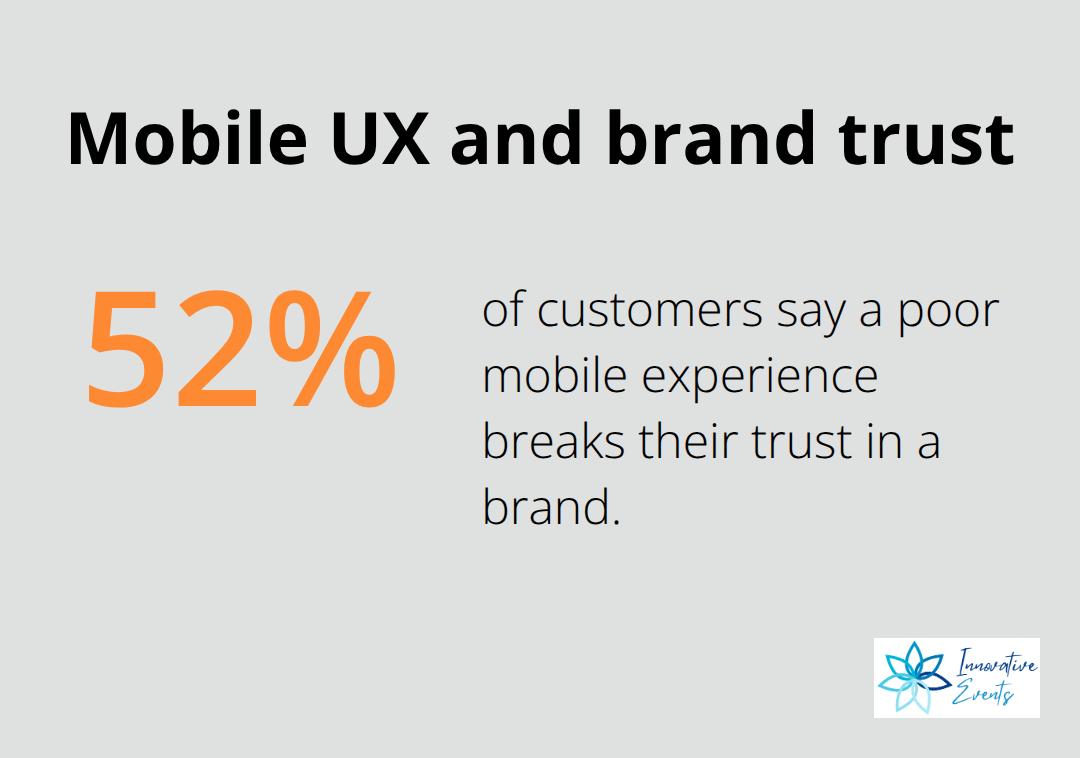
Mobile accounts for more than a significant portion of all US e-commerce sales, yet 52% of customers say a poor mobile experience breaks their trust in a brand. Your navigation must work flawlessly on phones first, then scale up to desktop.
Analyze your actual customer behavior through heat maps and session recordings. Tools like Hotjar show exactly where visitors click, how far they scroll, and where they abandon your site. Most retailers discover that customers never find products buried three clicks deep. Restructure your categories based on how customers actually search, not how your internal team thinks logically. If your data shows customers search for product benefits rather than technical specifications, organize your categories around those benefits.
Test different navigation structures with real visitors through A/B testing before rolling out changes site-wide. Include a prominent search bar at the top of every page, and make sure search results rank by relevance, not just alphabetically. Your search function should handle common misspellings and synonyms so a customer searching for yoga pants finds results even if they type yogurt pants.
Personalize the Shopping Experience
Personalization separates thriving stores from mediocre ones, yet most retailers ignore it entirely. Sephora demonstrated that tailored experiences drive purchases and loyalty (showing customers product recommendations based on their skin type, past purchases, and browsing history). You don’t need Sephora’s budget to implement this approach.
Segment your email list by purchase history and send different product recommendations to first-time buyers versus repeat customers. First-time buyers need reassurance through reviews and guarantees; repeat customers respond better to exclusive early access to new products. Tools like Klaviyo automate this segmentation and personalization without requiring manual work. On your product pages, show customer reviews prominently and highlight the most helpful ones first, since social proof directly influences purchase decisions. Include user-generated content like customer photos of products in action, which builds trust far more effectively than professional photography alone.
Remove Friction From Checkout
At checkout, your job is to remove every possible friction point. The top reason customers abandon carts is unexpected fees appearing at the final step. Display your total cost, including shipping and taxes, before customers enter payment information, not after. Mandatory account creation kills conversions; offer guest checkout as the default option with an optional account signup afterward.
Your checkout flow should take no more than three to four steps on mobile devices. Each additional step increases abandonment roughly 3% to 5%. Test your checkout on actual mobile phones, not just desktop browsers, because payment buttons that look large on a desktop feel cramped on phones. Offer multiple payment methods including digital wallets like Apple Pay and Google Pay, which reduce friction significantly since customers don’t need to type payment details.
Recover Abandoned Carts
Cart recovery emails remain one of your highest-ROI marketing channels, with abandonment rates exceeding 70% across many industries. Send your first recovery email within one hour of abandonment, reminding customers what they left behind without being aggressive. Include a small incentive like 10% off if appropriate for your brand positioning, but don’t lead with discounts since most abandoned carts represent genuine purchase intent, not price sensitivity.
Final Thoughts
Your e-commerce brand strategy isn’t something you build once and forget; it’s a living system that evolves as your business grows and customer expectations shift. The brands winning in 2026 understand that positioning, visual identity, and customer experience must work together seamlessly, then adapt based on real performance data. Start with your positioning statement, test it against competitors, and align your visual identity and brand voice to reinforce it before you optimize navigation, personalization, and checkout.
Measure what actually matters to your business. Track your repeat purchase rate, average order value by customer segment, and which channels drive your most valuable customers, since these metrics reveal whether your strategy works or just sounds good internally. Cart abandonment rates, email open rates, and mobile conversion performance tell you exactly where friction exists and what needs fixing. Long-term brand growth comes from consistency-your logo, color palette, and core messaging should remain stable while you adapt tactics based on performance data.
The brands that build genuine loyalty create memorable experiences that make customers want to return and recommend you to others. This happens through transparent communication about your products, responsive customer service, and a clear commitment to the values you claim to represent. If you’re building a comprehensive brand strategy that extends beyond your website into events, content, and community engagement, Innovative Events specializes in crafting immersive brand experiences that inspire lasting connections with your audience.