

Content marketing teams often struggle with unclear roles and overlapping responsibilities. This confusion leads to missed deadlines, inconsistent messaging, and wasted resources.
We at Innovative Events have seen how proper content marketing responsibilities transform team performance. Clear role definition increases productivity by 25% according to recent industry research.
The right structure makes content creation smoother and results more measurable.
Who Handles What in Content Marketing Teams
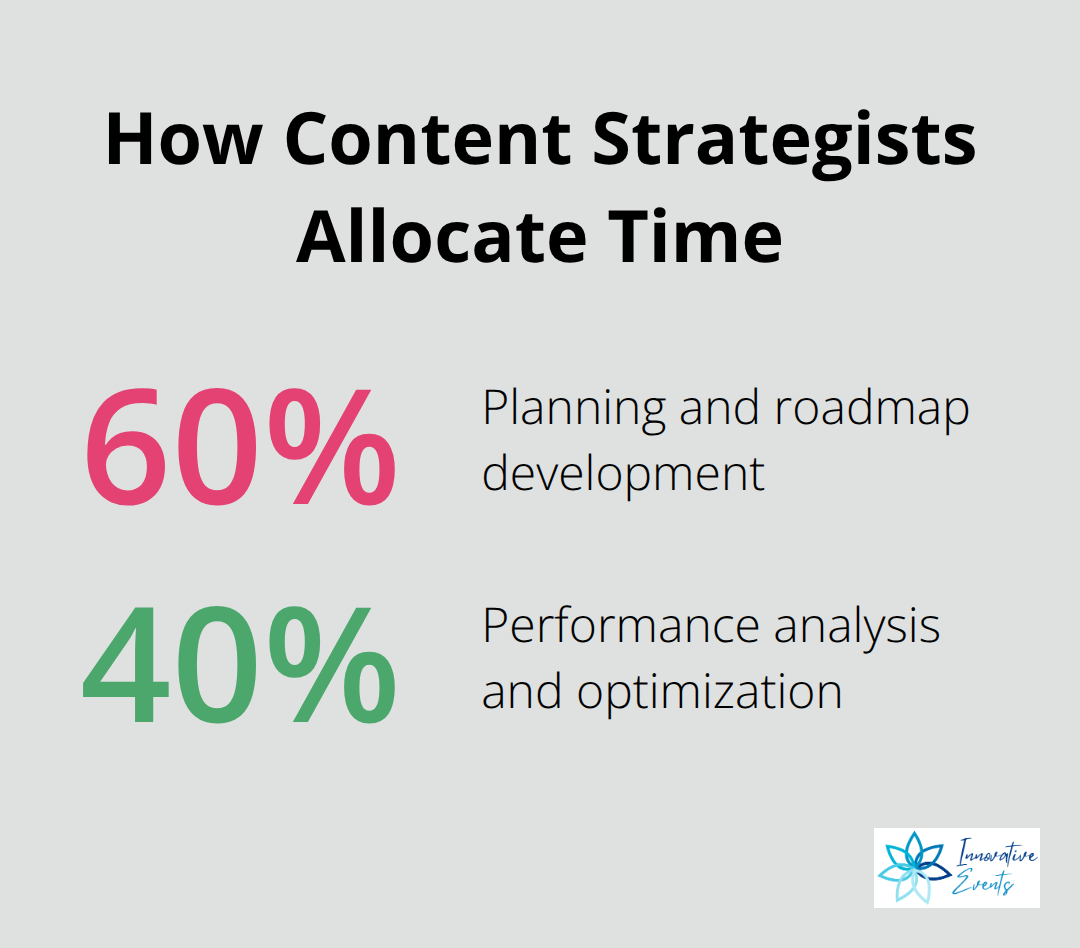
Content strategy demands dedicated ownership to prevent the chaos that destroys marketing efforts according to CMI’s latest research. The strategy role requires someone who maps content to business objectives and maintains brand consistency across all touchpoints. This person analyzes audience data, identifies content gaps, and creates frameworks that guide every piece of content your team produces. Content strategists spend 60% of their time on planning and 40% on performance analysis (making this role fundamentally different from content creation).
Content Creation Needs Editorial Leadership
Content production teams need managing editors who control quality and maintain publishing schedules. These editors oversee content calendars, coordinate with subject matter experts, and maintain brand voice consistency across formats. SEO specialists audit content for optimization opportunities while designers transform complex information into visual formats that enhance engagement according to recent studies. The most effective teams assign specific content types to specialists rather than expect generalists to handle everything from blog posts to video scripts.
Distribution Strategy Determines Content Success
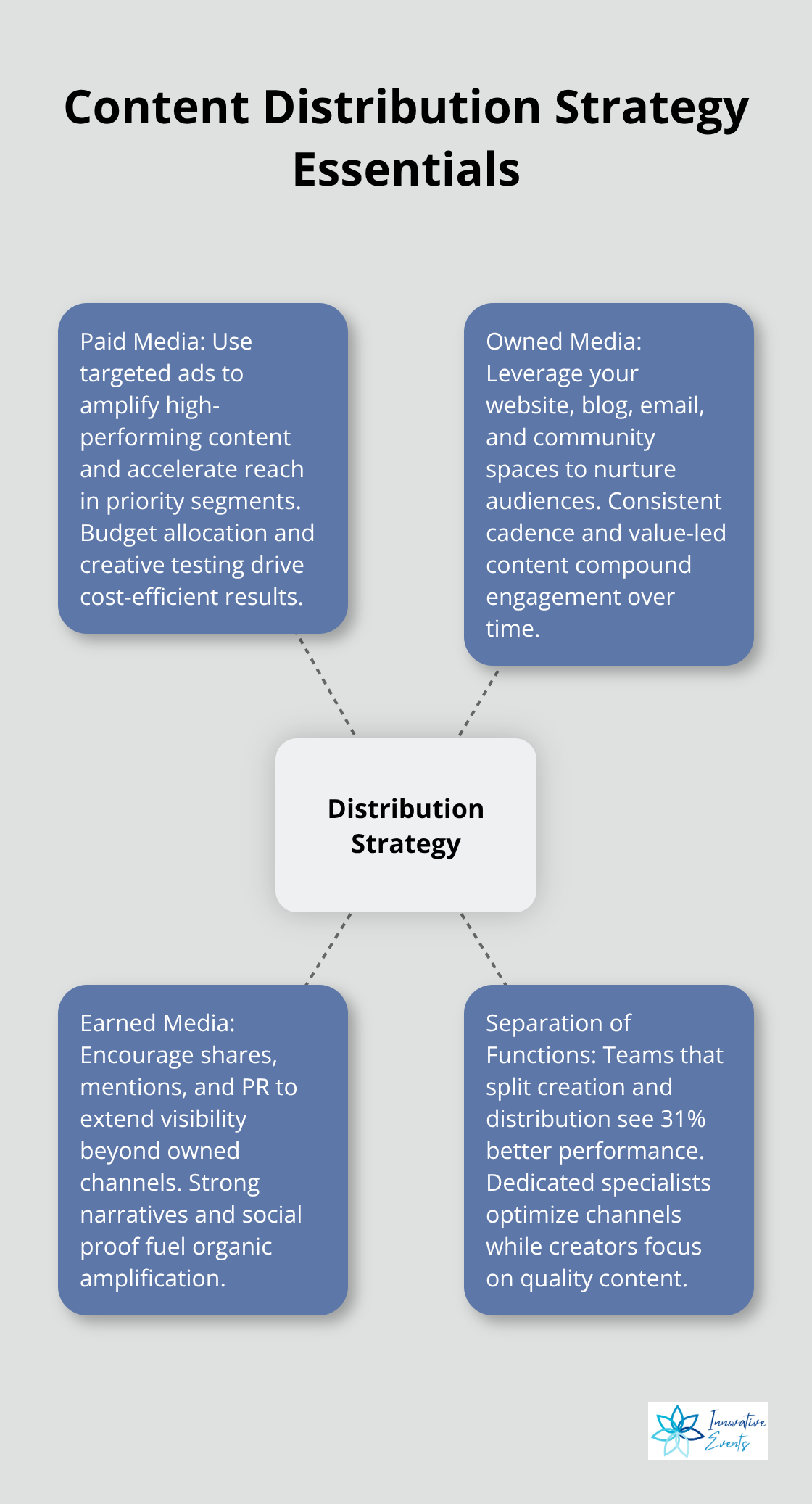
Content distribution strategists develop go-to-market plans that incorporate paid, owned, and earned media channels. Email marketing specialists focus on list growth and conversion optimization while social media experts track platform trends and engagement metrics. The distribution role requires understanding platform-specific content formats and timing strategies that can increase reach by 200% when executed properly. Teams that separate creation from distribution see 31% better performance because distribution specialists focus entirely on maximizing content visibility.
Technical Skills Bridge Strategy and Execution
Data experts set up analytics systems, define KPIs, and optimize content based on insights across marketing channels (54% of teams lack dedicated data analysis, according to industry reports). These specialists translate performance metrics into actionable recommendations that improve content effectiveness. Technical writers ensure content aligns with search intent while maintaining readability standards that support both user experience and search engine optimization goals.
The foundation of clear responsibilities sets the stage for developing the specific skills that make content teams successful across all these specialized roles.
What Skills Drive Content Marketing Success
Data analysis transforms content teams from guesswork to strategic precision. Teams that track performance metrics see better results, but most marketers struggle with meaningful measurement. The key lies in setting up analytics systems that connect content performance to business outcomes rather than vanity metrics. Focus on conversion rates, customer acquisition costs, and lifetime value attribution instead of page views or social shares. Google Analytics 4 and tools like Hotjar provide actionable insights when you configure them properly. The most successful teams dedicate 20% of their time to performance analysis and use these insights to optimize future content production.
SEO Writing Demands Technical Precision
Technical writing skills separate effective content teams from amateur operations. Search intent alignment drives stronger organic performance than keyword-stuffed content. Writers must understand semantic search, featured snippet optimization, and structured data implementation to compete effectively. Tools like Clearscope and MarketMuse help content creators optimize for topical authority while they maintain readability. The best SEO writers combine technical knowledge with editorial judgment (creating content that satisfies both search algorithms and human readers). Teams that integrate SEO specialists into content creation workflows rather than treat optimization as an afterthought see 40% better search performance.
Community Management Amplifies Content Impact
Social media management extends far beyond posting content to building engaged communities around brands. Platform-specific expertise matters more than general social media knowledge because each channel requires different content formats and engagement strategies. TikTok demands vertical video storytelling while LinkedIn favors professional insights and industry commentary. The most effective social media specialists spend 60% of their time engaging with audiences rather than creating new content (community building requires consistent interaction and rapid response times). Authentic relationship development turns followers into brand advocates who amplify content reach organically.
These specialized skills work best when teams structure their operations around clear workflows and measurable objectives that align individual expertise with broader marketing goals.
How Do You Structure Content Teams for Maximum Impact
Team structure determines content marketing success more than talent or budget, according to recent industry analysis. The most effective teams organize around three core functions rather than traditional hierarchical models. Content strategists map quarterly objectives to monthly content themes and weekly schedules. Production teams need editors who coordinate writers, designers, and video creators while they maintain quality standards across all formats. Distribution specialists focus entirely on channel optimization and audience engagement rather than content creation.
Teams that separate these functions see better performance because specialists develop deeper expertise in their specific areas. Standard procedures eliminate confusion when team members understand exactly who handles content approvals, revision requests, and deadline management.
Performance Metrics Drive Strategic Decisions
Clear KPIs transform content teams from reactive to proactive operations. Track conversion rates rather than vanity metrics like page views or social shares because business impact matters more than engagement numbers. Set monthly targets for lead generation, email list growth, and customer acquisition costs that directly connect content performance to revenue goals.
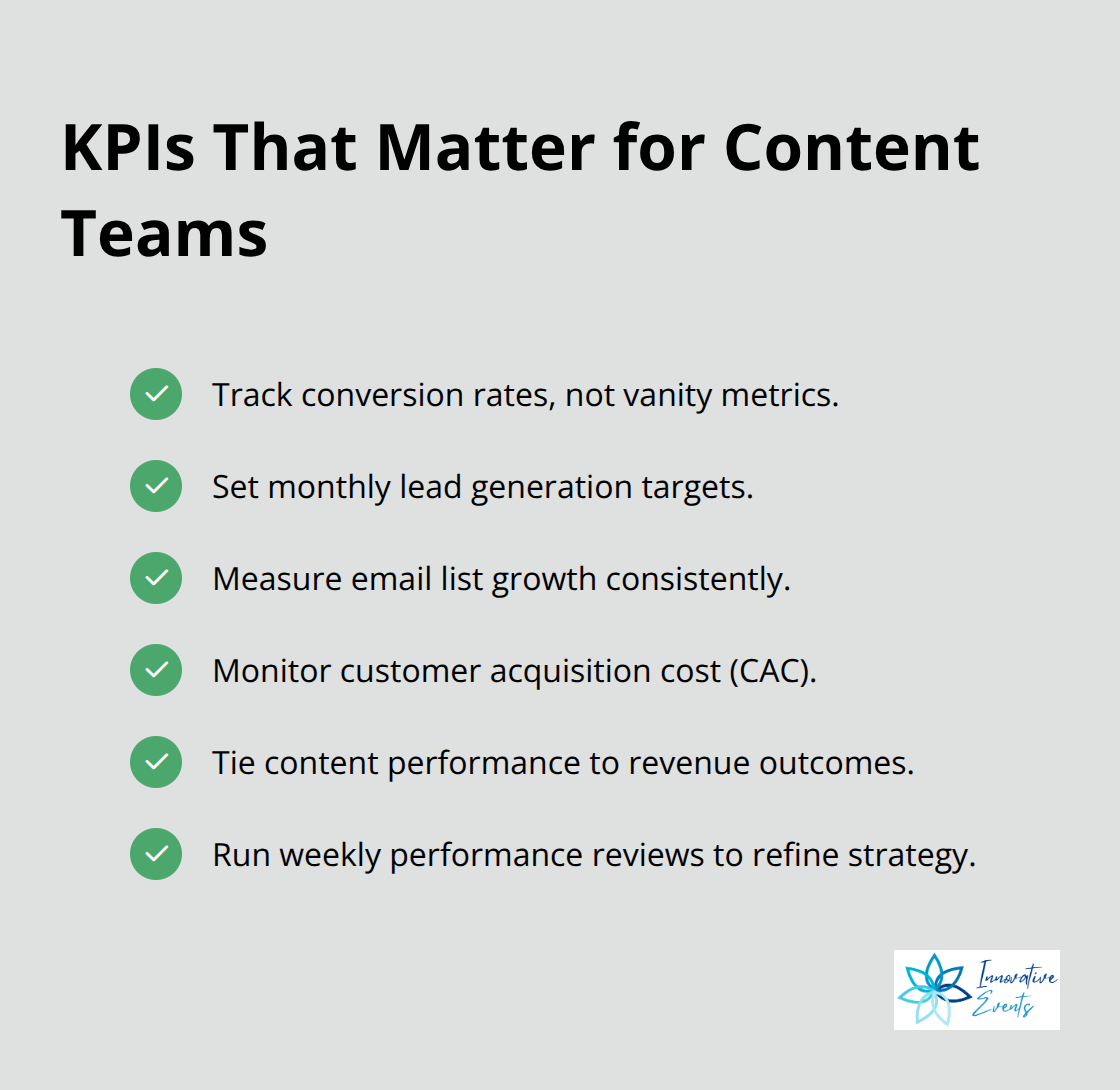
The most successful teams dedicate specific roles to data analysis rather than expect content creators to interpret analytics. Tools like Google Analytics 4 and HubSpot provide actionable insights when you configure them properly with conversion tracking and attribution models. Weekly performance reviews help teams identify successful content patterns and eliminate ineffective approaches before they waste additional resources.
Production Schedules Prevent Content Chaos
Content calendars require detailed production timelines that account for research, writing, editing, design, and approval phases. The best teams work 6-8 weeks ahead of publication dates to accommodate revision cycles and unexpected delays. Assign specific deadlines for first drafts, editorial reviews, and final approvals rather than vague timeline expectations.
Project management tools like Asana or Monday.com help teams track progress and identify bottlenecks before they affect schedules. Batch similar content types together because writers perform better when they focus on blog posts for entire weeks rather than switching between formats daily. Emergency content protocols handle breaking news or trending topics without disrupting planned editorial calendars (this approach maintains consistency while allowing flexibility for timely content opportunities that support your brand architecture strategy).
Final Thoughts
Content marketing responsibilities form the backbone of successful marketing operations. Teams with clearly defined roles achieve 25% higher productivity and eliminate the confusion that leads to missed deadlines and inconsistent messaging. Strategic planning, content creation, and distribution require specialized expertise rather than generalist approaches.
Well-structured teams separate strategy from execution while they maintain clear communication workflows. Data analysis transforms guesswork into strategic precision when teams dedicate specific roles to performance measurement. SEO specialists and social media experts develop deeper expertise when they focus on their core competencies rather than juggling multiple responsibilities (this specialization drives measurable results).
The impact extends beyond efficiency gains because teams with defined content marketing responsibilities see 31% better performance. Specialists optimize their specific areas while they collaborate effectively across functions. We at Innovative Events help businesses build comprehensive marketing strategies that align content operations with broader business objectives through strategic planning and execution expertise.