

Companies with multiple products or services face a common challenge: maintaining consistent brand recognition while managing diverse offerings. A brand umbrella strategy solves this by creating unified messaging and visual identity across all business areas.
At Innovative Events, we’ve seen how this approach transforms marketing effectiveness and builds stronger customer relationships. The right strategy reduces costs while amplifying brand impact across every touchpoint.
What Makes Brand Umbrella Strategy Different
A brand umbrella strategy operates under one master brand name that covers multiple products or services, which creates unified recognition across your entire business portfolio. This approach differs fundamentally from individual brand strategies where each product maintains a separate identity, messaging, and marketing campaigns. Companies like Apple demonstrate this perfectly – whether customers purchase an iPhone, MacBook, or Apple Watch, they experience consistent design language, quality expectations, and brand values that reinforce the master brand.
The Core Architecture
The foundation rests on three components: unified visual identity, consistent messaging framework, and shared brand values. Microsoft exemplifies this with products that range from Windows to Teams, all of which carry the same visual elements and professional positioning. Individual brand strategies require separate logos, color schemes, and marketing materials for each product, which multiplies costs and fragments customer recognition.
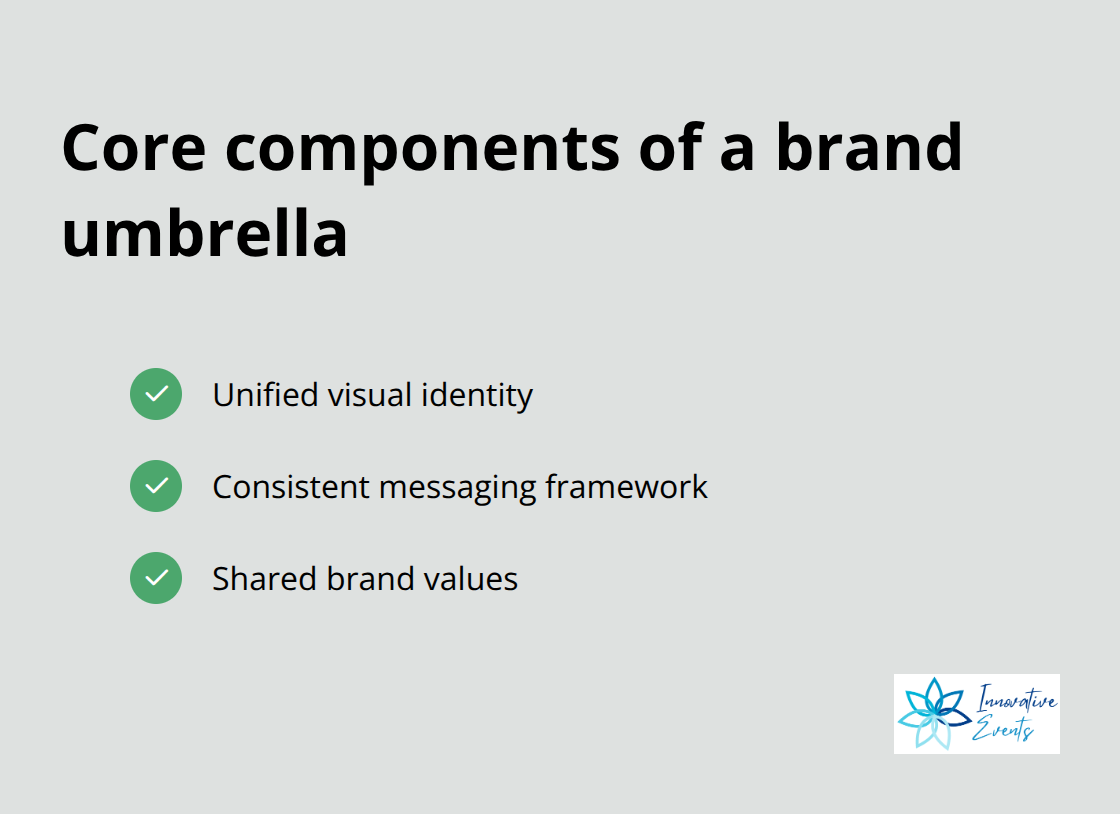
Brand umbrella strategies eliminate this fragmentation when companies establish clear guidelines that govern how every product or service represents the master brand.
Strategic Advantages Over Fragmented Approaches
Operating multiple brands under one umbrella allows for better risk management and provides a buffer against market fluctuations. When Virgin Group launches new services, customers immediately transfer their trust from Virgin Airlines to Virgin Mobile because the brand equity works across categories. Individual branding forces companies to rebuild trust and recognition from zero with each new product launch, which requires significantly higher marketing investments and longer market penetration timelines. The umbrella approach leverages existing brand awareness to accelerate new product acceptance and reduce customer acquisition costs across the entire portfolio.
Implementation Challenges and Solutions
Companies must address quality consistency across all products under the umbrella brand (as one weak product can damage the entire brand reputation). Nestle’s experience with the Maggi product crisis illustrates how a single product failure can impact a large umbrella brand’s reputation globally. Successful umbrella brands like Unilever maintain strict quality standards across diverse product lines from Dove to Lipton, which protects the master brand integrity. Organizations need robust quality control systems and crisis management protocols to prevent reputation contagion that could affect the entire brand portfolio.
These strategic considerations lead directly to the substantial benefits that companies can achieve through the proper implementation of umbrella branding approaches.
Why Brand Umbrella Strategies Drive Better Business Results
Brand umbrella strategies deliver measurable financial advantages that individual approaches cannot match. Companies that implement unified strategies reduce costs by 15-30% as they eliminate duplicate campaigns and leverage shared creative assets across product lines. Procter & Gamble demonstrates this efficiency when they run integrated campaigns that promote multiple products simultaneously under their master brand, which reduces per-product marketing spend while maintaining market presence. Marketing teams can reallocate resources from brand development to customer acquisition when they operate under one umbrella, which accelerates growth and improves return on marketing investment.
Cost Reduction Through Unified Operations
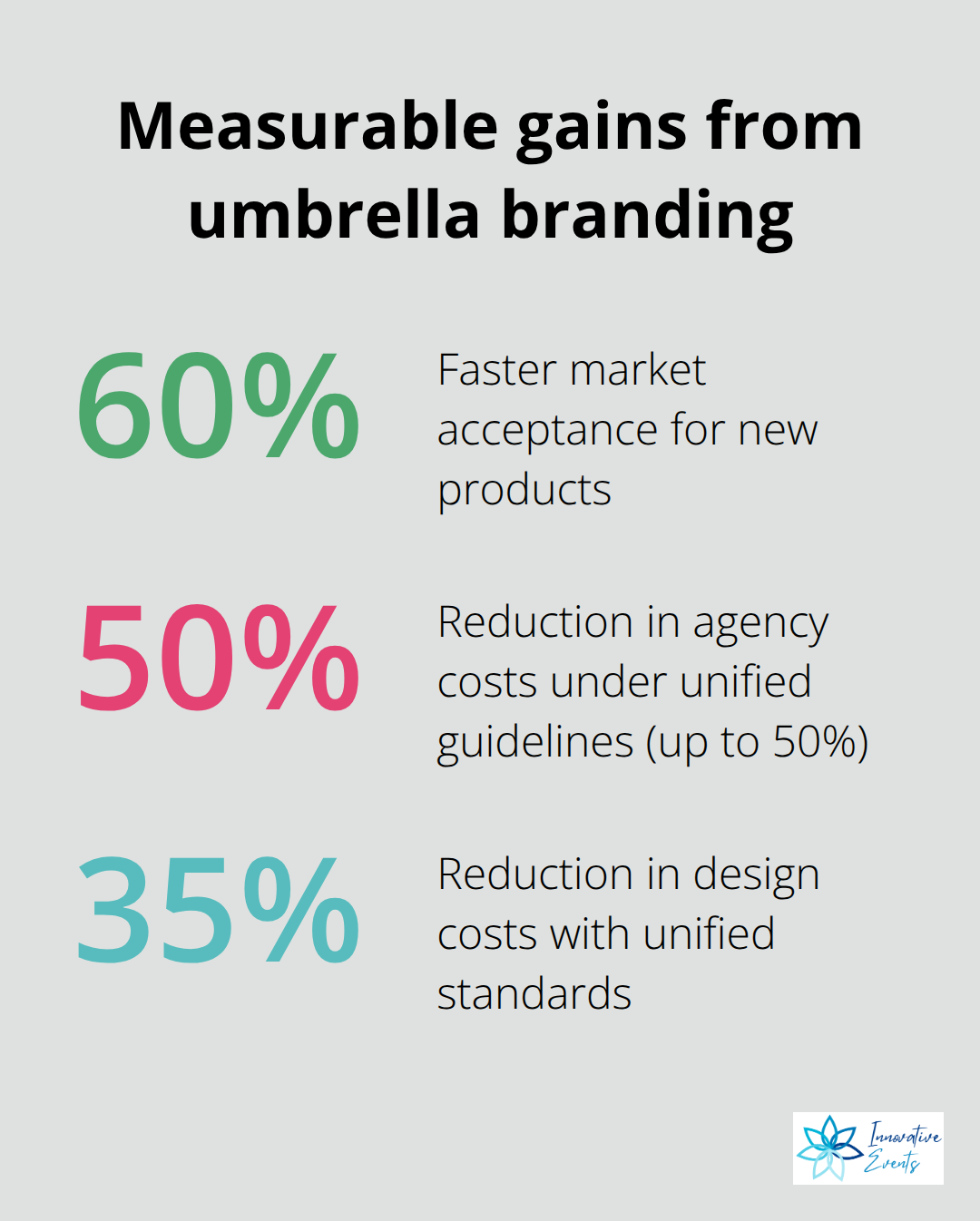
Marketing departments save substantial resources when they consolidate brand management activities under one umbrella structure. Johnson & Johnson operates with unified creative guidelines that govern everything from Tylenol packaging to Band-Aid advertising, which eliminates the need for separate design teams and reduces agency costs by up to 50%. Companies avoid duplicate spending on market research, brand positioning studies, and consumer insights when they share these investments across all products. Legal costs decrease significantly as trademark registration, brand protection, and compliance efforts cover the entire product portfolio rather than individual brands.
Accelerated Trust Transfer and Market Entry
Established umbrella brands can launch new products with 60% faster market acceptance compared to standalone brands, according to Harvard Business Review studies. Virgin Group exemplifies this advantage when they enter regulated markets like banking and telecommunications with immediate consumer recognition and trust transfer from its airline operations.
Customer acquisition costs drop dramatically when new products inherit the credibility and awareness of the master brand, which allows companies to achieve profitability faster and with lower initial investment. Brand equity built over years transfers instantly to new offerings (reducing the typical 18-24 month brand building timeline to 6-8 months for market penetration).
Enhanced Customer Loyalty and Cross-Selling Opportunities
Umbrella brands create natural pathways for customers to explore additional products within the same ecosystem. Apple customers who purchase an iPhone often add Apple Watch, AirPods, and other accessories because they trust the brand quality and expect seamless integration. This cross-selling effect increases customer lifetime value by 40-60% compared to companies with separate product brands. Kellogg’s leverages this advantage across cereals and snacks, maintaining unified taste profiles that keep customers loyal to their brand family rather than switching to competitors.
These financial and operational advantages set the foundation for successful implementation, which requires careful planning and systematic execution across all brand touchpoints.
How to Build a Brand Umbrella Strategy That Works
Start with a comprehensive brand audit that examines every customer touchpoint, message variation, and visual inconsistency across your current portfolio. Companies with fragmented brand presentations face significant challenges in maintaining customer trust and recognition. Document every logo variation, color scheme, and message approach currently in use across products, services, and departments. Interview customers to identify which brand elements they recognize and value most, then map these insights against your business objectives. Companies like IKEA conduct annual brand audits that reveal message gaps and visual inconsistencies, which they address through systematic brand consolidation efforts that improve customer recognition by 40%.
Visual Identity Standards
Create a master brand guidelines document that governs every visual and verbal expression of your brand across all products and services. Successful umbrella brands maintain strict design systems where logo placement, color usage, typography, and imagery follow identical standards regardless of product category. Unilever enforces unified guidelines across 400+ brands, which reduces design costs by 35% while strengthening brand recognition. Develop message hierarchies that prioritize your core brand promise above individual product features, then train all teams to apply these frameworks consistently.
Message Framework Development
Test your unified message with focus groups to measure comprehension and emotional response before full implementation. Virgin Group demonstrates effective message consistency by applying identical brand voice across airlines, mobile services, and banking operations (maintaining the same customer-first tone regardless of industry). Document approved language patterns, key phrases, and communication styles that reflect your brand personality. Train customer service representatives and sales teams on these standards so they reinforce your umbrella strategy at every interaction point.
Touchpoint Implementation
Implementation requires systematic coordination across digital platforms, physical locations, packaging, customer service, and sales materials to create seamless brand experiences. Start with high-impact touchpoints like websites and social media where changes generate immediate visibility, then progress to packaging, signage, and sales collateral. Monitor brand recognition metrics monthly during the 12-18 month transition period, as consistent implementation strengthens brand value measurement across all touchpoints.
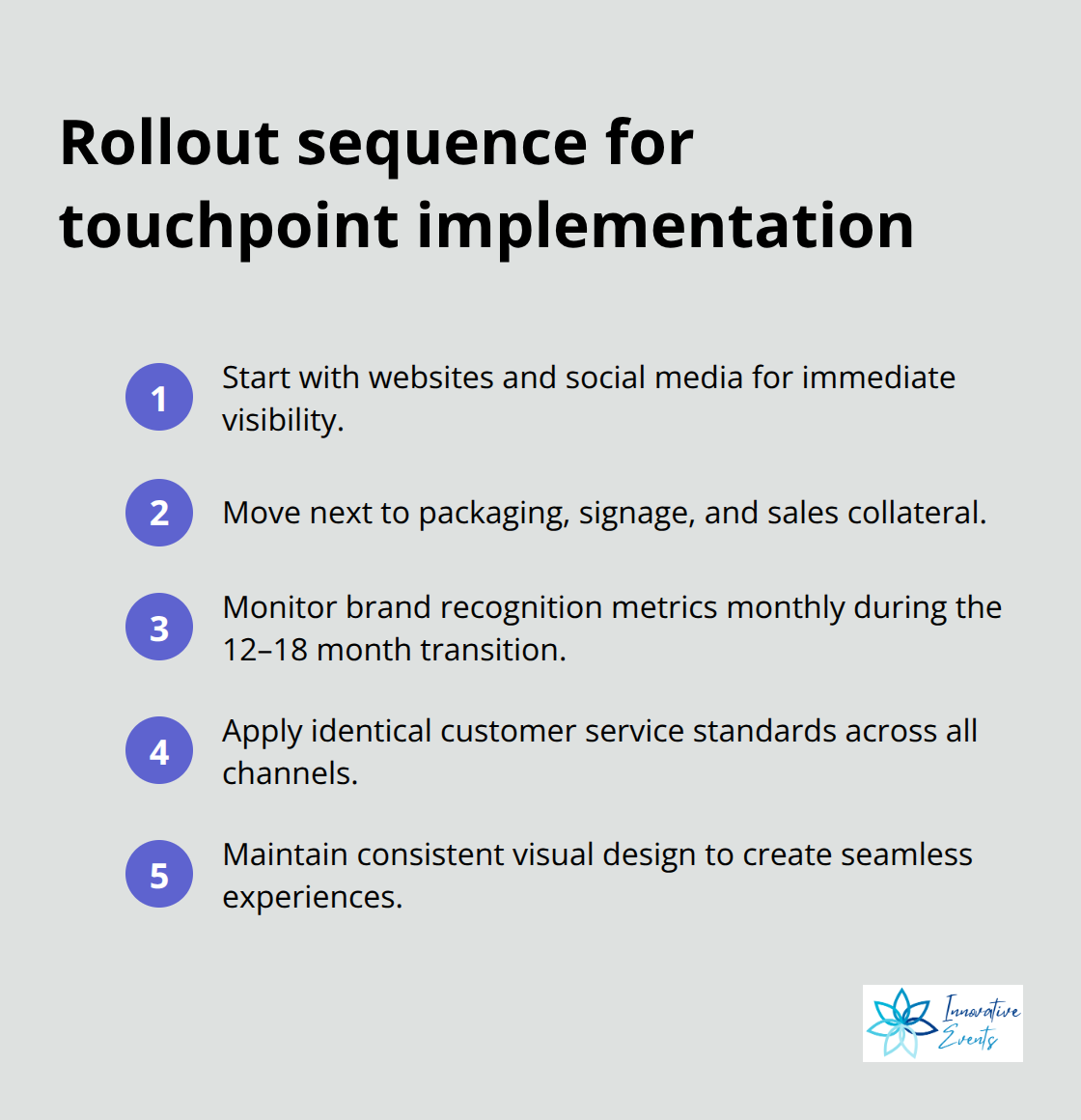
Apply identical customer service standards and visual design across all channels to eliminate confusion and strengthen brand architecture strategy.
Final Thoughts
Brand umbrella strategy transforms how companies manage multiple products and creates unified recognition that reduces marketing costs by 15-30% while accelerating market entry. Companies that implement this approach see 60% faster product acceptance and 40-60% higher customer lifetime value through natural cross-selling opportunities. The systematic approach requires comprehensive brand audits, unified visual standards, and consistent message frameworks across all touchpoints.
Success starts when companies document current brand variations, interview customers about recognition patterns, and create master guidelines that govern every brand expression. Implementation should begin with high-impact digital touchpoints before it expands to packaging, sales materials, and customer service standards. Companies must monitor brand recognition metrics monthly during the 12-18-month transition period to measure progress and adjust strategies.
Long-term business growth accelerates when customers transfer trust instantly between products under the same umbrella (companies avoid the typical 18-24 month brand timeline for new launches while they build stronger market positions through consolidated brand equity). At Innovative Events, we help businesses develop comprehensive brand strategies that create lasting market impact through strategic marketing and exceptional brand experiences.