

Your brand is more than a logo or tagline. It’s the foundation that drives every business decision and customer interaction.
We at Innovative Events have seen companies transform their market position through strategic brand strategy workshops. These focused sessions help teams align on purpose, values, and messaging that resonates with their audience.
The right workshop framework turns abstract brand concepts into actionable strategies that fuel growth.
What Makes Your Brand Foundation Unshakeable
Brand strategy workshops fail when teams skip the fundamentals. Most companies jump straight into visual design without understanding who they serve or why they exist. This backwards approach costs businesses millions in wasted marketing spend and confused messaging.
Start With Purpose That Drives Profit
Your brand purpose must connect directly to revenue generation. Companies that define and embed a clear purpose into their strategy consistently outperform those without it. Purpose acts as both a differentiator and performance driver in competitive markets.
Define your purpose when you identify the specific problem you solve and the transformation you create for customers. Write it in one sentence that any employee can memorize and repeat. Strong purposes focus on customer outcomes, not internal aspirations.
Map Your Audience With Surgical Precision
Generic target audiences produce generic results. Successful brands identify specific customer segments with measurable characteristics. Use demographic data, behavioral patterns, and psychographic insights to build detailed profiles. Careful targeting improves campaign performance metrics such as click-through rate and conversion rate.
Interview existing customers to identify common pain points, decision-making processes, and preferred communication channels. Create separate profiles for each distinct customer segment you serve.
Turn Competitive Analysis Into Strategic Advantage
Most competitive analysis stays surface-level and misses strategic opportunities. Study competitor messaging, pricing strategies, and customer feedback patterns. Identify gaps where competitors fail to meet customer needs. Brands that conduct thorough competitive research achieve faster growth rates than those that skip this step.
Analyze competitor social media engagement, review sentiment, and marketing channels. Map their strengths and weaknesses against your capabilities to find your unique market position. This foundation work sets the stage for developing the brand voice and personality that will differentiate you in the marketplace.
How Do You Build Brand Components That Convert
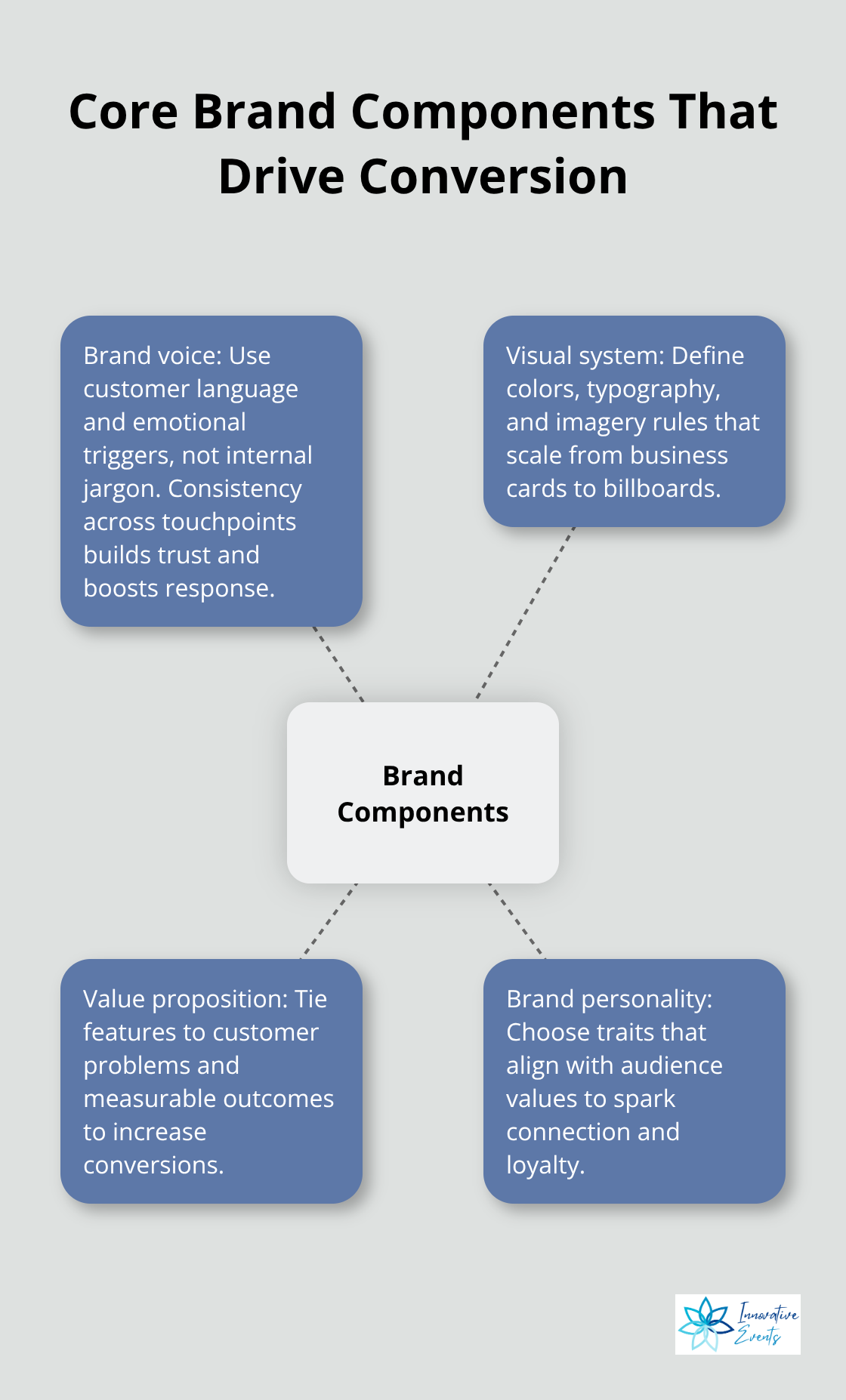
Brand voice and personality drive customer decisions more than visual elements. Companies with a consistent brand voice across all touchpoints see over 20% revenue growth compared to those with inconsistent messaging. Your brand voice must reflect customer language patterns and emotional triggers, not internal corporate speak.
Document specific words, phrases, and tone guidelines that teams can apply across every customer interaction. Test voice consistency when you read content aloud and ask if it sounds like the same person speaking.
Create Visual Systems That Scale
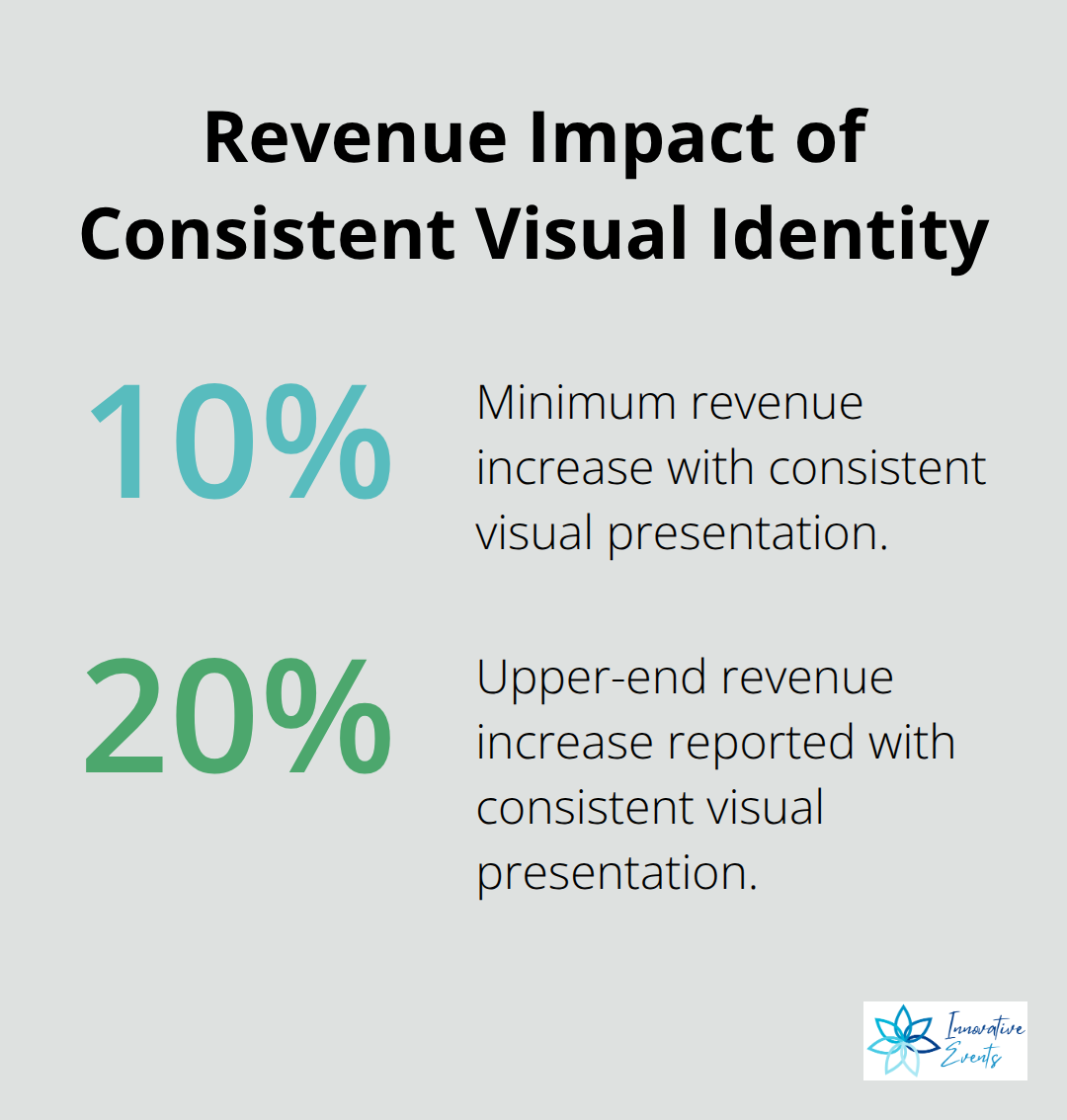
Visual identity extends beyond logos to color psychology, typography hierarchy, and imagery style. Brands with consistent visual presentation increase revenue by 10-20% according to McKinsey studies. Define specific color codes, font families, and image treatment rules that work across digital and print applications.
Build template systems that non-designers can use without compromising brand integrity. Your visual identity must function at business card size and billboard scale equally well.
Transform Features Into Customer Outcomes
Value propositions fail when they list features instead of customer transformations. Effective messaging frameworks connect product capabilities to specific customer problems and measurable results. Companies that lead with outcome-based messaging achieve higher conversion rates than feature-focused competitors.
Structure your messaging hierarchy with primary value proposition, supporting benefits, and proof points. Each message must answer why customers should choose you over alternatives and what specific results they can expect.
Develop Brand Personality That Resonates
Brand personality shapes how customers perceive and connect with your business. Define specific personality traits that align with your target audience’s values and preferences. Use personality frameworks to identify whether your brand should feel professional, approachable, innovative, or trustworthy (or a combination of these traits).
Test personality consistency across all customer touchpoints from website copy to customer engagement interactions. Strong brand personalities create emotional connections that drive loyalty and word-of-mouth referrals.
These brand components work together to create the foundation for effective workshop facilitation and collaborative decision-making processes.
How Do You Execute Workshop Sessions That Produce Results
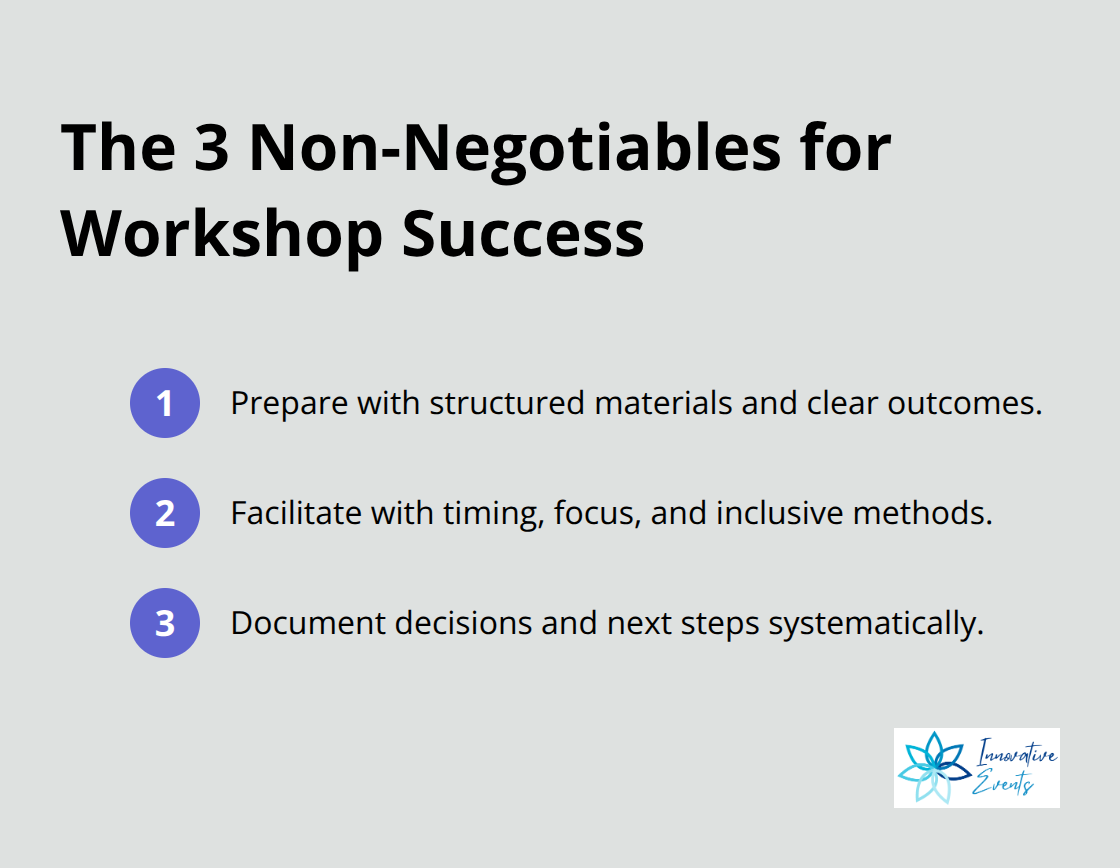
Workshop success depends on three non-negotiable elements: structured preparation, skilled facilitation, and systematic documentation. Companies that skip proper workshop preparation waste significant time in meetings, with executives spending almost 23 hours weekly in meetings, according to research. Start preparation two weeks before your session when you create participant workbooks with pre-work assignments, exercise templates, and decision frameworks.
Send materials seven days in advance with clear instructions on what participants must complete beforehand. Define specific outcomes for each workshop segment and communicate these expectations to all attendees.
Structure Exercises That Generate Consensus
The most effective brand strategy workshops use timed exercises that force decisions rather than endless discussion. Allocate 15 minutes for individual brainstorms, 20 minutes for small group synthesis, and 10 minutes for large group alignment on each major topic.
Use dot votes to prioritize options and eliminate analysis paralysis. Successful facilitators interrupt off-topic conversations within 30 seconds and redirect focus to specific outcomes. Document every decision in real-time with shared screens that all participants can see.
Facilitate Collaborative Decision-Making
Strong facilitators guide teams through structured decision processes without imposing their own opinions. Ask open-ended questions that reveal underlying assumptions and surface potential conflicts early. When disagreements arise, focus on data and customer insights rather than personal preferences.
Create safe spaces where all participants contribute ideas without judgment. Use techniques like silent brainstorms and anonymous input collection to prevent dominant personalities from controlling discussions (particularly important in hierarchical organizations).
Document Outcomes and Create Action Plans
Workshop outcomes die without immediate action plans and clear accountability structures. Create implementation timelines during the final 45 minutes of your session with specific deadlines, responsible parties, and success metrics.
Schedule follow-up check-ins at 30, 60, and 90 days to maintain momentum and address implementation challenges. Companies that schedule structured follow-ups achieve 94% productivity rise after implementation compared to those that end workshops without concrete next steps.
Transform workshop insights into brand guidelines, message templates, and decision criteria that teams can apply immediately to real business situations. Working with experienced brand strategy consulting professionals can help ensure these outcomes translate into measurable business results. Assign ownership for each action item before participants leave the room.
Final Thoughts
Your brand strategy workshop creates the foundation that transforms how customers perceive and interact with your business. The purpose, audience insights, competitive positioning, voice, visual identity, and value proposition you develop become the strategic framework that guides every marketing decision and customer touchpoint. Teams must translate these outcomes into actionable brand guidelines immediately after the session ends.
Implementation requires immediate action on three fronts. First, convert workshop outcomes into brand guidelines that teams can apply consistently across all communications. Second, establish measurement systems that track brand awareness, customer perception, and revenue impact over time (quarterly reviews work best for most organizations). Third, schedule regular assessments to adapt strategies based on market feedback and performance data.
Long-term brand success demands consistent execution and continuous refinement. Companies that maintain brand discipline across all touchpoints achieve sustained competitive advantages and premium pricing power. We at Innovative Events help companies transform brand strategies into memorable experiences that drive measurable business results through our comprehensive marketing services.