
Music shapes how customers feel about your business. A strong brand music strategy creates instant recognition and emotional bonds that generic background sounds simply cannot match.
At Innovative Events, we’ve seen firsthand how the right audio identity transforms customer experiences. This guide shows you exactly how to build one.
Why Brand Music Matters
Sound travels faster than visuals into human memory. Research on the reminiscence bump shows that music from adolescence and early adulthood creates lasting brand associations because it ties directly to identity formation. This means a well-chosen audio identity doesn’t just grab attention in the moment-it embeds itself into how customers think about your brand for years.
Coca-Cola’s integration of the song “Buka semangat baru” demonstrates this principle perfectly. The track wasn’t originally created for the brand, but when embedded thoughtfully into their campaigns, it became a powerful emotional anchor that customers associated exclusively with the company. Nostalgia-driven sound, particularly 80s and 90s synths, engages Millennials and Gen Z because it connects to their formative years.
The practical takeaway is straightforward: choose music that resonates with your audience’s emotional timeline, not just current trends. Tempo and rhythm matter more than most businesses realize. Slower tempos signal warmth and trust, while faster tempos trigger energy and urgency. If you’re selling luxury goods, you need different sonic choices than a fitness brand. Your music communicates your brand’s values before a single word of copy appears.
Differentiation Through Authentic Sound
Generic background music makes you forgettable. Thousands of businesses use the same stock music libraries, which means your customer hears your brand’s audio and thinks of five competitors simultaneously. Original compositions or carefully licensed indie tracks cut through this noise because they feel distinctive and personal.
Authentic global genres-K-pop, traditional Chinese orchestration, reggaeton, amapiano-help brands reflect their local markets while standing out as alternatives struggle to capture genuine cultural origins. Authentic sound reflects a broader market shift: audiences can sense when music lacks human authenticity, particularly with non-Western sounds where cultural nuance matters enormously.
The cost argument against original music is outdated. A two-day content shoot yields multiple sonic assets that feed social media, podcasts, and campaigns without the expense of traditional music video production. This approach lets you build a cohesive sonic world around each release while controlling your budget.
Measuring What Actually Works
Measuring impact requires specificity: track recall, emotional response, brand favorability, and long-term associations across campaigns. If your music strategy isn’t connected to measurable business outcomes, you’re treating audio as decoration rather than strategy.
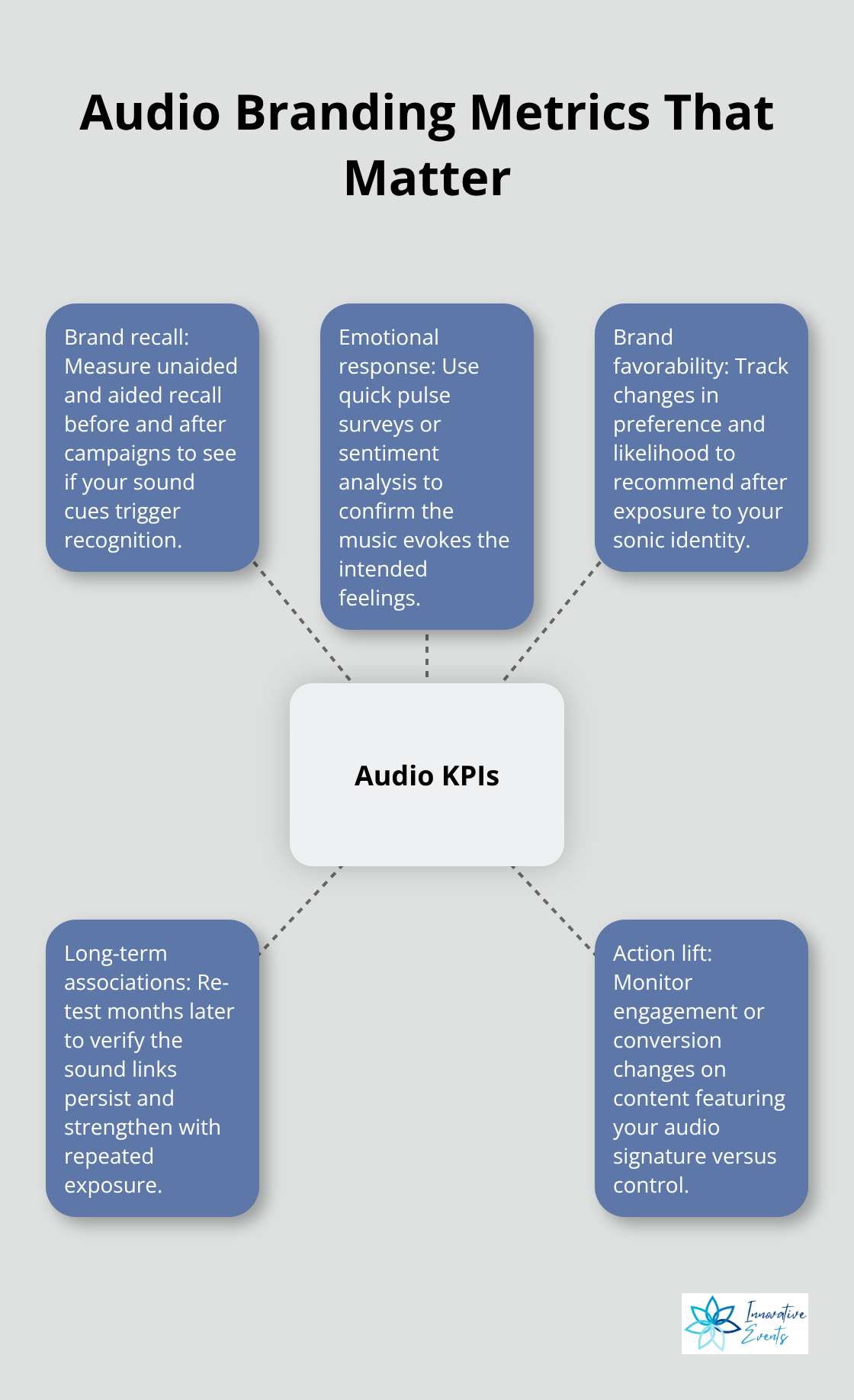
Test your sonic choices with real audiences before full rollout, focusing on memory and emotional resonance to predict actual impact. The data you collect here-which tracks resonate, which tempos drive engagement, which genres align with your audience, becomes the foundation for everything that follows. This testing phase separates brands that stumble with audio from those that builda genuine competitive advantage through sound.
Building Your Brand Sound Identity
Define Your Brand Personality First
Start with your brand personality, not the music itself. Identify three to five emotional qualities that represent your business: luxury and sophistication, energy and innovation, trustworthiness and stability, or playfulness and humor. These qualities become your sonic filter, and every music decision flows from this foundation. A financial services company needs entirely different audio than a children’s product brand. Tempo, instrumentation, and genre all serve your personality.
Slower orchestral pieces convey stability and trust. Upbeat electronic or indie pop signals creativity and movement. Once you lock in your personality, you can evaluate specific tracks or commission original work that matches those emotional markers. Test this framework with your team: play three different genres and ask which one feels like your brand. The answer reveals whether your personality definition is actually clear or still fuzzy. If disagreement emerges, your brand personality needs refinement before you spend money on music.
Match Music to Your Audience’s Identity
Your target audience’s age and cultural background should dictate music choices far more than your personal taste. A 45-year-old business professional responds to different sonic cues than a Gen Z consumer. Research shows that nostalgia marketing works because it connects to identity formation during adolescence and early adulthood, so a brand targeting Millennials might lean into 90s indie or electronic sounds, while a brand reaching Gen X might explore 80s-influenced compositions.
Beyond age, examine where your audience lives and what music they actually consume. Spotify’s public playlists and TikTok trends reveal what resonates culturally. If your audience skews toward Latin America, reggaeton and trap latino should influence your choices. If you’re building presence in Southeast Asia, K-pop and local genres carry more weight than Western pop.
Create Consistency Across Every Touchpoint
Once you’ve selected your music, integrate it consistently across every customer touchpoint: your website homepage, hold music on customer service calls, in-store or event environments, social media content, email marketing, and video productions. Inconsistency fractures brand recognition. If your brand music sounds like upbeat indie pop on Instagram but classical orchestration on your website, customers never build the sonic association that creates a competitive advantage.
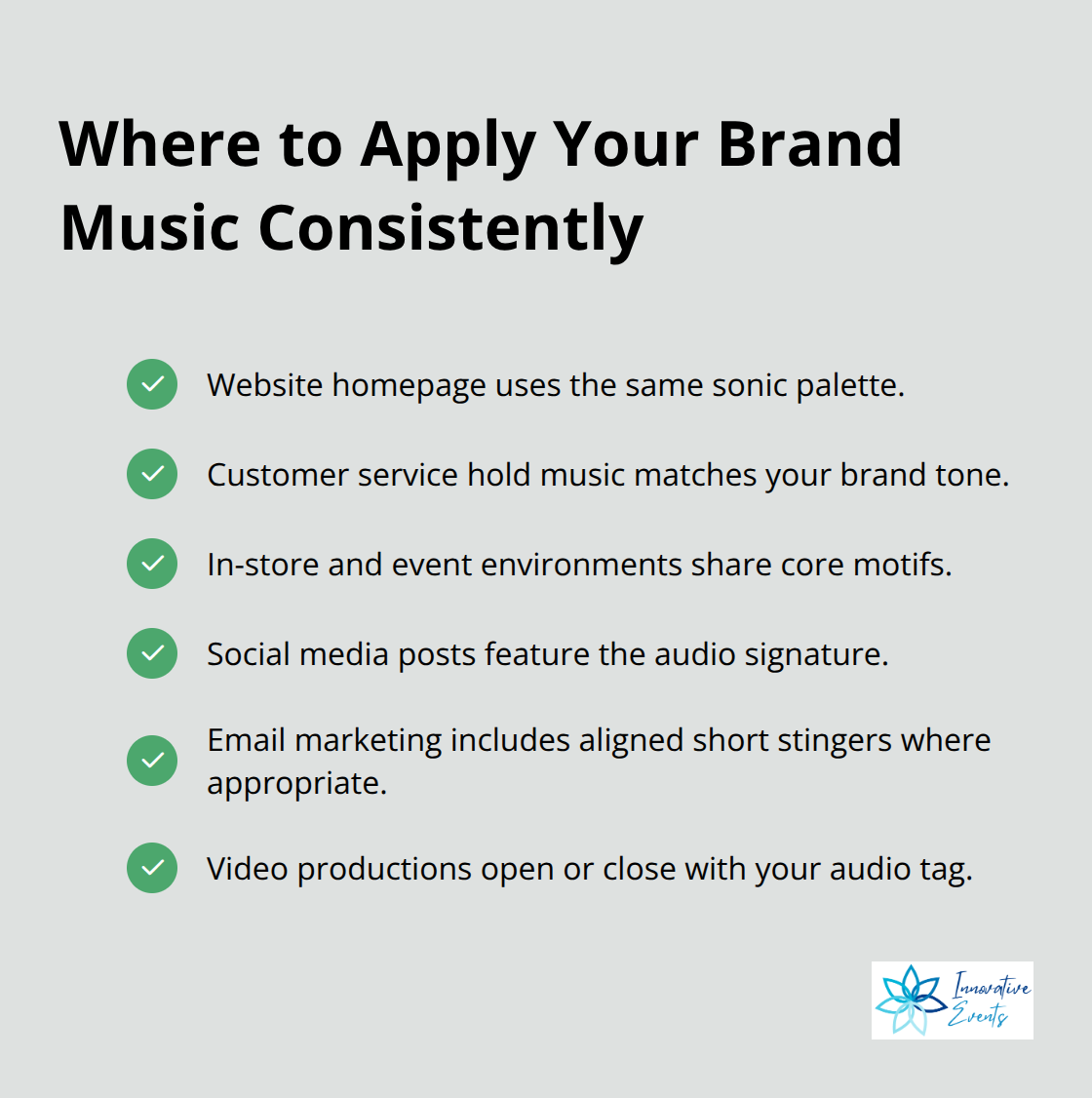
One practical approach involves creating a short audio signature that plays at the beginning of videos, podcasts, and ads. This micro-moment creates recall without annoying audiences through overuse. Measure how this consistency impacts brand recall by surveying customers before and after implementation, asking whether they can identify your brand by sound alone. That metric matters more than streaming numbers.
Test Before Full Implementation
Authentic global genres-K-pop, traditional Chinese orchestration, reggaeton, amapiano-help brands reflect their local markets while standing out as alternatives struggle to capture genuine cultural origins. Audiences can sense when music lacks human authenticity, particularly with non-Western sounds where cultural nuance matters enormously.
The cost argument against original music is outdated. A two-day content shoot yields multiple sonic assets that feed social media, podcasts, and campaigns without the expense of traditional music video production. This approach lets you build a cohesive sonic world around each release while controlling your budget. Test your sonic choices with real audiences before full rollout, focusing on memory and emotional resonance to predict actual impact. The data you collect here, which tracks resonate, which tempos drive engagement, and which genres align with your audience, becomes the foundation for everything that follows.
This testing phase separates brands that stumble with audio from those that build a genuine competitive advantage through sound. Once you’ve validated your sonic identity with real audience feedback, you’re ready to apply it strategically across campaigns and customer experiences.
What Actually Kills a Brand Sound Strategy
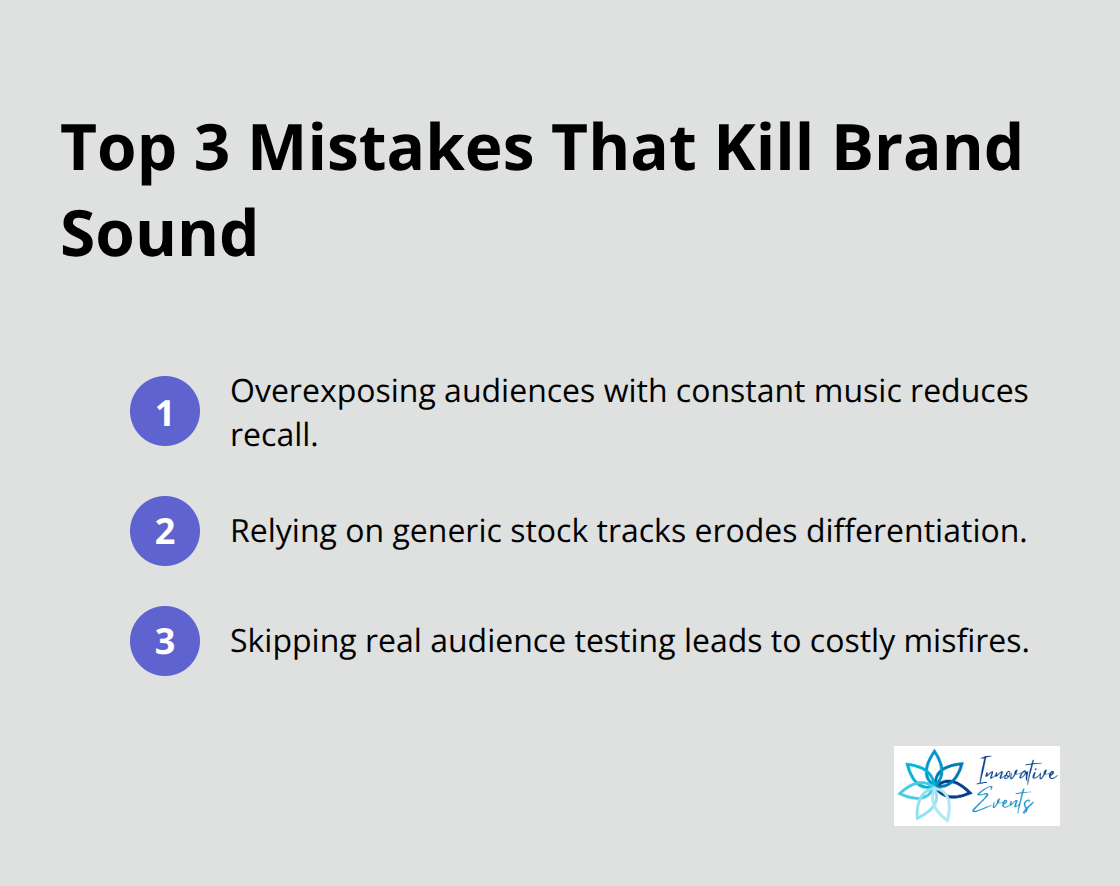
Most brands fail at audio branding not because they select the wrong music, but because they treat sound as a strategic asset instead of background decoration. The three most common mistakes destroy even well-intentioned efforts: flooding customers with constant music, settling for cheap stock tracks, and skipping audience testing entirely.
The Overexposure Trap
The first mistake wastes money by assuming more audio means better branding. Research shows that overexposure to brand music actually decreases recall and creates listener fatigue. Your hold music shouldn’t loop endlessly. Your website homepage shouldn’t auto-play audio.
Your email campaigns shouldn’t include background tracks in every message.
Instead, deploy your brand sound strategically at high-impact moments: the beginning of video content, during critical customer touchpoints like checkout or service calls, and in paid advertising where you control the experience. A short audio signature lasting three to five seconds creates stronger recall than a thirty-second composition playing constantly. Test this with your own team: listen to your current brand music for fifteen minutes straight. If you feel annoyed by minute eight, your customers feel the same way.
Why Generic Stock Music Costs More Than It Saves
The second mistake involves selecting generic stock music because it costs less upfront. This logic fails because generic tracks cost more in lost differentiation. Thousands of brands license the same uplifting acoustic guitar loops from the same five libraries, which means your music triggers no unique association.
Original compositions or carefully licensed indie tracks from platforms like Bandcamp cost between $500 and $5,000 for a usable audio signature, which amortizes across months of customer interactions. That investment delivers measurable returns through increased brand recall and emotional resonance that stock music simply cannot match. The financial argument against original music collapses when you calculate the cost of weak brand differentiation.
Testing Prevents Expensive Failures
The third mistake skips testing with real audiences before full rollout. Many brands select music based on internal preferences or what competitors use, then wonder why campaigns underperform. Instead, test three to five different sonic options with a representative sample of your actual target audience, measuring emotional response and recall specifically.
Ask which track makes them feel more likely to buy from your brand, which one they’d recognize again, and which one matches their perception of your company values. The data from this testing phase costs virtually nothing but prevents expensive mistakes. After validation, implement your sonic identity consistently across every platform: your website, social media, video content, events, and customer service. Inconsistency fractures the entire strategy and wastes the investment you’ve made in selecting the right sound.
Final Thoughts
Your brand music strategy compounds over time as customers repeatedly hear your sonic identity across touchpoints. Each interaction reinforces recognition, and recognition builds loyalty. Customers who recognize your brand by sound alone demonstrate stronger loyalty than those exposed to visual branding alone, because audio bypasses rational decision-making and speaks directly to emotion and memory.
Measuring results requires tracking specific metrics: brand recall before and after implementation, customer sentiment shifts, engagement rates on content featuring your sonic identity, and ultimately, revenue impact from campaigns using your audio branding. Start small with testing, validate your sonic choices with real audiences, then scale implementation across all customer touchpoints. The businesses winning right now understand that sound functions as strategy, not decoration.
We at Innovative Events help brands craft immersive experiences where audio plays a central role. From event environments to marketing content and social media strategy, we integrate sound strategically to strengthen your brand presence and deepen customer relationships. Your sonic identity deserves the same strategic attention as your visual branding.