

Most brands plateau because they lack a clear roadmap. Without intentional planning, even great products fail to gain traction in competitive markets.
At Innovative Events, we’ve seen firsthand that a solid brand growth strategy separates thriving companies from those stuck in neutral. This guide walks you through the exact steps to build momentum, measure what matters, and scale sustainably.
Building a Strong Brand Foundation
Your brand foundation isn’t a philosophical exercise. It’s the operational backbone that determines whether your marketing hits or misses. Most companies skip this step or treat it as a checkbox, then wonder why their campaigns feel scattered and their positioning blurs into the noise. The foundation requires three concrete decisions: what your brand stands for, who actually buys from you, and why customers should pick you over alternatives.
Define What Your Brand Actually Stands For
McDonald’s renewed its brand purpose to feed and foster communities, and this decision guided everything from communications to daily operations, proving that a clear foundation shapes real business outcomes. Without this clarity, you’ll waste budget on campaigns that confuse your audience instead of converting them.
Write down why your brand exists beyond making money. What problem does it solve? What values guide your decisions? Pizza Hut rediscovered its roots by reintroducing the red-roof logo and adopting a bolder tone, backed by research showing it was the original pizza category leader. This wasn’t sentimental-it was grounded in customer insight that repositioned the brand as confident and authentic. Your values and mission must connect to what customers actually need, not what sounds impressive in a boardroom.
Identify Who Actually Buys From You
Demographic data alone won’t cut it anymore. You need behavioral and transactional data to identify customer segments. Asos segmented its audience into style tribes and created YouTube content like Sneakers In 60 and How To Style, which coincided with an 80% increase in UK trainer video watch time. This worked because they knew their audience inside out and tailored content accordingly.
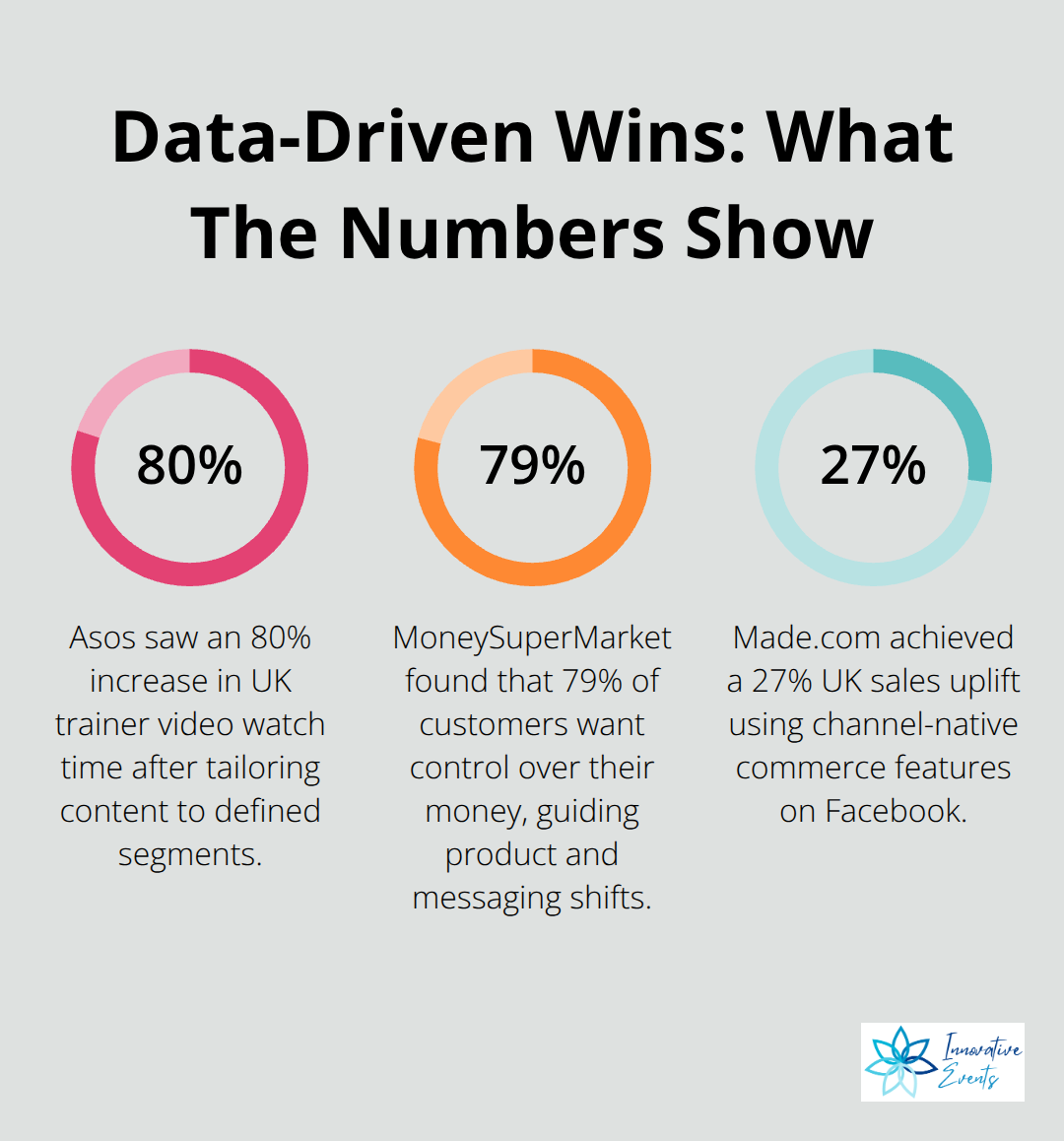
MoneySuperMarket’s 2017 consumer research showed 79% of customers want control over their money, so the brand shifted to technology-enabled experiences with credit monitoring and bill tracking tools that deepened ongoing relationships. Start with your existing customer data-transaction history, browsing behavior, engagement patterns-and layer in demographic and interest information. The brands that win segment customers by what they do, not just who they are.
Position Your Brand With Precision
Your positioning statement should reflect this specificity. Shell used predictive intent-to-purchase marketing by mapping online signals like search behavior, in-market data, and geolocation to generate high-value scores, delivering an ROI of 4.44 in the US and 2.49 in China according to Mediacom. This level of precision separates brands that scale from those that plateau.
With your values, mission, and customer segments locked in, you’re ready to translate these insights into a brand architecture strategy that actually resonates. The next section shows how to turn this foundation into a marketing strategy that reaches the right people with the right message at the right time.
Creating a Comprehensive Marketing Strategy
Your brand foundation means nothing if customers never hear about it. The gap between clarity and visibility kills most growth strategies. You need a marketing approach that reaches customers across the channels where they actually spend time, backed by data that tells you what’s working and what’s wasting budget.
Choose Channels Where Your Audience Actually Engages
Cadbury produced a 22-minute original film as part of its Families Reunited campaign and partnered with Global Radio and Spotify to curate branded playlists, extending reach far beyond traditional ads. This worked because Cadbury didn’t scatter messaging across random channels-it selected platforms aligned with where its audience consumed content. Enterprise boosted trust and awareness by sponsoring Absolute Radio’s Isle of Wight Festival coverage, reaching over 6.8 million in the target audience and achieving 47% competition-entry conversion with 155,906 social video views.
The lesson is direct: pick channels where your customer segments actually engage, then measure whether those channels drive conversions. Made.com used Facebook’s channel-native commerce features and achieved a 27% UK sales uplift and 22% uplift in Germany, proving that platform-native commerce features matter more than generic social posting. Start by mapping where each customer segment spends time-TikTok for Gen Z, LinkedIn for B2B decision makers, YouTube for long-form content seekers-then test campaigns on those platforms with clear conversion goals attached. Abandon channels that don’t deliver incremental revenue, no matter how trendy they seem.
Let Data Drive Every Channel Decision
Data must guide every channel decision you make. Ferrara Candy tracks sales by household, TV viewing, and ad exposure across 120,000 stores to measure five weeks of post-campaign impact, according to AdAge, turning guesswork into measurable outcomes. Porsche’s 99X Electric campaign on Twitch targeted 18–34-year-olds with an interactive play-your-own-adventure experience, reaching nearly 1 million players in four hours and becoming the platform’s most-viewed live stream. This wasn’t luck-Porsche identified the audience, chose the right platform, and built an experience native to that channel.
Shell used predictive intent-to-purchase marketing by mapping online signals like search behavior, in-market data, and geolocation to generate high-value scores, delivering an ROI of 4.44 in the US and 2.49 in China, according to Mediacom. This approach transforms how brands allocate budget across channels.
Adapt Your Message to Each Platform’s Norms
Consistency across platforms matters, but not in the way most marketers think. You don’t repeat identical messages everywhere. Instead, you maintain the same core positioning while adapting tone and format to each channel’s norms. TikTok Shop brands like Pure Daily Care run hundreds of new videos weekly with creators and affiliates, treating the platform’s algorithm as the primary distribution mechanism. Meanwhile, Amazon requires different creative and messaging.
The brands that scale treat each channel as distinct and allocate budget based on which channels drive the highest customer acquisition cost relative to lifetime value. Concentrate resources on the two or three channels that move the needle for your specific customer segments, test relentlessly with performance data, and cut anything that doesn’t deliver measurable returns. This focused approach sets the stage for the next critical phase: measuring what actually works and scaling based on real performance data rather than assumptions.
Measure What Actually Moves Revenue
Most brands track metrics that feel important but don’t drive decisions. Page views, impressions, and engagement rates create the illusion of progress while your actual revenue stalls.
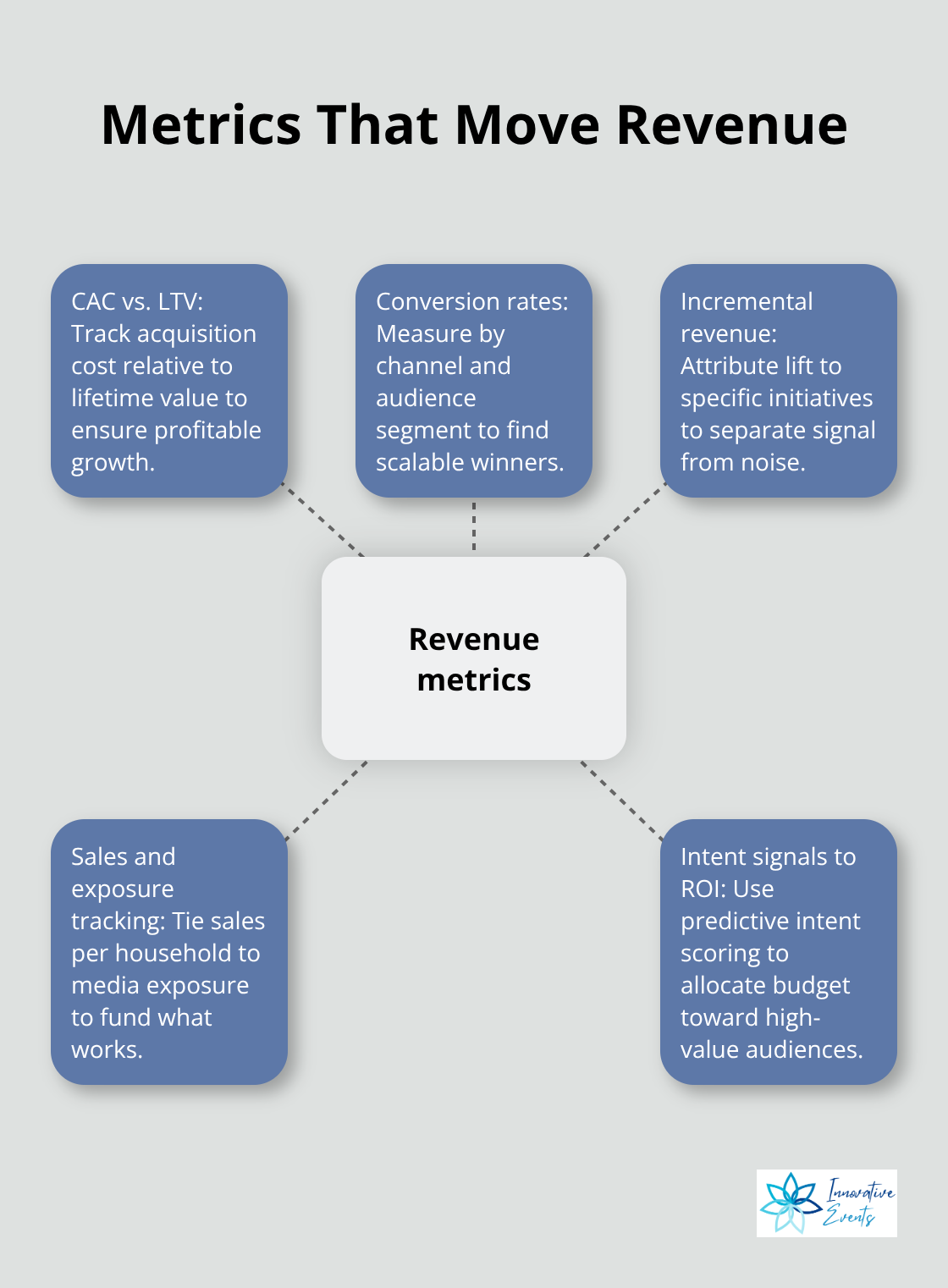
The brands that scale obsess over a narrow set of metrics tied directly to business outcomes: customer acquisition cost relative to lifetime value, conversion rates per channel and audience segment, and incremental revenue from each marketing initiative. Ferrara Candy tracks sales per household, TV viewing, and ad exposure across 120,000 stores to measure five weeks of post-campaign impact, according to AdAge, then allocates budget to what works. This approach separates guesswork from accountability.
Start with metrics that directly impact your revenue model. For e-commerce, focus on conversion rate per traffic source, average order value per customer segment, and repeat purchase rate. For B2B, track cost per qualified lead, sales cycle length per source, and deal size per account segment. Shell mapped online signals like search behavior, in-market data, and geolocation to generate intent-to-purchase scores, delivering ROI of 4.44 in the US and 2.49 in China, according to Mediacom. This specificity forces you to stop measuring vanity metrics and start measuring what your finance team cares about.
Stop Relying on Engagement Metrics Alone
Engagement metrics lie. High engagement doesn’t guarantee conversions or revenue. A viral TikTok video might accumulate millions of views and thousands of comments while driving zero sales. Brands that scale measure engagement in the context of downstream business impact. Baked by Melissa built an authentic founder-led presence that boosted followers by 6,000% over five years, reaching about 4 million across channels and 2.5 million on TikTok, but the real win came when that audience translated to sponsored content partnerships and paid brand collaborations that generated revenue. The engagement held value only because it connected to monetization.
Track engagement metrics only if you can trace them to customer acquisition or revenue. Otherwise, cut them from your dashboard. Test every major campaign with an incrementality study to isolate the revenue impact of that specific initiative. Starling Bank focused on brand-building to become a household name and scaled from roughly 900,000 accounts to 1 million through measuring brand lift as a growth lever, according to The Drum. This requires running control and test groups where one segment sees your campaign and an equivalent segment doesn’t, then comparing revenue outcomes between the two. Most brands skip this because it requires discipline and patience, but it remains the only way to know whether your marketing actually works or whether customers would have converted anyway.
Test Ruthlessly and Kill What Doesn’t Work
Data without decision-making is theater. The brands that win test multiple approaches on small budgets, measure the results after sufficient time has passed for the data to stabilize, then reallocate budget aggressively toward winners and away from underperformers. Pure Daily Care achieved a fivefold sales increase on TikTok Shop in July 2025 compared to the previous month through running hundreds of videos weekly with creators and affiliates, then analyzing which content and creator partnerships drove the highest customer acquisition cost. They didn’t cling to approaches that felt right or looked polished. They measured, learned, and shifted resources.
Set a decision rule before you launch: if a channel doesn’t deliver a customer acquisition cost lower than X per date Y, you kill it or reallocate 80% of its budget to top performers. Graze expanded from direct-to-consumer into retail through leveraging both channels to drive market penetration, using each channel’s performance data to guide inventory and promotional decisions. This requires killing sacred cows. If your expensive brand ambassador program isn’t producing measurable incremental revenue compared to paid media, cut it. If your email list has a 1.2% click-through rate while paid search drives 4.8%, shift budget from email to search. The discomfort of cutting underperformers is exactly the discipline that separates scaling brands from stagnant ones.
Redirect Budget Toward Winners Every Quarter
Track your top five performing channels and initiatives monthly, and commit to redirecting at least 20% of budget from bottom performers to top performers every quarter. This simple discipline compounds over time and forces your team to stay focused on what actually works instead of defending pet projects. The brands that scale treat budget allocation as a monthly exercise, not an annual one.
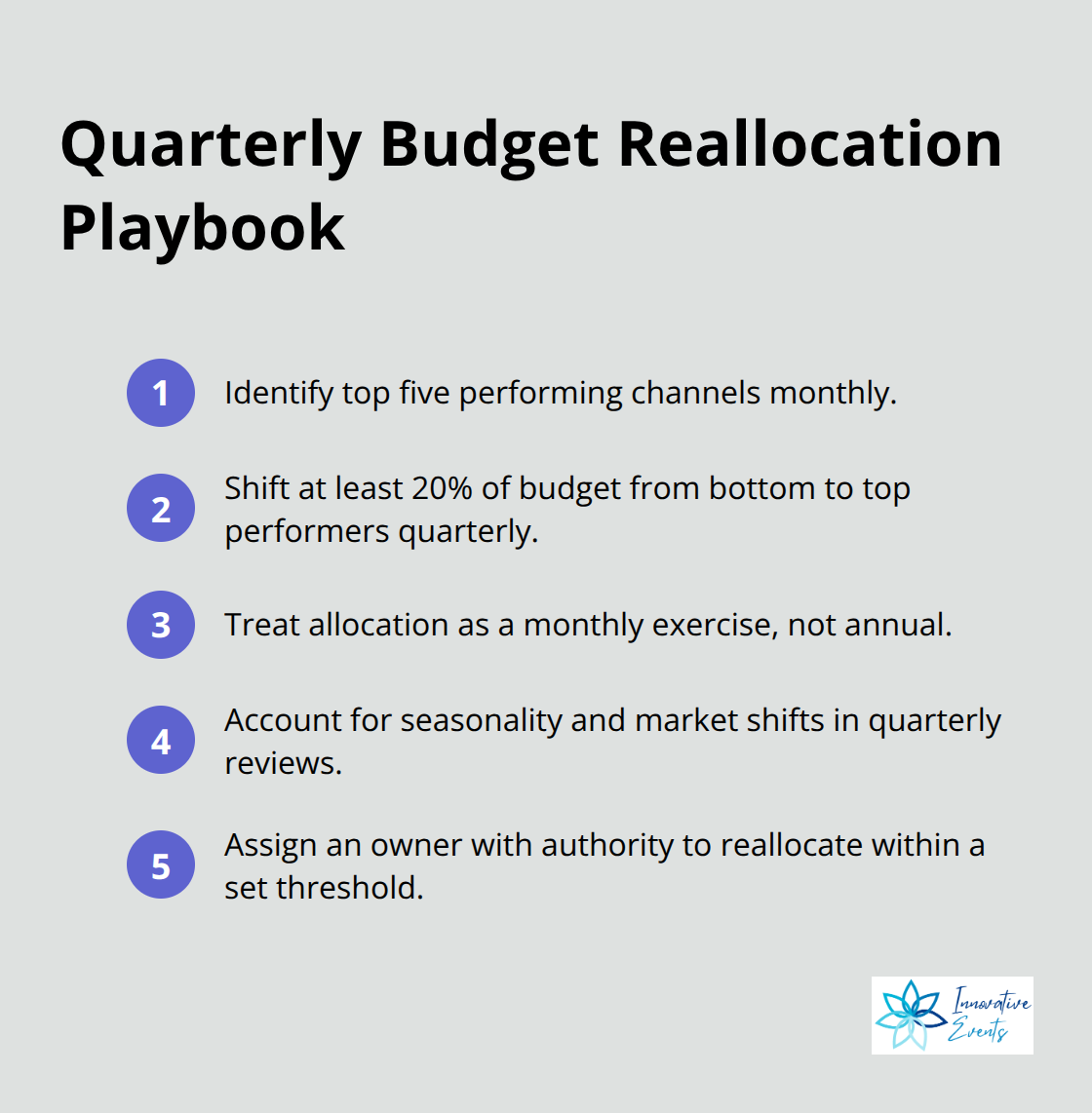
Quarterly reviews allow you to respond to market shifts, seasonal changes, and new platform opportunities without waiting for annual planning cycles. Assign one person ownership of this monthly analysis and give them authority to reallocate budget without requiring approval for moves under a certain threshold (perhaps 10% of total spend). This removes friction and accelerates your ability to capitalize on what works.
Final Thoughts
A brand growth strategy only works when you treat it as an ongoing discipline rather than a one-time project. The foundation you build, the channels you select, and the metrics you track all matter only if you commit to measuring results and adjusting course based on what the data tells you. Most brands fail not because their strategy was flawed, but because they abandoned it after three months when results didn’t match their optimistic projections.
The real work starts after you launch your campaigns. Some channels will underperform your expectations while others will surprise you with results. Your audience segments will shift, competitors will copy your moves, and new platforms will emerge. The brands that scale treat their strategy as a living document, reviewed monthly and adjusted quarterly based on performance data. This requires discipline, but it separates companies that grow from those that stagnate.
Start this week by picking one metric tied directly to revenue and tracking it daily for the next month. Identify your top three customer segments and map where they actually spend time online. Run a small test campaign on one new channel with a clear success metric attached. We at Innovative Events help brands build immersive experiences that turn strategy into reality, and the right partner can accelerate your growth by translating your brand growth strategy into experiences that move customers.