
Corporate events fail when companies skip the basics. We at Innovative Events have seen it happen countless times: poor venue choices, weak audience engagement, and no clear metrics for success.
The difference between a forgettable event and one that drives real business results comes down to deliberate planning. This guide walks you through the essential elements for planning engaging corporate events, from setting measurable objectives to building community after the final session ends.
Setting Clear Objectives and Goals
The biggest mistake companies make is treating event objectives as afterthoughts. They book a venue, set a date, then scramble to figure out why they’re actually hosting the event. This backwards approach wastes budget and delivers weak results. Your objective isn’t vague inspiration-it’s a concrete business outcome. Are you generating qualified leads? Building retention among existing customers? Launching a product to a specific market segment? Strengthening internal culture? Each objective demands different venue choices, content strategies, and measurement approaches.
Low engagement costs organizations significantly, which means corporate events that fail to align with clear business goals become expensive distractions rather than strategic investments. Define exactly who attends, what they need to learn or experience, and what action you want them to take afterward. This clarity shapes everything that follows.
Define Your Business Outcome
Your objective must connect to measurable business results, not just feel-good intentions. Lead generation events require different tracking than culture-building initiatives. Product launches demand different speaker selections than customer retention roundtables. An executive roundtable needs a different formality, venue aesthetics, and speaker caliber than a team-building session for frontline staff.
Map these distinctions explicitly before vendor conversations begin. Your objective determines whether you need an intimate boardroom or a large conference center, whether you hire external speakers or feature internal leaders, and whether you prioritize networking time or structured content delivery. Vague objectives lead to misaligned decisions that waste resources and disappoint attendees.
Measure What Actually Matters
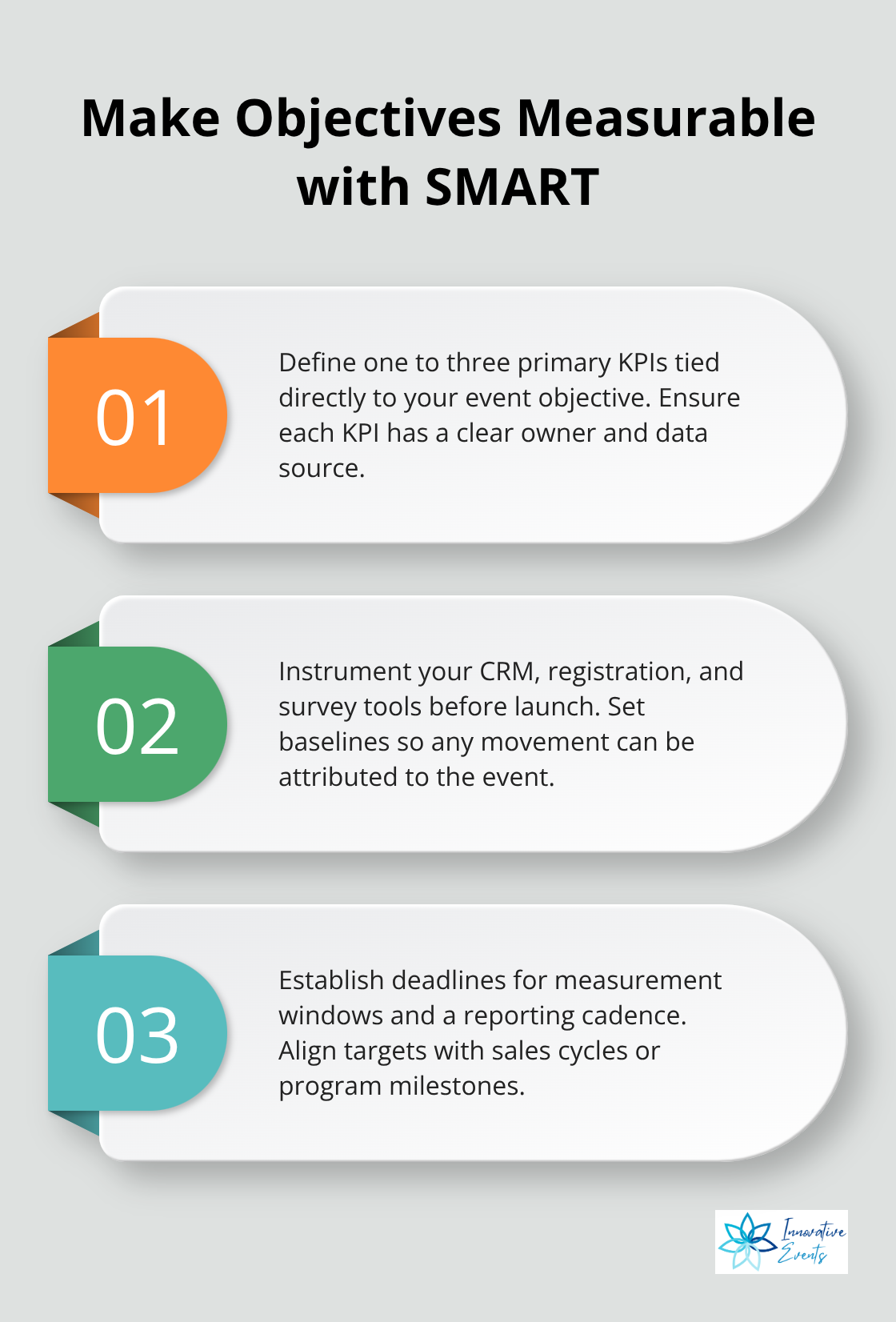
Success metrics must connect directly to your business objective, not just attendance numbers. If your goal is lead generation, track lead quality and conversion rates linked to your CRM system, not simply how many people registered. If you’re building internal engagement, monitor participation rates, sentiment through pulse surveys, and manager involvement-metrics that research indicates correlate with better retention and performance.
Clearly defined goals are essential for measuring success. Use the SMART framework: Specific, measurable, actionable, relevant, and time-bound. Set your metrics before the event launches so you can actually measure against them.
Real-time dashboards during the event help you spot engagement problems immediately. Post-event surveys should stay brief (research shows longer surveys tank response rates) and focus on satisfaction, content relevance, and likelihood to attend future events.
Cost ROI calculations matter too: compare total event expenses against ticket revenue, sponsorship income, and downstream customer conversions. For internal or nonprofit events, tie outcomes to strategic goals like improved onboarding completion rates or employee retention improvements rather than forcing pure financial math.
Align Your Event to Brand Values
Strategic planning includes clear communication with attendees, structured registration systems, thoughtful event agendas, and branding across invitations and materials. Mismatched venue tone, messaging that contradicts corporate values, or content that doesn’t match attendee expectations wastes resources and damages credibility. Your brand strategy should inform venue selection, catering choices, speaker selection, and even how you communicate with attendees.
If sustainability is central to your brand, choosing a green venue, sourcing local catering, and using digital collateral instead of printed materials becomes non-negotiable. If innovation is your message, the event experience itself should demonstrate that through immersive technologies or interactive formats rather than traditional classroom setups. If customer relationships drive your business, the event design should prioritize authentic networking over forced mingling.
These brand touchpoints shape every vendor conversation and purchasing decision. When your event reinforces who you are, attendees leave with a stronger brand connection and a clearer understanding of your values. When your event contradicts your brand, attendees notice the disconnect immediately.
Move From Planning to Execution
With clear objectives, measurable metrics, and brand alignment locked in, you now have the foundation to make venue, technology, and logistics decisions that actually serve your business goals. The next phase focuses on creating the physical and digital experience that brings your objective to life.
Building Spaces That Drive Engagement
Your venue choice determines whether attendees feel energized or exhausted, whether networking happens naturally or feels forced, and whether your message lands or gets lost in poor acoustics. The venue isn’t just a container for your event-it shapes attendee behavior and experience directly. Most companies pick based on capacity and price alone, then wonder why their event feels generic. Poorly designed layouts trap people in corners, weak audio systems make speakers inaudible, and uncomfortable seating kills engagement within the first hour. Your venue decision should start with how you want people to move, interact, and feel.
Match Your Space to Your Event Goals
If lead generation matters, you need booth layouts that funnel traffic naturally and create conversation zones. If culture-building drives your event, you need breakout spaces for small-group discussions and lounge areas that encourage informal connection. If you’re launching a product, you need sightlines that let everyone see the stage and tech infrastructure that supports flawless demos. Map your attendee journey before touring venues-where do they enter, how do they register, where do they eat, which sessions do they attend, where do they network. This blueprint shows you exactly what layout demands your space must meet.
Control the Physical Environment
Temperature control matters more than most planners realize. Attendee engagement drops significantly when rooms run cold or hot, yet many venues treat climate as an afterthought. Request detailed floor plans and walk through during similar event times to see actual lighting, acoustics, and traffic patterns rather than empty spaces. You’ll spot problems that photos and virtual tours hide.
Invest in Professional Audio Visual Quality
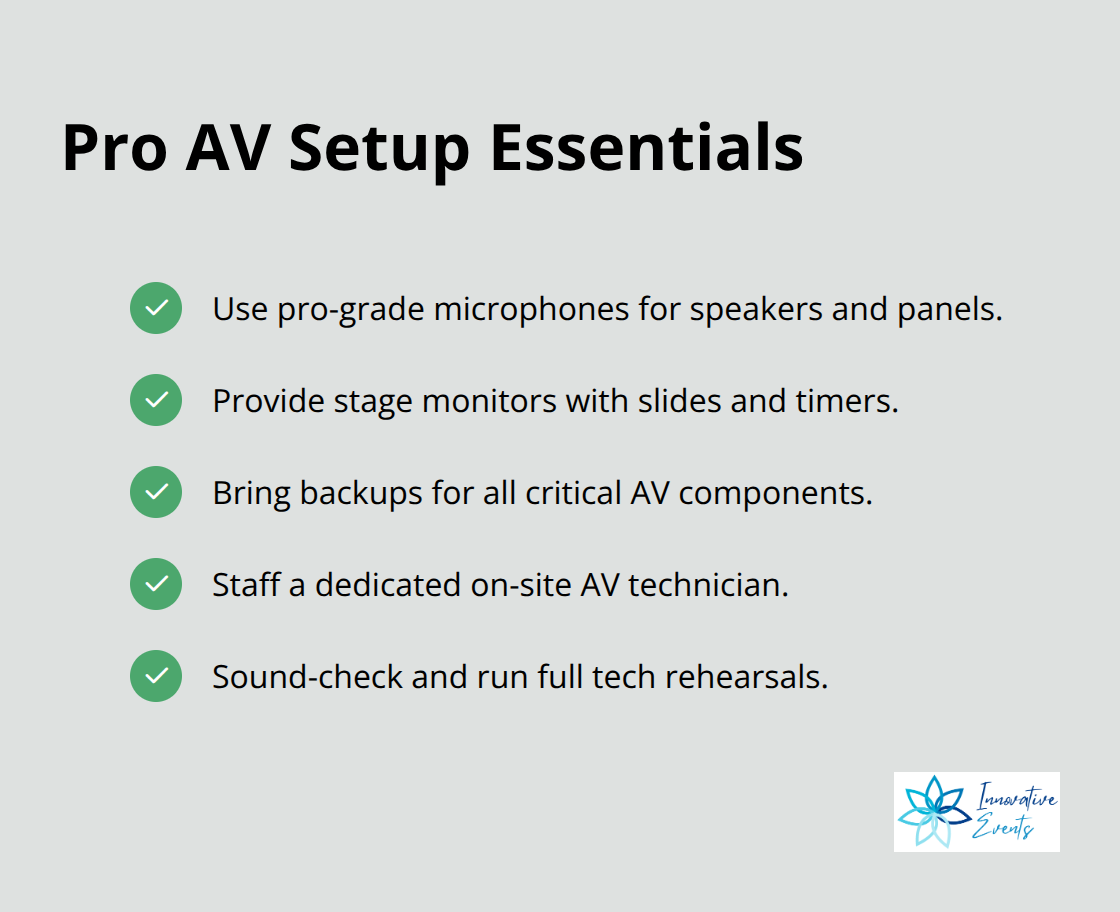
Poor sound systems force speakers to shout, making presentations painful rather than compelling. Dim projection makes content hard to read and signals low production value to attendees. Companies often invest six figures in speaker fees, then skimp on the AV budget and lose impact. Your AV setup should include professional-grade microphones, monitors so speakers can see their slides and time cues, backup equipment for every critical component, and a dedicated technician on-site throughout the event. Test all technology during setup, not during the live event.
Fuel Attendee Energy With Strategic Catering
Catering strategy shapes attendee energy and comfort more than most planners acknowledge. Heavy meals make people drowsy during afternoon sessions; light snacks maintain focus. Offering limited dietary options frustrates attendees and signals that their needs don’t matter. Modern corporate events should accommodate vegetarian, vegan, gluten-free, and allergen-free meals as standard practice, not special requests. Build breaks into your agenda-attendee retention drops sharply without mental resets. A 15-minute break every 90 minutes of content keeps people alert and gives informal networking time that often generates better connections than structured networking sessions. Hydration stations throughout the venue cost little but noticeably improve attendee comfort and engagement.
Prepare for Flawless Execution
With your venue locked in and your physical environment optimized, you now shift focus to the content and interactions that fill that space. The next phase addresses how you engage your audience before they arrive, during every moment on-site, and long after the final session ends.
How to Build Momentum Before, During, and After Your Event
The window before your event opens determines whether people actually show up. Most companies send a single email announcement and hope for registrations. This approach leaves money on the table and tanks attendance. Start promotion three months before your event with a multi-channel strategy that builds anticipation progressively. Social media countdowns, sponsor spotlights, speaker announcements, and early-bird registration incentives create reasons for people to pay attention repeatedly rather than once. Email as the most valuable learning channel, remains your highest-value channel for event promotion. Your registration page itself should clearly state what attendees will learn, who they’ll meet, and why their specific role matters to the event. Vague descriptions generate low-quality registrations. Specific positioning attracts people genuinely interested in your content. Track where registrations come from so you can double down on channels that deliver engaged attendees rather than warm bodies.
Create Engagement On-Site Through Interactive Formats
The real engagement happens on-site, and most corporate events squander this opportunity through passive formats. Ditch classroom-style presentations where attendees sit silently for hours. Structure your program with short keynotes followed by interactive panels with Q&A and breakout discussions that invite participation. Build in activity-based networking rather than forced mingling-attendees connect naturally through shared tasks, workshops, or problem-solving sessions instead of awkward cocktail hours.
Real-time engagement metrics during your event show which sessions hold attention and which ones lose people. Use this data to adjust timing or content immediately, rather than waiting until post-event surveys. This responsiveness separates memorable events from forgettable ones.
Prioritize Attendee Wellness and Comfort
Wellness matters more than most planners acknowledge. Include 15-minute breaks every 90 minutes, offer quiet zones for people who need mental resets, and provide healthy food options that sustain energy rather than crash it. These elements seem minor until you watch attendees’ focus collapse during afternoon sessions because the event skipped breaks or served heavy meals.
Temperature control, comfortable seating, and adequate hydration stations cost little but noticeably improve how attendees experience your content. Small comfort details signal respect for attendees’ time and attention.
Execute Immediate Post-Event Follow-Up
Post-event success depends on immediate follow-up, not delayed communication. Send thank-you messages within 48 hours, provide access to session recordings or slides within one week, and share attendee feedback showing you heard their input. Close the loop by communicating what you’ll do differently based on their suggestions. This transparency builds trust and increases attendance at your next event.
Pulse surveys (one-question feedback tools) capture sentiment while memory is fresh and response rates stay high, unlike lengthy post-event questionnaires that most people ignore. Quick feedback mechanisms tell you what worked and what fell flat before attendees forget the experience entirely.
Measure Engagement Throughout the Event Lifecycle
Track where registrations come from during your promotion phase so you can double down on channels that deliver engaged attendees. Monitor which sessions hold attention during the event itself through real-time metrics. Collect immediate feedback after the event ends through brief surveys. This three-phase measurement approach (pre-event, live, post-event) reveals patterns that single-point surveys miss.
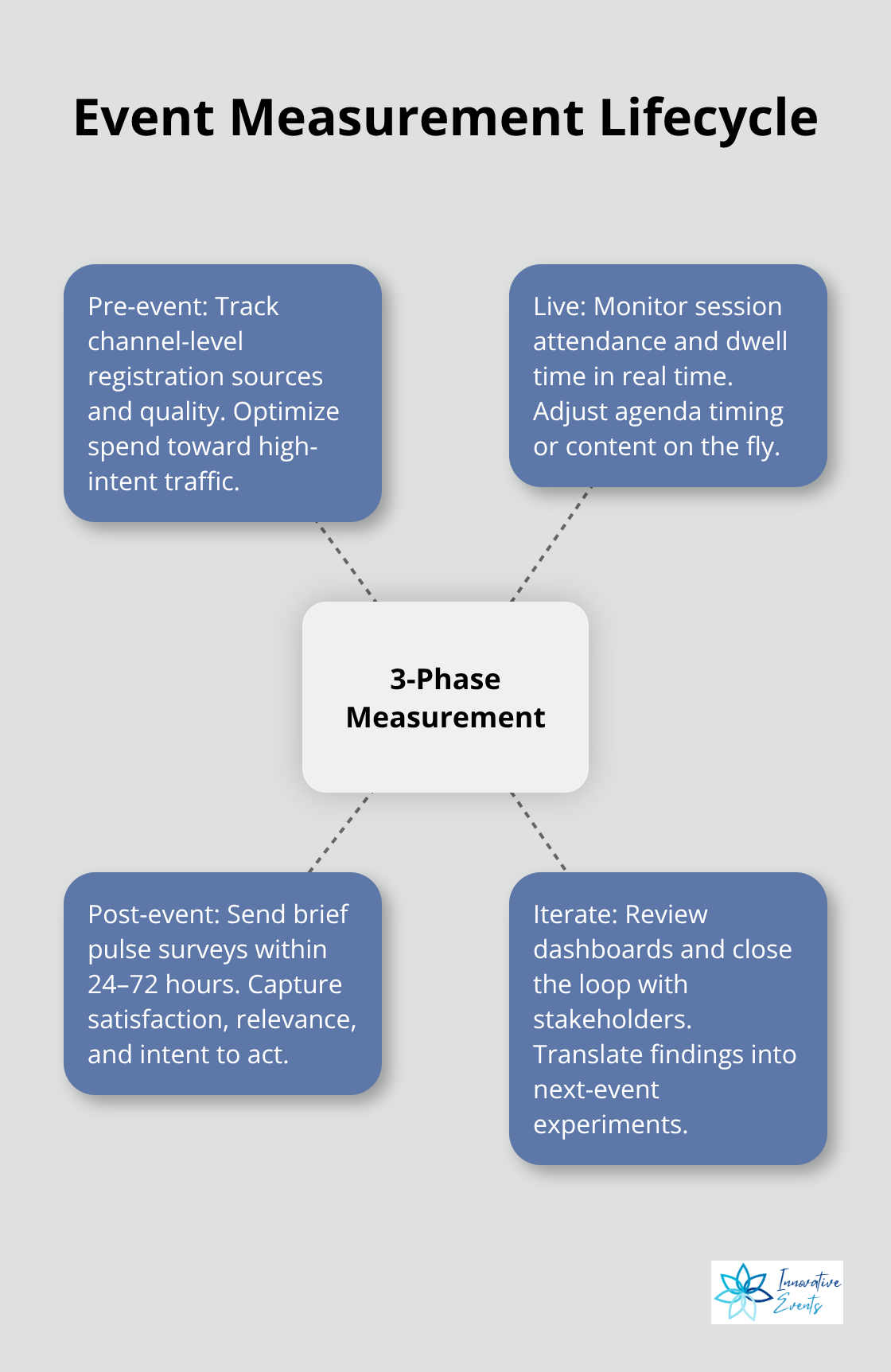
Real-time dashboards during your event show which content resonates and which sessions lose people-use this data to adjust immediately rather than waiting for post-event analysis. This agility transforms events from static experiences into responsive, attendee-centered programs.
Final Thoughts
Planning engaging corporate events succeeds when you treat objectives, experience design, and audience engagement as interconnected priorities rather than separate tasks. Companies that see real business results start with clarity about what they want to achieve, then build every decision around that outcome. Your venue choice, technology investment, catering strategy, and follow-up approach all flow from your initial objective.
The measurement phase separates events that drive business impact from those that simply occur. Track registration sources to identify which promotion channels attract genuinely interested attendees. Monitor real-time engagement during your event to spot which content resonates and which sessions lose people. Collect immediate feedback while memory is fresh rather than waiting weeks for post-event surveys that most people ignore.
We at Innovative Events understand that executing this level of planning requires expertise across event management, technical production, and strategic marketing. Our team handles everything from initial strategy through post-event analysis, ensuring your corporate event delivers measurable business results. Whether you need full event management, professional AV support, or strategic marketing guidance, we bring the specialized skills that transform planning into flawless execution.