
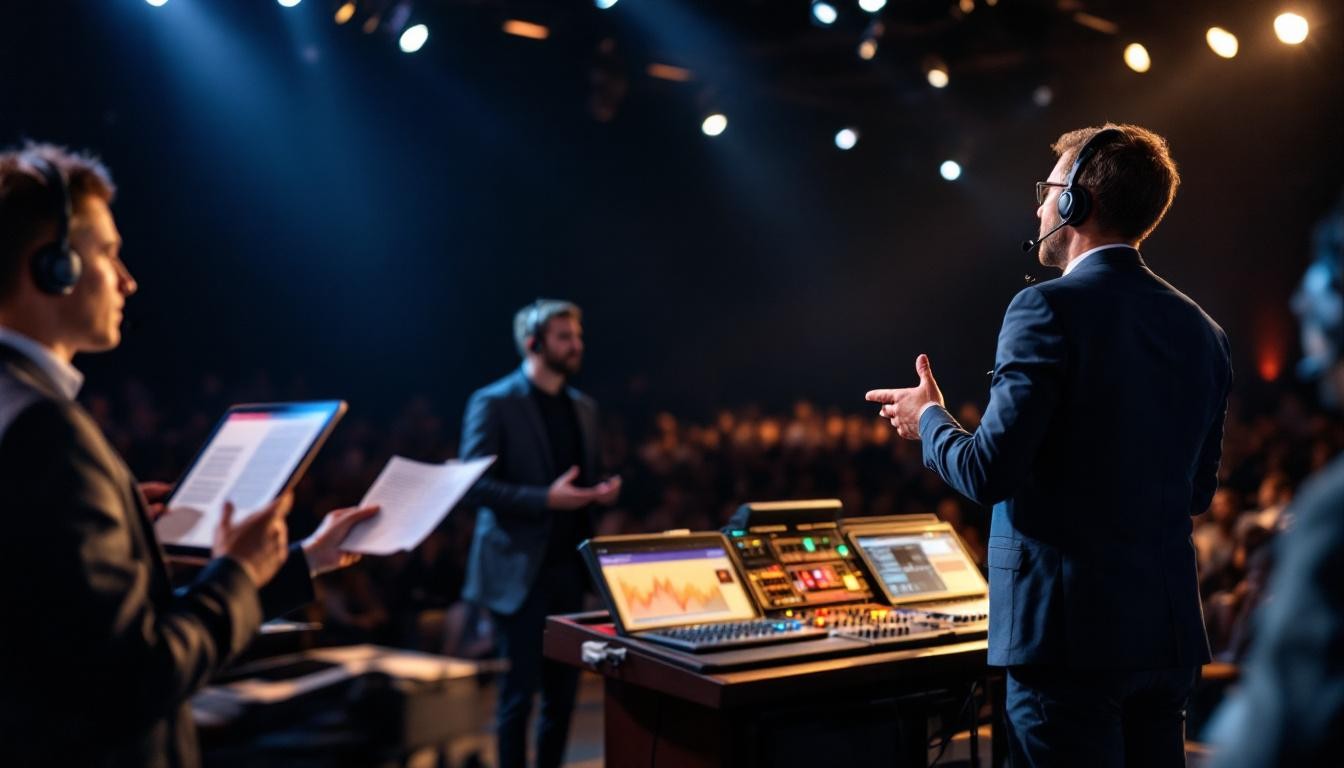
Public speakers often face a critical challenge: managing technical elements while staying focused on their message. At Innovative Events, we’ve seen firsthand how event support for public speakers transforms nervous presenters into confident performers.
The difference between a forgettable talk and a memorable one often comes down to the technical backbone behind the scenes. When audio, lighting, and video work flawlessly, speakers can concentrate entirely on connecting with their audience.
Why Professional Event Support Matters
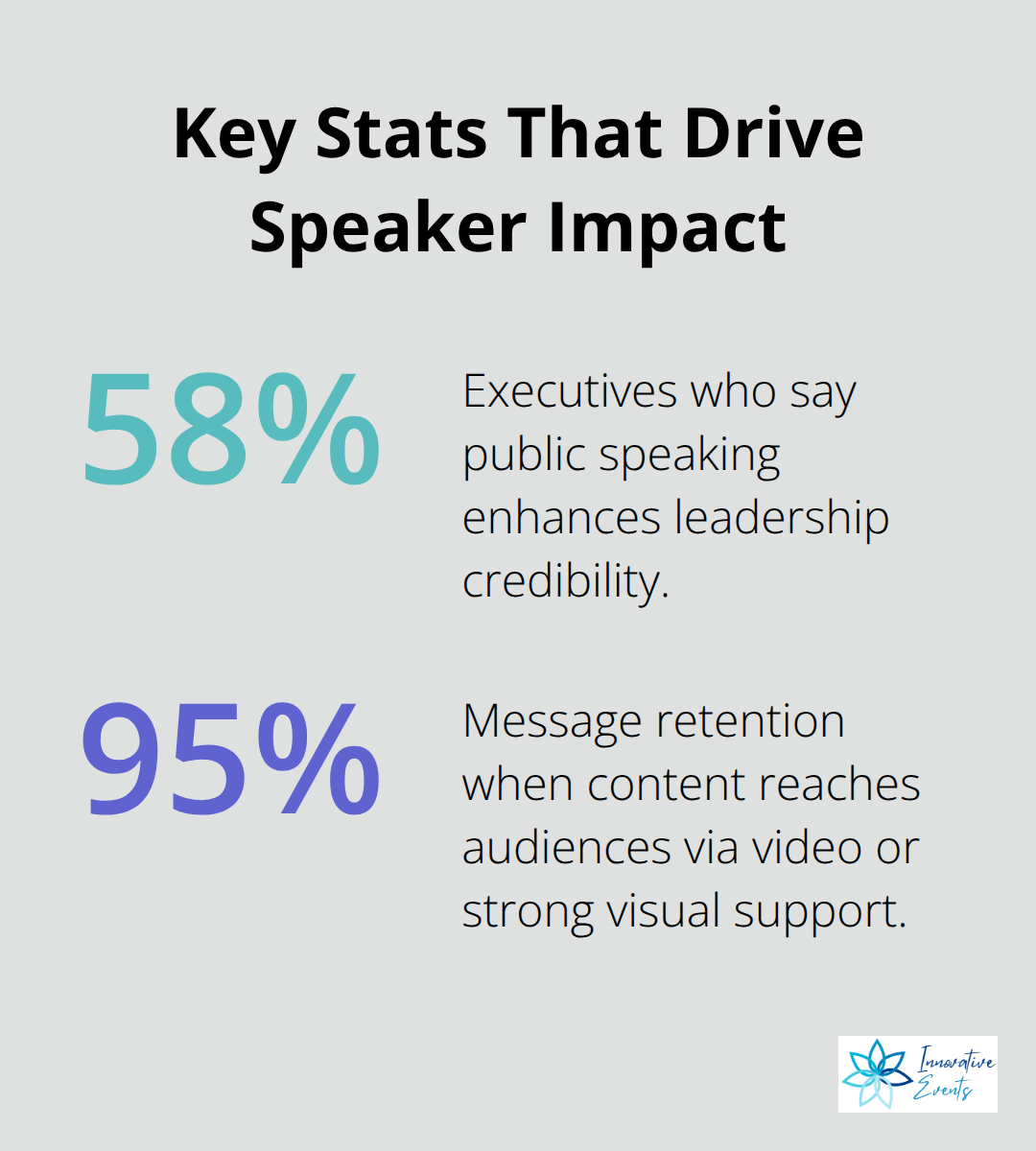
Technical anxiety ranks among the top reasons speakers underperform. According to Harvard Business Review, 58% of executives say public speaking enhances leadership credibility, yet many never reach that potential because equipment failures or poor audio quality distract them. When a speaker worries about whether the audience can hear them or see their slides clearly, their message gets buried under technical stress. Professional event support eliminates this distraction entirely.
A dedicated technical team handles microphone levels, screen transitions, and lighting adjustments so speakers can focus exclusively on connecting with their audience. This separation of concerns isn’t a luxury-it’s the difference between a presentation that lands and one that falls flat.
The Real Cost of Technical Failure
Poor presentation skills cost businesses an estimated $62.4 million annually in lost productivity, according to industry research. A significant portion of that loss stems from technical mishaps that derail speakers mid-presentation. When audio cuts out, slides fail to advance, or lighting creates glare on screens, audience attention collapses. Research shows that visual learners particularly benefit from animations and strong visuals in presentations. This means every technical failure directly reduces what your audience remembers and acts on.
Experienced support teams anticipate problems before they happen. They conduct full technical rehearsals, test backup systems, and position crew members strategically to respond to issues in seconds rather than minutes. This proactive approach transforms potential disasters into non-events-the audience never notices because nothing goes wrong.
Building Speaker Confidence Through Preparation
Speakers who know their technical setup works perform measurably better. Pre-event rehearsals with your support team allow speakers to practice with actual equipment, understand sightlines, and test microphone placement. This preparation directly reduces performance anxiety. When a speaker steps on stage knowing exactly how their slides will appear, where to stand for optimal lighting, and that audio engineers are monitoring every word, their delivery becomes more natural and persuasive. The confidence shows.
Audiences respond to speakers who appear comfortable and in control. Professional event support creates that environment by handling every technical variable and allows speakers to concentrate on their content, pacing, and audience engagement rather than worrying about whether the projector works or if anyone in the back row can hear them. This foundation of technical reliability sets the stage for what happens next: how event support services actively elevate speaker performance through specialized sound, lighting, and video systems.
How Event Support Services Transform Speaker Impact
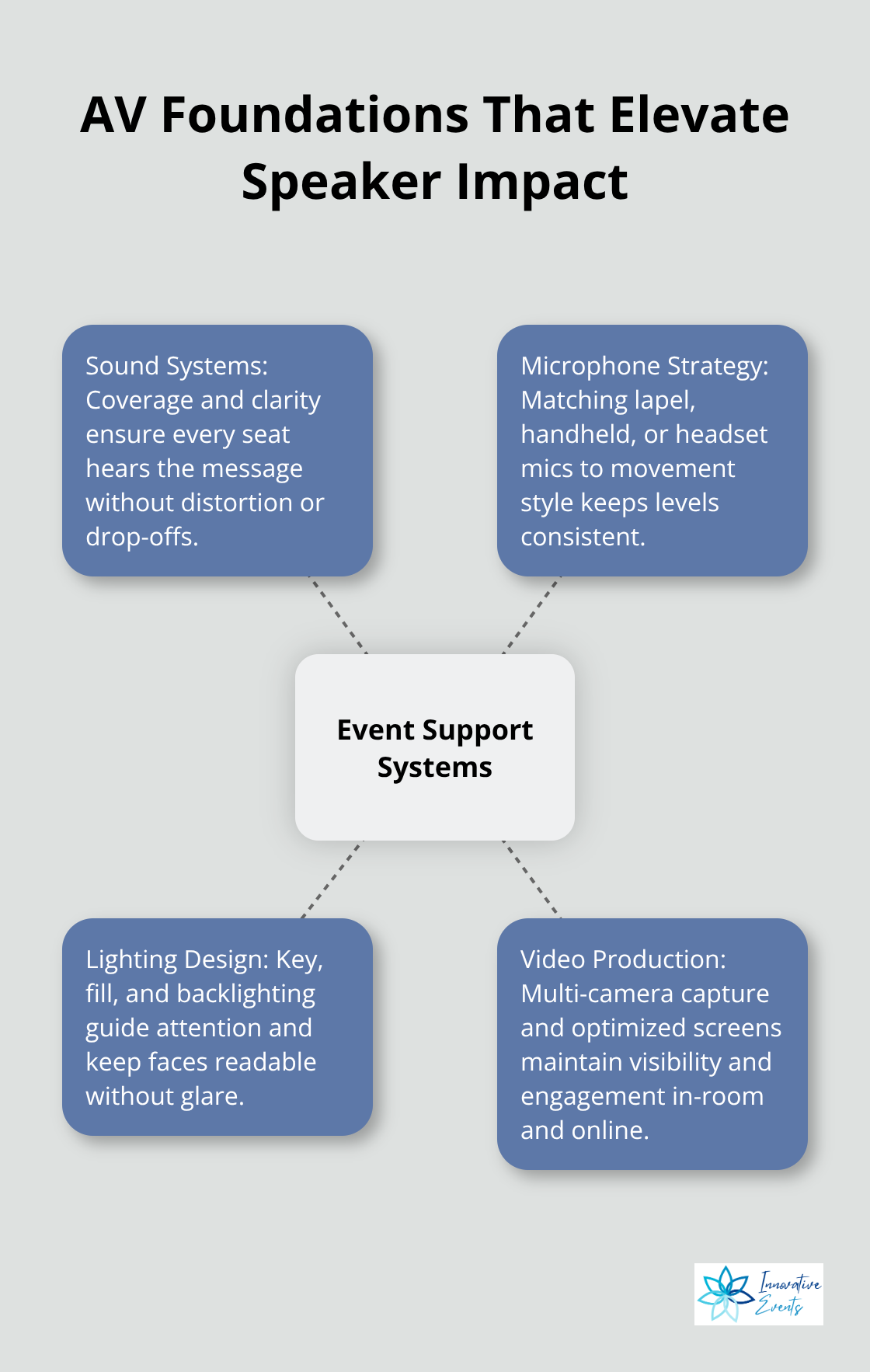
Professional event support extends far beyond pressing play on a presentation. Sound systems and microphone management form the first critical layer of any speaking event. A speaker’s voice must reach every seat in the room with clarity and consistency, regardless of room acoustics or crowd size.
Industry data shows that 95% of message retention occurs when content reaches audiences via video or with strong visual support. This means audio quality isn’t optional-it’s foundational to whether your audience remembers anything at all.
Sound Systems and Microphone Strategy
Experienced audio engineers monitor throughout the presentation, adjusting for feedback, speaker movement, and ambient noise rather than simply setting microphone levels at the start. Wireless microphones require backup batteries and secondary units positioned strategically around the venue. Lapel mics work better for speakers who pace across the stage, while handheld mics suit Q&A segments where audience members ask questions. The choice depends entirely on your speaker’s movement style and the room layout.
Test microphone placement during rehearsals, not on event day. Speakers often move unpredictably once adrenaline kicks in, and your audio team needs to anticipate those shifts. Poor audio creates immediate audience frustration-people stop listening when they can’t hear clearly, and your message evaporates before it lands.
Lighting Design and Visual Perception
Lighting design shapes how audiences perceive speakers and absorb information. Strategic lighting focuses attention on the speaker while ensuring slides remain visible without glare or washed-out colors. Research shows that visuals boost persuasiveness by enhancing audience engagement with digital media. Backlighting separates speakers from backgrounds, creating visual depth that keeps eyes engaged. Front-of-house lighting eliminates shadows on faces, which audiences interpret as lack of confidence.
Key light, fill light, and ambient lighting must work together; too much contrast creates harsh shadows, while flat lighting makes speakers appear tired. Color temperature matters significantly; warm light around 3000K feels inviting, while cooler light feels clinical. Video screens require different lighting than stage presentations; ambient light washing over screens reduces contrast and makes content harder to read. Professional lighting designers walk the venue hours before the event, measuring ambient light levels and testing equipment positions. They adjust based on what the camera sees, not just what the human eye perceives.
Video Production and Screen Management
High-definition video capture serves multiple purposes: it records the presentation for future distribution, but it also reveals what the audience actually sees. Many speakers assume their slides are visible from the back row when the video reveals that the text is too small or the colors lack contrast. Multi-camera setups capture wide shots of the speaker, close-ups of slides, and audience reactions-this variety maintains viewer interest during post-event content distribution.
Screen placement and size matter significantly; a 10-foot screen in a 500-seat auditorium leaves back-row attendees squinting. Calculate screen size based on the furthest viewer’s distance-a general rule suggests one inch of screen height per 10 feet of viewing distance. Wireless presentation clickers with backup systems prevent the common disaster of slides refusing to advance. A dedicated operator manages slide transitions rather than relying on speakers, who often click too fast or forget the next slide exists.
Post-event, well-produced video clips drive engagement across social platforms. This technical foundation-sound, lighting, and video working in concert-creates the conditions where speakers truly connect with audiences. The next step involves preparing speakers to use these systems effectively through structured rehearsals and on-site coordination.
Key Elements of Reliable Speaker Support
Pre-Event Technical Rehearsals: Transform Preparation
Full technical run-throughs at least two weeks before the event separate speakers who nail their delivery from those who stumble through technical chaos. During rehearsal, your speaker practices with actual microphones, tests slide transitions on the exact projector that will be used, and walks the stage under real lighting conditions. This isn’t about perfection-it’s about eliminating surprises. Speakers who rehearse with their audio team know precisely how their wireless microphone responds when they move stage left, whether their slides remain readable from the back row, and how long transitions take between topics.
Speakers discover that their prepared remarks run three minutes over time, not during the actual presentation. They learn their lapel mic picks up rustling fabric and adjust their movement accordingly. Audio engineers use rehearsals to set proper microphone levels, identify feedback frequencies in the room, and position backup equipment. Lighting designers confirm that backlighting separates the speaker from backgrounds and that key lights eliminate unflattering shadows. Video operators verify camera angles capture both the speaker’s expressions and readable slide content.
When rehearsal happens correctly, everyone on your technical team knows exactly what success looks like and how to achieve it. This preparation directly reduces anxiety because speakers enter the stage with genuine confidence, not false bravado.
On-Site Support Coordinates Every Technical Element
On-site support during the presentation requires a coordinated crew with clear roles and communication channels. A lead audio engineer monitors levels throughout, adjusting for speaker movement and room dynamics rather than leaving settings static. A lighting operator responds to cues-brightening during emotional moments, adjusting when video screens activate-rather than running a preset show. A stage manager communicates via headset with all crew members, cueing slide advances and coordinating transitions between speakers.
This coordination matters enormously. Each team member focuses on their specific responsibility, which allows the speaker to concentrate entirely on message delivery and audience connection. The technical crew becomes invisible to the audience-they notice only flawless execution.
Post-Event Analysis Drives Future Improvement
After the presentation concludes, a technical breakdown happens systematically-equipment powers down safely, cables coil and store properly, and video files back up immediately to prevent data loss. Your technical team should share engagement metrics and retention metrics with speakers, showing where audience attention peaked during video playback and which slides generated the most interaction. This feedback helps speakers refine future presentations based on actual audience response, not assumptions.
Most speakers never receive this insight; they finish the talk and move on without understanding what truly resonated. Post-event video clips also drive engagement across social platforms when produced with multiple camera angles and professional editing.
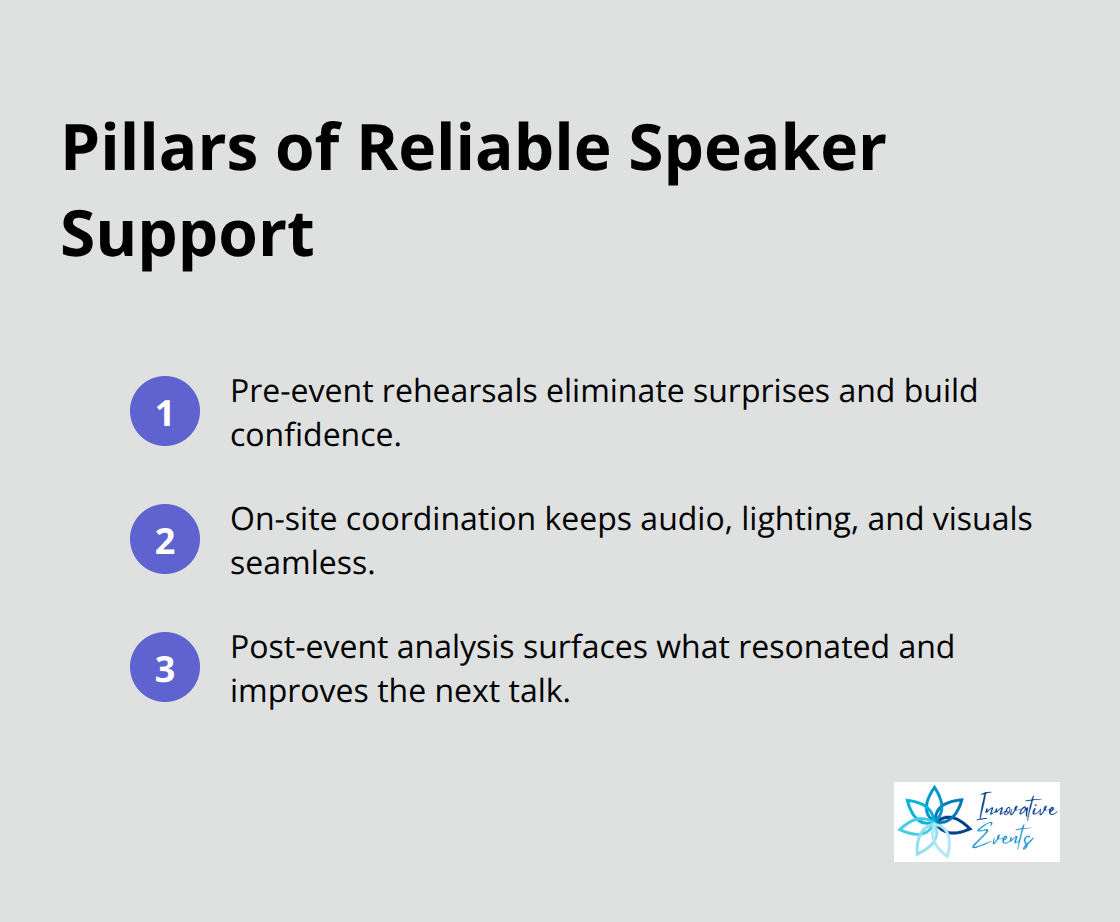
This systematic approach to technical support, from rehearsal through analysis, creates the conditions where speakers truly connect with audiences and deliver measurable impact.
Final Thoughts
Professional event support for public speakers transforms nervous presenters into confident performers who command rooms. Businesses lose $62.4 million annually to poor presentation skills, yet many of those failures stem from preventable technical problems rather than speaker ability. When audio cuts out, slides fail, or lighting creates glare, audiences stop listening-professional event support eliminates these distractions entirely and allows speakers to focus on delivering their message with clarity.
Speakers who arrive anxious become performers who connect with audiences when they know their technical setup works flawlessly. Pre-event rehearsals build genuine confidence, on-site coordination ensures nothing distracts from the message, and post-event analysis reveals what truly resonated with audiences. The investment in event support for public speakers delivers measurable returns through higher registration rates, increased social platform engagement, and most importantly, audiences who remember and act on messages delivered with technical excellence.
Innovative Events specializes in managing everything from speaker sourcing to on-site technical execution to post-event content distribution, ensuring speakers have the support they need to deliver impact consistently. Your speakers deserve professional event support that makes excellence inevitable, not crossed fingers and hope.