

Content marketing isn’t optional anymore. Companies that publish regular, valuable content see 67% more leads than those that don’t, according to HubSpot research.
At Innovative Events, we’ve seen firsthand how the importance of content marketing transforms business results. The brands winning today aren’t just selling-they’re teaching, building trust, and staying top-of-mind with their audiences.
Why Content Marketing Beats Traditional Advertising
The Trust Advantage Over Interruption
Content marketing outperforms traditional advertising because it builds genuine trust rather than demanding attention. When HubSpot analyzed content marketing performance, they found that 70% of marketers can demonstrate that content marketing has grown their number of leads and increased customer engagement. More importantly, companies that prioritize blogging are 13 times more likely to see positive ROI compared to those that don’t. This isn’t about posting random articles or videos-it’s about solving real problems your audience faces every single day.
Tap Into Sales Intelligence for Topic Ideas
Sales teams know customer problems intimately. They hear objections during calls, they watch prospects hesitate before buying, and they know exactly what questions come up repeatedly.
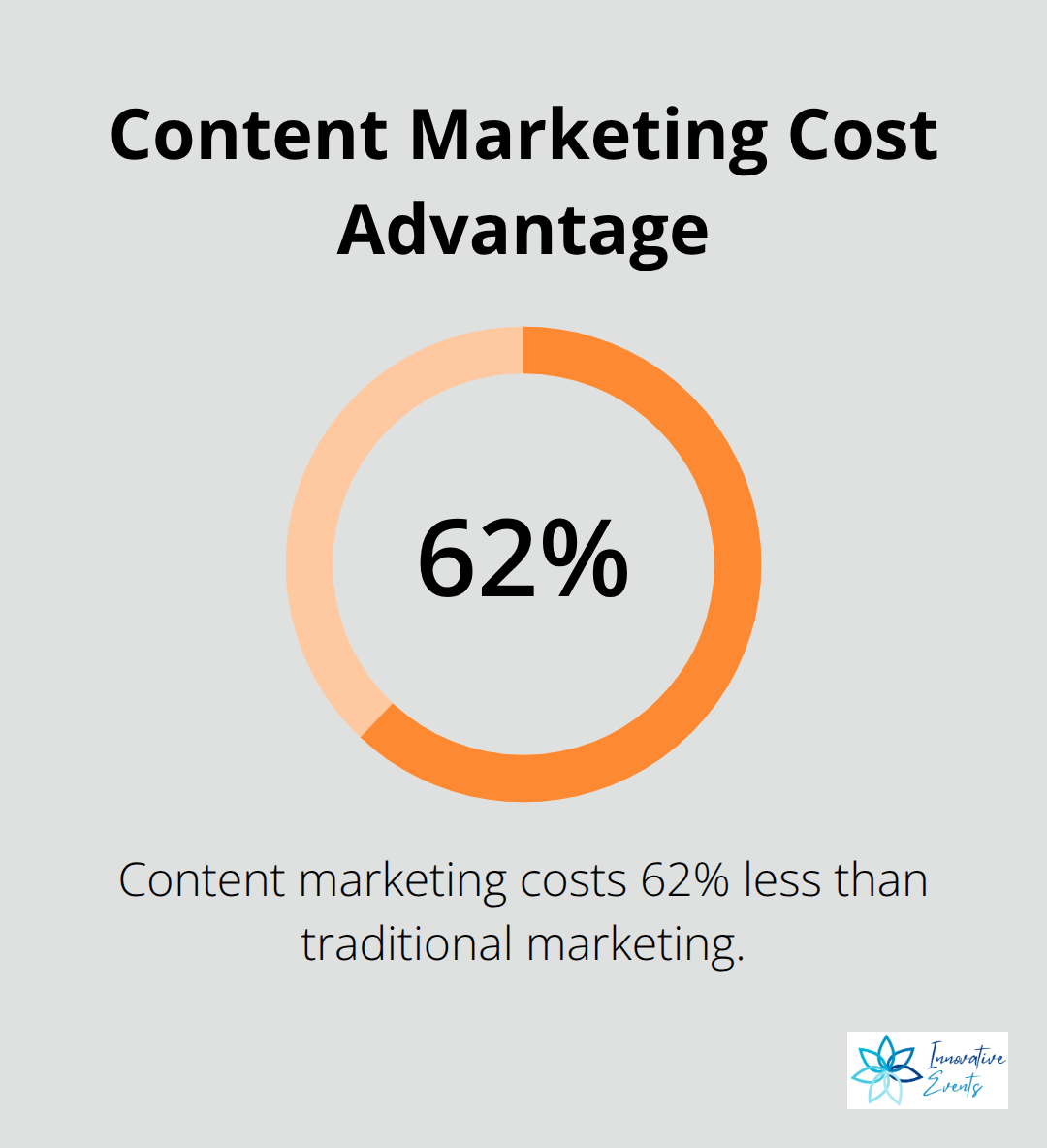
Mining those conversations for content topics gives you an unfair advantage because you earn attention through value rather than interruption. Content marketing costs 62% less than traditional marketing while generating about three times as many leads, which makes the math simple: you get better results for less money.
Rank Where People Actually Search
The path from awareness to purchase has fundamentally changed. Sixty-eight percent of all online experiences begin with a search engine, and 75% of users never navigate beyond the first page of search results. This means your content must rank where people are actually looking.
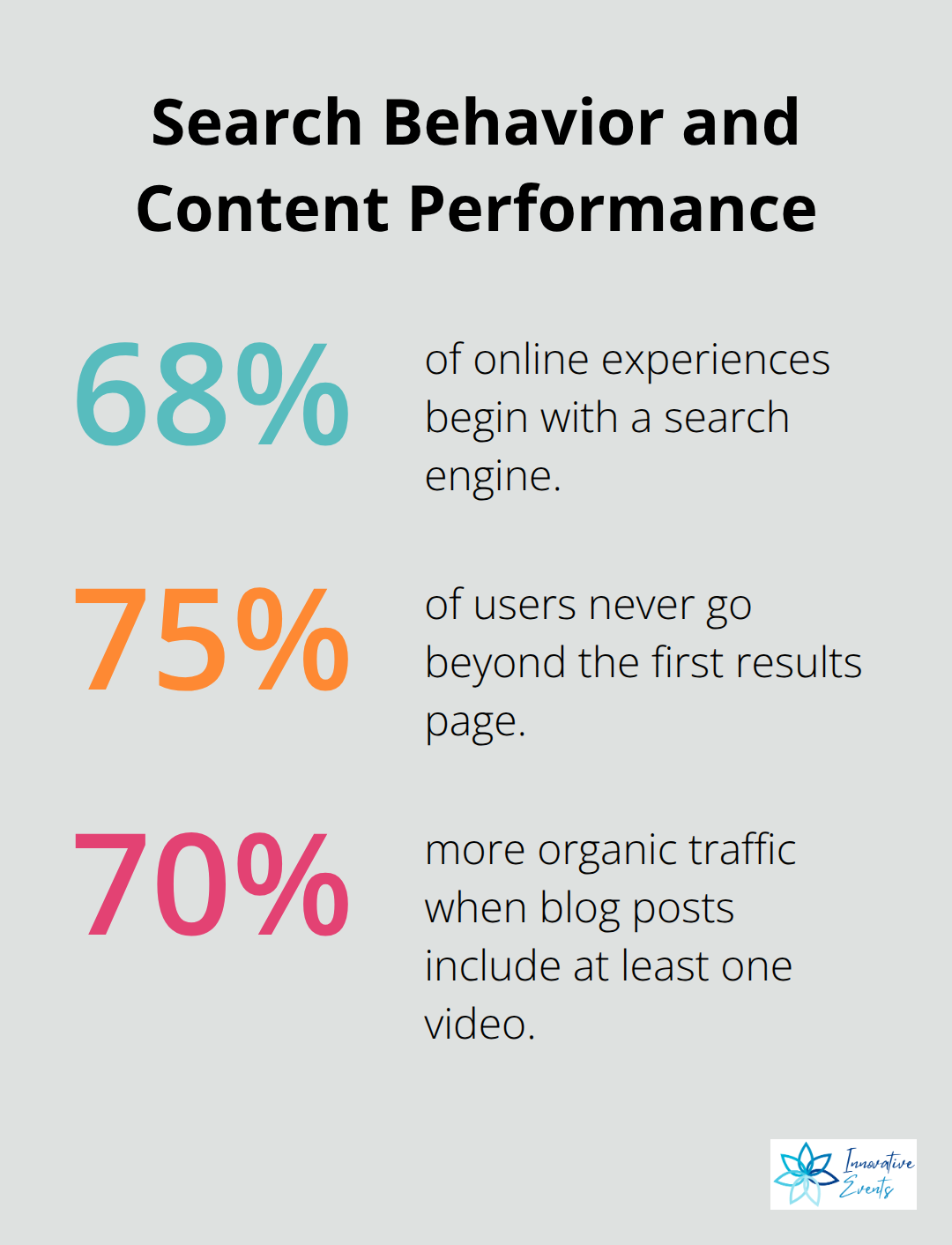
Blog posts featuring at least one video attract 70% more organic traffic than text-only posts, so format matters significantly.
Build Authority Through Consistency
Authority requires consistency over months and years, not quick wins. Sixty percent of the pages ranking in Google’s top 10 results are over three years old, which proves that older, well-maintained content compounds in value. The brands winning right now aren’t those with the flashiest ads or the biggest marketing budgets (they’re the ones who publish helpful, specific, accurate content that their audience actually wants to read and share). Content marketing leaders experience 7.8 times more site traffic than non-leaders, and that traffic converts because it arrives with genuine intent rather than interruption.
The real question isn’t whether you have time for content marketing-it’s whether you can afford to let your competitors own the search results and audience attention that content delivers.
Building Your Strategy on Real Audience Needs
Start with what your sales team already knows. They hear the same questions repeatedly during calls, they watch prospects get stuck at specific decision points, and they know which objections appear in nearly every conversation. Extract those patterns and turn them into content topics. This approach beats generic keyword research because you solve problems your actual prospects voice every single day. If your sales team regularly hears questions about implementation timelines, cost justification, or integration with existing systems, those become your content pillars. The alternative is guessing what your audience wants, which wastes months of publishing effort on topics that don’t move prospects toward buying decisions.
Segment Your Audience Before You Write Anything
Different buyers need different content at different stages. A prospect in early awareness doesn’t need detailed product comparisons yet, but a decision-maker comparing vendors absolutely does. Map out your audience segments by their role, their stage in the buying journey, and the specific problems they solve. Someone researching solutions behaves completely differently from someone evaluating your product against competitors. This segmentation determines what you publish and where you distribute it. LinkedIn works differently than TikTok. Email reaches existing prospects differently than search engines reach strangers. Marketers who segment their audiences and tailor content accordingly see significantly higher engagement because the message matches what each group actually needs at that moment.
Match Formats to How Your Audience Consumes Information
Blog posts work for detailed problem-solving and SEO visibility. Videos drive 70 percent more organic traffic when paired with written content. Podcasts work for audiences with commutes or hands-on jobs. Infographics compress complex comparisons into visual formats that people share. Webinars let you demonstrate solutions in real time. The mistake most teams make is publishing the same content across every channel. Instead, choose formats based on where your audience actually spends time and what format solves their problem most effectively. A prospect trying to understand technical architecture needs a detailed blog post with diagrams. A prospect deciding between vendors might prefer a side-by-side comparison video. A busy executive consuming content during a commute might grab a podcast episode. Your format strategy should match consumption habits, not publishing convenience.
Organize Publishing Around Real Business Events
Your content calendar shouldn’t be random. It should connect to product launches, seasonal buying patterns, industry conferences, and the actual questions your sales team hears at specific times of year. If your industry sees budget decisions in Q4, your content strategy should have comparison pieces and ROI calculators ready in September and October. If you launch a new product in March, your content should start warming audiences in January. If your sales cycle spans six months, your content sequence needs to address each stage of that journey in the right order. Consistency matters more than volume. Publishing one solid piece every two weeks beats publishing five weak pieces one week and nothing for three weeks. Set a realistic publishing cadence your team can actually maintain, then protect it fiercely.
Protect Your Publishing Rhythm to Win Long-Term
The brands winning with content aren’t the ones with unlimited budgets or massive teams. They’re the ones who commit to a sustainable rhythm and stick to it for years. This consistency compounds over time-older, well-maintained content continues to attract traffic and generate leads months or years after publication. Your competitors are likely publishing sporadically or abandoning their efforts after a few months. That’s your advantage. When you maintain a steady publishing schedule (even a modest one), you gradually accumulate content assets that work for you continuously. The next phase of your strategy involves measuring what actually works so you can refine your approach and allocate resources toward the topics and formats that drive real business results.
Measure What Actually Moves the Needle
Track Metrics That Connect to Revenue
Stop measuring vanity metrics. Total page views mean nothing if those visitors bounce immediately without engaging.
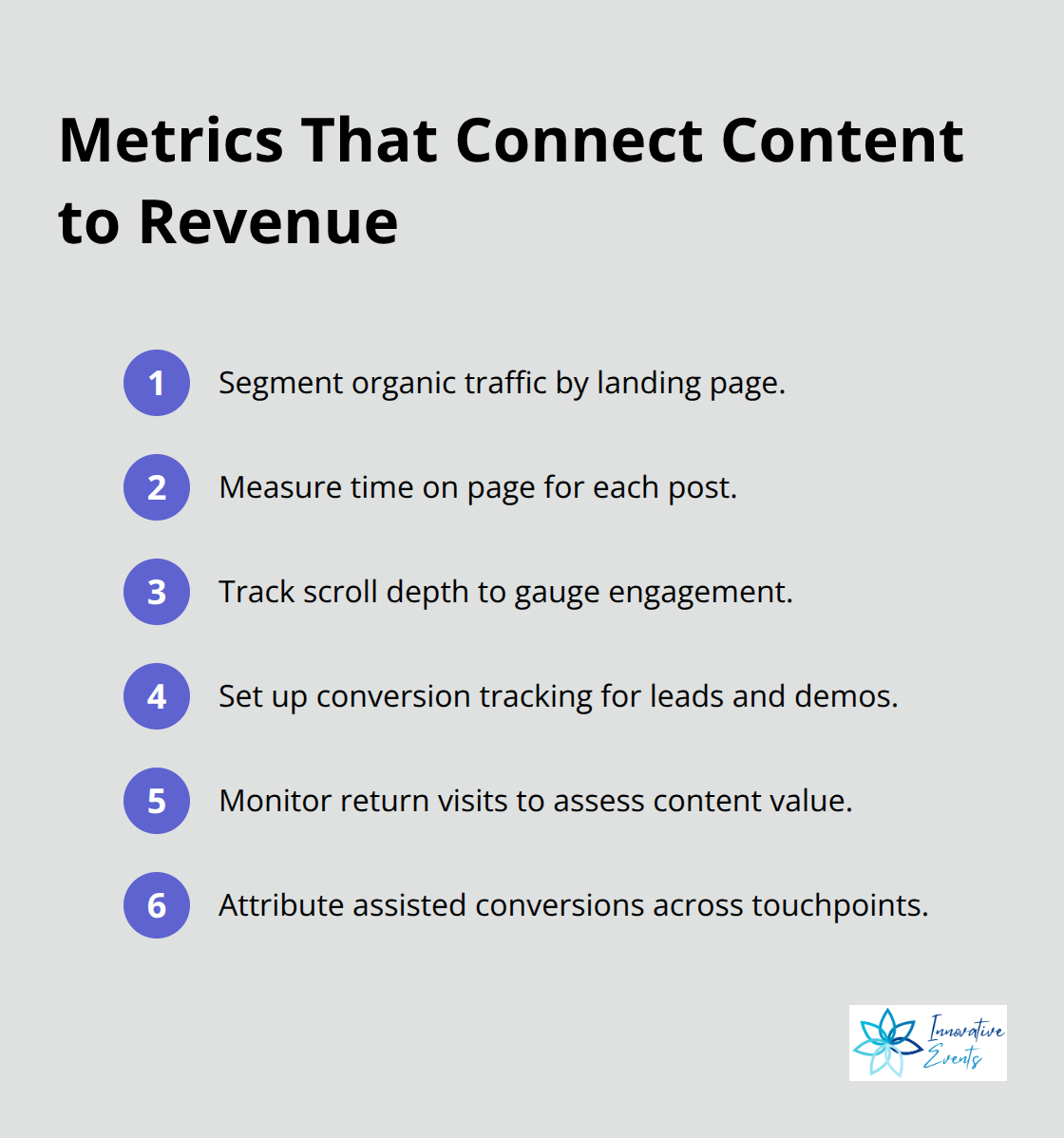
Focus on metrics that directly connect to business outcomes because that’s what matters when you allocate budget and time to content. Track organic traffic through Google Analytics, but segment it by landing page and measure how long visitors actually stay. A post that attracts 500 visitors who spend 45 seconds on the page underperforms compared to a post that attracts 150 visitors who spend 8 minutes reading and scrolling through the entire piece. Time on page and scroll depth reveal whether your content actually solves the problem people came to find.
Connect Content to Conversions and Sales
More importantly, connect content interactions to actual conversions and revenue whenever possible. Set up conversion tracking in Google Analytics so you can see which content pieces drive leads, demo requests, or sales conversations. If a blog post about implementation timelines generates 12 qualified leads per month, that content deserves continued investment and expansion. If another post attracts traffic but never converts anyone, that’s a signal to either rewrite it with a stronger call-to-action or redirect your publishing effort elsewhere.
Return visits matter significantly because they indicate whether your audience finds your content valuable enough to come back. Assisted conversions matter because they show which content pieces appear in the customer journey before someone actually buys, even if they don’t directly generate the conversion themselves. Someone might read your comparison guide, then read your pricing page, then talk to sales before purchasing. That comparison guide assisted the conversion even though it wasn’t the final touchpoint.
Test Different Approaches Systematically
Test different content approaches systematically instead of hoping something works. If your sales team reports that prospects struggle with ROI justification, publish two different pieces addressing that topic from different angles. One might focus on hard cost savings. Another might address time-to-value or competitive advantage. Monitor which version attracts more traffic, keeps visitors engaged longer, and generates more qualified leads. Double that investment in the winning format and approach.
Video paired with written content generates 70 percent more organic traffic than text alone, but that doesn’t mean every piece needs video. Test it with 3–5 pieces and measure the actual results for your specific audience. Your audience might prefer detailed written guides over videos, or vice versa. Podcast episodes might convert better than blog posts for your particular market. The only way to know is to test and measure. Most teams publish the same format repeatedly without ever testing alternatives, which means they’re likely leaving significant performance gains on the table.
Amplify What’s Already Working
Refresh your highest-performing content regularly because older posts that still rank well can attract even more traffic with minor updates. Add recent data, remove outdated references, improve the internal linking structure, and republish. Instead of starting from zero with new topics, amplify what’s already working. This approach delivers faster results and compounds the return on your initial writing investment.
Final Thoughts
Content marketing compounds over time, and the importance of content marketing strengthens the longer you commit to it. The brands dominating their markets right now win because they publish consistent, valuable content that solves real problems their audiences face every single day-not because they have bigger budgets or flashier campaigns. Marketers who prioritize blogging are 13 times more likely to see positive ROI, and content marketing costs 62 percent less than traditional marketing while generating three times as many leads.
Start with your sales team’s most common questions and build your first content pieces around those topics. Segment your audience by their role and buying stage, then choose formats that match how they actually consume information. Set a realistic publishing schedule you can maintain for months, not weeks, and track metrics that connect to revenue rather than vanity numbers.
We at Innovative Events understand that content strategy works best when paired with strategic marketing and brand experiences that reinforce your message. Whether you’re launching a product, building thought leadership, or strengthening your market position, start today and stay consistent-your competitive position will strengthen as you accumulate content assets that attract traffic and generate leads continuously.