

Most content marketers guess what their audience wants. They publish without data, hoping something sticks.
At Innovative Events, we’ve seen firsthand that content marketing research changes everything. When you know your audience, track what works, and study your competition, your content stops being a shot in the dark and becomes a strategic asset that drives real results.
Understanding Your Audience Through Research
Start with real data about who engages with your content, not assumptions. Most marketers skip this step and pay for it later. Demographics tell you age, location, and income level, but psychographics reveal what your audience actually cares about, their pain points, and what motivates them to take action. Google Analytics 4 shows demographic breakdowns of your website visitors, while Facebook Audience Insights provides psychographic data including interests, behaviors, and purchase intent.
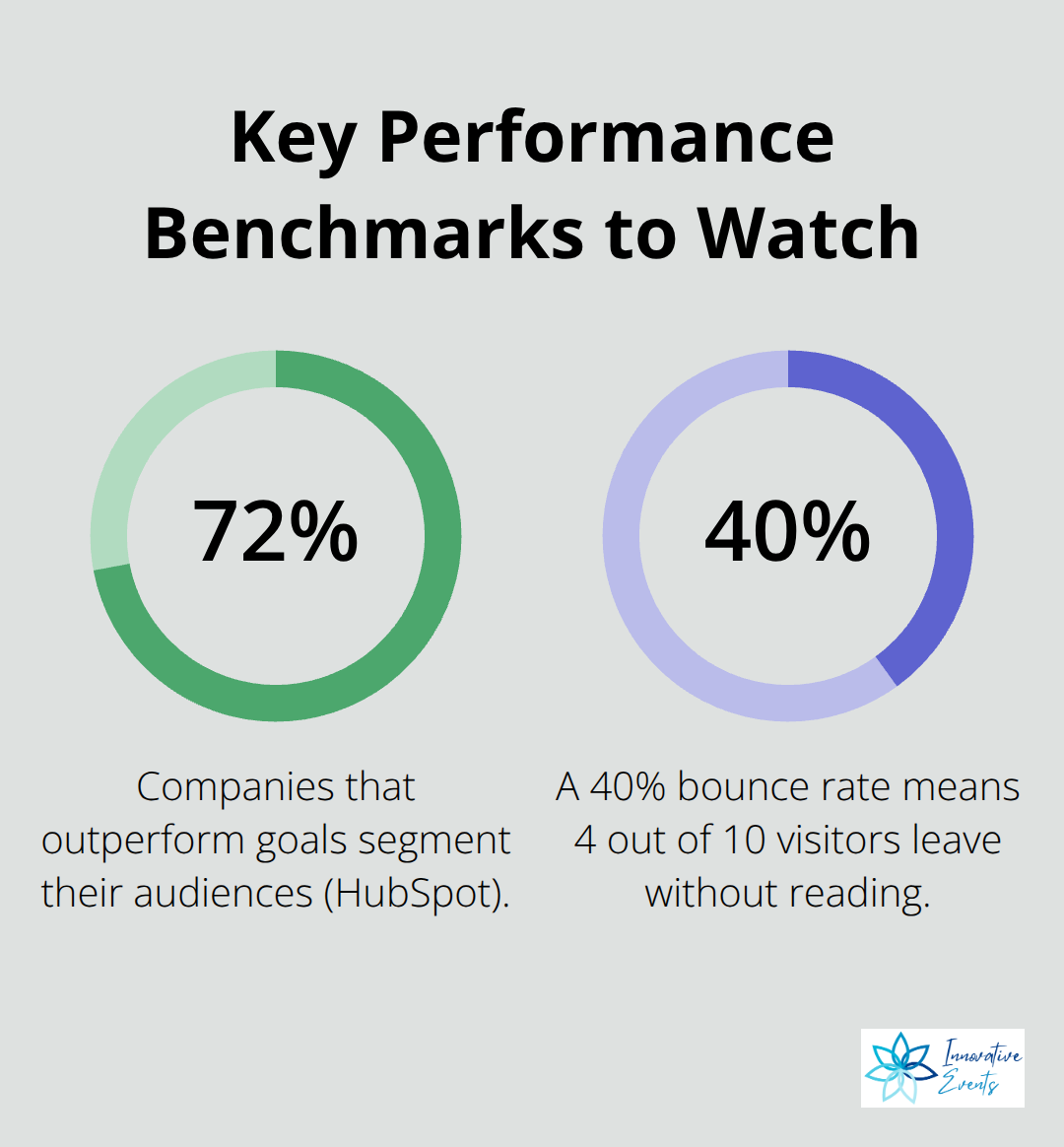
HubSpot’s research found that 72% of companies that outperform their goals segment their audiences, proving that specificity matters more than broad reach. Pull your analytics and identify which demographic segments spend the most time on your content and convert at the highest rates. Then move beyond the numbers.
Ask Your Audience Directly
Surveys and interviews cut through the noise of assumptions. The key is asking specific questions that reveal what content formats, topics, and solutions your audience actually needs.
Create short surveys with five to seven targeted questions focused on pain points, preferred content types, and industry challenges. Send these to your existing customers and email subscribers where response rates are higher. One-on-one interviews with ten to fifteen of your best customers reveal nuances that surveys miss-how they describe problems, what language resonates, and what objections come up repeatedly.
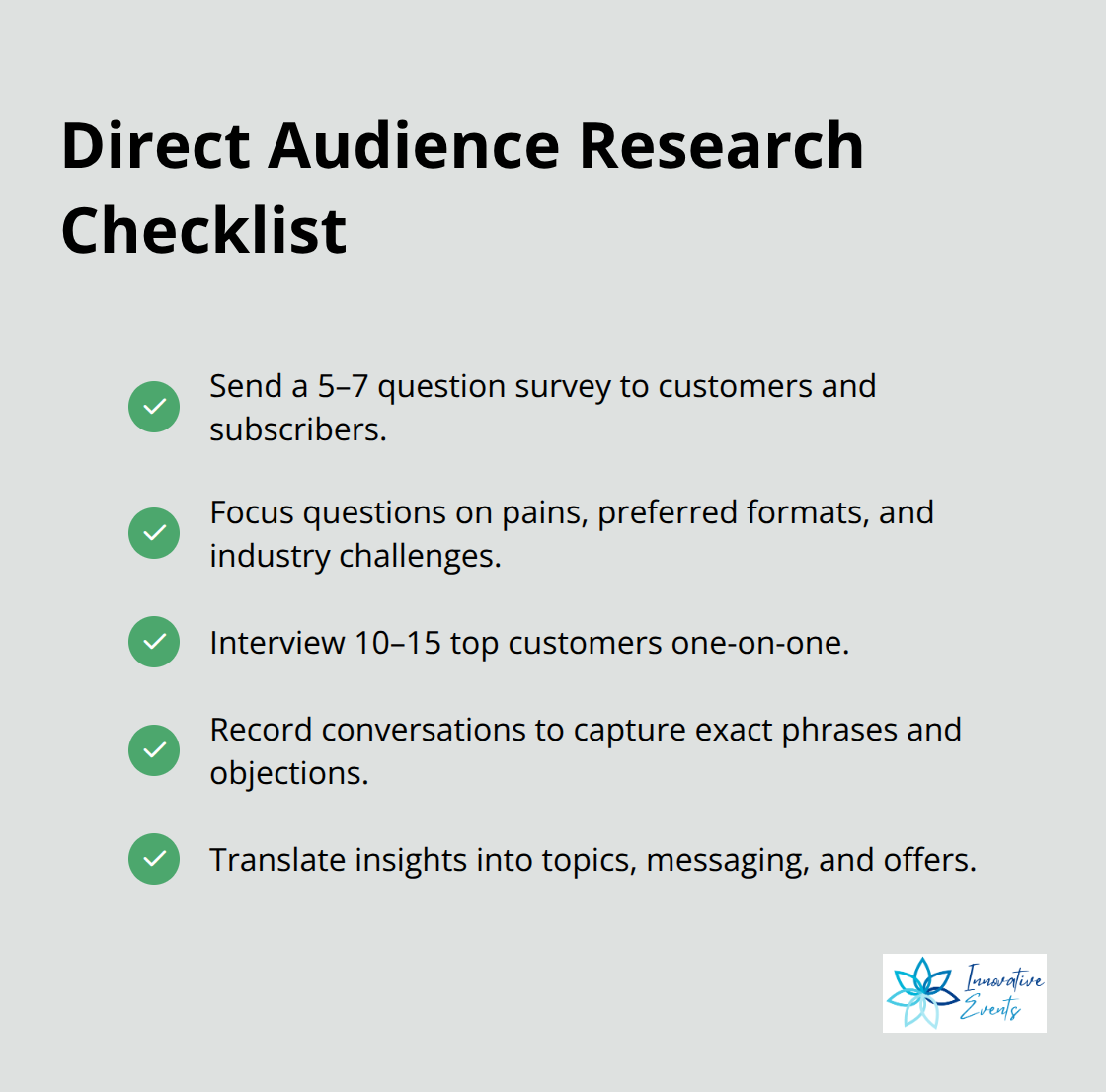
Record these conversations if possible so you can reference exact quotes for future content. This direct feedback becomes your competitive advantage because most competitors skip it entirely.
Listen to Social Media Conversations
Social media conversations reveal genuine sentiment and trending topics within your industry. Listen to what people say on LinkedIn, Twitter, Reddit, and industry-specific forums where your audience congregates. Tools like Mention track brand mentions and competitor discussions in real time, while Brandwatch analyzes sentiment across platforms to show whether conversations lean positive or negative.
Reddit’s subreddits dedicated to your industry contain unfiltered discussions about real problems people face. Search for keywords related to your industry on Reddit and read through threads to identify recurring frustrations and questions. Twitter conversations during industry events show what topics generate engagement and debate. This organic conversation data is far more reliable than manufactured market research because people express genuine opinions without survey bias.
Compile these insights into a simple spreadsheet listing the top ten problems, questions, and interests your audience discusses. Use this list to guide your content calendar for the next three months. With a clear picture of who your audience is and what they actually care about, you’re ready to measure which content performs best and why.
Content Performance Metrics and Analytics
Most marketers obsess over vanity metrics. They celebrate high page views while their conversion rates tank and their content ROI sits unknown. Stop measuring everything and start measuring what drives revenue. Engagement metrics vary wildly across platforms, so comparing LinkedIn likes to YouTube watch time is pointless. Instead, track engagement rate, which divides total interactions by total impressions. If your engagement sits below these ranges, your content either misses your audience’s interests or fails to prompt action. Google Analytics 4 lets you segment engagement by content type and audience segment, so pull reports showing which specific topics drive the highest engagement within your target demographics. Focus on creating more of what actually resonates rather than chasing arbitrary traffic numbers.
Where Conversions Actually Happen
Conversion tracking separates content that builds awareness from content that generates revenue. Set up conversion goals in Google Analytics 4 for specific actions like email signups, demo requests, or purchases. Then attribute conversions back to the content pieces that triggered them. Calculate your content ROI by dividing total revenue from conversions against content production costs. If you spent 500 dollars creating a piece of content that generated 5,000 dollars in attributed revenue, your ROI is 900%. Most B2B content takes weeks or months to generate conversions, so track both immediate conversions and assisted conversions where content influenced a purchase, even if another touchpoint closed the deal. Traffic source matters enormously here. Organic search traffic from Google converts at higher rates than social media traffic for most B2B companies because people actively searching for solutions show higher purchase intent than those passively scrolling feeds. Analyze which traffic sources deliver conversions, then double down on content strategies that attract that source.
Traffic Patterns Reveal Content Gaps
User behavior data shows exactly where people drop off and what content keeps them engaged. Heatmaps from tools like Hotjar reveal which parts of your content pages people actually read versus where they stop scrolling. If people consistently exit after your first section, your introduction fails to hook them. Session duration and bounce rate tell you whether content meets audience expectations. A 40% bounce rate on a blog post means 4 out of 10 visitors leave without reading anything, signaling poor headline targeting or mismatched search intent. Cross-reference this data with your keywords.
If people searching for “event marketing strategy” land on a page about event budgeting, your keyword targeting created a mismatch. Fix this by either rewriting the page to address the strategy or creating separate content for budget-focused searchers. Traffic source analysis in Google Analytics 4 shows which channels deliver your most engaged and converting visitors. If organic search sends high-quality traffic but paid ads don’t convert, shift budget toward SEO content creation instead of paid promotion. This data-driven reallocation prevents wasting money on underperforming channels.
Competitive Performance Benchmarking
Understanding how your content performs against competitors reveals whether you’re winning or falling behind. Pull engagement rates, traffic estimates, and content topics from your top three competitors using tools like SEMrush or Ahrefs. Compare their average blog post length, publishing frequency, and keyword targets against your own output. If competitors publish 2,000-word posts twice weekly while you publish 800-word posts monthly, you’re losing visibility and authority. Study which competitor content pieces generate the most backlinks and social shares (these indicate quality and relevance). Then identify the topics they cover that you haven’t addressed yet. This gap analysis shows you exactly where to focus your next content initiatives. Track these metrics quarterly, so you spot trends before competitors pull further ahead. Your content strategy should respond to competitive pressure, not ignore it.
With engagement rates, conversion data, and competitive benchmarks in hand, you now understand which content performs and why. The next step involves studying your competitors more systematically to identify the specific topics and strategies that will set your content apart.
Competitive Analysis: Finding Revenue in Content Gaps
Your competitors publish content constantly, but they miss opportunities your audience actively searches for every month. Start by mapping what your three closest competitors actually cover. Use SEMrush or Ahrefs to pull their top 50 organic search keywords and the content pieces that rank for those terms. Export this into a spreadsheet and compare it against your own keyword targets. Most companies discover they chase the same 10-15 keywords everyone else targets while ignoring 30-40 keyword opportunities their audience searches for monthly.
Identify High-Value Keywords Your Competitors Miss
Search volume and keyword difficulty matter together, not separately. A keyword with 500 monthly searches and low difficulty often outperforms a 5,000-search keyword with brutal competition because you’ll actually rank and convert traffic. Search Intent Keyword Tool and Answer the Public show what specific questions your audience asks around your topic. If competitors focus on how-to content while your audience searches for comparison content, that’s your gap: create the comparison content they ignore.
Traffic estimates from Ahrefs show exactly how many visitors your competitors pull from specific keywords. If a competitor ranks for a keyword that drives 2,000 monthly visitors and you don’t rank at all, that’s revenue walking to someone else. Prioritize closing these gaps first because the audience demand already exists. Your spreadsheet should track competitor keyword rankings, traffic estimates, and content volume quarterly, so you spot trends before competitors pull further ahead.
Analyze Content Formats and Publishing Patterns
Content format matters more than most marketers admit. Track which competitor content formats generate the most backlinks and social engagement using Ahrefs and BuzzSumo. If your industry favors long-form guides but competitors mostly publish short blog posts, longer content becomes your competitive advantage. Check how frequently competitors publish new content in each category. If competitors publish one guide monthly but publish blog posts weekly, you could dominate the guide space with a bi-weekly schedule.
Analyze the exact angles competitors take on overlapping topics. Two companies might both write about event marketing, but one focuses on budget and another on ROI. Find angles nobody covers. Look at competitor email newsletters and social media calendars to spot content themes they emphasize repeatedly.
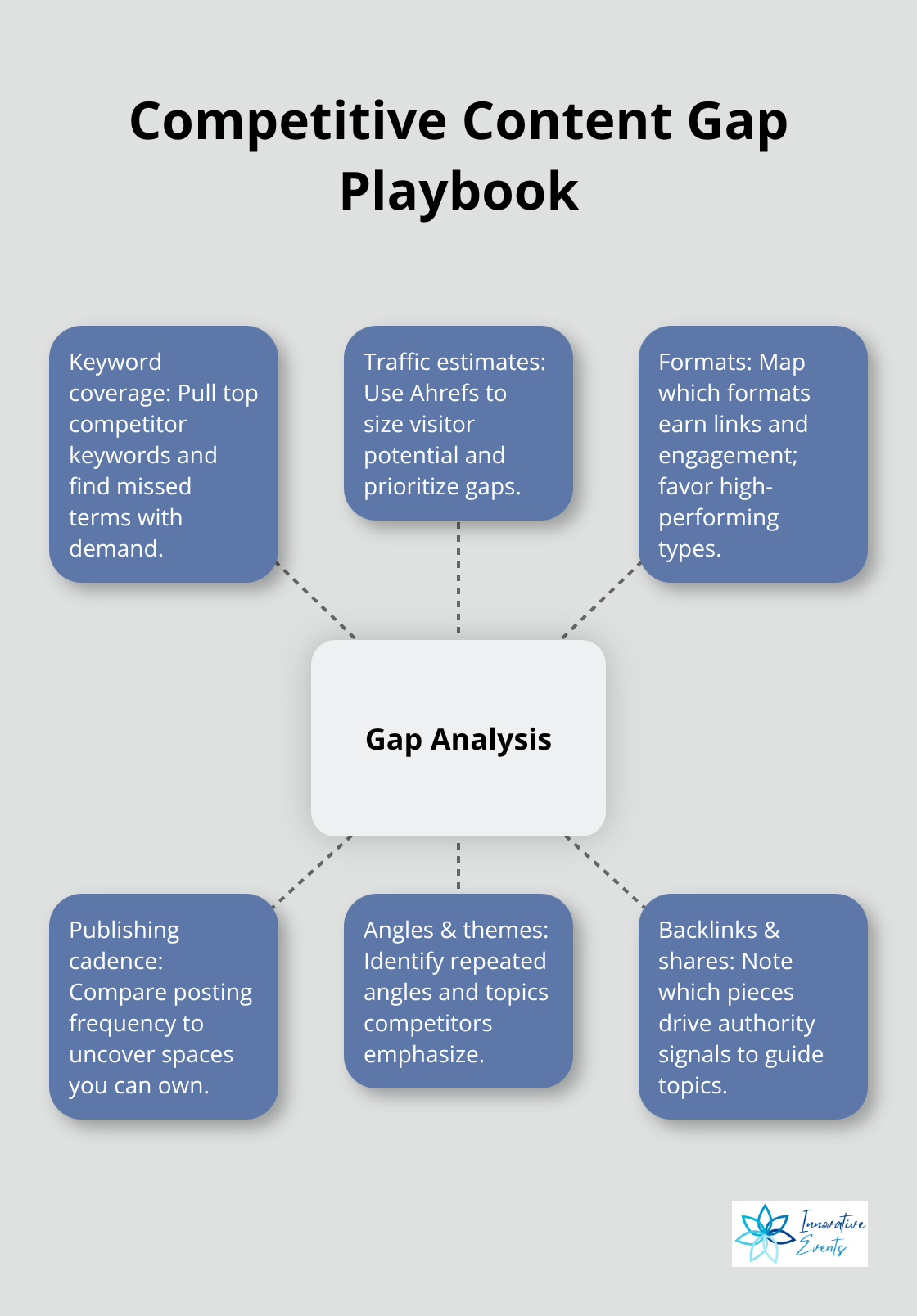
Repetition signals what they believe drives audience value. If every competitor mentions a specific software tool or methodology, that’s a signal your audience cares about it, and you need content addressing it.
Study Competitor Content Angles and Themes
Your competitors reveal what resonates with your shared audience through their content choices. Pull the top 20 blog posts from each competitor (ranked by traffic) and read through them to identify recurring themes, frameworks, and solutions they emphasize. If three competitors all feature case studies about enterprise clients, your audience likely values enterprise-focused content. Create case studies that address gaps in their coverage (perhaps mid-market companies or specific industries they ignore).
Examine how competitors structure their content around pain points. If they address cost concerns in one section but skip ROI entirely, that’s a gap. Your content can position ROI as the primary benefit while treating cost as secondary. This angle shift attracts audiences frustrated with competitor content that doesn’t match their priorities. Track these insights in a simple spreadsheet listing competitor angles, formats, and themes so you can reference them when planning your content calendar.
Final Thoughts
Content marketing research methods separate companies that waste budget from those that generate measurable revenue. You now have a framework to understand your audience through real data, measure what actually works, and identify gaps your competitors miss. The difference between guessing and knowing is the difference between content that disappears and content that drives business results.
Set a quarterly rhythm where you pull analytics reports, survey your audience again, and update your competitive analysis. This rhythm keeps your content strategy responsive to market shifts rather than locked into outdated assumptions. Assign one person ownership of this process so it actually happens, because without ownership, research becomes something you meant to do but never prioritize.
Start implementing these methods immediately by picking one area. If you lack audience insights, launch a five-question survey this week; if you have audience data but don’t track conversions properly, set up conversion goals in Google Analytics 4 today; if you’ve never analyzed competitors, spend two hours pulling their top keywords and content topics. We at Innovative Events help brands transform research into compelling content and immersive experiences that drive results. Small actions compound into a research-driven content marketing strategy that outperforms competitors who still guess.