

Picking the wrong brand strategy partner can cost you months of wasted effort and thousands in budget. The best brand strategy firms don’t just talk about growth-they deliver measurable results backed by real industry expertise.
At Innovative Events, we’ve seen firsthand how the right strategic partner transforms how businesses connect with their audiences. This guide walks you through what separates top-tier firms from the rest, and how to find the one that fits your goals.
What Separates Top Firms From Average Ones
Industry expertise cuts discovery time in half
Industry expertise matters far more than general branding knowledge. The best firms don’t just understand branding theory-they know your specific market inside out. Lippincott, recognized by Gartner as a top brand strategy agency in 2025, blends brand strategy with customer experience and service design across sectors like energy and aviation.
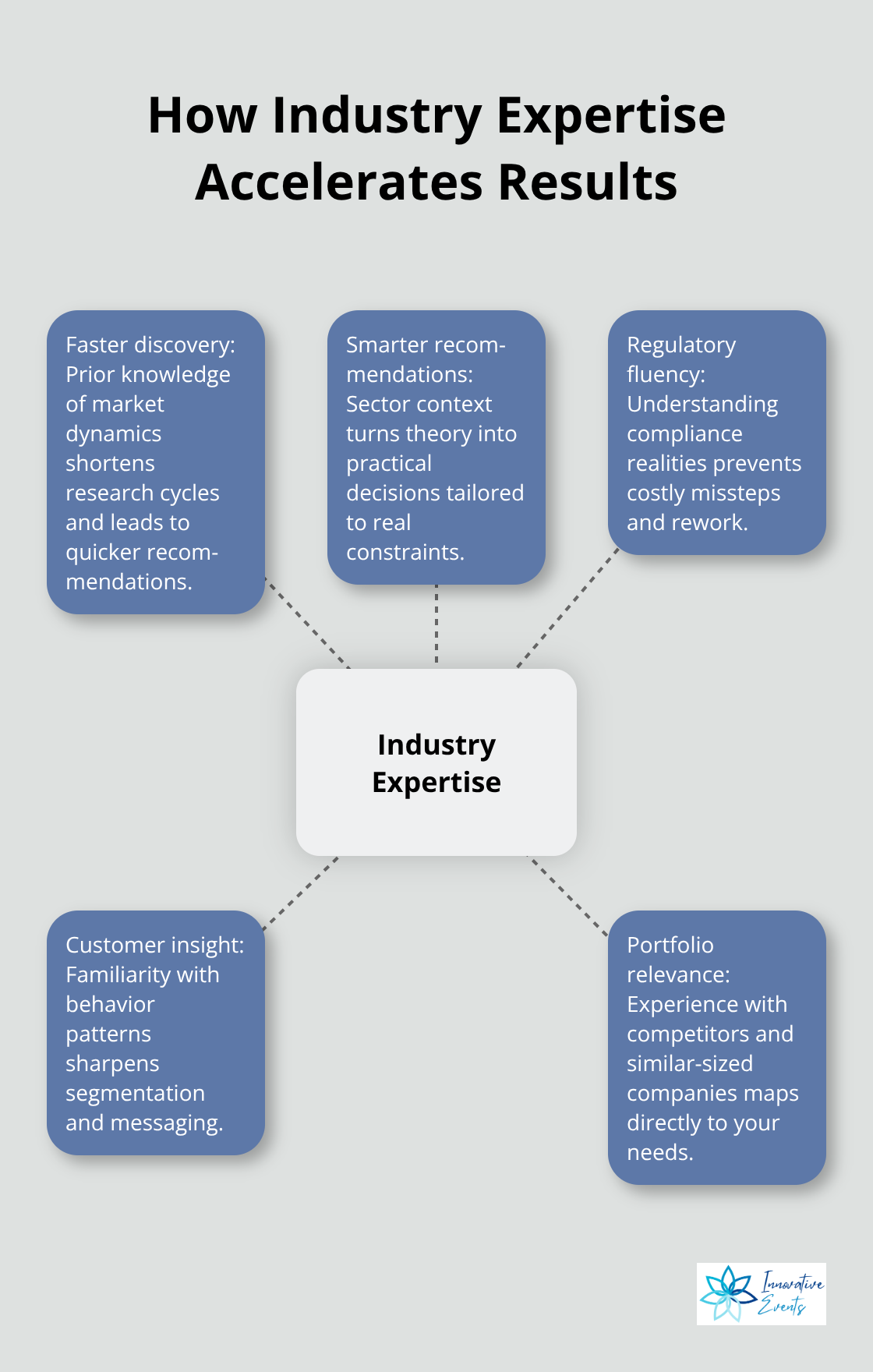
Siegel+Gale excels at simplifying complex, regulated organizations in healthcare and financial services, proving that deep sector knowledge translates directly to smarter strategic recommendations. When you evaluate a firm, examine their portfolio in your exact industry. If they’ve worked with competitors or similar-sized companies, they already understand your market dynamics, regulatory constraints, and customer behavior patterns. This cuts months off the discovery phase and means faster, more confident recommendations.
Measurable results separate strategy talk from strategy delivery
Ask potential partners for specific outcomes, not just attractive case studies. Aviva’s multi-market rebrand restored awareness within three months after a substantial launch investment and coordination of roughly 700 involved employees-that’s a concrete timeline and scale metric. Microsoft’s transformation under Nadella drove brand value from approximately 61 billion dollars in 2014 to about 352.5 billion dollars in 2024, according to Interbrand, showing how bold strategic direction compounds over time. When firms pitch you, demand numbers: revenue lift percentages, market share gains, customer acquisition cost reductions, or brand awareness improvements with specific timeframes. Generic claims about success mean nothing. The firms worth your budget track their impact rigorously and show you exactly what changed after their work landed. Avoid partners who focus heavily on design awards or industry recognition instead of client business outcomes.
Customization beats templated approaches
Generic brand frameworks fail because every business operates in a different competitive context with different customer needs. Prophet’s work repositioning T-Mobile as the Uncarrier showed tangible growth outcomes precisely because the strategy targeted the specific pain point of contract-locked customers, not because it followed a standard playbook. MetaDesign excels at systems-led, scalable brand ecosystems for multi-unit global brands like Cencora, but that approach wouldn’t work for a startup needing rapid market entry. A top firm asks hard questions about your business model, margin structure, distribution channels, and customer acquisition costs before proposing a strategy. They push back on assumptions and investigate why competitors position themselves the way they do. If a firm presents the same strategic framework to every client, that’s a red flag. Your brand strategy should feel built for your specific situation, not adapted from a template.
The right partner asks uncomfortable questions
Top firms don’t accept your brief at face value. They challenge your assumptions about who your customers are, why they buy, and what competitors actually threaten your position. This friction, while sometimes uncomfortable-produces sharper strategy. A firm that simply agrees with everything you say hasn’t earned its fee. Instead, look for partners who conduct original research, test hypotheses against real market data, and aren’t afraid to recommend a direction that contradicts your initial thinking. The best strategic partners operate as extensions of your leadership team, not as vendors executing orders.
Speed and flexibility matter as much as pedigree
Large, prestigious firms bring credibility and deep resources, but they often move slowly through approval layers and rigid processes. Smaller, specialized boutiques like Equibrand and Insight to Action move faster and adapt their approach mid-project when market conditions shift. Consider your timeline and how much flexibility you need. A six-month rebrand requires a different partner than a rapid repositioning for a product launch. The firm’s size and structure should match your pace and decision-making style. Ask how they handle scope changes, how quickly they iterate on concepts, and whether they work in sprints or traditional waterfall phases. A firm that can’t match your velocity will frustrate your team and delay results.
Now that you understand what separates top-tier firms from the rest, the next step is identifying which specific services actually move the needle for your business.
Core Services That Actually Drive Growth
Positioning and messaging work solve real market problems
Positioning and messaging work sounds abstract until you realize it determines whether your brand registers in a crowded market or gets ignored. The best firms don’t just write clever taglines-they conduct original research to identify the specific market position your competitors haven’t claimed. Siegel+Gale’s work simplifying complex regulated organizations proves that positioning solves real market problems: when messaging becomes clearer, customer acquisition costs drop, and sales cycles shorten.
A strong positioning statement answers three hard questions your firm must resolve before any design or campaign work begins: What specific customer problem does your brand solve that competitors ignore? Why are you uniquely qualified to solve it? What proof demonstrates that you actually deliver on that promise?
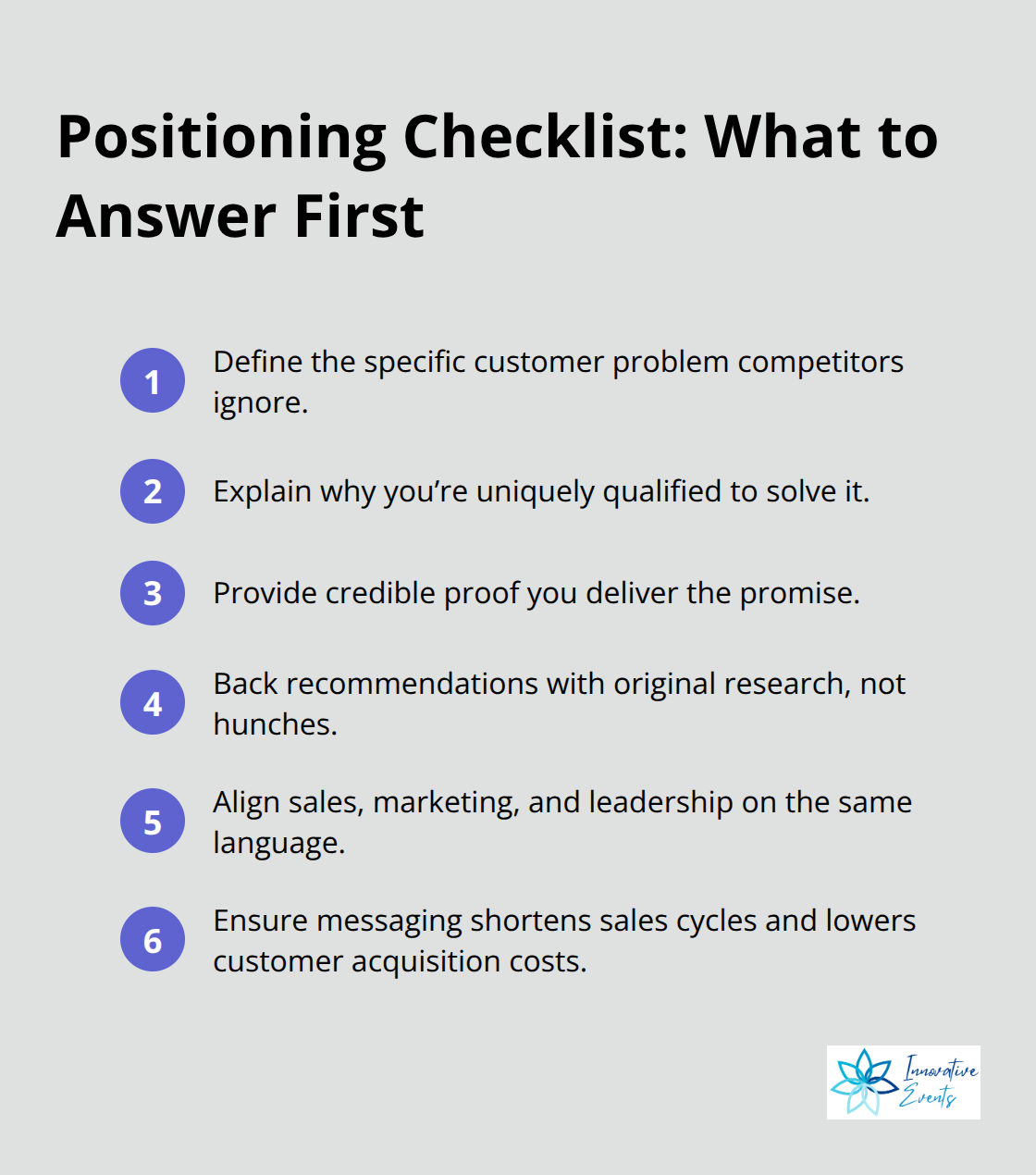
When evaluating positioning work, demand to see the research behind the recommendation-customer interviews, competitive analysis, market gap identification-not just intuition or creative hunches.
Prophet’s T-Mobile repositioning worked because it targeted a specific pain point (contract lock-in) that other carriers weren’t addressing, not because the creative was flashy. Messaging development then translates that positioning into language your sales team, marketing, and leadership all use consistently. If your sales team describes the brand differently from your website, your positioning hasn’t been communicated effectively internally.
Market research and competitive analysis expose what’s actually happening
Market research and competitive analysis reveal what’s actually happening in your category rather than what you assume is happening. Firms like Lippincott embed customer experience and service design research into their strategy work, uncovering not just who buys but why they choose one brand over another at the moment of decision.
Ask potential partners how they conduct research: surveys alone miss the nuance of real behavior, but ethnographic fieldwork, purchase journey mapping, and win-loss analysis against specific competitors expose the gaps competitors leave open. The firms that invest in original research, not recycled industry reports, produce positioning that actually sticks in the market because it rests on observed customer behavior, not assumptions.
Implementation and activation transform the strategy into daily execution
Implementation and activation separate the strategy from execution, and this is where most brand work fails. A brilliant positioning means nothing if your team doesn’t know how to activate it across sales conversations, website copy, packaging, and customer service interactions. Equibrand and Insight to Action excel here by ensuring the brand strategy translates into concrete action plans your team can execute daily.
Demand that your partner provide activation toolkits: messaging guides for sales, content calendars, visual system documentation, employee training plans, and measurement frameworks to track whether the market actually perceives the new positioning. Without activation, sthe trategy sits in a PowerPoint deck gathering dust while your business operates under the old positioning. The firms that excel at this phase treat activation as equally important as strategy development itself, not as an afterthought.
Now that you understand what services move the needle, the next critical step is learning how to evaluate which firm actually has the right expertise and approach for your specific situation.
Choosing the Right Partner Comes Down to What They’ve Actually Built
Examine case studies that match your business stage and industry
Evaluating a brand strategy firm requires moving past impressive credentials and examining what they’ve delivered for clients in situations similar to yours. Request case studies from firms that have worked with companies at your revenue stage and in your industry. A firm that repositioned a Fortune 500 company may lack the flexibility or speed needed for a growth-stage startup, and vice versa. Ask specifically what changed after their work landed: did customer acquisition costs drop, did brand awareness metrics improve measurably, did sales cycles shorten? Lippincott, recognized by Gartner, publishes client work across the energy, aviation, and hospitality sectors with documented outcomes. When you examine case studies, ignore the creative awards and design accolades. Instead, focus on the business metrics. Did revenue grow? Did market share increase? Did the brand successfully enter a new category?
Testimonials from client leadership matter more than testimonials from the firm’s creative team. Reach out directly to past clients if the firm allows it, and ask one specific question: Would you hire them again for a different project? Their answer reveals whether the partnership actually delivered or just produced nice deliverables.
Assess how they conduct research before recommending positioning
The strategy development approach separates firms that think deeply from firms that execute templates. During your initial conversations, ask how they conduct research before recommending positioning. Do they interview your customers directly, or do they rely on secondary market data? Do they analyze your competitors’ customer acquisition costs and messaging strategies, or do they make assumptions? Firms that invest in original fieldwork cost more upfront but produce positioning that actually resonates because it rests on observed behavior rather than intuition.
Ask them to walk you through their process from kickoff to final recommendations, and notice whether they ask uncomfortable questions about your business model, your margin structure, and whether your target customer actually needs what you sell. Top firms push back on briefs. They challenge assumptions. They sometimes recommend directions that contradict your initial thinking. If a firm simply agrees with everything you say during the discovery phase, that’s a warning sign that they’re not thinking critically.
Demand pricing transparency and understand the partnership structure
Budget and partnership structure matter as much as expertise. Demand pricing transparency upfront. Many firms quote large fees but then add charges through change orders and scope creep.
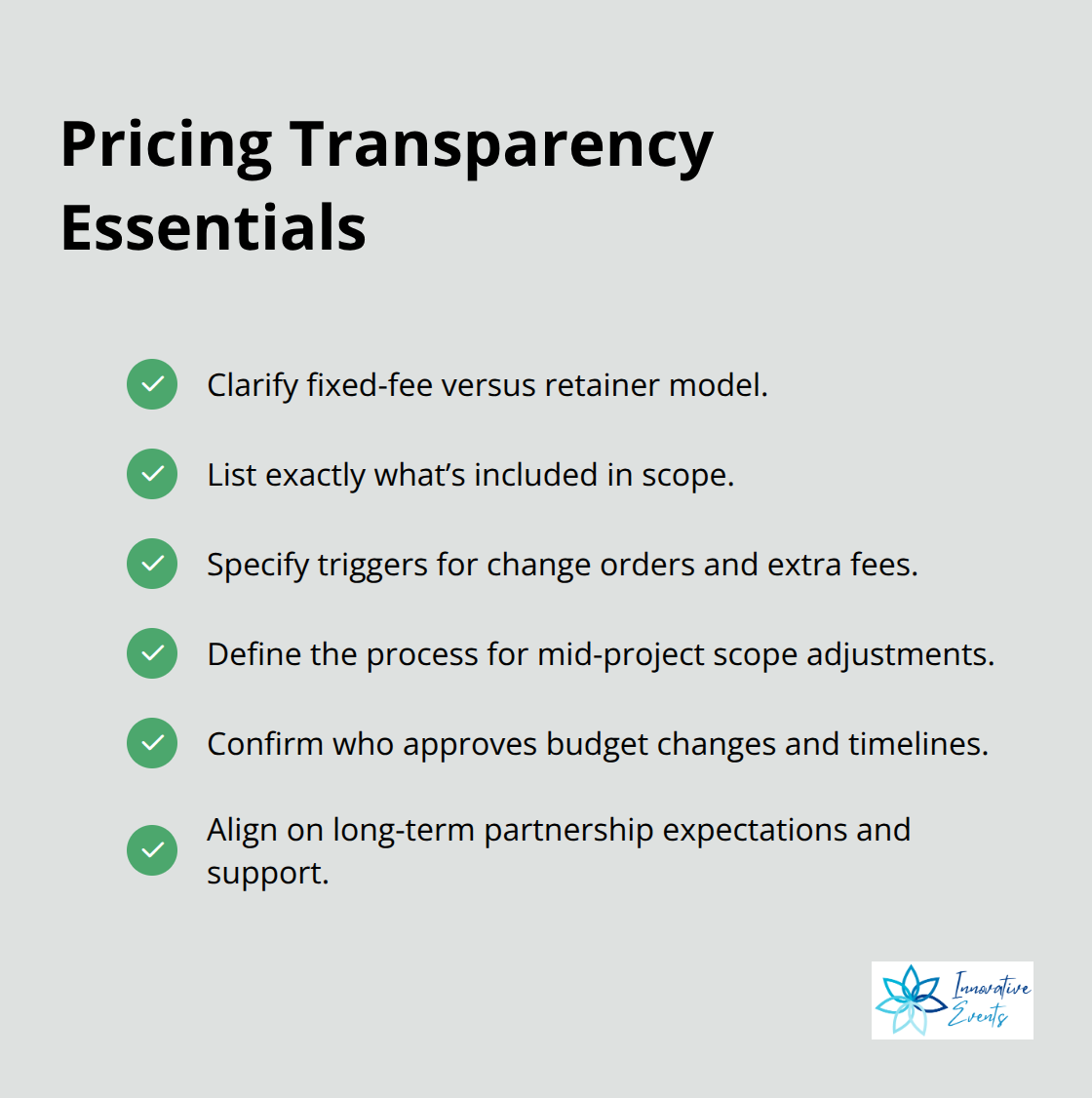
Boutique firms like Equibrand often work on fixed fees for specific deliverables, while larger agencies may charge retainer models. Understand exactly what’s included, what triggers additional fees, and what happens if you need to adjust scope mid-project.
More importantly, assess whether the firm views this as a one-time project or a long-term partnership. Brands evolve, and the firms worth your investment adapt their strategy as market conditions shift. A partner that commits to your growth over multiple years produces better results than one focused on completing a single engagement and moving on.
Final Thoughts
The best brand strategy firms treat strategy as a business discipline, not a creative exercise. They demand measurable outcomes, challenge your assumptions, and customize their approach to your specific market position and growth stage. They invest in original research rather than recycled industry reports, and they provide activation toolkits that your team can execute daily.
Your choice of partner directly impacts whether your brand strategy translates into real market traction or sits unused in a PowerPoint deck. When evaluating potential partners, prioritize industry experience and measurable client outcomes over brand recognition alone. Request case studies from companies at your revenue stage and in your sector, ask how they conduct research, and demand pricing transparency upfront to avoid surprise change orders that derail budgets.
The right strategic partner becomes an extension of your leadership team, adapting as market conditions shift and your brand evolves. We at Innovative Events specialize in crafting immersive brand experiences and strategic marketing content that drive real business results. Explore how Innovative Events can help you build lasting relationships with your audience and transform your brand presence into measurable growth.