

B2B content marketing is shifting fast. Account-based strategies, video content, and AI tools are reshaping how companies connect with buyers in 2026.
At Innovative Events, we’ve watched these B2B content marketing trends reshape client campaigns. This guide breaks down what’s working now and how to apply it to your strategy.
Personalization Without the Creep
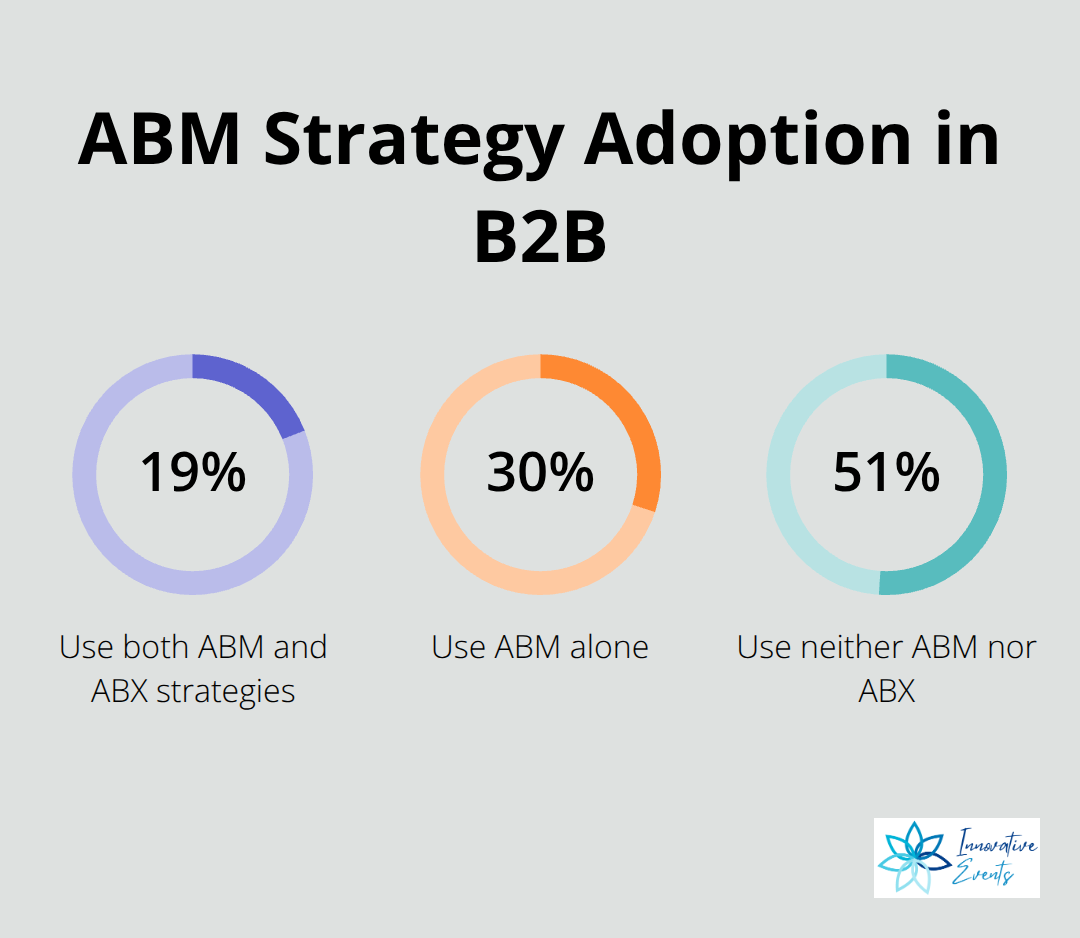
The data is clear: 89% of B2B marketers personalize content, but 59% do so across only one or two channels. That’s shallow personalization, and it shows. The real opportunity lies in moving beyond surface-level tactics like inserting a prospect’s name into an email. We’re talking about account-level personalization that treats high-value customers as ongoing conversations, not one-off blasts. According to research from CMI and MarketingProfs, 19% of B2B marketers use both ABM and ABX strategies, 30% use ABM alone, and 51% use neither. Among those using ABM, only 21% have reached an established maturity level, with just 5% at advanced and 1% at leading stages.
This gap represents a massive competitive advantage for companies willing to invest in proper account-based approaches. The most effective personalization strategies focus on consistency and context across touchpoints-email, social, websites, digital ads, and content marketing-rather than trying to customize everything at once.
First-party data drives real segmentation
First-party data collection is widespread, with 91% of B2B marketers gathering customer information. The methods vary: 77% collect through subscriptions, 68% through gated assets and webinars, 63% via CRM and sales interactions, and 52% through behavioral signals. But here’s the critical insight-governance maturity lags far behind collection efforts. Only 52% of marketers in pace-setter segments have established, advanced, or leading data governance. This means most organizations sit on valuable data they cannot leverage effectively. The payoff for proper governance is substantial: 52% report better targeting and personalization, 44% gain deeper insights, 28% increase trust with customers, and 26% see direct ROI improvements. Data quality and compliance remain headaches for 24% of marketers, which is why governance cannot be an afterthought. Start by auditing what data you actually own, how it flows through your systems, and whether it meets privacy standards. Then build segmentation around specific buyer behaviors, not just job titles or company size.
Behavioral signals beat demographic assumptions
Someone viewing your pricing page twice signals a different intent than someone downloading a case study. The most mature ABM practitioners use account-specific personalization (40%), journey-specific content (33%), and behavioral signals. Notice that behavioral signals rank among the most effective tactics, yet they’re often the most predictive. If a prospect watches a product demo, that’s a signal to trigger bottom-of-funnel ads. If they visit your comparison page repeatedly, that’s a cue to send competitive proof content. If they’ve viewed pricing more than once, that’s a green light for SDR outreach. These micro-signals matter because they reflect actual interest, not assumptions about what someone in their role should care about. Among ABM users, 65% employ basic role-based personalization, which is a starting point but insufficient on its own. The companies seeing ABM outperform traditional marketing-18% significantly, 47% somewhat, and 65% overall-are those layering behavioral data on top of account and role information. This requires connecting your website analytics, email engagement, ad interactions, and CRM data into a single view. Tools and platforms vary, but the principle remains: watch what people do, not just who they are, and respond accordingly.
Moving beyond assumptions to action
The shift from demographic targeting to behavioral intelligence separates pace-setters from the rest. You can’t personalize effectively without understanding what each account actually does on your digital properties. Most organizations collect this data but fail to act on it quickly enough. The companies winning at ABM treat high-value accounts as ongoing relationships, not campaign targets. They respond to behavioral signals within hours, not weeks. They test different messaging for different roles within the same account. They measure success not by clicks or impressions, but by pipeline velocity and deal size. This approach demands investment in people, processes, and technology-but the competitive advantage is real. As you build out your account-based strategy, video and interactive content become your most powerful tools for demonstrating value at scale.
Video and Interactive Content Dominance
Short-form video captures attention where buyers spend time
Video dominates B2B content strategies because it works. Eighty-seven percent of B2B marketers plan to invest in video in 2025, and that momentum continues into 2026. The reason is straightforward: video boosts engagement and knowledge retention far beyond static content. On LinkedIn, short-form video performs exceptionally well because the platform’s algorithm favors it, and buyers actively consume video while researching solutions.
Most B2B companies struggle not with whether to use video, but with what kind of video actually drives results. Generic product demos and talking-head interviews rarely convert. What works is a video that addresses specific buyer pain points at exact moments in their journey. A logistics company showing how their platform reduced shipping delays by 25% outperforms a generic explainer about features. A procurement cost calculator wrapped in a short video tutorial beats a PDF guide.
The companies seeing traction treat video as a distribution and education tool, not just a content format. They create videos for LinkedIn feeds, YouTube Shorts, email sequences, and landing pages-each optimized for where it lives and who watches it. Production quality matters less than authenticity and clarity.
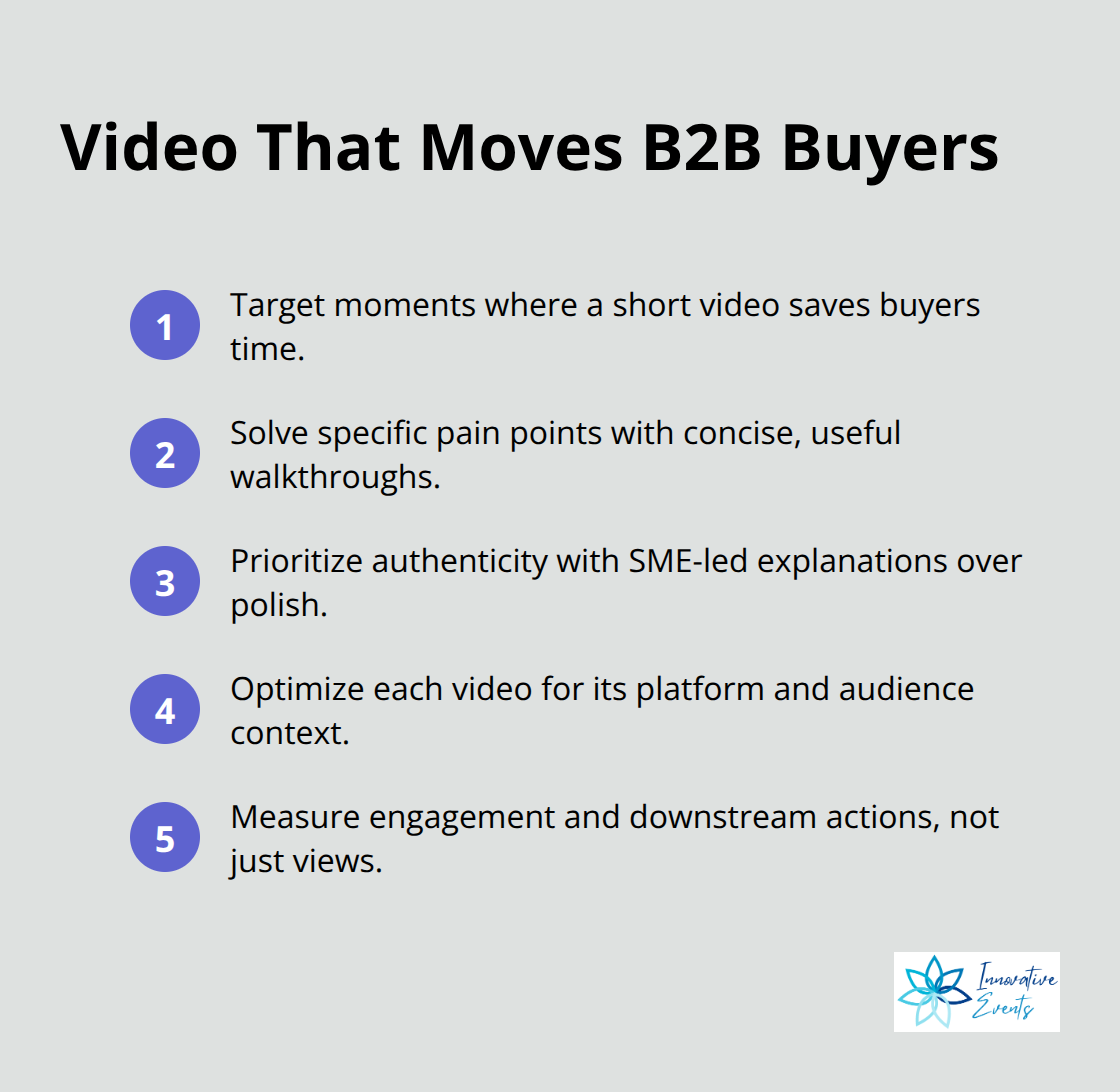
A subject matter expert recording a five-minute walkthrough of how to use your platform outperforms a professionally produced generic overview.
Identify moments where video saves time
Start by identifying the three to five moments in your buyer’s journey where a short video would save them time or answer their biggest questions. Then produce those videos with whoever in your organization can explain the concept best. Distribute them where your buyers actually spend time, and measure not just views but engagement rates and downstream actions like demo requests or pricing page visits.
Interactive content transforms passive readers into active participants
Calculators, assessments, and configurators work because they deliver immediate, personalized value. A SaaS company offering a TAM calculator that shows prospects their potential market opportunity generates significantly more qualified leads than a generic ROI whitepaper. An assessment tool that identifies which of your solutions fits a prospect’s specific use case drives faster buying decisions than comparison pages. Interactive content generates higher engagement and longer time-on-page than static alternatives.
Live events and webinars create momentum through real-time connection
Live streaming and webinars extend this principle into real-time environments. Webinars work best when they solve an immediate problem or reveal new industry insights, not when they function as thinly disguised sales pitches. The most effective webinars feature genuine experts discussing real challenges their customers face, with plenty of time for questions and discussion. Attendees should leave with something actionable they can implement the same day.
Hybrid events-combining in-person and virtual attendance-amplify impact because buyers increasingly trust face-to-face conversations. A ten-minute in-person conversation at a conference generates more momentum than a month of emails. The companies are winning at this blend of webinars and live events into a continuous cadence rather than treating them as one-off campaigns. They follow live interactions with personalized video follow-ups, interactive assessments to gauge fit, and rapid SDR outreach to capture momentum.
Speed determines whether signals convert to a pipeline
Speed matters enormously. Connecting with a prospect within hours of their webinar attendance or calculator interaction beats waiting days or weeks. Most organizations have the tools to execute this-they simply don’t prioritize the operational speed required to capitalize on the signal. This operational discipline separates companies that generate pipeline from those that merely generate attendance. As you build these video and interactive experiences, the next critical layer involves the technology that powers them: AI-driven content creation and distribution systems that amplify your reach without sacrificing the human expertise that buyers actually trust.
Where AI Accelerates, Humans Decide
AI adoption in B2B content is no longer optional. According to the 2026 B2B Content and Marketing Trends report by CMI and MarketingProfs, 95% of B2B marketers use AI-powered applications, with 89% specifically using content creation tools to generate or optimize written content. But here’s where most organizations fail: they treat AI as a replacement for strategy instead of an accelerator for execution. The real competitive advantage belongs to companies that use AI to handle the repetitive work-content optimization, publishing scheduling, and performance prediction, while keeping human expertise at the center of what gets created. Forty-five percent of marketing budgets now prioritize AI-powered tools, making it the top investment category ahead of events and owned media. This shift happens because AI delivers on specific, measurable tasks. Eighty-seven percent of marketers report productivity improvements from AI, and 80% see operational efficiency gains. But only 65% report improved creativity, and just 58% see better content quality.
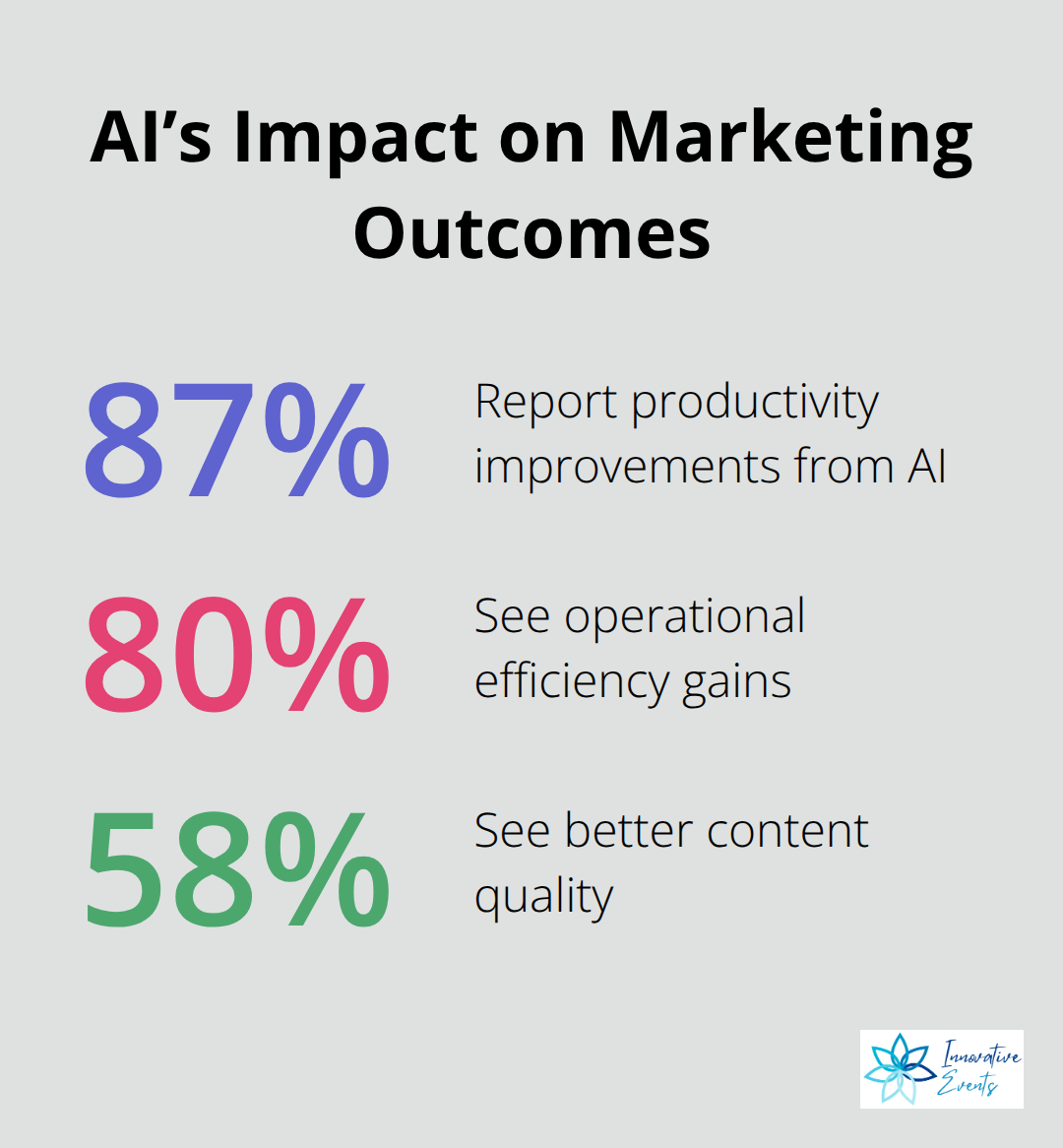
The gap between productivity and quality reveals the trap: AI excels at processing volume, but struggles to produce the original insights and authentic voices that actually convert B2B buyers. The companies pulling ahead treat AI as infrastructure for the mundane-scheduling posts, optimizing headlines, analyzing which content performs, while investing heavily in the human work of strategy, research, and original thinking that AI cannot replicate.
Automation Handles Volume, Not Strategy
Content optimization and publishing automation free your team to focus on what matters. AI tests 50 headline variations and identifies which performs best with your audience segments. It analyzes your top-performing content from the past 12 months and surfaces the topics, formats, and messaging patterns that drive engagement. It schedules posts across LinkedIn, email, and your website based on when your specific audiences engage most. What it cannot do is decide whether your brand should shift toward thought leadership content, whether your messaging misses a critical pain point your buyers face, or whether your content strategy aligns with your actual sales process. According to CMI and MarketingProfs research, 97% of B2B marketers have a content strategy, and 74% credit strategy refinement as the biggest driver of improved results. This matters because automation without strategy produces noise at scale. The companies winning treat AI automation as a force multiplier for a solid strategic foundation. Start here: define what success looks like for each content pillar-awareness, consideration, decision-and which metrics actually matter to your business. Then deploy AI to execute that strategy faster and more consistently than your competitors. Use predictive analytics to anticipate which pieces of content will perform best before you invest heavily in production.
Predictive Signals Replace Guesswork
Predictive analytics powered by AI forecasts content performance with surprising accuracy by analyzing patterns in your historical data, audience behavior, and competitive landscape. If your case studies consistently outperform whitepapers with your target accounts, AI flags this and recommends shifting your resource allocation accordingly. If video content drives 3x more engagement than static posts in your industry, predictive models surface this pattern so you can plan your production calendar with confidence. If certain topics consistently drive demo requests or sales conversations, you can double down on those topics while deprioritizing what merely produces vanity metrics like views. The practical application is straightforward: feed your AI tools 12 months of content performance data-what you published, when, where, and how it performed across engagement and conversion metrics-and let the system identify the patterns your team might miss. This approach beats gut feel and committee opinions. One critical guardrail: predictive models work best when your data is clean, and your metrics actually measure business outcomes, not just engagement. If you measure views instead of conversions, or clicks instead of pipeline influence, your predictions will optimize for the wrong things. Fix your measurement framework first, then deploy prediction tools.
Conversational AI Accelerates Buyer Interactions
Chatbots and conversational marketing tools handle routine questions at scale while your team focuses on complex, high-value conversations. A prospect landing on your website at 2 a.m. gets an immediate response to basic questions about pricing, features, or use cases. That same prospect receives a warm handoff to your sales team during business hours if they express serious intent. This approach keeps prospects engaged without forcing them to wait for human availability. The companies seeing results treat conversational AI as a qualification and education layer, not a replacement for human sales conversations. AI handles the volume of initial inquiries and surfaces the most qualified leads to your team. Your team then focuses on the conversations that actually move deals forward. This division of labor matters because it respects both the strengths of AI (speed, consistency, availability) and the strengths of humans (judgment, relationship-building, complex problem-solving). The data support this hybrid approach: 28% of B2B marketers experiment with AI agents, and among pace-setters (the most advanced organizations), 43% use them. The benefits are measurable-52% report improved operational efficiency, 21% see better customer engagement, and 19% report increased campaign performance and ROI. The challenges remain real (data quality, compliance, integration costs), but the companies investing in this layer are capturing more pipeline with fewer resources.
Quality Data Powers Better Predictions
AI tools only work as well as the data feeding them. Garbage in, garbage out applies directly to predictive analytics and conversational AI. If your CRM contains incomplete contact information, outdated company data, or inconsistent engagement records, your AI predictions will be unreliable. If your website tracking misses key interactions or your email platform doesn’t sync with your CRM, you lose critical signals about buyer intent. Start by auditing your data infrastructure. What information do you actually collect? Where does it live? How often does it sync across systems? Which data quality issues slow down your team the most? Then prioritize fixing the biggest gaps before you layer on more AI tools. The companies winning at this have invested in data governance, establishing clear ownership, standardized definitions, and regular quality checks. Only 52% of marketers in pace-setter segments have established, advanced, or leading governance, which means most organizations sit on valuable data they cannot leverage effectively. The payoff for proper governance is substantial: 52% report better targeting and personalization, 44% gain deeper insights, 28% increase trust with customers, and 26% see direct ROI improvements. Data quality and compliance remain headaches for 24% of marketers, which is why governance cannot be an afterthought. Fix your foundation first, then let AI amplify what you’ve built.
Final Thoughts
The B2B content marketing trends reshaping 2026 reward companies that blend human expertise with operational discipline. Personalization at scale requires first-party data governance and behavioral intelligence, not guesswork, while video and interactive content work because they deliver immediate value and respect buyer time. AI accelerates execution, but only when strategy comes first.
The companies pulling ahead treat content as a product, not a campaign, and they measure pipeline velocity and deal influence instead of vanity metrics. They respond to buyer signals within hours, not weeks, and they invest in people and processes alongside technology. These organizations understand that 95% of B2B marketers use AI, yet only those combining AI with solid fundamentals see sustainable ROI.
Audit your current content performance against these trends and identify where you fall short on personalization, which buyer moments lack video or interactive tools, and how much of your content strategy depends on human thinking versus automation. Pick one trend to master before chasing the next, build the foundation of clean data and clear strategy before layering on AI tools, and test everything you implement. If you need help translating these B2B content marketing trends into a cohesive strategy and immersive experiences that move the pipeline, Innovative Events specializes in crafting brand experiences that connect strategy to execution.