

Social media engagement directly impacts your bottom line. Posts that spark conversation generate more visibility, build customer loyalty, and ultimately drive sales.
At Innovative Events, we’ve seen firsthand how brands that prioritize boosting social media engagement outperform their competitors. This guide walks you through the strategies, metrics, and tactics that actually work.
Why Engagement Actually Moves the Needle
Engagement separates brands that grow from those that stagnate. When someone comments on your post, shares your content, or saves it for later, they signal to the algorithm that your message has value. Posts with higher engagement rates receive significantly more visibility in followers’ feeds. This isn’t about vanity metrics-it translates directly to reach. Facebook remains the largest network with approximately 3.065 billion monthly active users, yet only a fraction see any given post. The algorithm determines who sees your content largely based on how much engagement your previous posts generated. A single well-crafted post that sparks genuine conversation can expand your audience exponentially without spending money on advertising. Brands that understand this shift their entire approach from broadcasting to conversing.
How Trust Converts Into Revenue
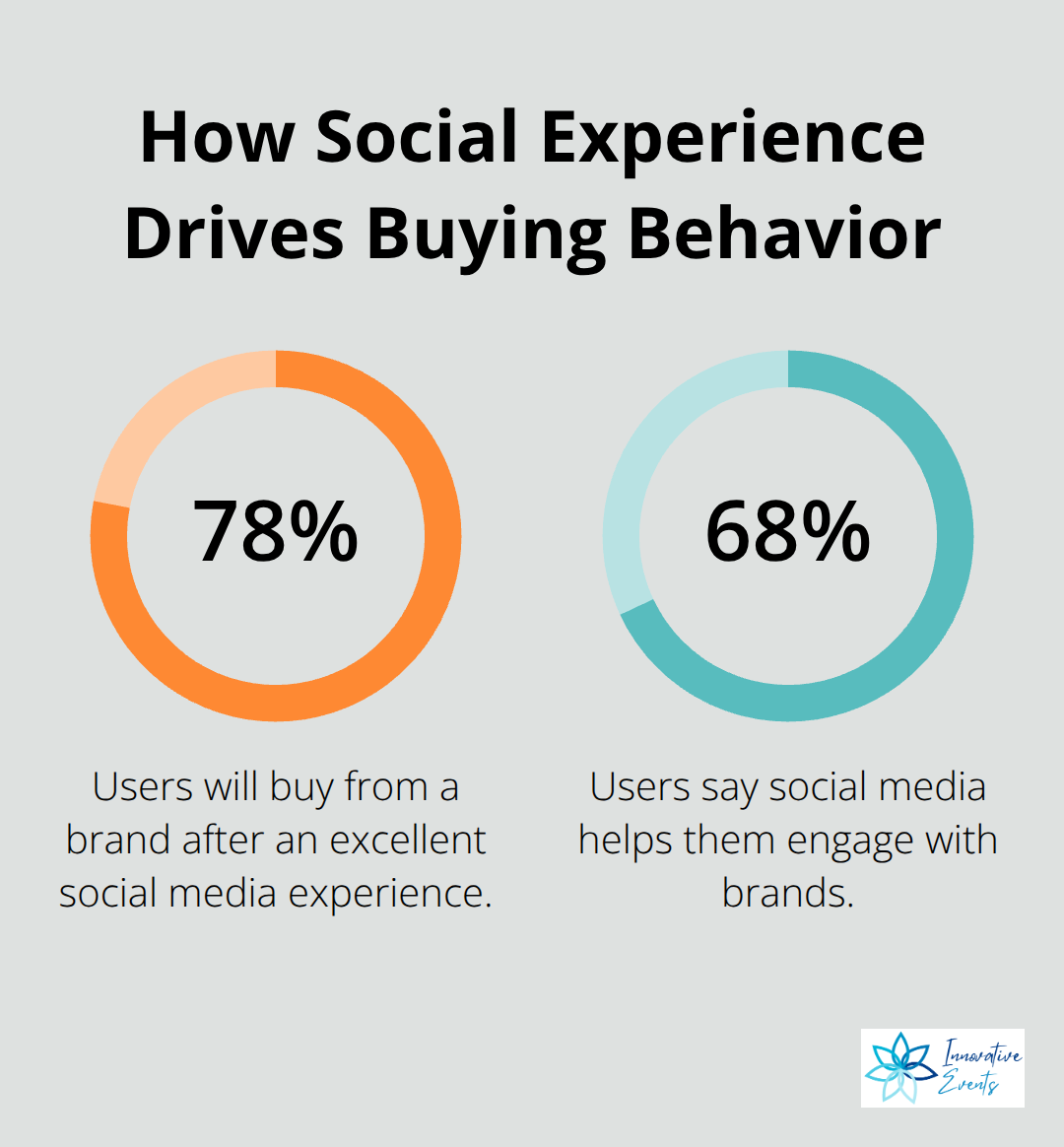
Trust converts. 78 percent of users will buy from a brand after an excellent social media experience, and 68 percent of users think social media helps them engage with brands. This isn’t theoretical-it’s actual behavior driving purchasing decisions across demographics. When your audience sees you responding thoughtfully to comments, engaging with their content, and building a genuine community rather than pushing sales messages, they develop confidence in your brand.
This confidence creates loyalty that survives price increases, competitor campaigns, and market shifts.
The Power of Responding to Comments
Comments that receive a response from the brand receive approximately 1.6 times more engagement than those left unanswered, according to platform data. This single statistic reveals why responsiveness matters so much. Brands that treat comments as a one-way broadcast channel miss the opportunity to deepen relationships and signal to algorithms that their content deserves wider distribution.
Building Momentum Through Interaction
The combination of quick responses and authentic interaction creates a compounding effect. More engagement attracts more visibility, which attracts more potential customers. When your messaging aligns with their needs, this visibility generates more qualified leads. The brands that recognize this pattern treat social media not as a broadcast channel but as a community space where real conversations happen. This shift in mindset changes everything about how you approach content creation and audience interaction.
Understanding why engagement matters sets the foundation for the strategies that actually produce results. The next section walks you through the proven tactics that turn this knowledge into measurable growth.
What Timing and Content Strategy Actually Drive Engagement
Posting when your audience is actually online matters far more than most brands realize. According to data from Sprout Social analyzing nearly 2.7 billion engagements across major platforms from May through September 2025, Tuesdays, Wednesdays, and Thursdays consistently outperform other days, while Saturdays and Sundays see the lowest engagement. Facebook performs well across the entire workday from 8 a.m. to 6 p.m. on weekdays. Instagram peaks Tuesday through Thursday from 11 a.m. to 6 p.m., with a secondary spike around 7 to 9 p.m. LinkedIn works best on weekdays between 8 a.m. and 2 p.m., particularly on Wednesdays and Thursdays. TikTok engagement explodes in the evenings from 5 to 9 p.m. Monday through Thursday. X performs strongest during business hours, especially 10 a.m. to 5 p.m. Tuesday through Thursday.
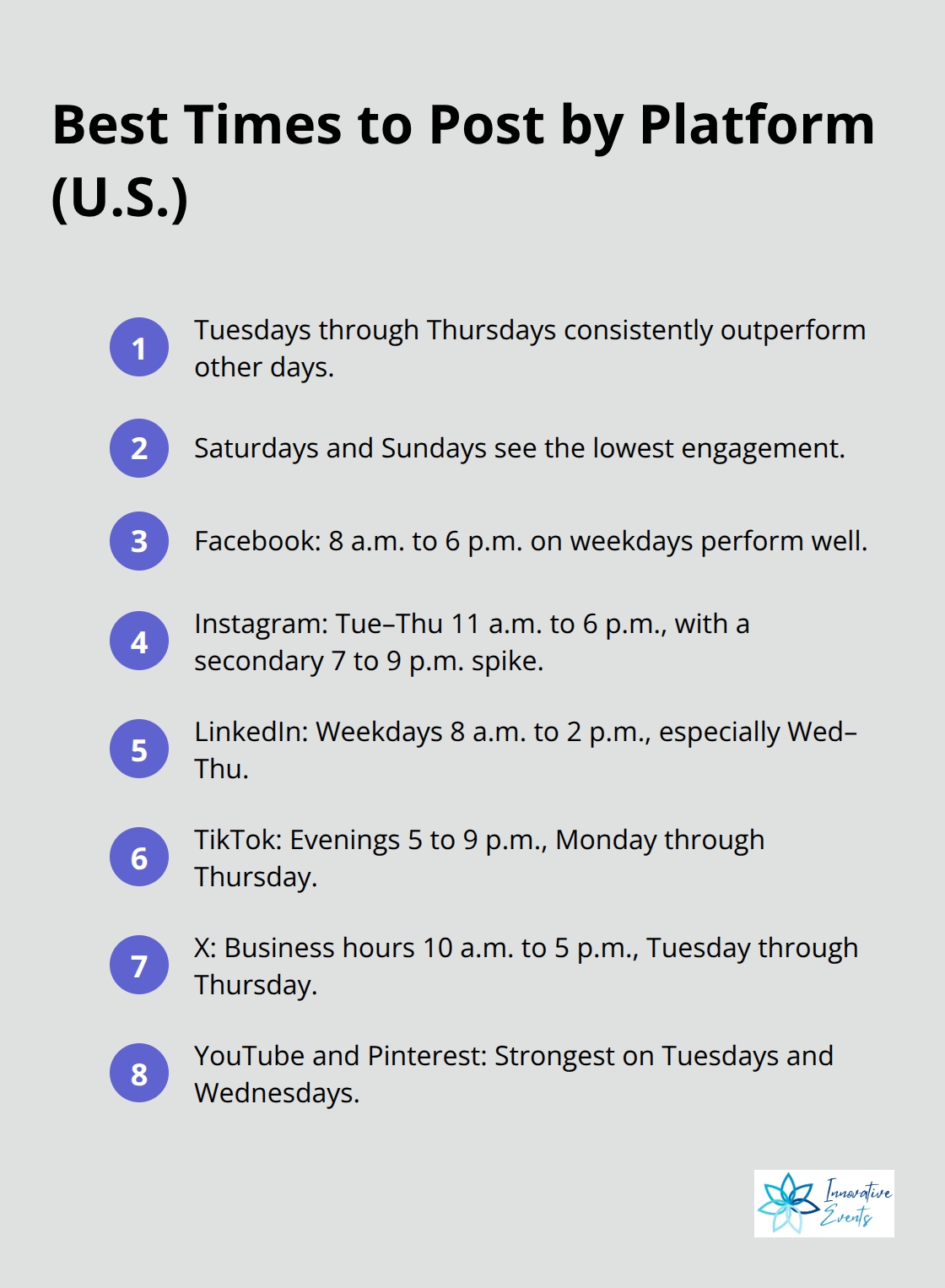
YouTube and Pinterest show their strongest activity on Tuesdays and Wednesdays. Most brands treat all platforms identically instead of recognizing these distinct patterns. Your posting calendar should reflect these windows, not ignore them. Tools like Sprout Social’s ViralPost AI identify your specific audience’s optimal times based on your posting history, allowing you to move beyond generic recommendations. This level of precision transforms your reach without requiring more content or budget.
Interactive Content Stops the Scroll
Polls, questions, and interactive formats demand participation rather than passive consumption. Elon Musk’s use of two-option polls on X generated significant engagement through minimal friction. When you ask your audience a direct question in your caption, you lower the barrier to interaction. Instead of hoping someone comments, you explicitly invite them to respond. NASA’s #AskNASA campaign on X showed how real-time questions create conversations that extend far beyond immediate followers. The practical application is straightforward: replace some percentage of your statement-based posts with genuine questions about your audience’s challenges, preferences, or experiences.
User-Generated Content Amplifies Your Reach
When followers see their own content featured by your brand, they share it with their networks, extending your reach organically. Communities built around genuine interaction rather than promotional messaging create advocates who promote your brand without being asked. This approach transforms passive followers into active participants who invest in your brand’s success.
Response Speed Determines Momentum
The speed of your responses determines whether conversations gain momentum or fizzle. Comments that receive brand responses get more engagement than unanswered comments. A 20 to 30 minute delay before responding to initial comments actually boosts visibility, as the comment bump technique extends the engagement window and signals activity to algorithms. This isn’t about being available every second; it’s about being strategic with your response timing to maximize algorithmic reach while demonstrating genuine care for your community.
The strategies you’ve just learned-timing your posts correctly, creating interactive content, and responding strategically-form the foundation of engagement growth. However, these tactics only work when you measure their impact and adjust your approach based on what the data reveals. The next section shows you how to track the metrics that matter and transform raw data into actionable improvements.
Measuring What Actually Moves Your Business
The gap between brands that grow and those that plateau is data literacy. Most teams track vanity metrics like total followers or likes while ignoring the signals that predict revenue. Reach tells you how many people saw your content, but engagement rate reveals whether those people actually cared. Click-through rate shows if your audience moved beyond passive viewing to taking action. The Sprout Social analysis of 2.7 billion engagements across platforms from May through September 2025 provides clear benchmarks for what good engagement looks like on each network, but your internal metrics matter more.
Set up a single dashboard using your platform’s native analytics or a tool like Sprout Social that tracks reach, engagement rate, impressions, and conversions alongside platform-specific signals like save rate on Instagram or watch-through rate on YouTube. This consolidated view prevents the common mistake of optimizing for the wrong metric. A post with a high engagement rate but a low click-through rate signals that your audience finds your content interesting but not compelling enough to act on. That distinction changes how you write captions and craft calls to action. Establish a baseline for your current performance before making changes. You cannot measure improvement without knowing where you started.

Track these metrics consistently over at least 30 days before drawing conclusions about what works, since platform algorithms and audience behavior shift weekly.
Content Pillars Reveal What Your Audience Actually Wants
Categorize your posts into content pillars such as educational content, behind-the-scenes material, customer testimonials, and industry insights, then tag every post by pillar in your analytics. This simple system transforms random data points into patterns. When you compare engagement across pillars, you discover that your audience responds significantly more to educational content than promotional posts, or that customer testimonials drive shares while industry news receives only passive views. Run this analysis monthly for at least 90 days to account for seasonal variation. Once you identify your top-performing pillar, increase the frequency of that content type while reducing underperforming categories. This approach lets the data answer the question directly rather than relying on assumptions.
A/B Testing Isolates What Actually Works
A/B testing works only when you test one variable at a time. If you change both your posting time and your content format simultaneously, you cannot isolate which change drove the result. Test a single element like caption length, visual style, or question phrasing across three variations for 45 days, then measure engagement rate to identify the winner. Scale the winning approach while testing the next variable. This iterative method compounds over months into significantly higher engagement than brands that rely on intuition or industry trends that may not apply to your specific audience.
Final Thoughts
Boosting social media engagement requires consistency, strategy, and willingness to adjust based on data. The tactics covered in this guide-posting at optimal times, creating interactive content, responding quickly, and measuring what matters form a complete system for growing your audience and driving business results. Timing, content quality, responsiveness, and measurement reinforce each other when you treat engagement as an interconnected system rather than isolated tactics.
Loyal followers become advocates who share your content, recommend your brand to others, and stick with you during market shifts. This community becomes your competitive advantage because competitors cannot replicate it through paid ads alone. The 78 percent of users willing to purchase from a brand after an excellent social media experience demonstrates that engagement directly influences purchasing behavior.
Start implementing these strategies immediately by auditing your current posting schedule against the platform-specific timing data provided earlier. Identify which content pillar generates the highest engagement for your brand, then increase its frequency. If you need support developing a comprehensive social media strategy that aligns with your broader marketing goals, we at Innovative Events specialize in creating engaging content to build loyal communities around brands.