
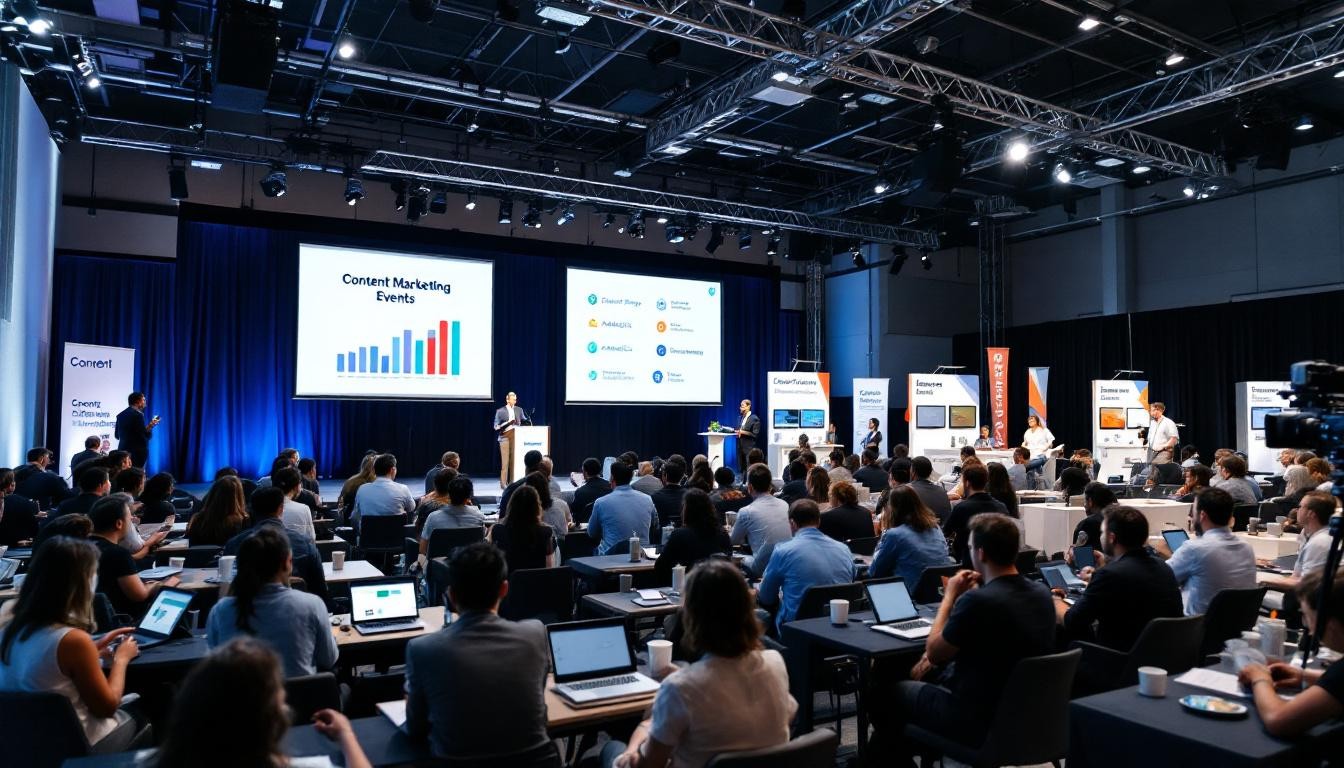
Content marketing events aren’t just about filling seats. They’re about generating measurable business results through strategic planning, compelling experiences, and data-driven refinement.
At Innovative Events, we’ve seen firsthand how brands that combine clear objectives with engaging storytelling outperform those that wing it. This guide walks you through the exact framework we use to help clients turn events into revenue drivers.
Strategic Planning That Drives Event ROI
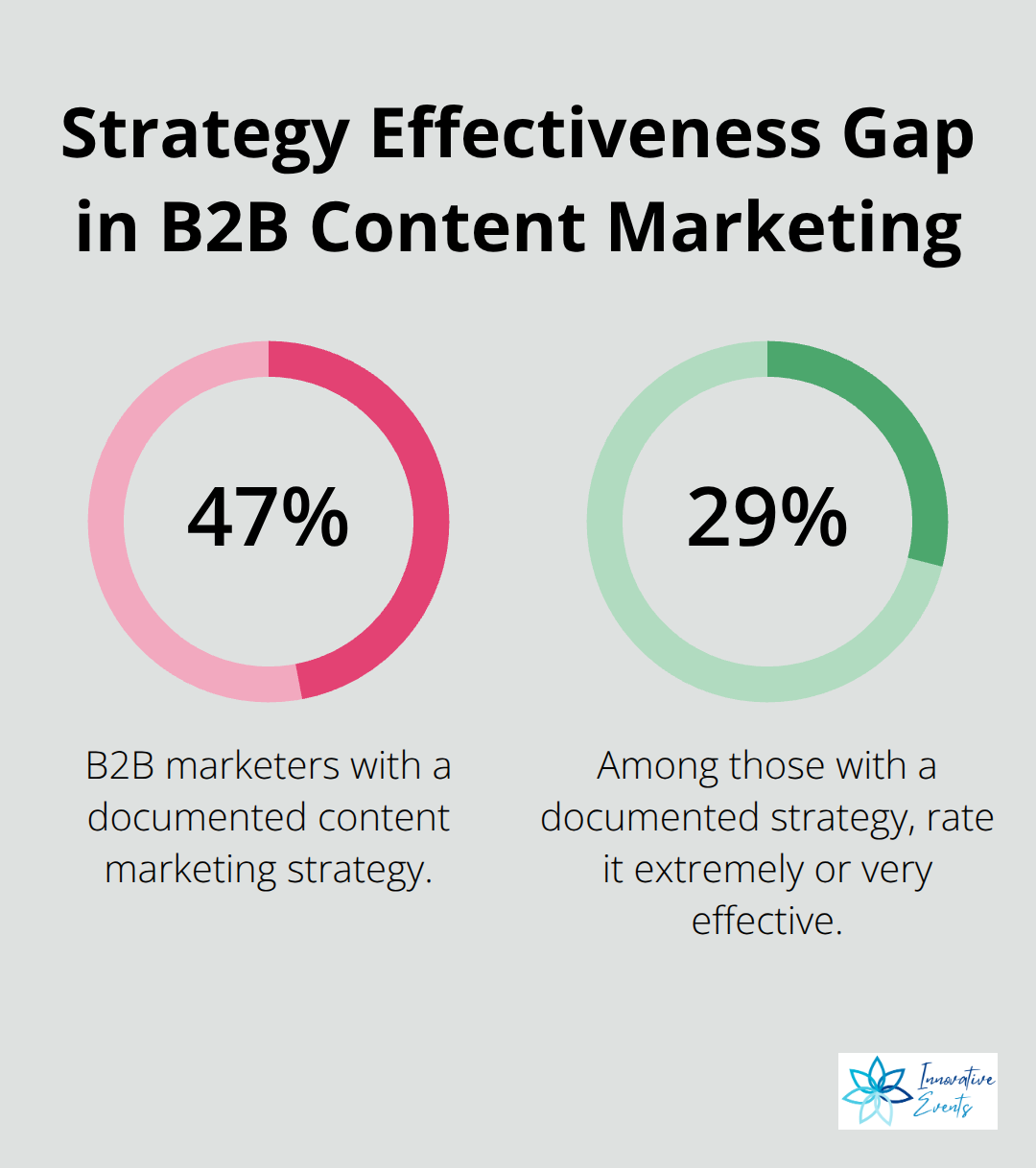
Start with numbers, not feelings. According to the Content Marketing Institute, only 47% of B2B marketers have a documented content marketing strategy, and among those who do, just 29% rate it as extremely or very effective. This gap exists because most teams skip the planning phase entirely or treat it as a box to check.
Your event strategy must connect directly to revenue. This means defining what success looks like before you book a venue or send a single email.
Define Measurable Objectives Tied to Business Outcomes
Establish specific, measurable objectives before you invest in your event. Are you aiming to generate qualified leads, nurture existing prospects, establish thought leadership, or drive product adoption? Each goal requires a different event structure, audience composition, and measurement framework. Without clarity here, you’ll spend money and time without knowing whether the event worked.
Your objectives should tie directly to revenue impact. A lead generation event tracks qualified pipeline created. A thought leadership event measures media mentions, speaking invitations, and brand authority signals. A product adoption event counts feature usage or expansion revenue. The measurement framework flows from your objective, not the other way around.
Research Your Audience Ruthlessly
Understanding the audience well is a success driver. This isn’t about demographics alone. You need to understand the specific problems your audience faces, what stage they’re at in their buying journey, and which channels they actually use.
If you’re targeting C-suite executives, a webinar at 2 p.m. on a Tuesday will fail. If you’re reaching early-career professionals, a three-hour in-person workshop might demand too much time. Conduct interviews, review past event data, analyze which content formats get engagement, and segment by role and intent. This research directly influences whether your event will attract the right people and whether those attendees will convert into customers or advocates.
Align Your Event to Your Marketing Strategy
Your event doesn’t exist in isolation. It must align with your overall marketing strategy, sales goals, and product roadmap. If your company launches a new product in Q2, a content marketing event in Q1 should educate and warm your audience for that launch. If you’re in a nurturing phase with existing customers, your event might focus on advanced use cases or community building rather than lead generation.
Brands that integrate events with email, social, and content marketing see significantly higher ROI than those treating events as standalone tactics. Define how your event connects to campaigns before and after it, what assets you’ll create from the event, and how those assets will be repurposed across owned, earned, and paid channels. This integration separates high-performing event marketing from wasted budgets.
With your strategy locked in, you’re ready to move into the creative phase-where compelling storytelling and engaging experiences transform your event from a calendar item into a business driver.
How to Make Your Event Content Actually Stick
Prioritize Authentic Voices Over Marketing Copy
Your speakers, customers, and internal experts are your greatest asset because they carry credibility that polished messaging cannot match. Case studies work-but only when you name the company and the specific results. Rather than saying a client saw revenue growth, specify that Company X increased pipeline by 34% after implementing a particular strategy. Attendees sense vagueness and will tune out. Invest in pre-event interviews with speakers and customers to uncover the real stories-the obstacles they faced, the exact steps they took, and the measurable outcomes. This content becomes the backbone of your event narrative and feeds into follow-up assets like email sequences, social clips, and blog posts.
Address Specific Pain Points, Not Generic Trends
According to the Content Marketing Institute, 82% of top marketers say understanding the audience deeply is a key success driver, and the second factor is high-quality content at 77%. This means your event content must address specific audience pain points, not generic industry trends. If your attendees struggle with attribution across channels, feature speakers who’ve solved that exact problem with concrete numbers. If they wrestle with AI adoption in marketing, showcase real implementations with measured productivity gains, not theoretical possibilities.
Invest in Production Quality and Honest Demonstrations
Production quality signals respect for your audience’s time. Professional video, clear audio, and polished visuals matter. A poorly lit speaker or muffled microphone undermines your message. Product demonstrations should show real workflows, not sanitized demos-include the messy parts, the configuration decisions, and the actual time investment required. Attendees respect honesty about what a tool can and cannot do.
Video remains dominant in marketing, with 89% of businesses using video as a core tool, and short-form video is increasingly the format of choice to meet demand for quick, engaging content. If your event relies solely on talking heads or lengthy presentations, you lose half your audience immediately.
Structure Interactive Elements Around Decision-Making Moments
Interactive elements should drive engagement without becoming gimmicks. Live polls, Q&A sessions, and breakout discussions work when they’re structured around decision-making moments in your audience’s journey. A poll that reveals how many attendees lack a documented strategy creates urgency and validates why they need to pay attention. A Q&A that surfaces the exact questions your sales team hears from prospects becomes proof that you understand their world.
Close each segment with a clear takeaway or next step. State what attendees learned, how it applies to their role, and what action they should consider taking. Don’t assume attendees will connect the dots themselves.
With authentic voices, targeted content, and honest demonstrations in place, you’re ready to measure whether your event actually moved the needle-and how to refine your approach for the next one.
How to Know if Your Event Actually Worked
Connect Event Activity to Real Business Results
The difference between a successful event and a wasted budget comes down to measurement. Most teams track attendance and call it a win. That’s a mistake. Real measurement requires connecting event activity to pipeline, revenue, and long-term customer behavior. Start with conversion metrics tied to your original objective. If you aimed to generate qualified leads, track how many attendees matched your ideal customer profile and how many became sales-qualified opportunities within 30 days.
The Content Marketing Institute found that 56% of content marketers struggle with ROI attribution in content marketing, which means most teams lack the infrastructure to answer this question at all. Set up GA4 conversion events before your event launches. Configure tracking for email signups, demo requests, and product trial activations. Use UTM parameters on all post-event links so you can attribute downstream behavior to the event itself.
Conversion rate benchmarks vary by motion: SaaS trial signups typically convert at 5–7%, B2B form submissions at 2–4%. If your event falls below these ranges, your messaging or audience targeting missed the mark. Track engaged sessions, which GA4 defines as sessions lasting at least 10 seconds with at least 2 pageviews or a conversion.
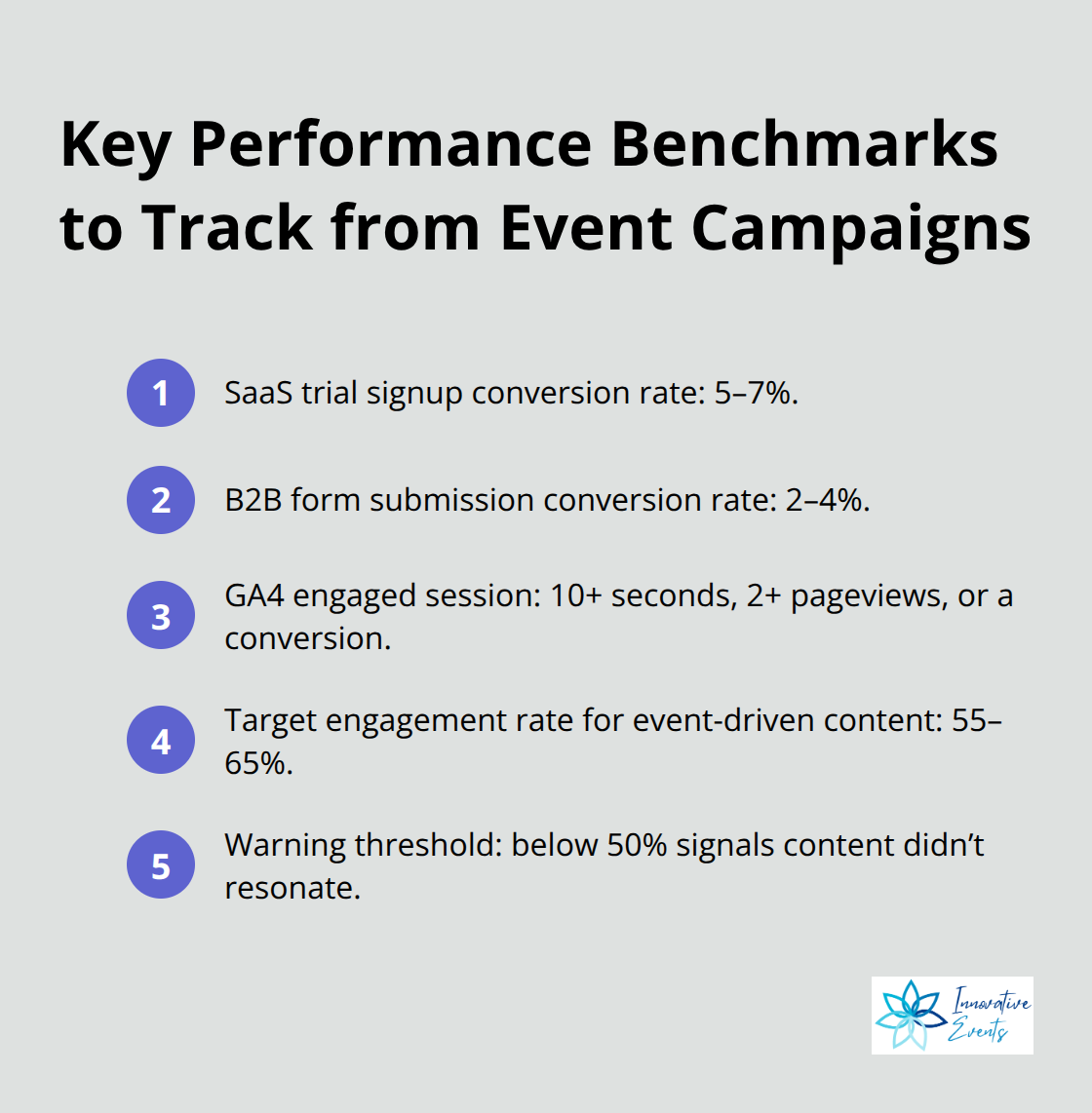
Try for an engagement rate around 55–65% for event-driven content. If you fall below 50%, your content didn’t resonate enough to hold attention.
Measure assisted conversions too-these are touchpoints that influenced a purchase before the final conversion event. In B2B, 40–60% of conversions are assisted, meaning your event likely influenced deals you won’t directly attribute to it. Calculate customer acquisition cost by dividing your total event spend by the number of new customers acquired within 90 days. SaaS companies should target payback under 12 months. If your CAC is higher, either your event attracted the wrong audience or your follow-up failed to convert interest into deals.
Execute Post-Event Follow-Up Within 48 Hours
The work doesn’t stop when the event ends. Post-event follow-up determines whether attendee interest converts into an actual pipeline. Send a thank-you email within 24 hours with the promised resources-slides, recordings, speaker contact information, whatever you committed to during the event.
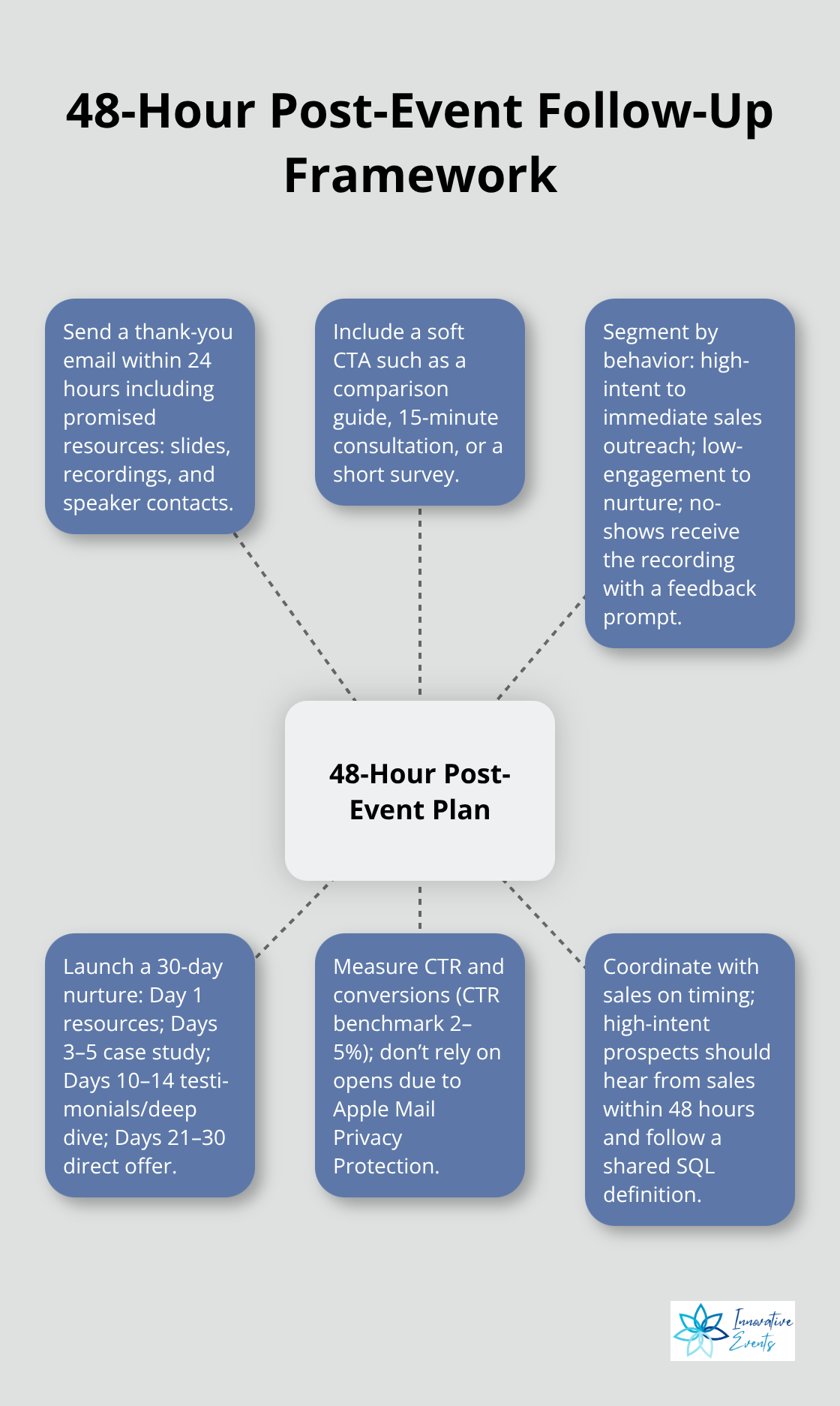
Include a soft call-to-action: a link to a comparison guide, a scheduling page for a 15-minute consultation, or a survey asking what they want to learn next. This email should go out automatically; delays kill momentum.
Segment your follow-up based on attendee behavior during the event. Those who watched the full recording and clicked multiple links are high-intent and should receive immediate sales outreach. Those who attended live but didn’t engage might need nurture content first. Those who registered but didn’t attend need a different message-send them the recording with a note that you’d love their feedback on a specific topic.
Create a 30-day nurture sequence for all attendees that reinforces the key takeaways and gradually increases the ask. Day 1 is the thank-you and resources. Days 3–5 introduce a case study showing how someone solved the problem discussed at your event. Days 10–14 feature customer testimonials or a deeper resource addressing a follow-up question you heard in Q&A. Days 21–30 make a direct offer: a trial, a demo, or a consultation. This sequence should feel like helpful education, not aggressive sales.
Measure email engagement carefully. Apple Mail Privacy Protection inflates open rates, so don’t rely on opens alone. Focus on click-through rate and conversion rate instead. Benchmarks from email service providers show CTR typically lands at 2–5% for nurture campaigns. If yours falls below 2%, your subject lines or content aren’t compelling enough to drive action. Coordinate with your sales team on handoff timing. If a prospect shows high intent after the event, they should hear from sales within 48 hours. Delay past that window and interest cools. Create a shared definition of a sales-qualified lead so marketing and sales agree on when to pass a prospect forward.
Analyze Results and Refine Your Approach
After 30 days, pull a full report. Compare attendee conversion rates by traffic source. Which channels drove the highest-intent attendees? If paid ads brought in 200 people but organic social brought in 50 people who converted at 3x the rate, shift your budget toward organic amplification next time. Look at attendance by role and company size. Did you attract the decision-makers you targeted, or did individual contributors show up instead? Attendance composition directly shapes whether your follow-up will convert.
Calculate your LTV to CAC ratio. If you spent $50,000 on the event and acquired 10 customers worth $15,000 each in first-year revenue, your ratio is 3:1, sustainable and healthy. If your ratio falls below 2:1, the event was unprofitable and needs restructuring before you repeat it. Document the exact questions asked during Q&A and the objections raised in conversations. These insights reveal what your audience actually cares about, not what you assumed they cared about. Use this intelligence to refine marketing and brand strategy for your next campaign.
Test different elements for your next event: speaker quality, session length, interactive format, and timing. Change one variable at a time so you can isolate what drives results. If you ran a 90-minute event and attendance was poor, try 60 minutes next time and measure the impact. Event marketing compounds over time, but only if you treat each event as a learning opportunity rather than a one-off activation.
Final Thoughts
Content marketing events work when strategy, execution, and measurement align. The brands that see real results start with clear objectives tied to revenue, invest in authentic voices and honest demonstrations, and then measure what actually happened. Skip any of these steps and your event becomes an expense, not an investment.
Your first content-marketing event teaches you what resonates with your audience, and your second event applies those lessons and performs better. Attendees who experience authentic storytelling and genuine expertise become advocates-they refer colleagues, share your content, and remember your brand when they’re ready to buy. This compounds into customer lifetime value that far exceeds the cost of the event itself.
Start with one clear objective, build your audience research, and execute with production quality that respects your attendees’ time. Innovative Events can guide you through every phase, from strategy and planning through post-event analysis. Measure ruthlessly, then do it again, better.