
Most brands fail because they skip the planning stage. They launch without a clear direction, confuse their audience, and waste marketing budget on inconsistent messaging.
At Innovative Events, we’ve seen firsthand how a solid brand planning strategy transforms companies. The brands that win are the ones with a defined identity, consistent visuals, and measurable results.
Your Brand Foundation
Mission and Vision as Operational Guides
Your mission and vision are not motivational posters for the office wall. They are operational documents that guide every decision your team makes. LinkedIn’s mission to connect the world’s professionals to make them more productive and successful works because it shapes product development, hiring, and marketing strategy simultaneously. Your mission should answer one question: what problem does your brand solve? Your vision answers another: what does success look like in five years? Write both in one sentence each. Anything longer gets ignored by your team.
Define Your Core Values with Honesty
Start with three to five core values that define how your brand behaves. Do not pick values because they sound good. Pick values because your organization actually lives them. If you claim sustainability as a value but your supply chain contradicts that, your audience will notice. CSR activities that align with Gen Z’s values serve to strengthen consumer–company identification, fostering loyalty and advocacy.
Know Your Target Audience in Detail
Your target audience is not everyone. Narrow it down ruthlessly. Define who your customer is by identifying their specific pain points, not just demographics. A tech company selling to finance teams faces completely different problems than one selling to healthcare providers. Create detailed buyer personas that include their goals, frustrations, and how they research solutions. According to research, 51% of Gen Z use social media to research brands before making a purchase decision, so understand where your audience gathers information and what questions they ask there.
Craft a Positioning Statement That Sticks
Your positioning is how you differentiate from competitors. Do not claim to be the best or the most innovative. Instead, state what you do differently and for whom. Patagonia owns environmental sustainability as its positioning, and every product, communication, and partnership reinforces that stance. Uber centralized its branding across global teams to deliver consistent, locally relevant messages. Your positioning must be specific enough that a competitor cannot claim the same thing.
Build Your Brand Story Around Customer Problems
A compelling brand story does not start with your company’s founding date. It starts with a customer problem. Describe the challenge your audience faces, explain how your brand solves it, and show what becomes possible afterward. Make sure everyone in your organization knows and can clearly explain your core stories. Your story should be repeatable across your website, social media, sales conversations, and events. It should feel authentic because it reflects real customer outcomes, not imaginary scenarios. Document your mission, vision, values, target audience definition, positioning statement, and core story in a single document. Share this document with your entire team. When everyone understands the foundation, execution becomes consistent, and your messaging strategy can build on this solid base.
Develop Your Brand Messaging and Visual Strategy
Translate Your Foundation Into Language Your Audience Understands
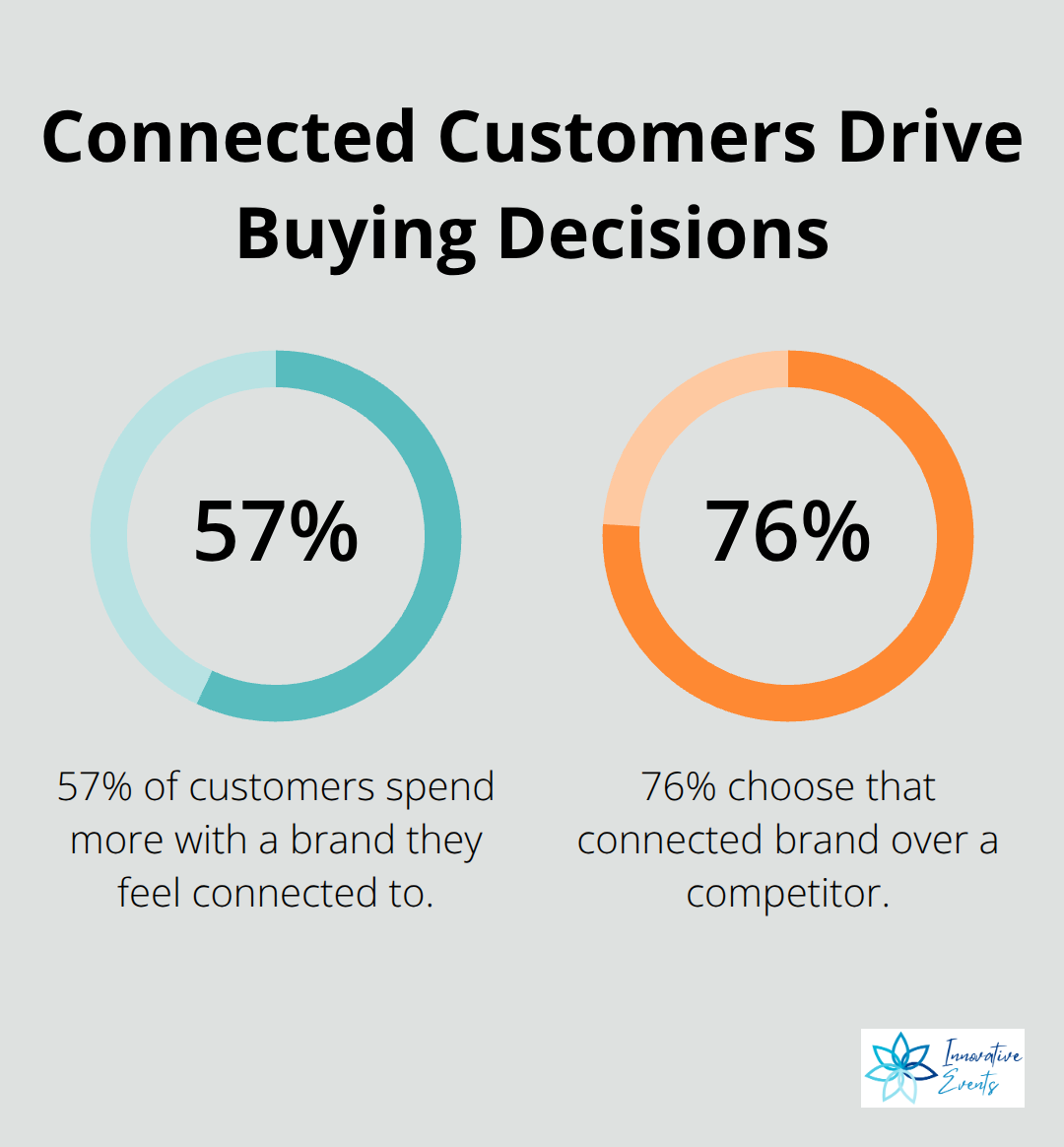
Your messaging strategy sits between your brand foundation and your visual identity. It converts who you are into language your audience understands and cares about. Most brands write messages about themselves instead of about their audience’s problems. A finance software company should not lead with features or company history. It should lead with the specific pain point: manual reconciliation takes your team eight hours per week, and that time costs money. According to research from Sprout Social, 57% of customers will spend more with a brand they feel connected to, and 76% will buy from that brand over a competitor. That connection happens through messaging that speaks directly to what matters to them.
Craft Key Messages That Resonate
Your key messages should be three to five statements that answer this question for each audience segment: what outcome does our brand make possible for you? Write these messages in plain language without jargon. If your team cannot explain a message in one sentence to a stranger, rewrite it. Test your messages across your target channels before rolling them out broadly. If your audience researches on LinkedIn, share a message there and monitor engagement. If they hang out on Reddit, post there, and see what resonates. Adjust based on real feedback, not assumptions.
Design a Consistent Visual Identity Across All Touchpoints
Your visual identity is how people recognize your brand instantly, and it matters more than most teams realize. Consistent visual identity across all touchpoints influences how audiences perceive your brand. Your logo, color palette, typography, and imagery style must work together across every touchpoint: your website, social media, print materials, event signage, and email. Inconsistency kills recognition and trust. Uber centralized branding across global teams so local markets could produce on-brand materials quickly without starting from scratch. That same centralization principle applies to your organization.
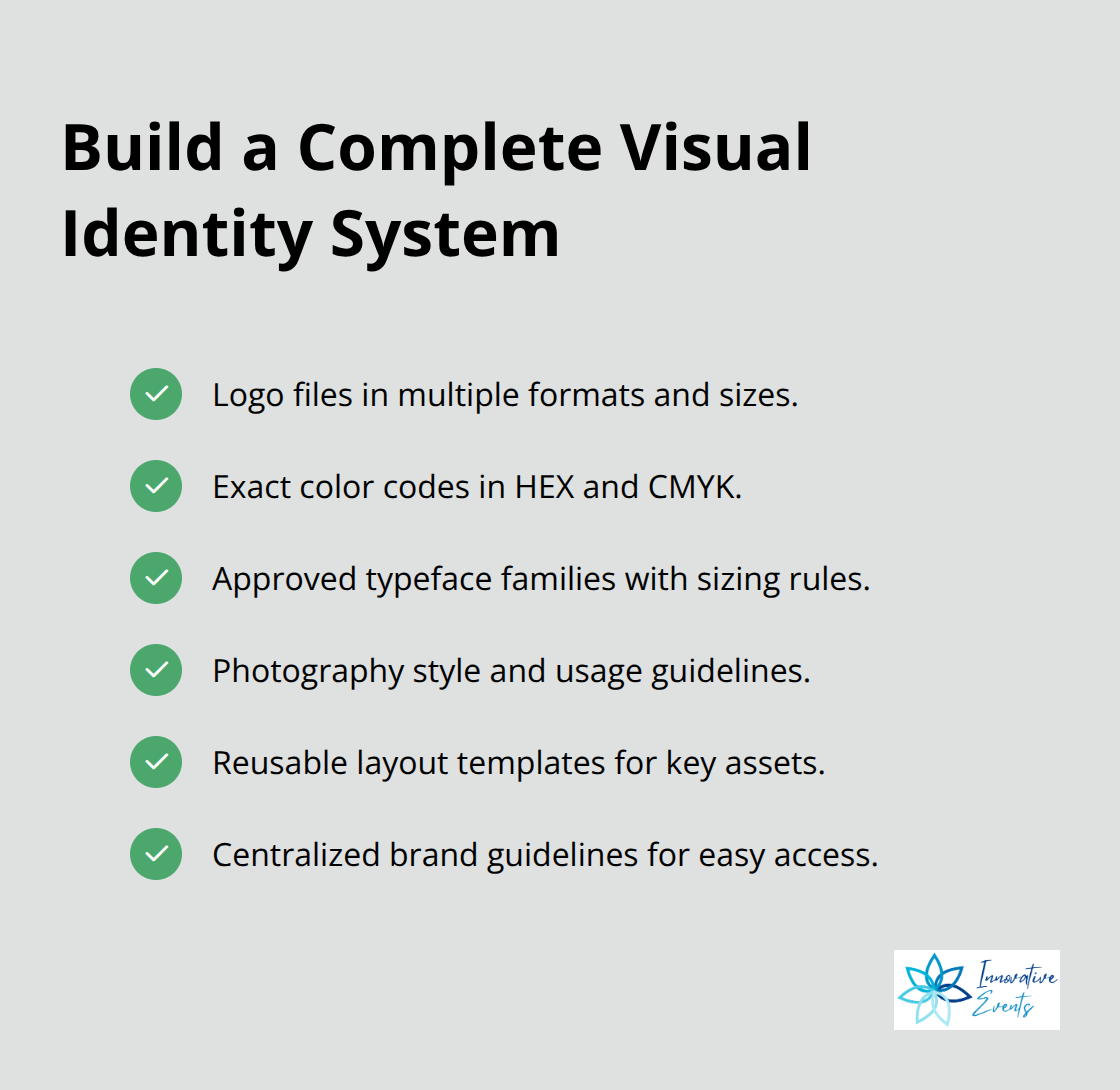
Create a visual identity system that includes your logo in multiple formats, exact color codes in hex and CMYK, approved typeface families with sizing rules, photography style guidelines, and layout templates. When your design team or agencies have these rules documented, they spend less time making decisions and more time creating. Brand guidelines enforce consistency without becoming restrictive.
Build Enforcement Systems That Stick
Too many companies create guidelines and then ignore them. Ninety-five percent of companies have brand guidelines, but only 25% actively enforce them, according to brand management research. Enforcement does not mean punishment. It means building a system where following guidelines becomes easier than breaking them. Host quarterly audits where you review all brand materials in use. Flag outdated collateral and remove it from circulation. Reorganize your asset library so anyone can find the right logo version, color code, or template in seconds. Use a centralized platform like Frontify or a shared drive with a clear folder structure so your entire team accesses the same current assets. When someone needs a social media graphic, they should find a template and modify it, not start from scratch or create something off-brand.
Move From Guidelines to Measurement
Consistent messaging and visuals only work if you track what actually moves your audience. Your next step involves setting up the systems that tell you whether your brand strategy is working.
How to Know Your Brand Strategy Actually Works
Brand strategy fails silently. Teams execute guidelines, spend marketing budget, and wonder why results plateau. The problem is that most brands never establish what success actually looks like before launch. You need specific metrics that connect directly to business outcomes, not vanity numbers that feel good in a meeting.
Define KPIs That Connect to Revenue
Start with three to five KPIs that matter to your business. If you sell B2B software, track how many qualified leads come from branded search versus competitor searches, or measure brand lift in aided awareness within your target buyer persona. If you run events, track attendance growth year-over-year among your core audience segment, and measure post-event engagement rates on your owned channels. Avoid metrics like total social media followers or website traffic, which tell you nothing about whether your brand strategy works. Instead, select KPIs that directly reflect your marketing goals, such as increasing revenue, generating leads, or improving brand awareness. Kantar’s 2026 brand planning research shows that integrating digital signals like search data with survey data reveals early brand momentum that traditional trackers miss.
Use Search Data as Your Intention Tracker
Search data acts as the world’s biggest database of intentions.
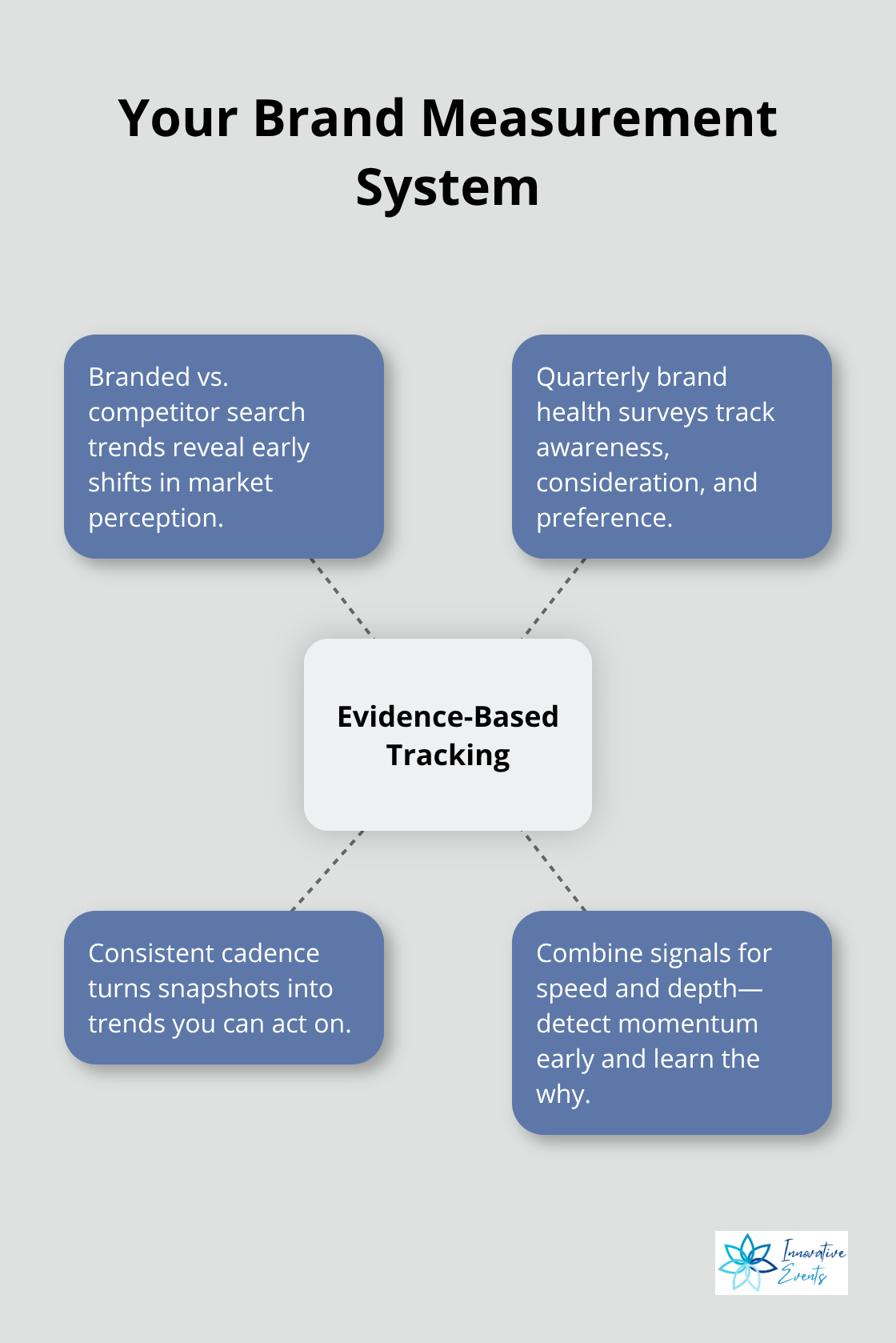
When you monitor search volume for your brand name versus competitor names, you see real shifts in market perception months before purchase behavior changes. Pair this with quarterly brand health surveys that measure awareness, consideration, and preference within your target audience. Run these surveys consistently so you spot trends, not just snapshots. This combination gives you both speed and depth-you catch momentum early while understanding why it happens.
Audit Materials and Adjust Quarterly
Monitor your brand performance by reviewing materials every three months and adjusting based on what the data shows. When you audit your brand assets quarterly, you catch inconsistencies before they damage perception. More importantly, you notice which messages, visuals, or channels actually drive engagement. If your LinkedIn content generates five times more qualified leads than your Instagram content, that tells you to invest differently. Kantar’s research on coffee brand BrandStructures shows that identifying real growth drivers through causal analysis lifted demand by 35 percent. The insights revealed exactly which positioning and messaging moved the needle, not just what correlated with sales.
Build a Dashboard and Track Monthly
Set up a simple dashboard that tracks your KPIs monthly. Monitor branded search volume and traffic sources. Monitor which brand messages appear in customer conversations, sales calls, and reviews. If customers repeatedly mention a benefit you never emphasized, that gap signals an opportunity to update your messaging. This approach transforms raw data into actionable intelligence.
Act on Evidence, Not Guesswork
When data shows a shift, act on it. If brand awareness drops in a specific region, investigate whether your visual consistency slipped there or whether a competitor launched a campaign. If preference for your brand increases, identify what changed and double down on it. This is not permission to chase every trend. It is permission to make informed adjustments based on evidence rather than assumptions. Your brand strategy becomes stronger when you treat it as a living system that responds to real market signals.
Final Thoughts
A strong brand planning strategy is not a one-time project-it is a system that evolves as your market shifts, your audience changes, and your business grows. The brands that dominate their categories treat strategy as an ongoing discipline, not a checkbox to complete. Your foundation matters: mission, vision, values, and positioning give your team direction. Your messaging and visuals create recognition. Your metrics tell you what actually works.
The data you collect each quarter informs your next quarter’s decisions. When search volume for your brand drops, you investigate. When a customer segment responds strongly to a specific message, you amplify it. When visual inconsistencies appear across channels, you correct them immediately. The brands winning right now are not the ones with the flashiest campaigns-they are the ones with clarity on who they serve, consistency in how they show up, and the discipline to measure and adjust.
We at Innovative Events help brands bring their strategy to life through strategic marketing and immersive experiences that create real connections with audiences. Your brand planning strategy is only as good as your ability to execute it consistently across every touchpoint. Whether you need help clarifying your brand foundation, developing your messaging, or measuring what works, the right partner makes execution faster and results stronger.