

Content marketing and thought leadership aren’t separate pursuits-they’re interconnected. When you publish strategic, valuable content, you position yourself as an authority in your field and build genuine trust with your audience.
At Innovative Events, we’ve seen firsthand how brands that commit to consistent, high-quality content outpace their competitors. This guide walks you through the exact steps to establish your authority, measure what works, and sustain your leadership position long-term.
How Content Marketing Becomes Your Authority Platform
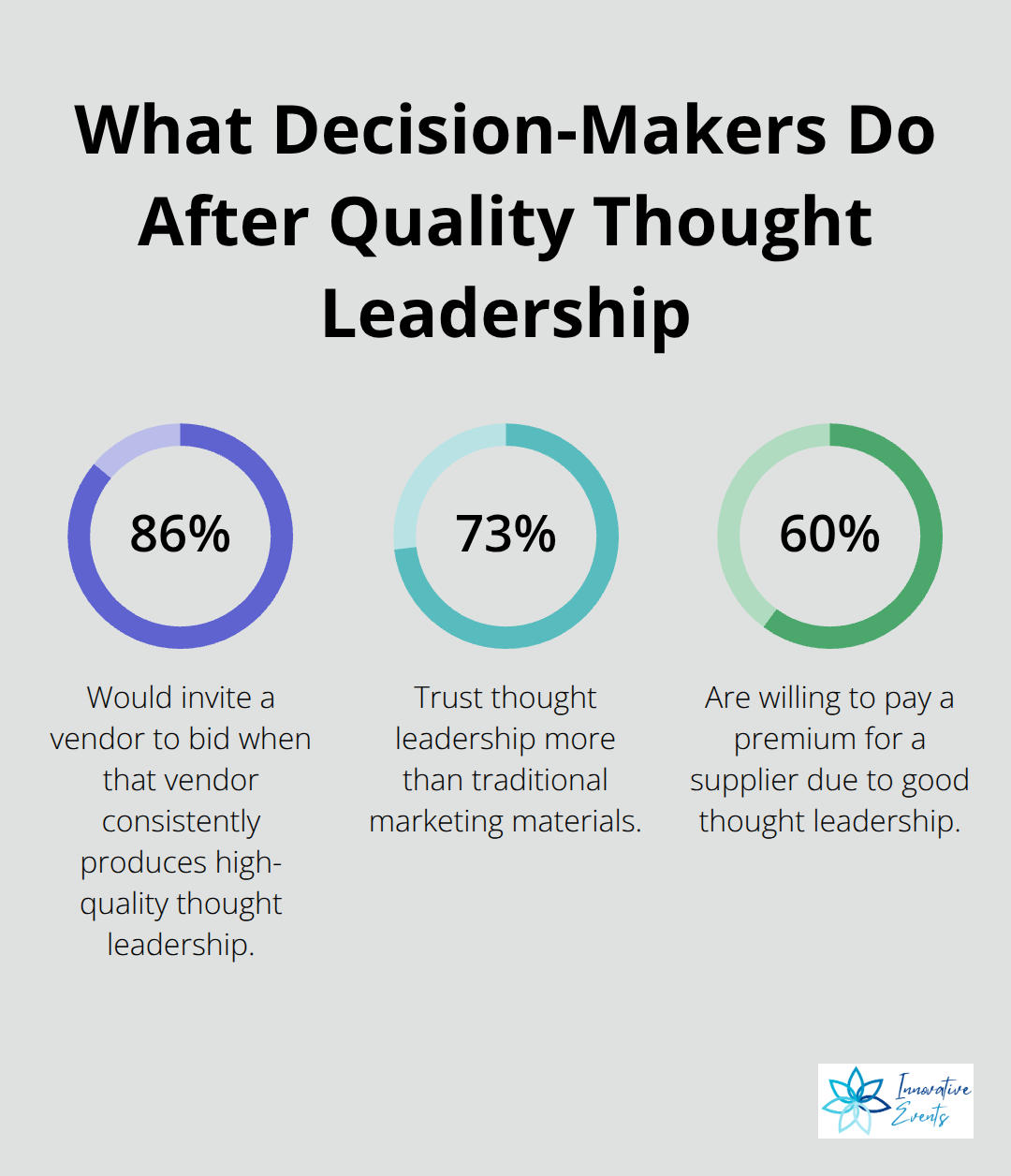
Content marketing transforms you into a thought leader because it forces you to articulate what you actually know. When you publish insights about your industry’s real problems, you stop being another vendor and start being a reference point. According to Edelman and LinkedIn’s 2024 B2B Thought Leadership Impact Report, 86% of decision-makers would invite a vendor to bid on a project if that vendor consistently produced high-quality thought leadership. That’s not a nice-to-have; that’s a competitive advantage worth hundreds of thousands in pipeline value. The data shows 73% of decision-makers trust thought leadership more than traditional marketing materials, and roughly 60% say good thought leadership makes them willing to pay a premium for a supplier.
This happens because consistent, valuable content proves you understand their world better than competitors who only push product messaging.
Strategic messaging creates visible expertise
Your content must address problems your audience encounters before they search for solutions. IBM Institute for Business Value found 88% of executives consume thought leadership, and 87% say it shaped a purchase decision in the last 90 days. This means you’re competing for attention from decision-makers who actively read industry insights. Most companies make the mistake of writing about their product instead of their customer’s challenge. When you publish original research or frameworks that solve real problems, you earn credibility that sales conversations cannot replicate. A healthcare marketer publishing data about patient retention trends becomes more valuable than one posting case studies about their software. The specificity matters enormously. Generic content about industry trends gets buried; proprietary insights or data-backed perspectives cut through because they offer something competitors cannot copy immediately.
Trust builds through consistency and transparency
Thought leadership only works if you maintain a publishing schedule people can depend on. Edelman and LinkedIn data from 2020 showed roughly 40% of decision-makers felt overwhelmed by content volume, yet over 70% continued reading to stay current. This tells you the audience is selective but engaged. Publishing sporadically or disappearing for months destroys the authority you’ve built. Brands establish themselves as category authorities through disciplined quarterly research releases paired with monthly articles exploring implications. The format matters less than the pattern. Whether you publish weekly on LinkedIn, monthly long-form articles, or quarterly research reports, your audience needs to know when to expect value from you. Transparency about your methodology, data sources, and perspective strengthens trust further. When you explain how you arrived at conclusions and cite credible sources, you signal confidence in your thinking rather than hiding behind vague claims.
Original research separates leaders from followers
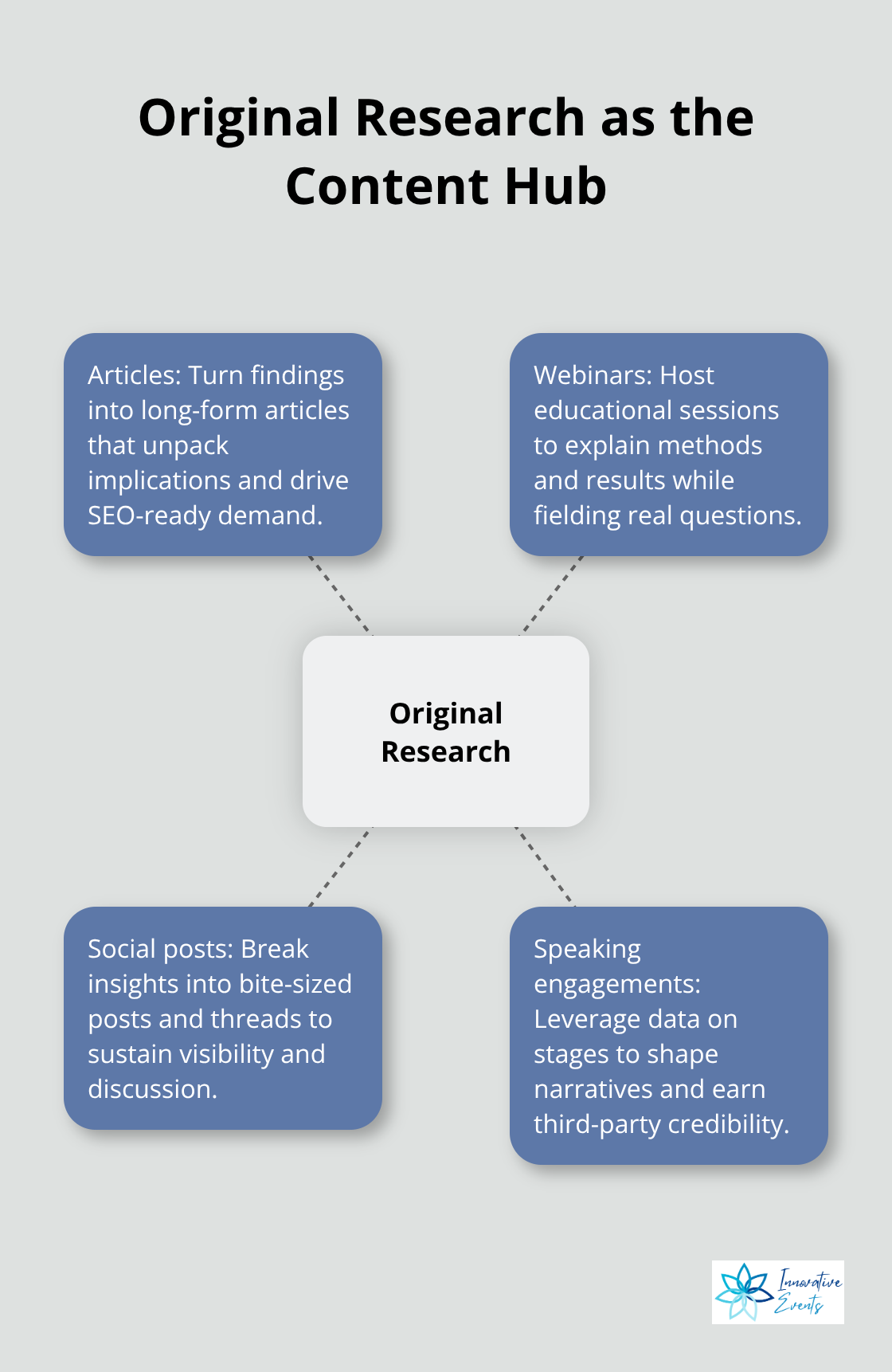
Decision-makers actively seek out proprietary insights that competitors haven’t yet replicated. Original research (whether a formal study, proprietary data analysis, or framework you’ve developed) gives you a defensible position in your market. When you own the research, journalists quote you, competitors chase your findings, and your audience returns repeatedly for fresh perspectives. This approach works across industries and audience sizes. A small team publishing quarterly pulse studies on their niche outperforms larger competitors who only repurpose industry reports. The investment in original research pays dividends because it becomes the hub for all your other content-articles, webinars, social posts, and speaking engagements, all of which flow from that central insight. Your next chapter explores how to select the right formats and distribution channels to amplify these insights across your audience.
Building Your Thought Leadership Strategy
Identify Your Genuine Competitive Advantage
Identifying what makes you different requires ruthless honesty about where your expertise actually sits. Most companies overestimate their uniqueness and underestimate the specificity their audience demands. Map three things: what problems you solve better than anyone else, what data or research you have access to that competitors don’t, and what perspective you hold that contradicts conventional wisdom in your industry. This isn’t about being contrarian for attention-it’s about finding the genuine gap between what the market believes and what your experience proves.
If you’ve spent five years helping enterprise clients reduce onboarding time by 40%, that becomes your angle. If your proprietary data shows decision-makers care less about feature counts and more about implementation speed, publish that finding. Your core expertise becomes credible only when it’s grounded in real outcomes, measurable results, or data you’ve actually collected. Generic observations about industry trends won’t differentiate you because every competitor makes the same claims.
Match Format to How Your Audience Consumes Content
Selecting formats matters far less than matching your content to how your audience actually consumes information. LinkedIn remains dominant for B2B decision-makers, but the format you choose on that platform-a short post, a long article, a video, or a carousel-depends on your message and your audience’s behavior. Research reports work when you have original data worth defending; monthly articles work when you can maintain consistency; LinkedIn posts work when you have a specific executive voice behind them; webinars work when you want to educate a targeted group.
Don’t pick formats based on what competitors do or what feels trendy. Instead, ask which format best delivers the insight you’ve identified and which channel your audience actively monitors. Your publishing schedule must be sustainable and predictable.
Establish a Rhythm Your Audience Can Depend On
A consistent publishing schedule builds habit and trust faster than occasional viral pieces that disappear for months. If you can only commit to monthly content, publish monthly reliably rather than promising weekly and vanishing. The discipline of showing up on schedule matters more than the frequency itself.
This consistency applies whether you work with an internal team or partner with an external content strategist. What matters is that your audience receives predictable, valuable insights on a schedule they can anticipate. Once you’ve locked in your formats and publishing rhythm, the next step involves selecting the specific distribution channels and amplification tactics that will carry your insights to the right decision-makers at the right time.
Measuring What Actually Moves the Needle
Track the Metrics That Matter to Revenue
Most teams measure vanity metrics instead of business outcomes. You publish thought leadership content for months, accumulate impressive page views and social impressions, then realize none of it translates into qualified conversations with decision-makers. Edelman and LinkedIn’s research found 75% of decision-makers researched a vendor after reading thought leadership, yet only 23% of those researchers became customers. That gap reveals the real challenge: engagement metrics do not equal revenue impact.
You need to track three distinct layers. First, measure audience reach and engagement on the channels where your audience actually spends time. LinkedIn engagement rates, article completion rates, and qualified traffic sources matter more than total impressions. Second, track the specific behaviors that predict sales readiness: how many decision-makers downloaded your research, attended your webinar, or requested a deeper conversation.
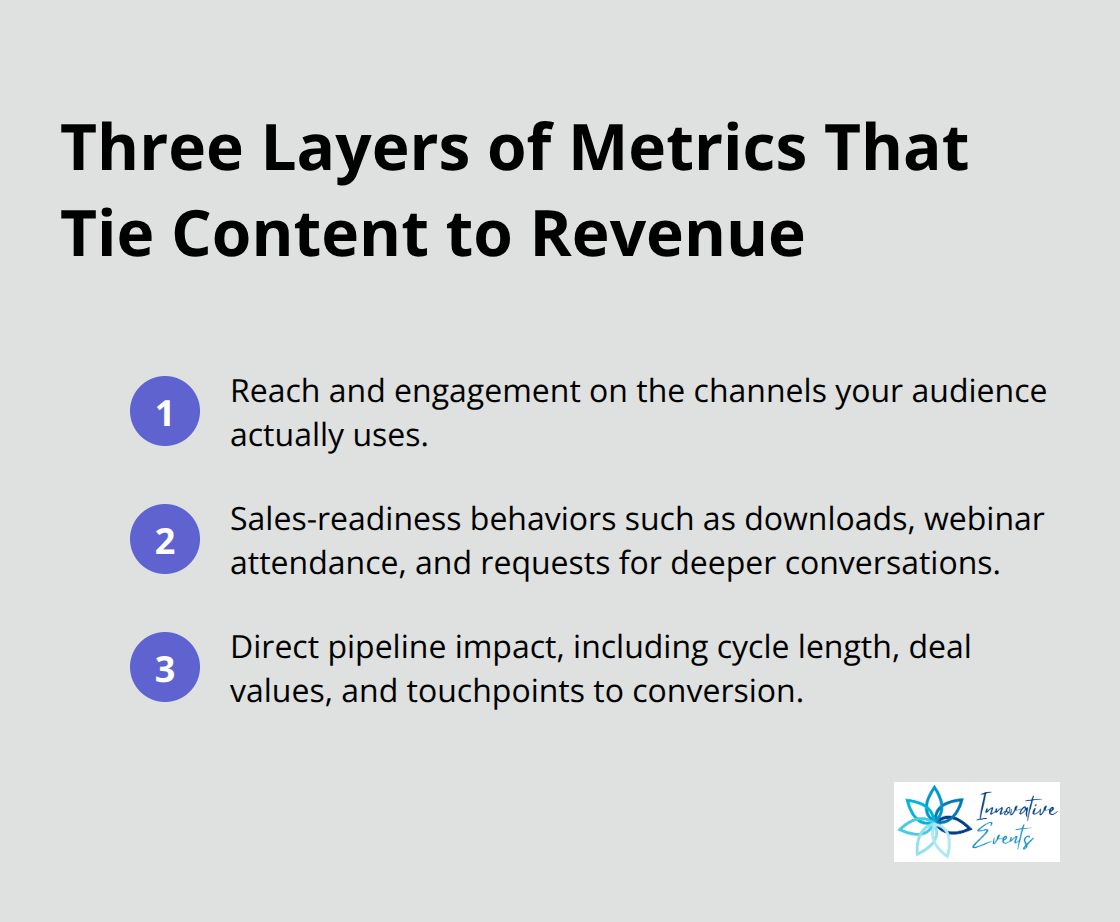
Third, connect content performance directly to pipeline movement. Did leads from your thought leadership articles have shorter sales cycles? Did they close at higher deal values? Did they require fewer touchpoints before conversion?
The Edelman and LinkedIn research showed decision-makers say good thought leadership makes them willing to pay a premium for a supplier. This means your content should correlate with deals that command higher margins. Start measuring by tagging all content in your CRM with the piece that drove the initial engagement, then track that lead through your sales process. This reveals which content formats and topics actually influence buying decisions rather than just generating noise.
Audit Performance Quarterly and Reallocate Resources
Refining strategy without solid data leads to repeating mistakes at scale. Every quarter, audit which pieces drove qualified conversations and which accumulated views without business impact. If your monthly LinkedIn posts generate engagement but your quarterly research reports drive 80% of qualified pipeline, reallocate resources toward research. If webinars attract attendees who never advance past initial conversations, test shorter educational sessions or shift to one-on-one executive briefings.
The IBM Institute for Business Value found 87% of executives have made a purchase as a direct result of thought leadership, yet most companies treat content performance as a vanity contest rather than a revenue driver. Stop creating formats your audience ignores simply because competitors use them. The discipline of measuring, analyzing, and adjusting quarterly keeps your thought leadership strategy aligned with actual market response rather than internal assumptions about what should work.
Adjust Your Publishing Model Based on What Works
Adjust your publishing schedule based on what actually works. If monthly content maintains consistency but quarterly pieces drive disproportionate results, shift to a model where you invest heavily in quarterly research and support it with lighter monthly content. If video performs dramatically better than written articles for your audience, acknowledge that reality and restructure your team’s workflow accordingly. Your content strategy should flex to match what your audience actually responds to, not what you assumed would work when you started.
Final Thoughts
Content marketing and thought leadership work together to build a lasting competitive advantage. The brands winning in 2026 aren’t chasing viral moments or publishing generic industry commentary-they commit to original research, maintain consistent publishing schedules, and measure what actually drives qualified conversations with decision-makers. Edelman and LinkedIn’s data consistently show decision-makers reward this approach: 86% would invite vendors to bid based on consistent thought leadership, 73% trust it more than traditional marketing, and 60% pay premiums for suppliers who demonstrate genuine expertise.
Your authority grows when you stop thinking like a marketer and start thinking like a researcher solving problems. Identify your genuine competitive advantage grounded in real outcomes or proprietary data, select formats and channels your audience actually uses, then publish on a schedule you can sustain indefinitely. Measure quarterly by connecting content performance to pipeline movement and qualified conversations, not vanity metrics, and adjust your strategy based on what the data reveals rather than what you assumed would work.
Thought leadership compounds over time as a discipline, not a campaign. Brands that invested in consistent, high-quality content years ago now own their market conversations while competitors scramble to catch up. We at Innovative Events help brands amplify their thought leadership through strategic speaking engagements and immersive experiences that position leaders as authorities-start now, stay consistent, and measure what matters.