

Most companies waste time creating content that doesn’t move the needle. A content marketing audit cuts through the noise by showing you exactly what’s working and what’s holding you back.
At Innovative Events, we’ve seen firsthand how a structured audit transforms content strategies. This guide walks you through assessing performance, spotting gaps, and building a roadmap that actually delivers results.
Assessing Your Current Content Performance
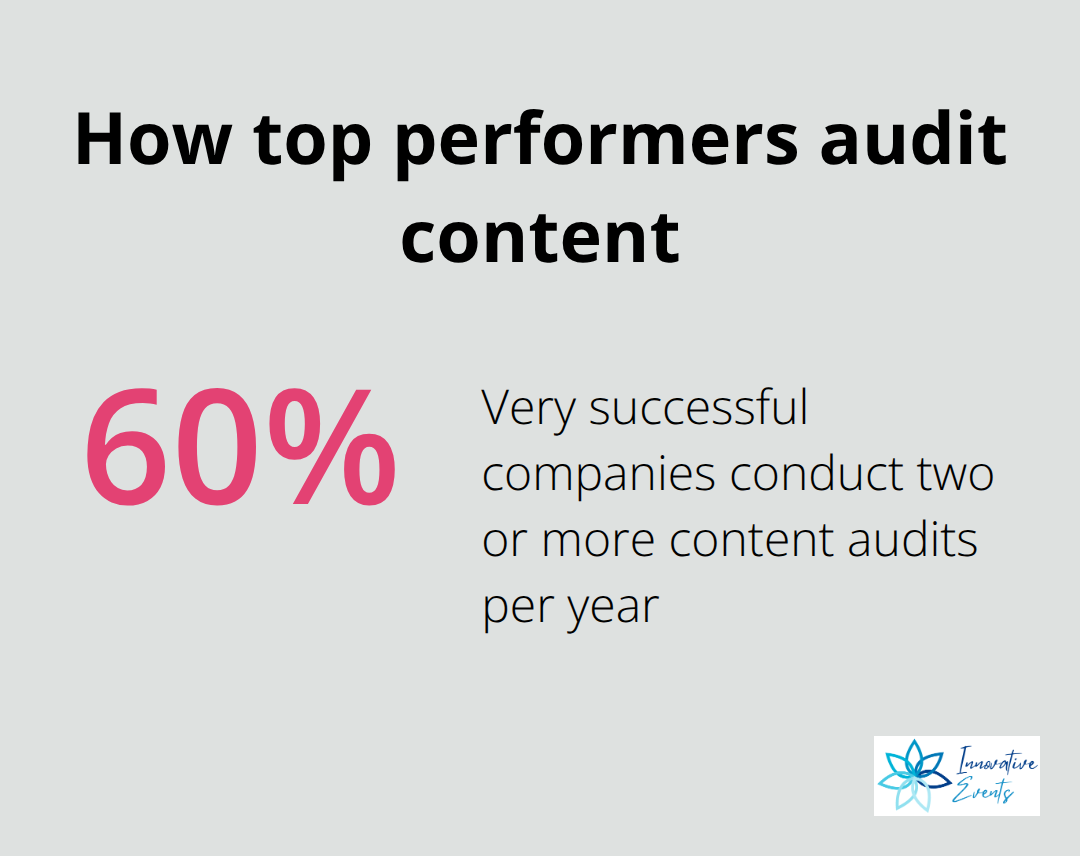
Start with Google Analytics 4 and Google Search Console. These tools give you the clearest picture of what’s happening on your site without requiring expensive software. Pull three to six months of data to spot real trends, not statistical noise. GA4 shows you page views and average engagement time. Google Search Console reveals total clicks, impressions, click-through rate, and average ranking position for each page. Export this data into a spreadsheet alongside your content inventory so you can compare performance across your entire site. Research from Semrush shows that 60% of very successful companies conduct two or more content audits per year, which means they check this data constantly. Don’t audit once and assume you’re done-the companies pulling ahead treat audits as an ongoing rhythm, not a one-time project.
Which Metrics Matter Most
Traffic alone tells you nothing useful. A page with 200 monthly visits but zero conversions wastes resources just as much as a page with zero traffic. Look at engagement time on page and bounce rate together. If visitors land on a page and leave immediately, your content either doesn’t match search intent or it’s poorly written. If they stay but don’t convert, your calls-to-action need work. Identify which pages drive traffic but perform poorly on conversions-those are your high-priority targets for improvement.
Articles in the everything-you-need-to-know format average 665 unique pageviews per month according to Semrush data, while comparison articles average 660, so longer comprehensive content tends to win. Check keyword rankings for your target terms using SEO tools like Semrush or Moz. If you rank on page two or three for high-intent keywords, that’s where your quick wins hide. Improving a page from position 11 to position 5 often requires less work than building new content from scratch, and the traffic boost comes faster.
Spotting Content That Competes With Itself
Many sites have multiple pages targeting nearly identical keywords. When you have three blog posts about the same topic, none of them rank well because Google can’t tell which one matters most. Audit your content for topic overlap and keyword duplication. Consolidate weak pages into one strong page using 301 redirects. This signals to search engines which version is authoritative and concentrates ranking power instead of splitting it.
Finding Content Gaps
Look for content gaps where you miss opportunities entirely. If competitors rank for a keyword your audience searches for, but you have no content addressing it, that’s a gap worth filling. Analyze your content by format, word count, and topic to see patterns in what performs. In 2025, short-form video is expected to get more investment than any other format, with 71% of marketing experts predicting increased social media content. Yet many sites still ignore video entirely. Understand what your audience actually consumes and adjust your mix accordingly. If your blog attracts 10,000 monthly visitors but your video content gets 500 views, the video might not be your priority right now. Follow the data, not industry trends.
The metrics you collect now become the foundation for identifying what to keep, improve, or remove entirely. With this performance picture in place, you’re ready to evaluate the quality and consistency of your content itself.
Identifying Strengths and Weaknesses
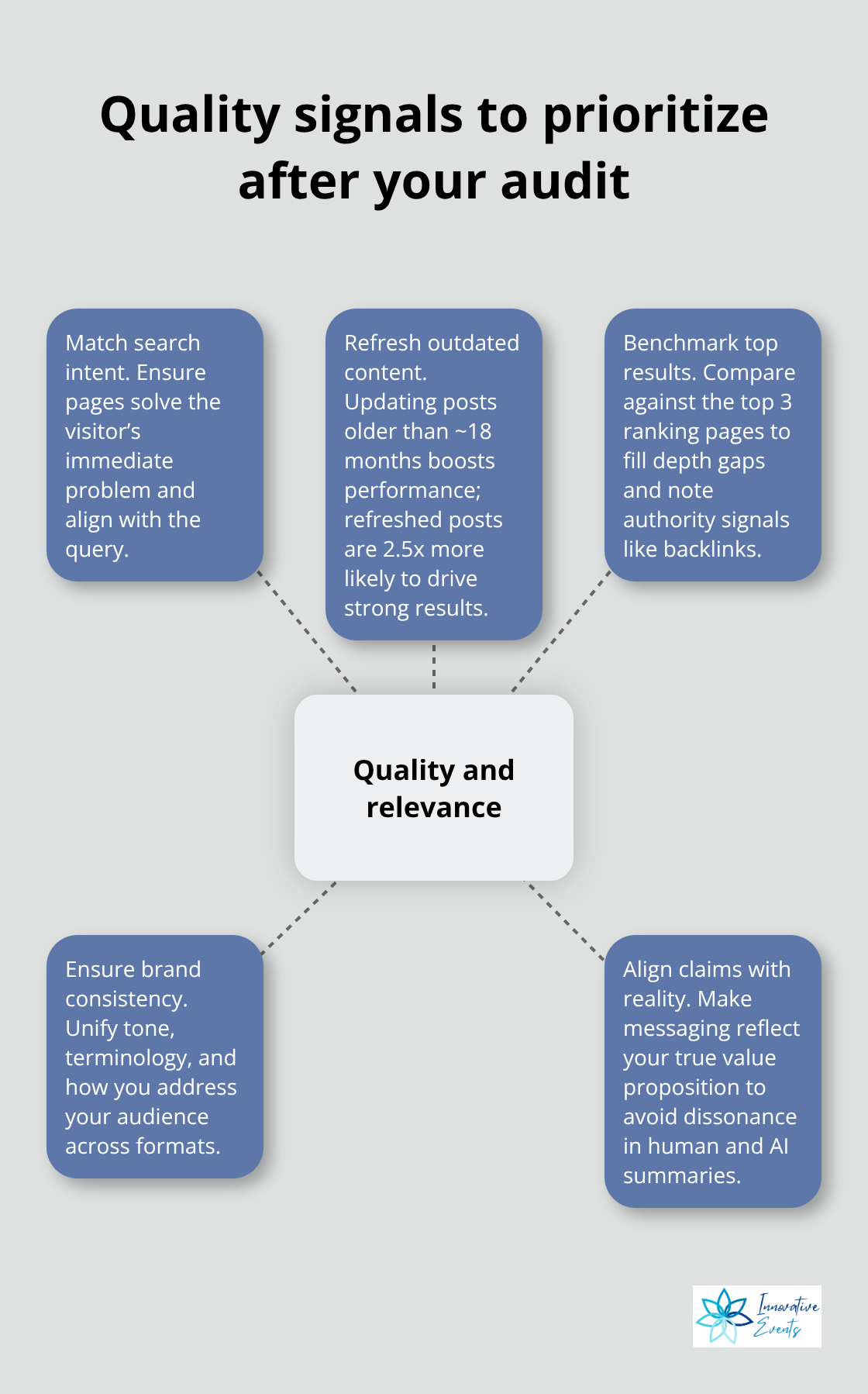
Quality content means different things depending on who measures it. Most teams focus on grammar and readability, which matter but aren’t enough. A perfectly written page that doesn’t answer what visitors actually want is still a waste of space. Start by comparing your content against what ranks in the top three positions for your target keywords. If competitors cover something you missed, note it. If their pages are poorly written but still rank, Google values something else about them-usually topical depth or authority signals like backlinks.
Match Content to Search Intent
Pull your underperforming pages and ask whether they actually solve the problem searchers have. Many sites publish content that’s technically correct but misses the search intent entirely. A visitor searching for how to plan a conference doesn’t want philosophy about event strategy; they want a checklist and timeline. Audit for intent-matching first, then worry about polish.
Check publication dates too. Content older than eighteen months in fast-moving industries like digital marketing or event marketing often contains outdated information that damages credibility. Bloggers who update older posts are 2.5x more likely to report strong results, so don’t assume old content is worthless-refresh it instead.
Evaluate Business Impact
Assess whether your content actually supports your business goals. If your goal is lead generation but your blog posts never mention your services or include calls-to-action, you’re creating content for content’s sake. Rate each piece on a simple scale: does this page actively support a business outcome, or is it just there? Pages that don’t contribute to any measurable goal should be consolidated, rewritten, or removed.
Brand voice consistency separates professional operations from scattered ones. When readers encounter three different writing styles across your site, they question whether anyone’s actually in charge. Audit your tone, terminology, and how you address your audience across content formats. Do you sound formal on the homepage but casual in blog posts? Do you call your customers clients in one place and customers elsewhere? These inconsistencies erode trust.
Align Messaging With Reality
Check whether your messaging aligns with your actual value proposition. Many companies say they’re customer-centric, but their content focuses entirely on product features. Others claim innovation but publish content that’s five years old. This dissonance shows up in how AI systems summarize and infer from your content. Too-outdated or contradictory material gets surfaced in AI responses and misrepresents your brand.
Track where your best-performing content actually gets discovered. If your blog gets traffic from organic search but your email list sees no engagement, you’re distributing to the wrong channels. Audit which platforms your audience actually uses and which ones waste your time. Some teams spend resources on LinkedIn when their audience hangs out on TikTok. Others send weekly emails when monthly ones would perform better.
Measure Distribution Performance
Look at click-through rates, time spent, and conversions by distribution channel. Cut the channels that consistently underperform and double down on what works. This performance data reveals not just what content matters, but how your audience actually wants to receive it. With these strengths and weaknesses mapped, you’re ready to turn findings into a concrete action plan that prioritizes what moves the needle most.
Creating Your Action Plan From Audit Data
Now that you’ve identified what works and what doesn’t, the temptation is to fix everything at once. Resist it. Companies that try to overhaul their entire content strategy simultaneously burn resources and see mediocre results across the board. Instead, segment your findings into three buckets: pages worth keeping and updating, pages worth consolidating, and pages worth removing. Start with pages that drive traffic but underperform on conversions-these represent your fastest wins. Tackle these high-traffic, low-conversion pages first because the effort-to-reward ratio is unbeatable.
Prioritize High-Impact Changes
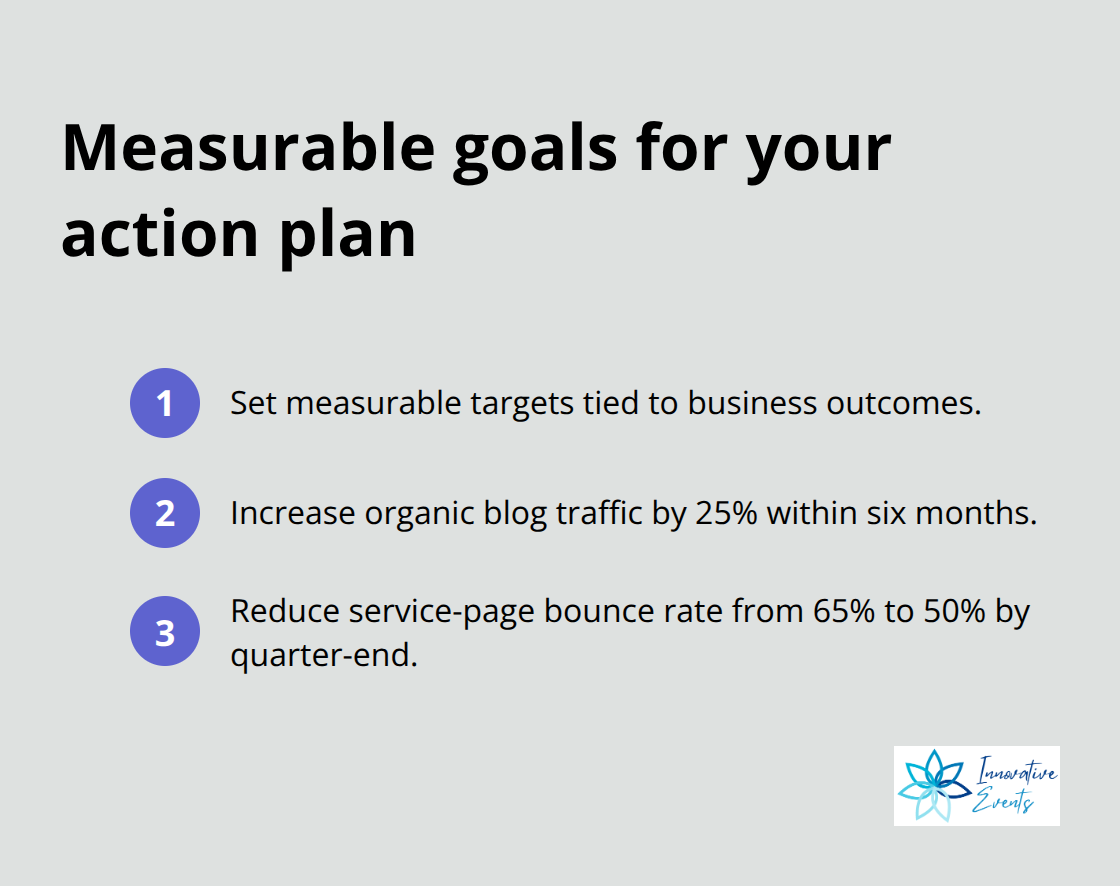
Your action plan needs to be written down and tied explicitly to business outcomes. Don’t create vague goals like “improve blog performance.” Instead, set measurable targets: increase organic traffic to blog posts by 25% within six months, or reduce bounce rate on service pages from 65% to 50% by quarter-end. These specific, time-bound goals keep your team accountable and let you measure success objectively.
For every piece of content in your inventory, make a binary decision: does this page support a measurable business outcome? If the answer is no, the page should be consolidated with a stronger asset, rewritten to serve a purpose, or deleted with a 301 redirect to relevant content. Pages that rank well but are outdated need a refresh, not a rewrite. Add a timestamped note explaining what changed and why, then republish. This signals to search engines that you’ve updated the content and helps readers understand the evolution of your thinking.
Consolidate and Redirect Competing Content
For pages competing for the same keywords, merge them into one comprehensive resource and redirect the weaker versions. This concentrates ranking power and improves your chances of reaching the first page. Your new content strategy should fill the gaps your audit revealed-topics your audience searches for, but you don’t cover, formats you’re missing, and keywords where competitors rank but you don’t. If your audit shows comparison articles average 660 pageviews monthly while your site has zero comparison content, create three to five comparison pieces targeting high-intent keywords in your space. If video is emerging as a format but you’ve ignored it, start with one or two short-form videos per month rather than committing to daily uploads.
Connect Goals to Real Business Metrics
Tie every content goal to a business metric your executive team cares about. Lead generation teams should measure cost per lead from organic content. E-commerce teams should track revenue from organic traffic. Event marketing teams should measure registrations sourced from content. This connection transforms content from a cost center into a revenue driver that justifies continued investment. Set a baseline from your audit data-if blog traffic currently generates 50 leads per month at a cost of $200 per lead, your goal might be to increase that to 100 leads per month while reducing cost per lead to $150. These numbers give you something concrete to chase.
Assign Clear Ownership and Maintain Momentum
Most companies fail at content strategy execution because they don’t assign ownership. Designate one person responsible for each content pillar or topic cluster. That person owns the performance metrics, the update schedule, and the quality bar. Without clear ownership, nothing gets maintained, and your audit findings gather dust. Schedule your next full audit for six months from now, not a year. Quarterly mini-audits of your highest-traffic pages and newest content keep you agile without overwhelming your team.
Final Thoughts
A content marketing audit transforms how you spend your resources. Your audit revealed which content drives real business results and which pieces drain resources without contributing anything measurable. Pick three to five high-impact changes from your action plan and execute them this month instead of trying to fix everything simultaneously.
Schedule your next audit in six months, not a year. Fast-moving industries like event marketing change constantly, and your content strategy needs to keep pace. Quarterly check-ins on your top-performing pages catch problems before they become serious, and this rhythm keeps your content fresh without requiring massive overhauls.
We at Innovative Events help brands craft compelling messaging and eye-catching visuals that align with business goals while maintaining consistency across all touchpoints. Your content audit findings should feed directly into your broader marketing strategy and event planning. Start your audit this week.