
Your product and brand strategy determine whether customers choose you or your competitors. Without a clear direction, you’ll waste resources chasing the wrong opportunities.
At Innovative Events, we’ve seen countless companies struggle because they never aligned their product decisions with their brand promise. This guide walks you through the exact steps to build a strategy that actually works.
Who Are Your Real Customers
Build Your Ideal Customer Profile on Data, Not Assumptions
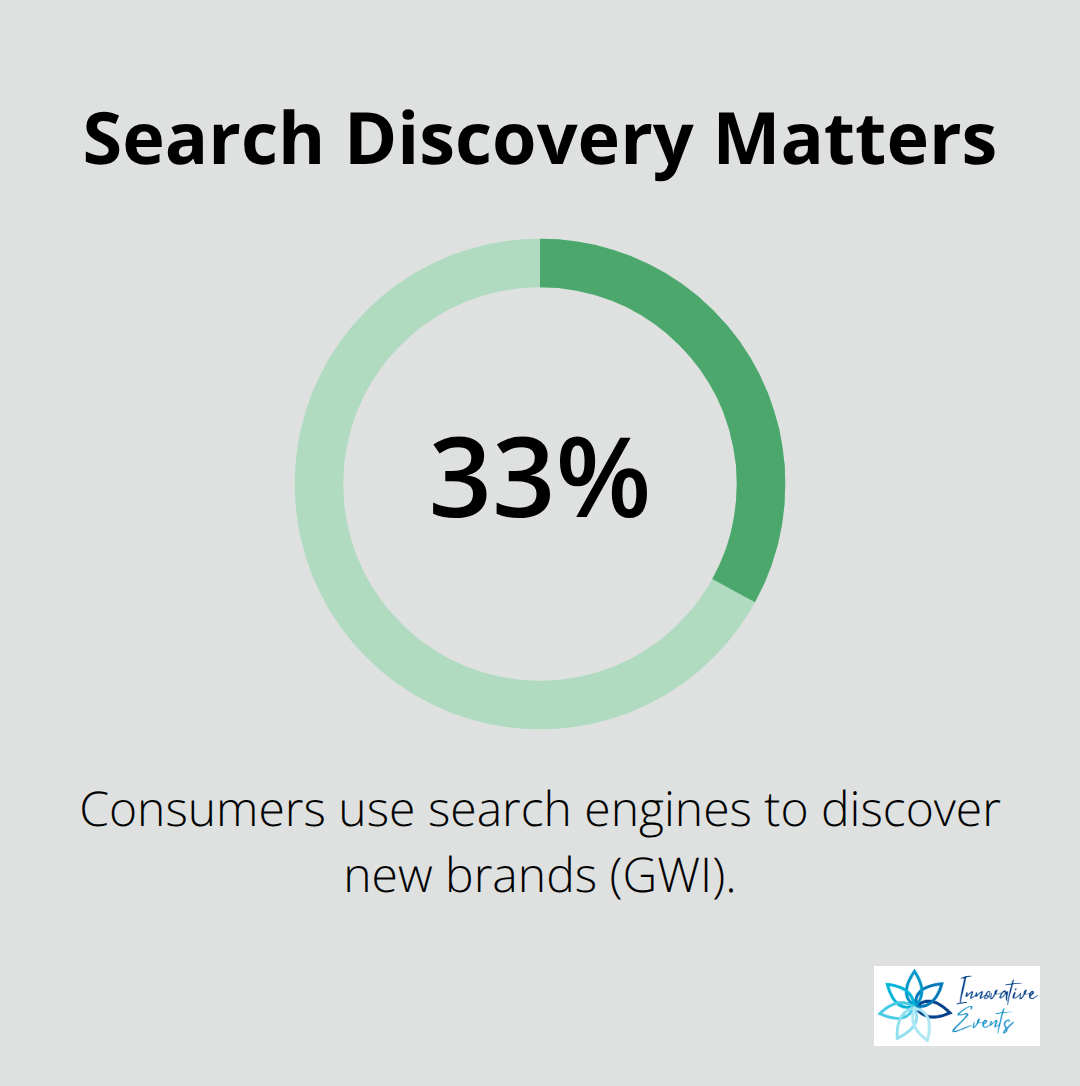
Your ideal customer profile isn’t a guess. It’s built on data about who actually buys from companies like yours, not who you wish would buy. According to GWI, 33% of consumers use search engines to discover new brands, which means your target market actively looks for solutions in specific ways. Start by analyzing your existing customer base.
Pull data on purchase frequency, average order value, demographics, and how they found you. Companies that skip this step and rely on assumptions waste 40% or more of their marketing budget on the wrong audiences.
Talk directly to your best customers
Interview your best customers directly. Ask them why they chose you, what problem you solved, and what alternatives they considered. This conversation reveals motivations that spreadsheets never will. You’ll discover whether they care about price, sustainability, convenience, or status-the actual drivers behind their decisions. Sales reps and customer support teams hear objections daily and know what stops prospects from buying better than anyone else. Their feedback cuts through noise and points you toward real barriers.
Map Your Competitive Landscape
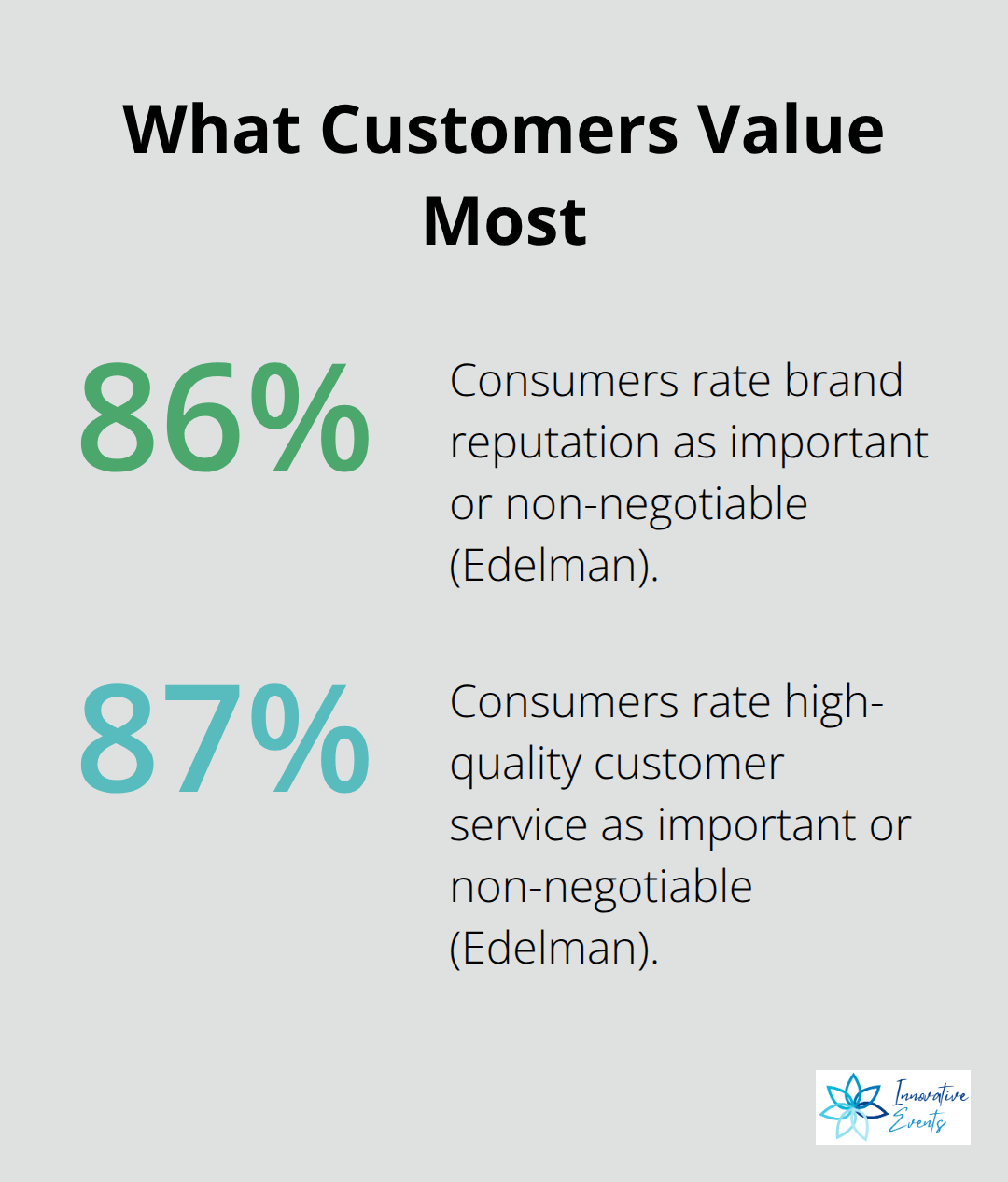
Identify three to five direct competitors and map their customer bases on social media and review sites. Look at who engages with their content, what complaints appear most often, and what gaps exist in their messaging. This shows you where customers feel underserved. According to Edelman research, 86% of consumers rate brand reputation as important or non-negotiable, and 87% rate high-quality customer service the same way. This means your target market will abandon you if you fail on either front, regardless of product quality.
Pinpoint the exact pain points That Drive Purchases
Customer pain points are the specific frustrations that make someone willing to spend money on a solution. Avoid generic answers like wanting better quality or lower prices. Instead, identify the exact moment when a customer’s problem becomes unbearable enough to act. Does your target market struggle with time constraints, complexity, trust, or integration with existing systems?
Survey existing customers about what took the longest to solve before finding you, what surprised them about their purchase experience, and what they’d change if they could. A/B test messaging that addresses different pain points to see which resonates strongest. If one customer segment responds 3x better to messaging about time savings versus cost savings, you’ve found a critical insight about what actually motivates them.
Document Pain Points With Specificity
Document these pain points specifically. Instead of noting that customers want efficiency, write that manufacturing managers need to reduce setup time by 20% to meet production deadlines without overtime costs. That specificity drives every strategic decision afterward. When you understand exactly what your customers need to accomplish and why it matters to them, you’re ready to position your product in a way that speaks directly to those needs.
Building Your Brand Identity With Real Differentiation
Define Your Value Proposition With Measurable Benefits
Your value proposition isn’t what you say it is-it’s what your customers believe it is based on how you show up consistently. Many companies waste months crafting elaborate mission statements that sound good but fail to answer the one question customers actually care about: Why should I choose you over someone else? List three concrete, measurable benefits your product delivers that competitors don’t. Not features-benefits. If you sell event management software, don’t say you have real-time collaboration tools; say you reduce event planning time by 30% compared to spreadsheets and email chains.
According to Nielsen research, long-term brand efforts deliver greater overall sales uplift and profitability. This means specificity in your value proposition directly impacts revenue. Test your value proposition against your target market’s pain points from the previous chapter. Does it address their actual frustrations, or does it solve problems they don’t have? Run A/B tests on your homepage messaging or ad copy to see which version generates higher click-through rates and conversions. The version that wins becomes your north star.
Create Consistency Across Every Customer Touchpoint
Your brand identity must remain consistent across every touchpoint your customers encounter, from your website to email signatures to how your team answers the phone. In 2024, 34% of beauty and personal care purchasers bought refillable products, proving that visual consistency and thoughtful design directly influence purchasing decisions. Create a style guide that documents your logo usage, color palette, typography, and tone of voice with specific rules for each channel. Specify exact Pantone colors rather than approximate hex codes.
Define whether your brand voice is formal or conversational, whether you use contractions, and how you handle industry jargon. Consistent messaging across channels builds trust and prevents confusion that erodes customer confidence. Assign one person to review all customer-facing communications before they go live. This single accountability step prevents the scattered messaging that happens when marketing, sales, and customer support operate without alignment.
Establish Clear Brand Voice and Tone Guidelines
Your brand voice sets the personality behind every message you send. When you apply the same visual language and tone consistently, customers recognize you instantly and perceive your brand as more credible and professional, even if your company is smaller than your competitors. Document specific examples of how your brand voice sounds in different contexts (social media posts, customer support responses, product descriptions). Show your team what your brand voice sounds like and what it doesn’t sound like. This clarity prevents tone drift across channels and ensures every team member reinforces the same brand identity.
The consistency you establish now directly shapes how customers perceive your product’s quality and trustworthiness. With your brand identity locked in place, you’re ready to position that identity strategically against your competition and map out how your product will evolve to stay ahead.
Product and Market Positioning
Test Product-Market Fit Before Full Development
Market validation is the process of testing whether real people in your target audience are willing to engage with or pay for your product idea before you build it. Most companies skip this step and build features nobody wants. Start by testing whether customers would actually buy your solution before you invest heavily in development. Talk to potential customers in your target market and ask them to pay for early access or a minimum viable product. If fewer than 30% express genuine interest and willingness to pay, your product-market fit is weak. This number matters because it separates real demand from polite interest.
Ask potential customers what they currently use to solve this problem, how much they spend annually, and what would need to change for them to switch. Their answers reveal whether your solution addresses a problem worth solving. When customers spontaneously mention your product to peers without being asked, you’ve found product-market fit. Until that happens, everything else is speculation.
Identify Problems Worth Solving
Run surveys across your target market, asking them to rate how painful their current solution is on a scale of 1 to 10. Problems rated 8 or higher have strong commercial potential because customers will actively seek alternatives. Validate your positioning against this reality before committing resources to full product development.
Build a Defensible Competitive Position
Your competitive position must be crystal clear and defensible. Identify the specific customer segment where your product outperforms competitors on the metrics that matter most to that segment. Avoid claiming you’re better at everything because nobody believes that. Instead, dominate one or two dimensions your target market actually cares about. If you target price-sensitive customers, be genuinely cheaper. If you target quality-focused buyers, have superior features or durability.
Document exactly how your product differs from the three closest competitors on the dimensions your target market prioritizes. Create a comparison matrix showing feature-by-feature differences, but weight them by importance to your customers. A feature that 5% of customers care about shouldn’t carry the same weight as one that 85% depend on.
Test your positioning messaging with your target market through ads or landing pages. Measure which positioning statement generates the highest conversion rate and cost per acquisition. Your strongest positioning isn’t what sounds most impressive; it’s what converts most efficiently.
Prioritize Features Based on Customer Demand
Plan product development around solving the exact problems you identified in your market research. Prioritize features based on customer feedback frequency, not internal preferences. If 70% of customers ask for feature X and 10% ask for feature Y, build X first, regardless of which excites your team more.
Set a clear timeline for releasing new features tied to customer feedback cycles. Quarterly releases allow you to gather feedback, iterate, and stay ahead of competitive threats. Companies that release new features annually fall behind those shipping quarterly because market dynamics shift faster than annual cycles allow.
Align Development With Customer Retention and Acquisition
Track which features drive retention and which drive acquisition. Some features keep customers loyal while others attract new ones; allocate development resources accordingly. Your roadmap should reflect what customers will pay for next, not what’s technically interesting to your engineering team.
Final Thoughts
Your product and brand strategy only works when you treat it as a living system, not a document you file away. Start implementing immediately by picking one area where you have the weakest data-if you haven’t interviewed customers directly, schedule five calls this week; if your brand guidelines don’t exist, draft them in the next two weeks; if you haven’t tested your positioning messaging, run a small ad campaign with different headlines to see what resonates. Small, consistent actions compound faster than waiting for perfect conditions.
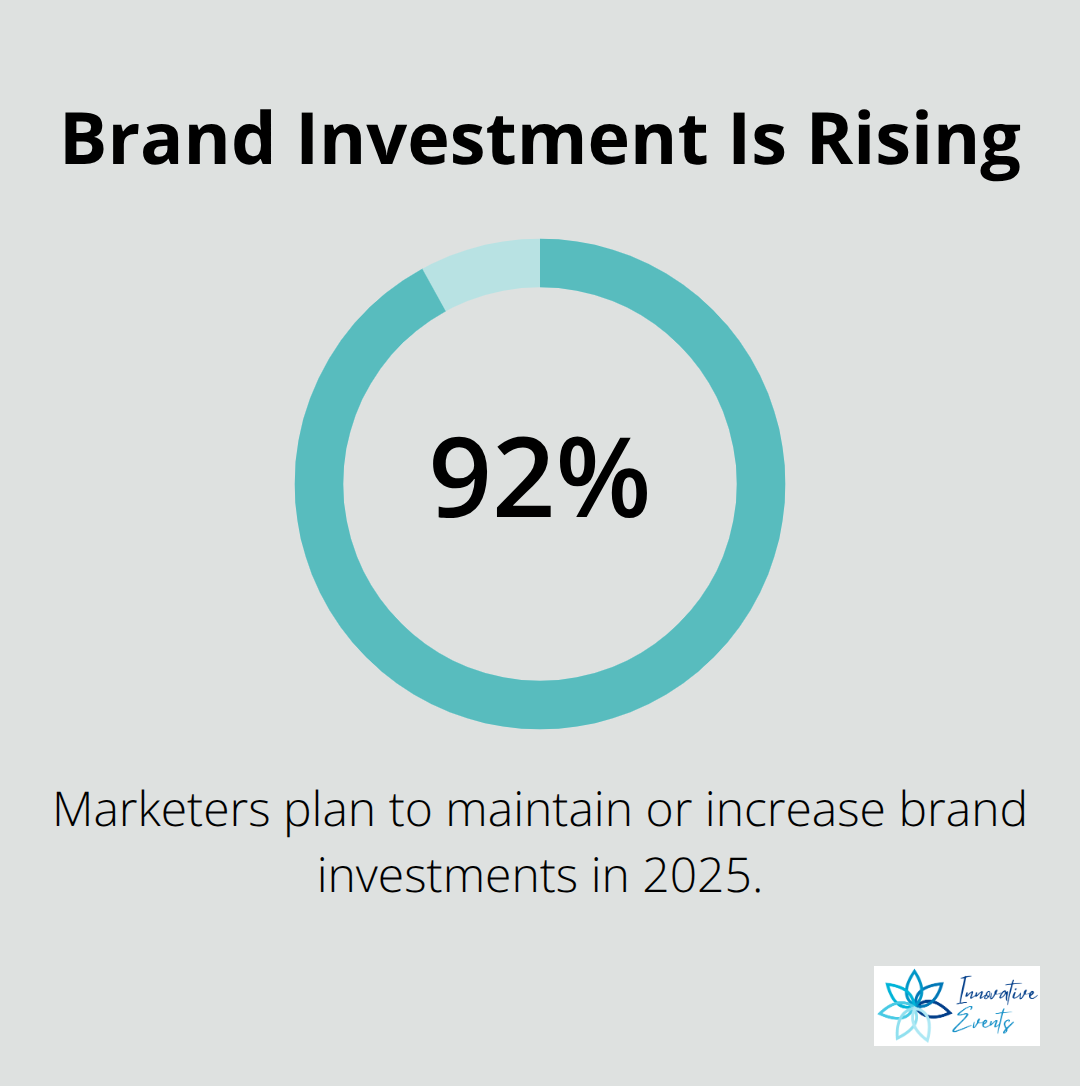
Track what matters by monitoring whether your target market converts at the rates you projected and which features customers use most. Watch your brand reputation metrics monthly through review sites and social listening, since 92% of marketers plan to maintain or increase brand investments in 2025, which means competition for attention is intensifying. Your measurement discipline separates winners from companies that guess.
Revisit your strategy quarterly as markets shift, competitors launch new products, and customer priorities evolve. We at Innovative Events specialize in transforming your product and brand strategy into immersive experiences that move customers forward, from event management to marketing content and social engagement. Discover how we elevate your brand.