

Content marketing drives 3x more leads than traditional advertising, yet 70% of marketers struggle with poor performance. Most companies waste resources on content that fails to connect with their audience.
We at Innovative Events have seen businesses transform their results by following proven optimization strategies. The right approach can boost engagement rates by 200% and cut customer acquisition costs in half.
Who Is Your Real Target Audience?
Most marketers think they know their audience, but many companies create content for personas that exist only in their imagination. Real audience research starts with data, not assumptions. Successful content marketing requires you to drill down into specific demographics, psychographics, and behavioral patterns. You’ll want to create buyer personas, which are semi-fictional profiles that represent your ideal customers. Start with an analysis of your existing customer base through Google Analytics, CRM data, and direct surveys. Focus on pain points, preferred content formats, and decision-making triggers rather than basic demographics.
Build Data-Driven Buyer Personas
Skip the generic persona templates that create fictional characters. Interview 10-15 actual customers and prospects to gather real insights about their challenges, goals, and content preferences. Tools like Typeform and SurveyMonkey can automate this process and provide quantifiable data.
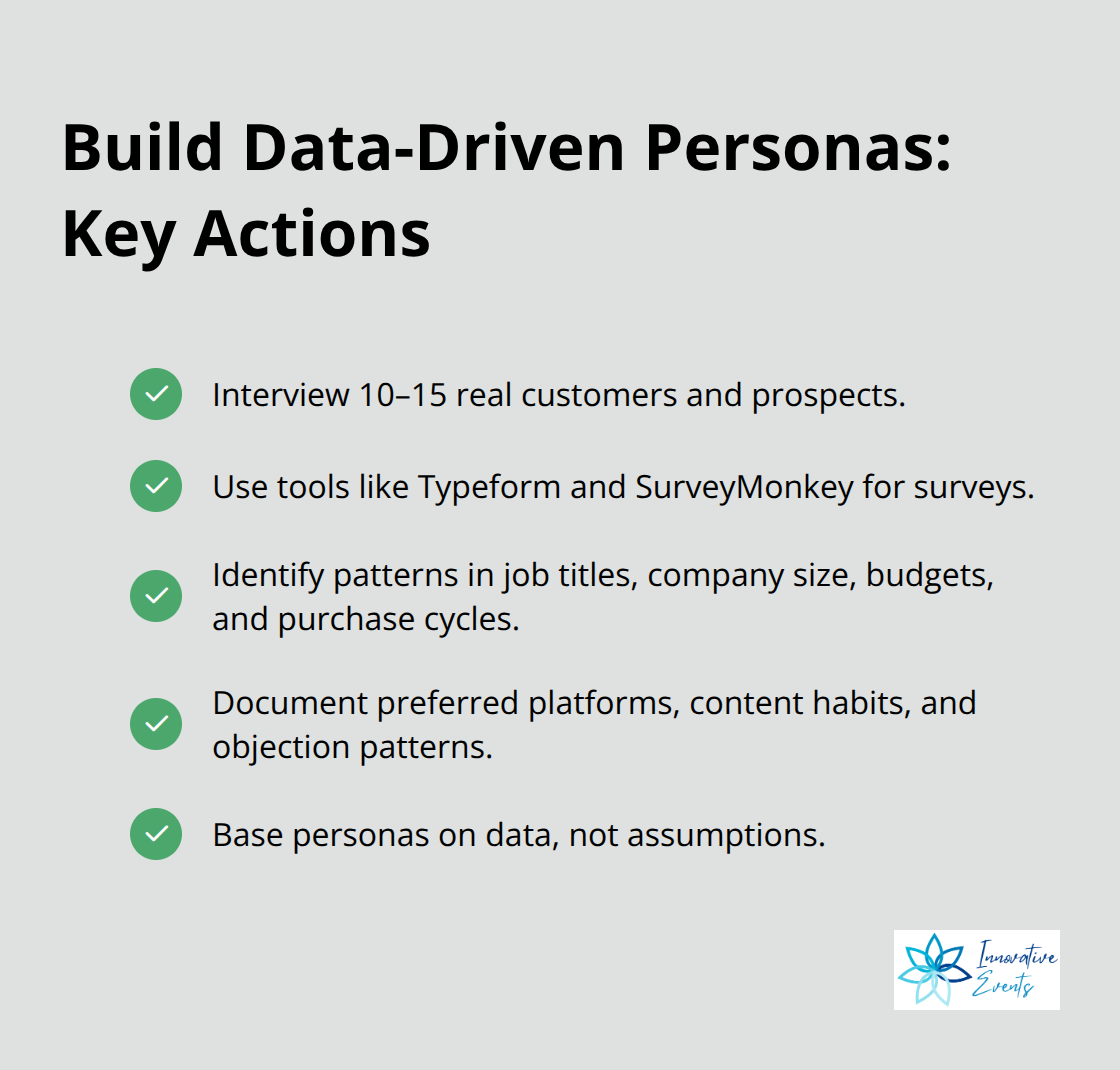
Look for patterns in job titles, company sizes, budget ranges, and cycles for purchases. The most effective personas include specific details like preferred social media platforms, content consumption habits, and objection patterns. Companies with well-defined personas can better reach their target audience through detailed research methods.
Set Measurable Goals That Drive Revenue
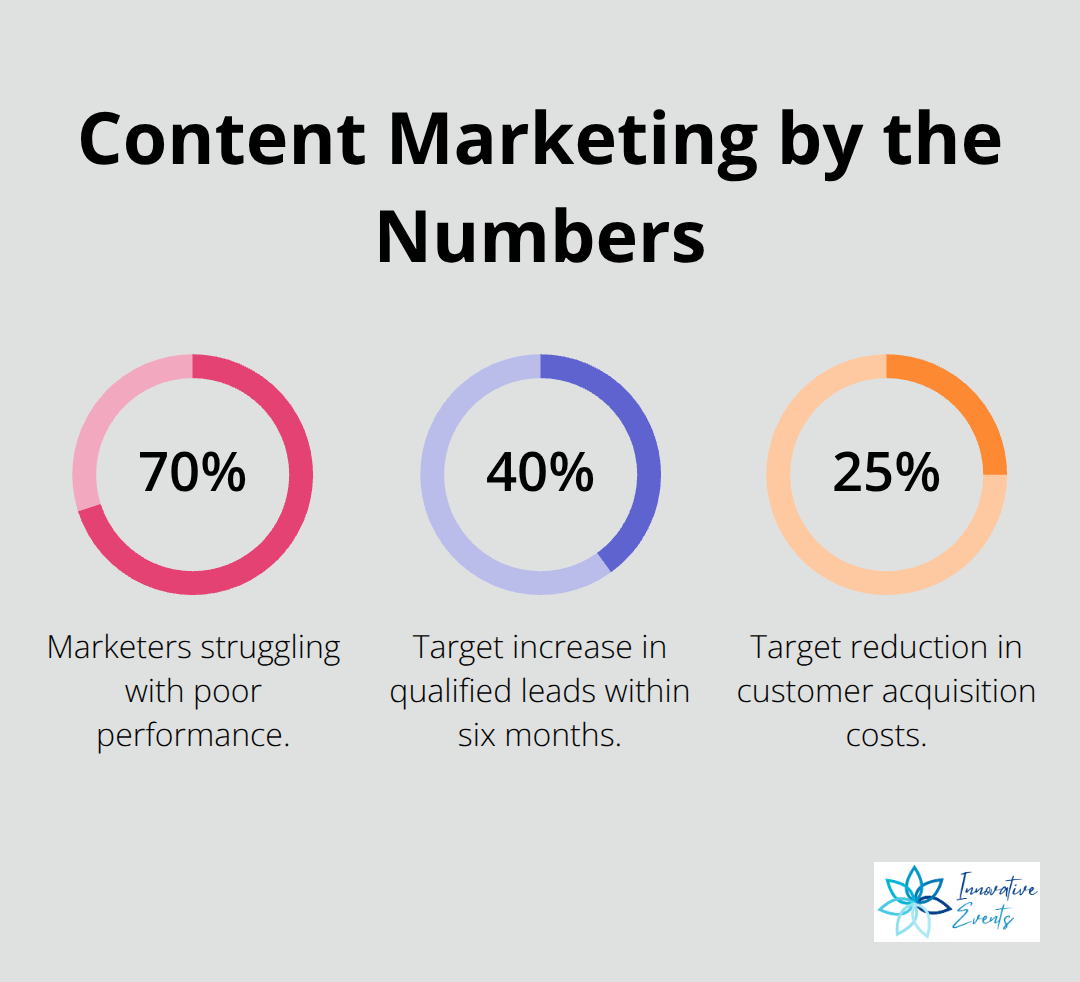
Vanity metrics like page views and social media likes waste your budget. Focus on metrics that directly impact revenue: lead generation, cost per acquisition, and customer lifetime value. Set specific targets like a 40% increase in qualified leads within six months or a 25% reduction in customer acquisition costs. Use the SMART goal framework but make them aggressive enough to drive real change. Semrush data shows that companies that track revenue-focused KPIs achieve 3x better ROI than those that measure engagement metrics alone.
Connect Content to Business Outcomes
Every piece of content must tie to specific business results through proper attribution. Track how blog posts convert readers into leads, how social media drives website traffic, and how email campaigns generate sales. Use UTM parameters and conversion pixels to measure the complete customer journey (from first touch to final purchase). This data reveals which content types deliver the highest return on investment and which channels deserve more budget allocation. Your competitor analysis becomes the foundation for this strategic approach.
How Do You Create Content That Actually Converts?
Content that converts starts with understanding the exact words your audience uses to describe their problems. Most marketers create content about what they think matters, not what their customers actually search for. Research shows that many pages struggle to gain organic visibility, highlighting the importance of targeting the right keywords. The solution lies in keyword research that goes beyond search volume. Focus on buyer intent keywords that indicate purchase readiness. Tools like Semrush and Ahrefs reveal which terms drive conversions, not just clicks.
Target High-Intent Keywords That Drive Sales
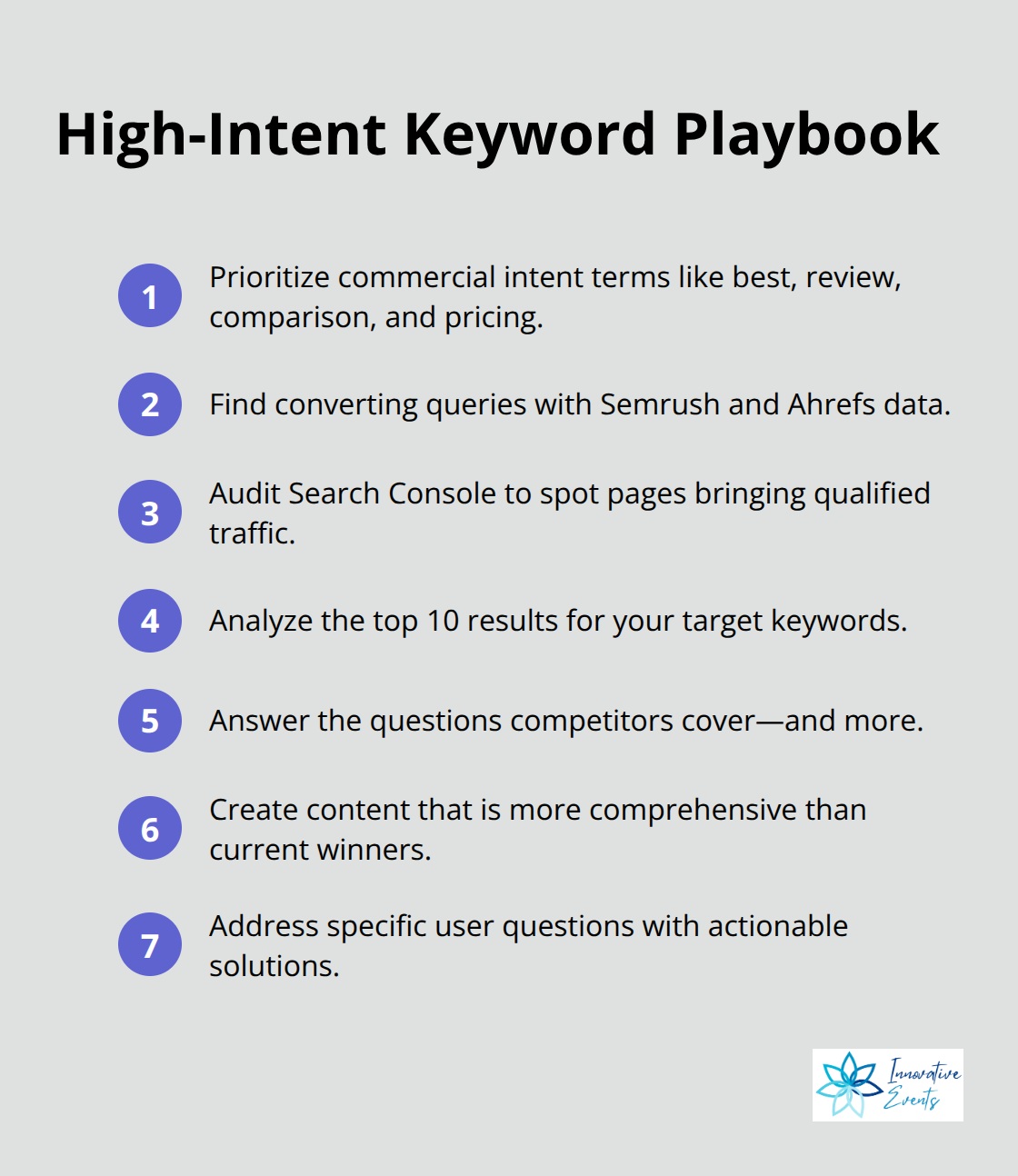
Generic keywords waste your budget on visitors who never buy. Focus on commercial intent keywords like best, review, comparison, and pricing terms. These searches convert significantly better than informational queries. Use Google Search Console to identify which current pages drive qualified traffic, then create more content around those themes.
Search for your main keywords and analyze the top 10 results. What topics do they cover? What questions do they answer? Your content must be more comprehensive than existing top performers. Tools like AnswerThePublic reveal the specific questions people ask about your topics. Create content that directly addresses these queries with actionable solutions, not vague advice.
Write Long-Form Content That Dominates Search Results
Long-form content performs best, with comprehensive articles receiving significantly more traffic and engagement. However, length means nothing without depth. Address every aspect of your topic thoroughly, include data from multiple sources, and answer related questions your audience asks.
Structure your content with clear headings, bullet points, and numbered lists. Break up text with relevant images and data visualizations (these elements also improve user engagement metrics). Search engines favor comprehensive content that keeps readers on the page longer.
Choose Distribution Channels Based on Performance Data
Publishing great content on the wrong channels kills your results. Email marketing delivers strong ROI, making it a primary distribution channel. LinkedIn generates significant B2B social media leads, while Facebook drives substantial referral traffic for most industries.
However, your audience data should determine channel selection, not industry averages. Analyze your Google Analytics to see which channels currently drive the most qualified traffic and conversions. Double down on what works rather than spreading resources across every available platform.
Repurpose Content Across Multiple Formats
Transform your long-form content into multiple formats: turn blog posts into podcast episodes, create infographics from data points, and extract social media posts from key insights. This approach maximizes your content investment while reaching different audience preferences.
Each format serves different consumption habits and platform algorithms. Video content generates significantly more engagement than other formats. Podcasts reach audiences during commutes and workouts when they can’t read articles. This multi-format strategy sets the foundation for effective SEO optimization that drives organic traffic growth.
Which Metrics Actually Matter for Content Success?
Most marketing teams track the wrong metrics and wonder why their content marketing fails. Page views, social shares, and time on page tell you nothing about revenue impact. Companies focusing on conversion metrics can benchmark against industry standards to uncover growth opportunities and scale their ROI.
Track metrics that connect directly to business outcomes: cost per lead, lead-to-customer conversion rate, and customer lifetime value from content channels. Set up conversion tracking for every content piece with UTM parameters and conversion pixels to measure the complete customer journey from first click to final purchase.
Focus on Revenue-Impact Metrics
Companies waste budgets on vanity metrics that don’t drive sales. Cost per acquisition (CAC) reveals the true efficiency of your content marketing efforts. Customer lifetime value shows which content attracts your most profitable customers. Return on ad spend (ROAS) measures the direct financial impact of your content investments.
Track lead quality scores to identify which content types attract prospects most likely to convert. Monitor conversion rates at each stage of your funnel to spot bottlenecks that kill sales momentum.
Test Headlines and Content Formats for Maximum Impact
A/B testing reveals which content elements drive conversions, not just clicks. Test headlines, call-to-action buttons, content length, and visual elements systematically. Companies using A/B testing experience an average 49% increase in conversion rates.
Test one element at a time with at least 1,000 visitors per variation for statistical significance. Focus tests on high-traffic pages first since they provide faster, more reliable results. Split-test email subject lines to boost open rates (this simple change often increases engagement by 20-30%).
Monitor Performance Weekly, Not Monthly
Weekly performance reviews catch problems before they drain your budget. Daily monitoring of key metrics helps you spot trends and opportunities faster than competitors. Google Search Console data updates frequently and shows which keywords drive organic traffic and conversions.
Track which content pieces generate the most qualified leads each week. Identify patterns in high-performance content themes and formats. Weekly analysis allows you to capitalize on trending topics while they still drive traffic.
Adjust Content Strategy Based on Real Performance Data
Data should drive every content decision, not gut feelings or industry best practices. Analyze which topics generate the most qualified leads, which formats convert best, and which distribution channels deliver the highest ROI. Double down on high-performance content themes and eliminate low-performance topics that drain resources.
Companies that adjust strategies based on specific business objectives achieve 3x better content marketing results than those that stick to rigid annual plans. Remove underperforming content that hurts your site’s overall authority and search rankings.
Final Thoughts
Content marketing optimization requires a systematic approach that prioritizes revenue over vanity metrics. Companies that focus on data-driven buyer personas, high-intent keywords, and conversion tracking achieve 3x better ROI than those who rely on guesswork. The most successful businesses test everything continuously and adapt their strategies based on real performance data.
Weekly performance reviews catch problems early, while A/B testing reveals which content elements drive actual sales. You must audit your current content performance to identify which pieces generate qualified leads and which waste your budget. Remove underperforming content that hurts your search rankings and double down on topics and formats that convert prospects into customers.
When you optimize content marketing effectively, you transform marketing from a cost center into a profit driver. Companies that commit to continuous testing and data-driven optimization will dominate their markets while competitors struggle with outdated approaches. We at Innovative Events specialize in content strategies that deliver measurable results (contact us to learn how we can help your business achieve similar success).