

E-commerce businesses face intense competition for customer attention. A solid content marketing strategy for e-commerce can transform browsers into buyers and one-time purchasers into loyal advocates.
We at Innovative Events have seen companies increase their conversion rates by 300% through strategic content approaches. The right mix of educational resources, customer stories, and optimized distribution channels drives measurable sales growth.
Understanding Your Ecommerce Audience
E-commerce audience analysis requires hard data, not assumptions. Google Analytics 4 reveals shopping patterns that most businesses overlook. Track user sessions by device type, page dwell time, and conversion paths to build accurate customer profiles. Research shows that consumers often explore products across multiple channels before making purchases. This behavior creates distinct customer segments that need different content approaches.
Demographics Shape Content Strategy
Age demographics influence content consumption habits dramatically. Shoppers aged 25-34 spend significant time with digital content, while older demographics show different preferences for communication channels. Geographic data matters equally. Urban shoppers often convert faster on mobile devices, while suburban customers may prefer desktop experiences for larger purchases. Income brackets influence platform preferences, too. Higher-income segments engage more with video content on professional platforms, while budget-conscious consumers rely heavily on comparison sites and review platforms.
Behavior Patterns Reveal Purchase Intent
Heat maps from tools like Hotjar show exactly where customers focus their attention. High-conversion product pages receive more attention to detailed specifications than low-performance ones. Cart abandonment happens quickly if shipping costs appear unclear. Successful ecommerce brands track micro-interactions: scroll depth, click patterns, and exit points. These behavioral signals predict purchase likelihood better than demographic data alone.
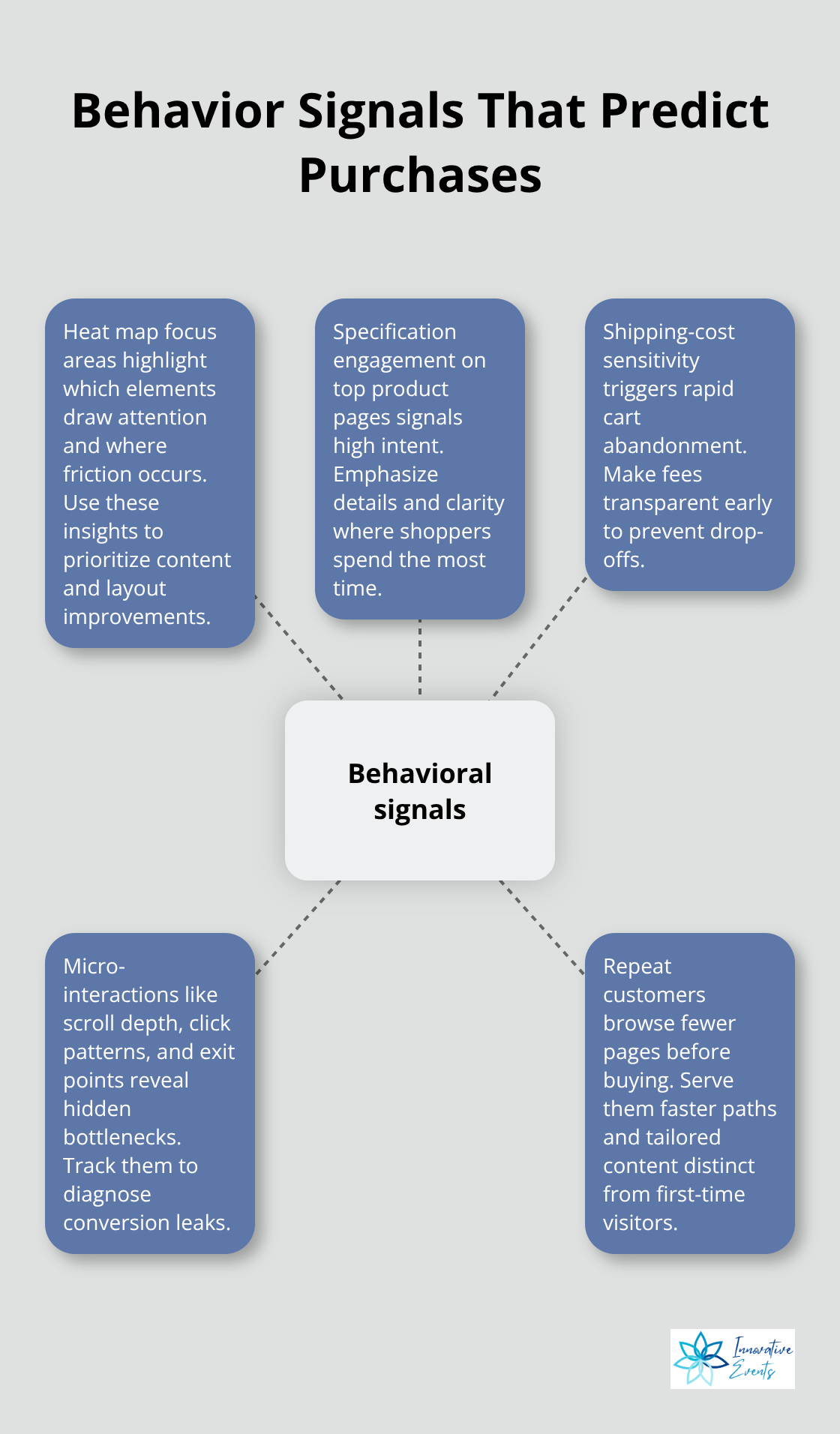
Repeat customers browse fewer pages before they buy, which indicates they need different content than first-time visitors.
Content Preferences Match Customer Journey Stages
Early-stage browsers consume educational content at higher rates than product-focused materials. Video testimonials convert prospects more effectively than written reviews during the consideration phase. Post-purchase customers engage most with how-to guides and community content. Mobile users prefer visual content under 15 seconds, while desktop users will engage with longer educational pieces. Instagram drives discovery for many Gen Z shoppers, but email remains a top conversion channel across all age groups with strong ROI performance.
These audience insights directly inform which content types will drive the most sales for your e-commerce business.
Content Types That Drive E-commerce Sales
Product education drives sales better than promotional content. Companies that publish detailed product guides see higher conversion rates than those that focus on sales pitches. Educational resources answer specific customer questions at the moment of need. Technical specifications, sizing guides, and compatibility charts reduce purchase anxiety. Shoppers spend longer on product pages with comprehensive educational content compared to basic product descriptions.
Educational Resources Build Purchase Confidence
How-to guides perform exceptionally well for complex products. Tutorial content generates more qualified leads than promotional materials. Create installation guides, maintenance tips, and troubleshooting resources for your products. Video tutorials receive significantly more shares than text and images combined. Educational email sequences convert better than promotional campaigns because they establish expertise before they present offers.
Customer Reviews Drive Purchase Decisions
Customer testimonials influence purchase decisions more than any other content type. Research shows 88% of consumers trust peer recommendations over advertisements. Display reviews prominently on product pages and category listings. Video testimonials convert better than written reviews because they feel more authentic. Encourage customers to include photos with their reviews – visual proof increases review credibility. Respond to negative reviews professionally to demonstrate customer service quality.
Interactive Content Engages and Converts
Interactive elements like product configurators increase time on site significantly. Quizzes that recommend products based on customer needs convert better than static product catalogs. Size calculators for furniture and clothing reduce return rates. Live chat integration during product browsing increases conversion rates. Interactive content formats work because they simulate the in-store experience online and help customers visualize products in their specific situations.
The success of these content types depends heavily on where and how you distribute them to reach your target audience.
Distribution Channels and Optimization
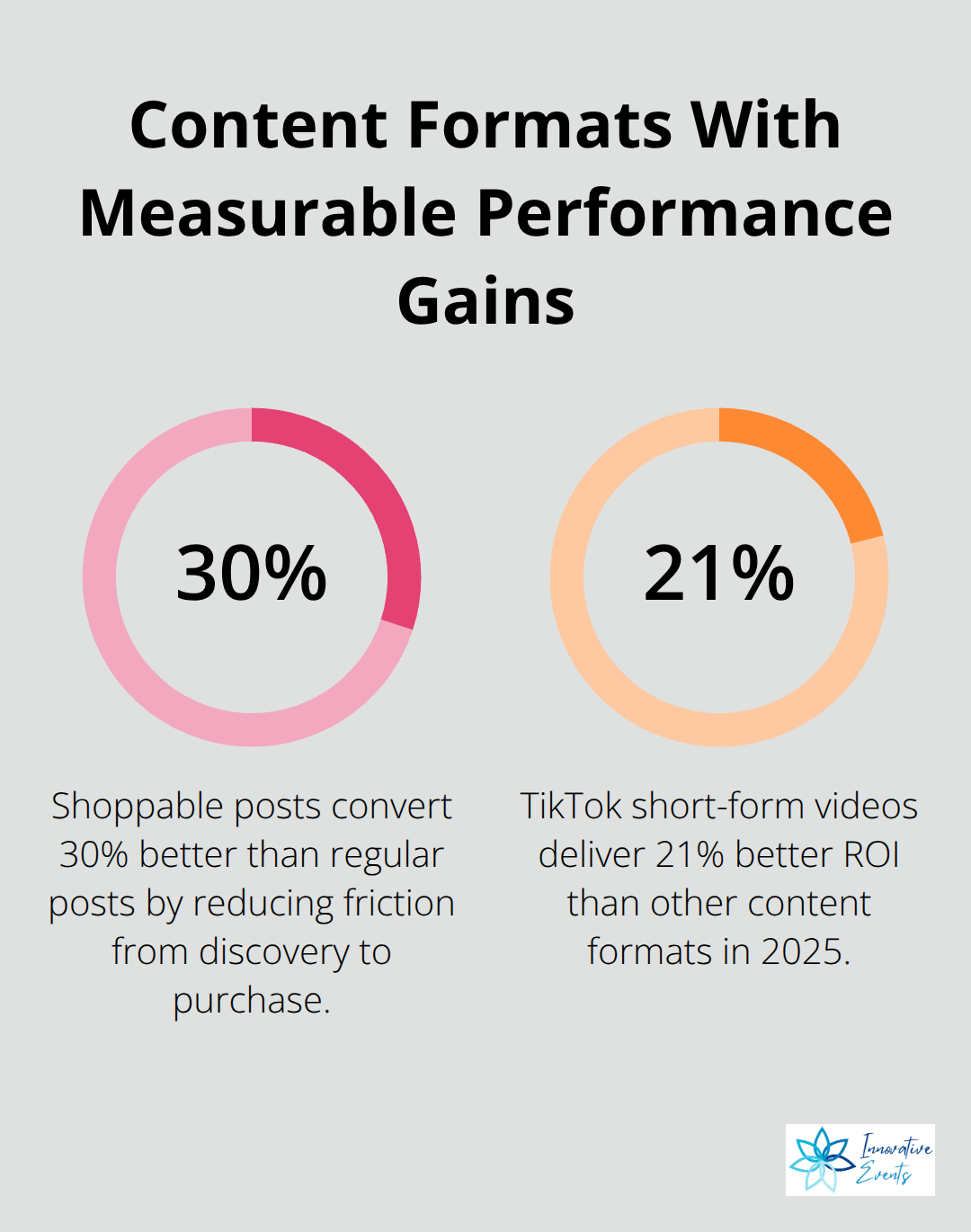
Instagram drives the highest engagement rates for e-commerce content with 1.4 billion monthly active users who actively shop through the platform. Shoppable posts convert 30% better than regular posts because they reduce friction between discovery and purchase. TikTok generates massive reach for product demonstrations, with short-form videos that deliver 21% better ROI than other content formats in 2025. Facebook remains powerful for retargeting campaigns, especially for higher-priced products where customers need multiple touchpoints before purchase. LinkedIn works exceptionally well for B2B ecommerce companies that target decision-makers with educational content about complex products.
Email Marketing Automation Drives Repeat Sales
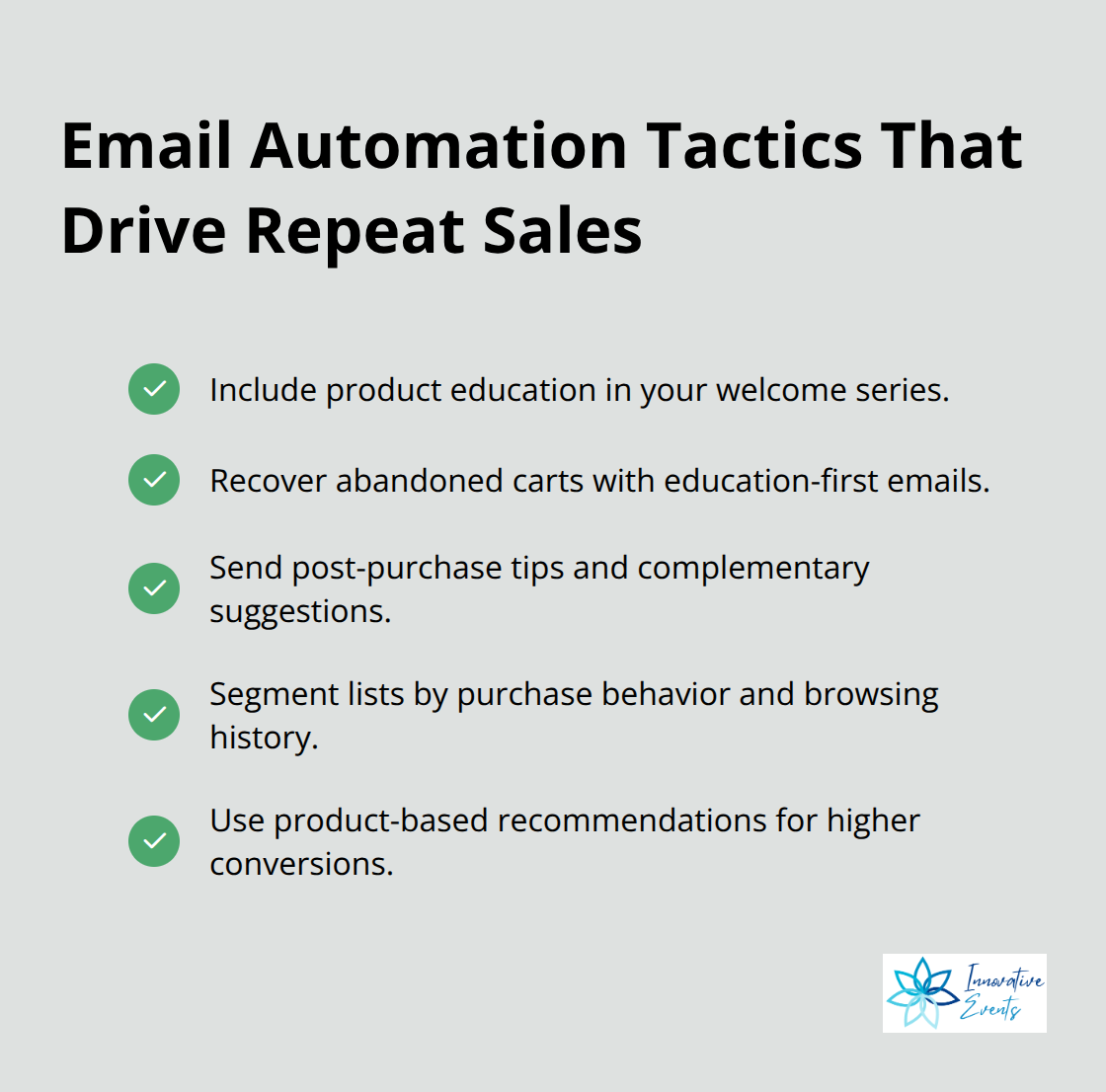
Email marketing delivers strong ROI for e-commerce businesses, with 35% of companies seeing a $10-$36 return for every $1 spent. Welcome series emails should include educational content about your products, not just promotional offers. Abandoned cart emails recover 15-25% of lost sales when they include product education rather than discount codes. Post-purchase email sequences that provide usage tips and complementary product suggestions increase customer lifetime value significantly. Segment your email lists based on purchase behavior and browsing history to send highly targeted content. Product recommendation emails based on previous purchases convert 5x better than generic promotional emails.
SEO Content Strategy Captures Purchase Intent
Product-focused blog content ranks higher in search results than general industry topics. Target long-tail keywords that include specific product features and use cases because these searches show strong purchase intent. Create comparison pages for your products versus competitors – these pages often rank well and convert visitors at higher rates. FAQ pages optimized for voice search capture the growing mobile traffic. Local SEO content works exceptionally well for e-commerce businesses with physical locations or region-specific products. Update product descriptions regularly with seasonal keywords to capture trending searches throughout the year.
Social Media Platform Optimization
Each platform requires different content approaches for maximum impact. Instagram Stories with product tags generate immediate purchase actions from engaged followers. TikTok product demonstrations perform best when they show real-world usage scenarios rather than polished advertisements. Facebook groups create communities around your products where customers share experiences and recommendations. Pinterest drives traffic for visual products like home decor and fashion through optimized product pins. YouTube product reviews and tutorials build long-term brand authority while capturing search traffic from product-related queries.
Final Thoughts
A successful content marketing strategy for e-commerce requires data-driven audience insights, educational content that builds purchase confidence, and strategic distribution across multiple channels. Companies that implement comprehensive content approaches see conversion rate increases of 300% or more. The key lies in matching content types to customer journey stages while you optimize for each platform’s unique characteristics.
Track performance through conversion rates, customer lifetime value, and engagement metrics rather than vanity numbers. Email marketing ROI, social media conversion rates, and organic search traffic provide clear indicators of content effectiveness (monitor cart abandonment recovery rates and repeat purchase patterns to measure long-term content impact). Start with an audit of your current content performance and identify gaps in your customer journey.
Develop educational resources for your top products first, then expand to broader topics. Test different content formats on each platform to find what resonates with your specific audience. We at Innovative Events help businesses create compelling marketing content that drives measurable results across all channels.