

Strong brands drive 23% higher revenue growth than their competitors, according to McKinsey research. Yet 77% of marketing leaders struggle to create cohesive brand marketing strategies that actually move the needle.
At Innovative Events, we’ve seen firsthand how the right approach transforms businesses from unknown players into market leaders.
This guide breaks down the exact framework successful companies use to build brands that generate measurable growth and lasting customer loyalty.
What Makes Brand Strategy Actually Work?
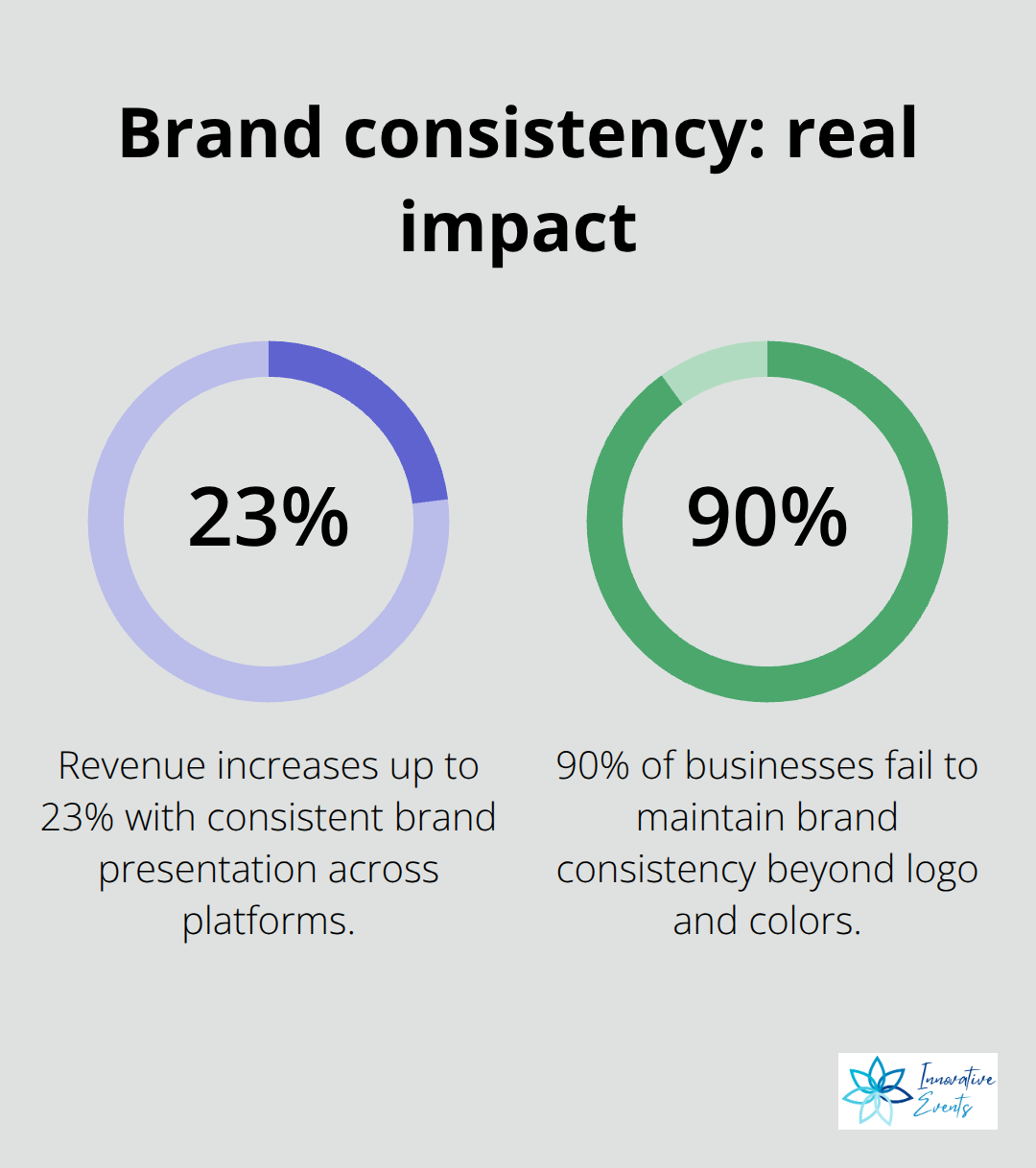
Brand strategy success starts with three non-negotiable elements that most companies get wrong. Harvard Business Review found that companies with consistent brand presentation across all platforms see revenue increases up to 23%, yet 90% of businesses fail to maintain consistency beyond their logo and colors.
Build Your Brand Foundation First
Your brand identity goes far deeper than visual elements. Patagonia generates over $1 billion annually because their core values of environmental responsibility drive every business decision, from product development to marketing campaigns. Define what your company stands for in one clear sentence, then align every action with that statement. Nike’s brand identity centers on athletic achievement and pushes limits, which explains why their partnerships with controversial athletes like Colin Kaepernick actually strengthened their market position despite initial backlash.
Target Audience Research That Actually Matters
Skip the demographic surveys that tell you nothing actionable. Airbnb grew from zero to $6 billion valuation when they studied actual behavior patterns rather than stated preferences. They discovered travelers wanted authentic local experiences, not hotel alternatives. Interview your current customers about their decision-making process, pain points, and what alternatives they considered. Spotify’s success with personalized campaigns comes from analyzing user data to create content that resonates with individual listening habits and preferences.
Message Consistency Across Every Touchpoint
Your brand message must remain identical whether customers encounter you on social media, email, or in person. Dollar Shave Club’s irreverent tone appears in their packaging, customer service responses, and advertisements because they documented specific voice guidelines. Create a brand voice document that includes tone, vocabulary, and message examples for different situations. Test message consistency when you have team members from different departments write sample communications, then compare results against your guidelines.
Transform Strategy Into Actionable Content
Most brands fail because they stop at strategy documents that collect dust on shelves. Successful companies translate their brand foundation into specific content that connects with audiences across multiple channels. Organic content marketing builds genuine connections through valuable, non-promotional content that drives the measurable results we’ll explore next.
How Do You Execute Brand Marketing That Drives Results?
Master Content Marketing Through Strategic Focus
Content marketing generates 3x more leads at 62% lower cost compared to traditional methods, but only when you execute it with strategic precision. Red Bull transformed from an energy drink company into a media powerhouse when it created 7,400 pieces of content annually that align with their extreme sports brand identity.
Their approach proves that successful content marketing requires you to treat your brand as a media company first, product seller second. Focus on one content format that your audience consumes most, then master that format before you expand to others.
GoPro built its entire brand through user-generated video content and spent 90% of its content budget to amplify customer stories rather than create original content. This strategy works because authentic customer experiences resonate more powerfully than polished corporate messages.
Build Micro-Communities That Convert
Social media engagement drives brand growth when you build micro-communities rather than chase follower counts. Glossier grew from zero to a $1.2 billion valuation when they created intimate conversations with beauty enthusiasts on Instagram and turned customers into brand advocates.
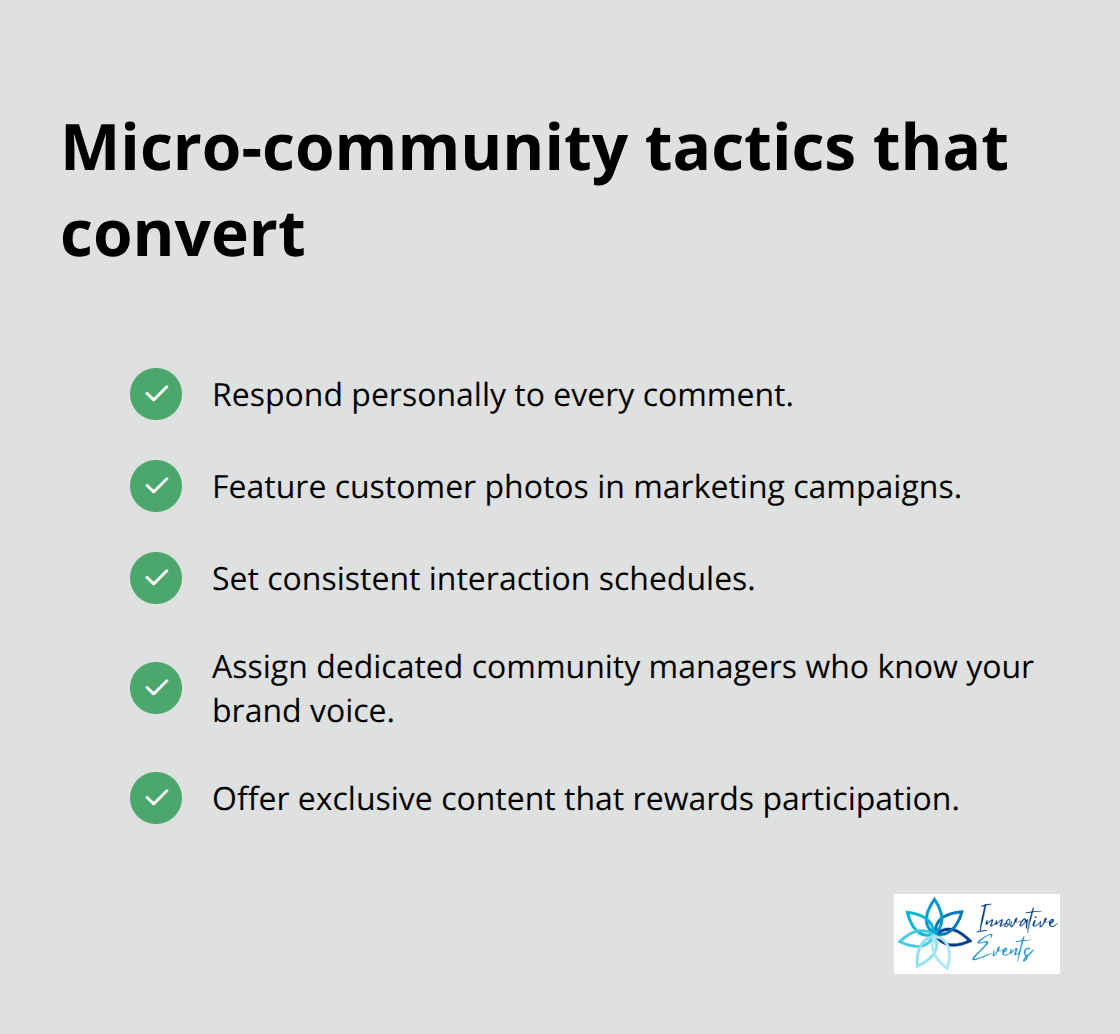
Their strategy involved personal responses to every comment and featured customer photos in their marketing campaigns. Successful community development requires consistent interaction schedules, dedicated community managers who understand your brand voice, and exclusive content that rewards participation.
Sephora’s Beauty Insider community generates 80% more revenue per customer than non-members because they create exclusive experiences and early access to products (demonstrating the power of VIP treatment in community management).
Integrate Multi-Channel Campaigns for Maximum Impact
Automated emails achieve 52% higher open rates and 332% higher click rates compared to regular campaigns, demonstrating the power of strategic multi-channel integration. Apple maintains identical product messages whether customers encounter their brand through television advertisements, retail stores, or social media.
They accomplish this consistency through centralized creative teams and unified campaign briefs that specify exact language for each channel. Implement weekly cross-departmental coordination meetings to create the framework for brand teams that deliver consistent results. Your brand voice must remain recognizable whether someone reads your email newsletter or watches your YouTube video.
Test your message consistency across channels monthly to identify gaps where your brand voice shifts or weakens. Document specific examples of how your core message adapts to different platforms while maintaining its essential character.
The foundation you’ve built and the execution strategies you’ve implemented need measurement systems that prove their effectiveness and guide your optimization efforts.
How Do You Measure Brand Marketing Impact?
Track Brand Awareness Through Multiple Data Points
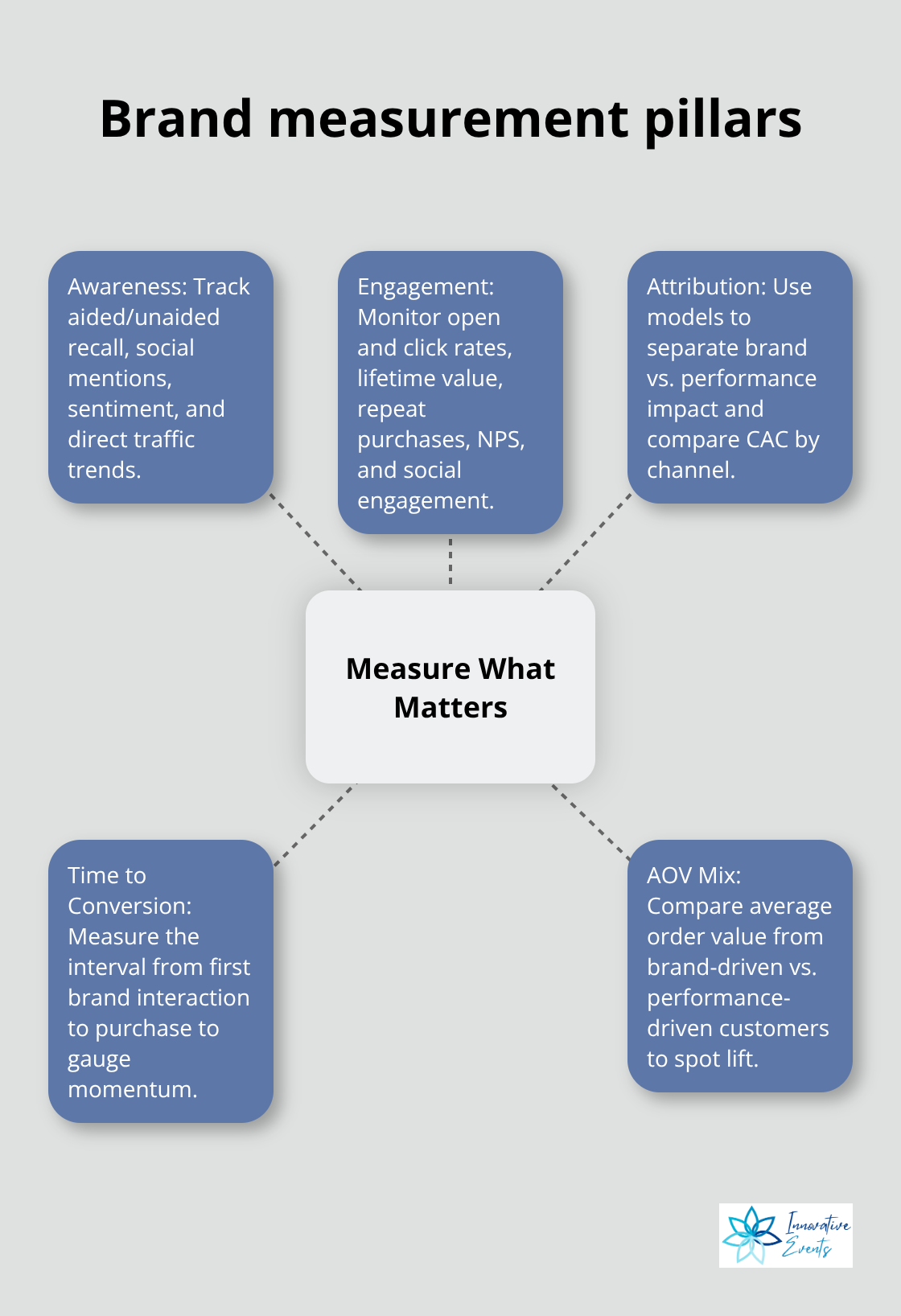
Brand awareness measurement requires specific metrics that connect directly to revenue growth. Coca-Cola tracks aided and unaided brand recall through quarterly surveys across their target demographics, while they monitor social media mention volume and sentiment analysis through Brandwatch. Their approach proves that effective measurement combines quantitative data with qualitative insights.
You should track brand mention frequency, share of voice compared to competitors, and website direct traffic growth monthly. Monitor these metrics consistently to identify patterns that predict revenue growth and market share expansion.
Analyze Customer Engagement Data That Predicts Growth
Email open rates above 25% and click-through rates that exceed 4% indicate a strong brand connection, according to Mailchimp benchmarks. Starbucks achieves 40% email open rates because its content focuses on exclusive offers and personalized recommendations rather than generic promotions.
You should monitor customer lifetime value, repeat purchase rates, and Net Promoter Scores quarterly to identify engagement trends. Companies with NPS scores above 50 grow revenue 2.5x faster than competitors. Track social media engagement rate, comment sentiment, and user-generated content volume to measure authentic brand connection.
Sephora’s Beauty Insider program generates 80% of its revenue from members who engage with exclusive content and community features. This data proves that engagement metrics directly correlate with revenue performance when you track the right indicators.
Calculate Revenue Attribution Through Brand Investment
Brand marketing ROI requires attribution models that connect awareness activities to sales outcomes. Procter & Gamble uses econometric models to prove their brand campaigns drive 60% of long-term sales growth, while performance marketing accounts for 40%.
Calculate customer acquisition cost through brand channels versus performance marketing to identify the most efficient growth drivers. Brands with strong emotional connections achieve 2x revenue growth compared to competitors focused solely on functional benefits, according to Harvard Business Review research.
Track revenue from customers who engage with brand content before purchase, the time between first brand interaction and conversion, and the average order value from brand-driven versus performance-driven customers. This analysis helps you optimize your marketing and brand strategy allocation and prove brand marketing effectiveness to stakeholders who demand concrete ROI data.
Final Thoughts
Brand marketing strategy success requires three fundamental elements: clear brand identity, targeted audience research, and consistent messages across all touchpoints. Companies that master these basics see 23% higher revenue growth while they build sustainable competitive advantages. Implementation starts when you document your brand foundation in actionable guidelines that every team member can follow.
Focus on one content format initially, build micro-communities rather than chase follower counts, and integrate campaigns across multiple channels for maximum impact. Track brand awareness metrics, customer engagement data, and revenue attribution monthly to optimize your approach. Long-term brand development demands continuous measurement and adaptation as market conditions shift.
The most successful brands treat themselves as media companies first and create valuable content that builds authentic connections with their audiences. They invest in community development, maintain message consistency, and use data-driven insights to refine their strategies (which separates winners from competitors who rely on outdated approaches). At Innovative Events, we help brands transform their marketing approach through strategic event experiences that build lasting relationships and drive measurable business growth.